REVIEW · PARIS
Semi-Private French Revolution and Conciergerie tour
Book on Viator →Operated by Fat Cat Tours · Bookable on Viator
Revolution doesn’t stay in museums on this route. You’ll connect the French Revolution to the streets and buildings you can actually see, with a guide who turns stone and street corners into a story you can follow. Walking is the point here: you notice details you’d miss at speed, and the whole loop feels made for real-time understanding.
Two things I really like: first, the stop plan is built around major Paris landmarks plus less-obvious reminders of the Revolution’s physical impact. Second, the guide storytelling is strong—names like Benoit, William, and Adam show up in guest comments as the kind of guides who bring the era to life and even share helpful restaurant ideas to keep your trip rolling. A key consideration: it’s a 2 hours 30 minutes walking experience in all weather, and there’s no food or drinks provided, so wear good shoes and plan for snacks if you need them.
In This Review
- Key Points to Know Before You Go
- A 2.5-Hour Walk Through Paris During the French Revolution
- Price and What You’re Really Paying For
- The Route Starts at the Bastille Area, Then Moves East to the Heart of Old Paris
- Stop 1: Opera Bastille and the Cultural Side of Revolutionary Paris
- Stop 2: Le Marais, a Neighborhood Built on a Swamp and Rebuilt After Upheaval
- Stop 3: Hôtel de Ville, the Seat of Government and a Wall of French Memory
- Stop 4: Tour Saint-Jacques, Flamboyant Gothic and a Church That No Longer Exists
- The Conciergerie Ending: Finishing With a Strong Revolution Anchor
- The Semi-Private Format: Why the Group Size Matters
- What to Wear and How to Pace Yourself
- Tickets, Language, and Getting There Without Stress
- Should You Book This French Revolution and Conciergerie Tour?
- FAQ
- How long is the Semi-Private French Revolution and Conciergerie tour?
- What does the tour cost?
- How many people are in the group?
- Is the tour offered in English?
- Are tickets or entry fees included for the stops?
- Does the tour include food or drinks?
- Where does the tour start and end?
- Does the tour operate in bad weather?
- Is there hotel pickup or drop-off, or transportation provided?
- Are service animals allowed, and is there any fitness requirement?
Key Points to Know Before You Go
- Small group size (max 15) keeps the tone personal and the pace manageable.
- Several stops are free to enter, so you’re spending time seeing rather than paying and waiting.
- The route mixes famous sites with Revolution-era architectural traces, especially in the Marais and around historic towers.
- English-speaking professional guide means you’re not stuck piecing things together on your own.
- All-weather operation makes dress choices part of the plan, not an afterthought.
A 2.5-Hour Walk Through Paris During the French Revolution
This is the kind of tour where you stop seeing Paris as a postcard and start seeing it as a living timeline. The French Revolution is usually taught as dates and proclamations. Here, you’re guided through a sequence of places where you can understand how power, culture, and even what survived physically shaped what came next.
The big practical advantage is the rhythm: it’s built for a short, focused window. In about 2.5 hours, you cover multiple notable areas without feeling like you need a full day just to get oriented. If you like history, but you also want to feel the city under your feet, this format works well.
You can also read our reviews of more private tours in Paris



Price and What You’re Really Paying For
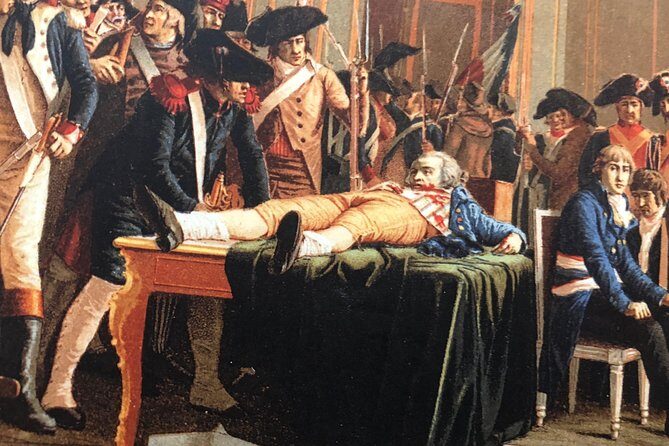
At $179.03 per person for roughly 2 hours 30 minutes, this isn’t a bargain-basement walking tour. The value comes from the mix of elements you get for that price:
- A professional English-speaking guide included.
- A semi-private feel with a maximum of 15 travelers.
- A route that hits several major Paris landmarks.
- Multiple stops listed as ticket-free.
When you compare that to what you’d pay for a guided experience plus separate entry tickets (or time spent hunting information alone), the cost starts to make more sense. You’re not paying for a bus ride or a museum ticket. You’re paying for interpretation—someone helping you see what matters in each location.
If your priority is getting deep into the French Revolution using real-world landmarks, and you want it in a small group, this price can feel fair. If you only want broad overview and you’re fine reading plaques on your own, you may be able to DIY for less.
The Route Starts at the Bastille Area, Then Moves East to the Heart of Old Paris
Your tour starts at the Banque de France area near Pl. de la Bastille (meeting point: Banque de France, 3 bis Pl. de la Bastille CS 41834). This matters because the Bastille zone is a natural jumping-off point for Revolution themes, and it’s also a good spot to connect later to other parts of central Paris.
The tour ends at the Conciergerie (2 Bd du Palais, 75001 Paris). That ending location is useful if you’re continuing your day on foot in the historic core. Even if you don’t plan anything specific right after, finishing at a major Revolution-related site gives you a strong final image to anchor the whole walk.
Stop 1: Opera Bastille and the Cultural Side of Revolutionary Paris
You’ll begin with Opera Bastille, the sleek auditorium opened in 1989. The key detail isn’t only that it hosts ballet and opera. It’s what this modern performance building says about continuity—how Paris keeps using art to define public life, even after earlier upheavals.
Why this stop works early in the tour: it gives you a visual baseline for how the city expresses culture. Then, as you move through the older neighborhoods and government buildings, the “what changed” story becomes easier to track.
What to watch for: the name itself points you toward the broader Revolution-era context of the Bastille area, even though Opera Bastille is modern. Think of it like a framing device—Paris still makes art visible, just in different eras and styles.
Possible drawback: because Opera Bastille is a major venue, you might want to be prepared for how busy the area can feel depending on the day. You’re on a walking tour, so you’ll likely move efficiently, but you’ll still benefit from arriving ready to follow your guide’s pace.
Stop 2: Le Marais, a Neighborhood Built on a Swamp and Rebuilt After Upheaval
Next comes Le Marais, described as a neighborhood that was once built on a land-filled swamp. That one fact is a powerful reminder that Paris isn’t just about kings and revolutions—it’s also about engineering, water management, and the practical work of rebuilding.
This stop also sets up the Revolution-era story in a visible way:
- The area was once a center of high culture.
- After the French Revolution it fell into disrepair.
- It later regained prominence.
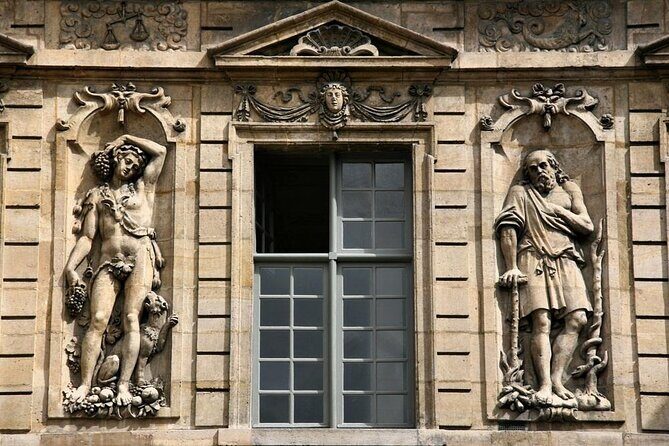
As you walk here with a guide, you’re not just seeing streets—you’re seeing how reputation and infrastructure can shift over time. Le Marais is a great place for this kind of explanation because the neighborhood feels layered. Even if you’re not an architecture person, you’ll start noticing how Paris keeps reusing and reframing older space.
Practical tip: Le Marais is the kind of district where you naturally want to slow down for photos and corners. Your guide’s job is to keep the narrative tight while still letting you appreciate those side streets. If you tend to rush when you travel, this kind of small-group route can gently coach your pace.
Possible drawback: you’ll be walking through a very urban, pedestrian area. If you’re sensitive to crowds, this stop might feel busier than the other, more “monument” oriented points.





Stop 3: Hôtel de Ville, the Seat of Government and a Wall of French Memory
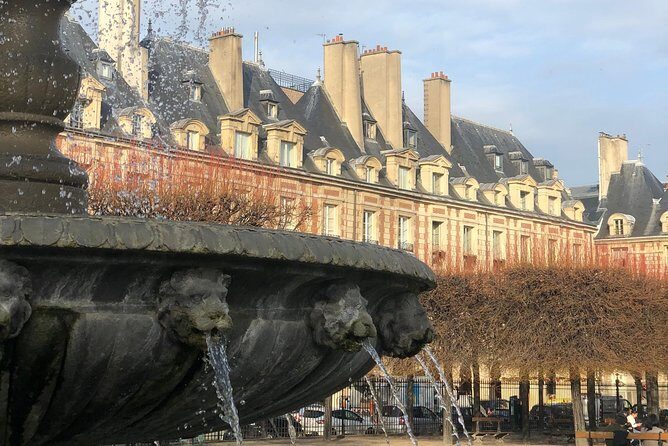
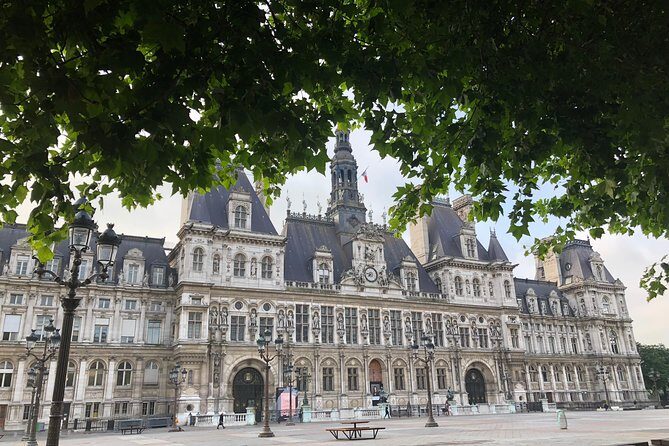
Then you move to Hôtel de Ville, a beautiful 19th-century building that is now the seat of the French government. This stop is a clean bridge between revolution and modern civic life.
Why it’s valuable in this tour: it’s not only a grand facade. It also features displays on French history, which means the building itself supports the conversation your guide is having with you.
When you reach Hôtel de Ville, you’ll likely start thinking differently about the Revolution. It stops being only a past event and starts looking like something that permanently reshaped how the city governs, organizes public life, and tells its own story.
What you can expect: you’ll take in the building’s presence and learn what to look for as a historical marker. Since admission is listed as free, you’re not forced into a ticket logistics moment that breaks the flow.
Possible consideration: government buildings can mean occasional changes to what’s accessible depending on events. Even with that uncertainty, a guide-led route is helpful because they can steer you to what’s available on the day you go.
Stop 4: Tour Saint-Jacques, Flamboyant Gothic and a Church That No Longer Exists
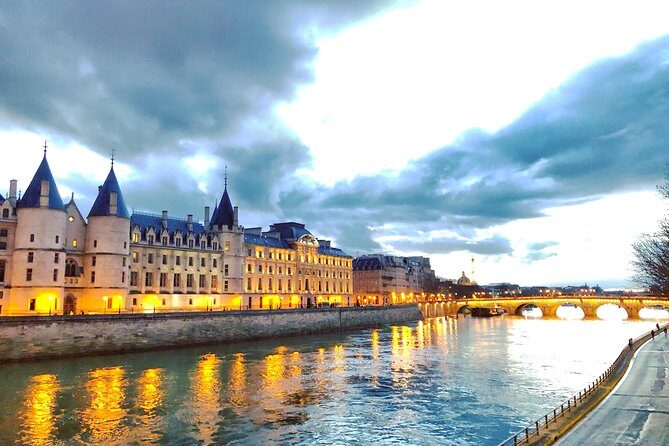
The tour ends at Tour Saint-Jacques, a flamboyant Gothic tower from the 16th century. You’ll also learn a crucial detail: it’s the only remains of the church of St Jacques de la Boucherie, which was demolished during the French Revolution.
This is one of those “small footprint, big meaning” stops. A tower standing alone tells a different story than ruins spread across a landscape. It suggests selective survival. It also makes the Revolution feel physical, not abstract.
This is a great point for you to slow down, because the lesson here is about loss and endurance at the same time. The tour uses that to reinforce the theme it’s been building from the start: what changes, what disappears, and what survives long enough to become part of everyday city life.
Possible drawback: towers are all about angles. If you’re short on time, or you’re trying to get a perfect photo in one shot, you can end up frustrated. Let the guide’s narrative set the pace; then take photos after you understand what you’re looking at.
The Conciergerie Ending: Finishing With a Strong Revolution Anchor
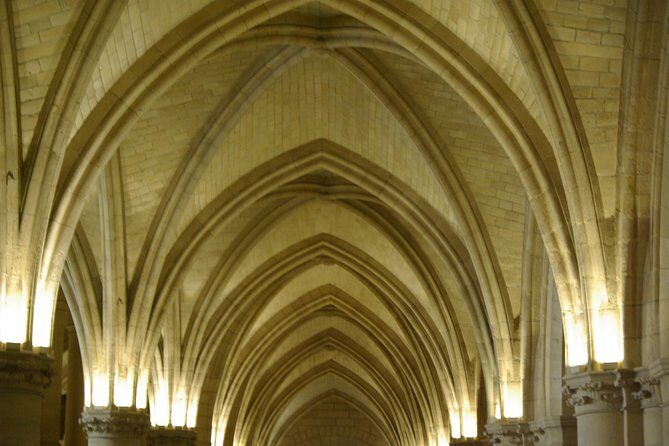
Your walking route finishes at the Conciergerie. That’s the name your entire tour is built around, so it works like a storyline “close.” Even if you don’t know the site yet, ending there gives you a clear final destination tied to the French Revolution theme.
If you like building a timeline in your head, this ending helps. You’ve already moved through culture, neighborhood change, government space, and architectural survival. Ending at the Conciergerie gives the last stop weight, so the tour doesn’t fade into generic sightseeing.
Practical advice: after the tour, take a few minutes to just stand and reset. A Revolution-themed walk can make you want to keep going immediately, but letting your brain absorb what you just learned makes the memories stick.
The Semi-Private Format: Why the Group Size Matters
This is limited to a maximum of 15 travelers, which is big enough that you’ll meet others if you want conversation, but small enough that you’re less likely to get lost in a crowd. For a topic like the French Revolution, that matters. The guide’s explanations can stay on track because the group isn’t huge.
In guest feedback, guides like Benoit, William, and Adam are singled out for storytelling style. One of the nicest outcomes of that kind of guide is momentum: you don’t just hear facts, you start connecting them to the street-level Paris you can see right now.
If you’re traveling as a couple, with a friend group, or with teenagers who might normally check out on history, this format is a better bet than a large “tour bus” style experience.
What to Wear and How to Pace Yourself
This tour operates in all weather conditions, and you’re told to dress appropriately. That’s a big deal on a walking route. Bring a rain layer if the forecast looks questionable, and plan for windier days in open areas.
You also should have a moderate physical fitness level. The good news: it’s only about 2 hours 30 minutes. The caution: it’s still walking, with the typical Paris stop-and-start rhythm.
Also, food and drinks are not included. If you know you get hungry, pack a small snack. At minimum, consider carrying water so you can keep your energy steady and not let hunger cut your attention during the story beats.
Tickets, Language, and Getting There Without Stress
You’ll get a mobile ticket, and the tour is offered in English. That makes it easier to manage your day without hunting for paper tickets.
The meeting point is near public transportation, which helps a lot in Paris. Still, I’d recommend arriving a little early so you can find the guide and settle in before the walking starts.
Admission for the named stops is listed as free for Opera Bastille, Le Marais, Hôtel de Ville, and Tour Saint-Jacques. That’s one more reason the tour works well: you can spend your money on the experience itself and not get stalled by entry fees.
Should You Book This French Revolution and Conciergerie Tour?
Book it if:
- You want a guided walk that helps you interpret what you see, not just “visit” places.
- You like history connected to real landmarks, including architectural traces of the Revolution.
- You prefer a small group and an English-speaking guide.
- You’re planning a shorter Paris stay and want a tight route with major stops.
Skip it if:
- You dislike walking for 2.5 hours, or you only want indoor museum-style time.
- You’re looking for a self-paced, no-guide experience where you can wander freely without a structured storyline.
- You hate weather-dependent outdoor time.
If you’re in the first group—history-minded, curious, and comfortable walking—this tour is a smart way to make the French Revolution feel like Paris, not a textbook.
FAQ
How long is the Semi-Private French Revolution and Conciergerie tour?
It lasts about 2 hours 30 minutes.
What does the tour cost?
The price is $179.03 per person.
How many people are in the group?
The tour has a maximum of 15 travelers.
Is the tour offered in English?
Yes, it’s offered in English.
Are tickets or entry fees included for the stops?
The itinerary lists admission as free for the listed stops: Opera Bastille, Le Marais, Hôtel de Ville, and Tour Saint-Jacques.
Does the tour include food or drinks?
No. Food and drinks are not included.
Where does the tour start and end?
It starts at Banque de France, 3 bis Pl. de la Bastille CS 41834, Paris, and ends at the Conciergerie, 2 Bd du Palais, Paris.
Does the tour operate in bad weather?
Yes. It operates in all weather conditions, so you should dress appropriately.
Is there hotel pickup or drop-off, or transportation provided?
No. Hotel pickup and drop-off and transportation to/from attractions are not included.
Are service animals allowed, and is there any fitness requirement?
Service animals are allowed. The tour calls for moderate physical fitness level.