
REVIEW · PARIS
The French Revolution: Self Guided Audio Tour of Paris
Book on Viator →Operated by VoiceMap Audio Tours · Bookable on Viator
Paris has a knack for drama.
This self-guided French Revolution audio tour turns the Marais into a story you can walk through at your own speed, with turn-by-turn directions plus automatic GPS playback. I like the offline access (audio, maps, and geodata) and the way the route connects major places, from Place de la Bastille to the Palais de Justice, into one clear narrative. The only real drawback: you need your own smartphone and headphones since they are not included.
The big win here is control. I like that you can pause, slow down, or speed up without waiting on a group, and the narration is designed to keep history feeling connected to the streets around you. You also get lifetime access to the English audio tour and a virtual tour, so it is not a one-and-done deal.
In This Review
- Key things to notice before you go
- Why the Marais is the right stage for revolutionary Paris
- Using VoiceMap: what your phone and headphones must do
- Place de la Bastille: where the story kicks into motion
- Place des Vosges to Hôtel de Sully: when streets connect to power
- Saint-Paul of Saint-Louis and Musée Carnavalet: the church-and-house view of upheaval
- Vestige de la Petite Force: bread pressure and worker fear
- Hôtel de Ville and Tour Saint-Jacques: law, walls, and the new political stage
- Place du Châtelet and Pont au Change: symbols across the Seine
- Palais de Justice: where upheaval, law, and injustice collide
- Price and value: a $19.99 audio route that replaces a bus tour
- Who should book this, and who should skip it
- Should you book this French Revolution audio tour?
- FAQ
- How long is the French Revolution self-guided audio tour of Paris?
- Where does the tour start and end?
- Is the tour in English?
- Do I need an internet connection while walking?
- Are museum tickets included?
- Do I need to bring a smartphone and headphones?
- Is food included?
- Is this tour shared with other groups?
Key things to notice before you go

- Offline audio and maps: download once, then wander without chasing service.
- Automatic GPS playback: you do not have to tap through every segment.
- Marais-to-Palais de Justice route: the story progresses across central Paris.
- Lifetime access in English: replay it later or use the virtual tour.
- Works well for families: it is a good fit for history-minded teens.
- Narrow scope, focused stops: you hit the places tied to revolutionary turning points.
Why the Marais is the right stage for revolutionary Paris
The Marais feels like a best-of Paris sampler: medieval street feel, grand squares, and buildings that look like they have been watching the city for centuries. What makes this tour work is that it uses those shapes—squares, courtyards, churches, and civic buildings—as anchors for the French Revolution story. You are not just hearing dates. You are seeing the geography that made the chaos easier to ignite and harder to stop.
I also like that this route is compact enough to stay interesting. In about 1 hour 30 minutes to 1 hour 45 minutes, you move through a chain of sites tied to political change, social pressure, and public law. It is a smart way to get historical context without spending your whole day in museums or queuing for timed entries.
You can also read our reviews of more guided tours in Paris



Using VoiceMap: what your phone and headphones must do
This tour runs through the VoiceMap app (Android and iOS), and it is built for self-guided walking. You get offline access to the audio plus maps and geodata, which is a big deal in Paris where signal can be patchy in pockets.
Here is what you should plan for:
- Bring your own smartphone and bring your own headphones (not provided).
- Charge your phone fully before you start, because navigation + audio can chew battery.
- If you can, download the content before you leave your hotel so you get the smoothest experience once you are on the walk.
One more practical upside: the narration is triggered as you move, so you do not have to constantly tap to keep up. That makes the experience less like a scavenger hunt and more like a guided stroll with the guide off-duty.
Place de la Bastille: where the story kicks into motion
Your tour begins at Place de la Bastille, tied to the infamous political prison that became a flashpoint. This is where the tour sets the tone: the Revolution here is not abstract. It is an event that sets off a chain reaction and changes how power works.
What I like about starting at the Bastille is that the surrounding city feels built for gathering. Squares help people see, talk, and move together, and the audio narration frames why that matters when crowds are angry and decisions are urgent. Even if you have only a basic sense of 1789, this start gives you a clear reason to care about every later stop.
Practical note: take a moment before you press play. Look at the area like you are trying to picture a crowd forming—your brain does better when it has a quick mental scene.
Place des Vosges to Hôtel de Sully: when streets connect to power
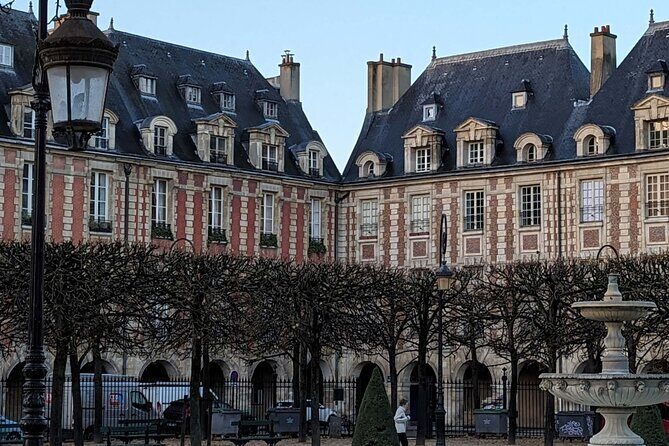
From the Bastille you head into the heart of the Marais, and one of the first “wow” moments is passing through Place des Vosges. The narration ties the square to political upheaval, and you start to understand that the Revolution did not only happen in palaces or pamphlets. It played out in public spaces where people could witness shifts from monarchy toward republic.
Next up, you work around the Cour et Jardin de l’Hôtel de Sully. Even if you are not a trained architecture person, you can feel what this stop is trying to teach you: these buildings were made to signal status, and they also show you what changed when that status was threatened. Then you continue to Hôtel de Sully, where the narration focuses on how the Revolution affected aristocratic property.
What to watch for here: do not rush. The tour’s pace is designed so you can look at courtyards and façades long enough to connect them to the story being told. If you speed through, you will still get the facts, but you will miss the “why this place matters” part.
Saint-Paul of Saint-Louis and Musée Carnavalet: the church-and-house view of upheaval
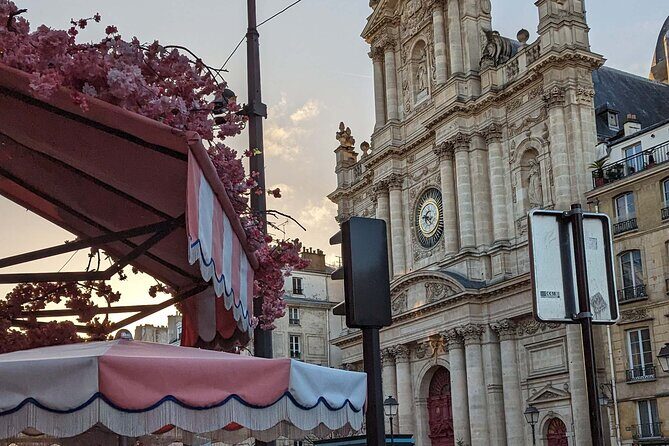
The tour moves through Place Sainte-Catherine, and the big historical anchor is the Parish Church of Saint-Paul of Saint-Louis. This part of the route emphasizes how moral debates and political pressure collided. Churches mattered because they shaped community life—and because revolutionary conflict often included arguments about authority and right behavior.
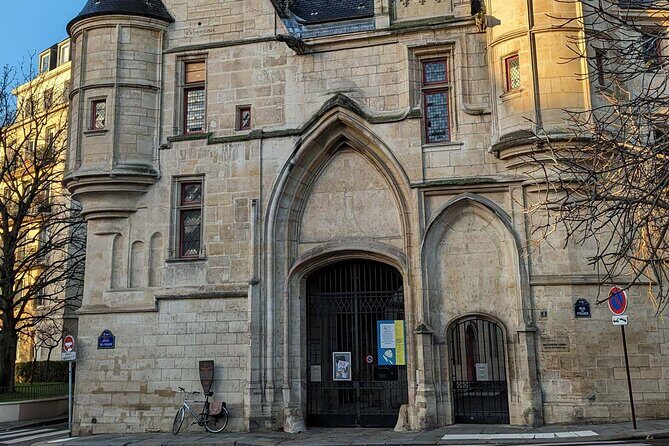
Close by, you pass Musée Carnavalet, and the narration explains confiscation of buildings from aristocratic owners. Even if you do not go inside the museum, this is useful. It explains why you see so many “old Paris” buildings and why some of them ended up with new uses after the political shake-up.
Why this section feels balanced: it mixes big political change with human-scale locations. You are not stuck on kings and generals only. You are seeing how society’s everyday structure got re-labeled.
You can also read our reviews of more tours and experiences in Paris


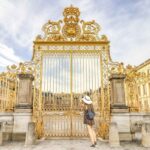



Vestige de la Petite Force: bread pressure and worker fear

One of the most memorable stops is Vestige de la Petite Force. The narration connects it to the revolutionary era and to the daily problem that can turn politics explosive: the price of bread. When costs rise and people feel trapped, political anger stops being theoretical.
I like this stop because it brings the Revolution down to a cause-and-effect level. You can think of it like this: politics may start in the language of rights and power, but it often spreads through basic needs—food, work, and survival. The audio keeps the focus on why those stresses mattered in Paris.
You do not need special knowledge here. If you pay attention to the setting and let the bread-price theme land, you will come away with a clearer sense of why public unrest was so intense.
Hôtel de Ville and Tour Saint-Jacques: law, walls, and the new political stage
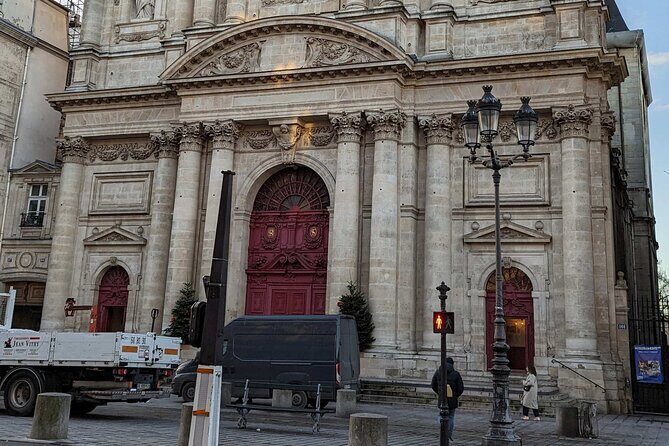
Next comes Hôtel de Ville, Paris City Hall. The tour ties it to the final days of the royal family and the broader political transformation that followed. This is a key shift in your experience: earlier, you were learning about ignition points and property change. Here, you are moving toward institutions—where decisions get made and laws get written.
You then pass the courtyard of Hôtel de Ville, a place the narration frames as connected to the birth of the National Assembly and citizens advocating for laws. That detail matters because it shows the Revolution as more than just destruction. It is also arguments about representation and rules.
After that, the tour takes you toward the Square of Saint-Jacques Tower, where you get a glimpse linked to the over 800-year-old city wall. That wall is a reminder that Paris has always been a place of boundaries and protection. Then you see Tour Saint-Jacques, and the audio uses it to help you reflect on how long the city’s story stretches—even when the Revolution tried to break time and reset everything.
This section works best if you slow down for looking. Great audio tours still need your eyes, and these stops are visual. Watch how the narration connects past infrastructure (walls and towers) to the idea of control, order, and vulnerability.
Place du Châtelet and Pont au Change: symbols across the Seine
As you move through Place du Châtelet, the tour explains symbolism behind an ornate column in the square. That is a useful technique: it teaches you to read public art as political language. Revolutionary thinking did not only spread through speeches and documents; it also got built into symbols people saw every day.
Then you cross Pont au Change, a bridge that the audio uses as a moment to absorb the historical atmosphere. Bridges are not just crossings—they are pressure points. People meet there, rumors travel there, and attention focuses there. Even without any special background, the tour’s framing helps you see why changes in Paris would feel dramatic fast.
Palais de Justice: where upheaval, law, and injustice collide
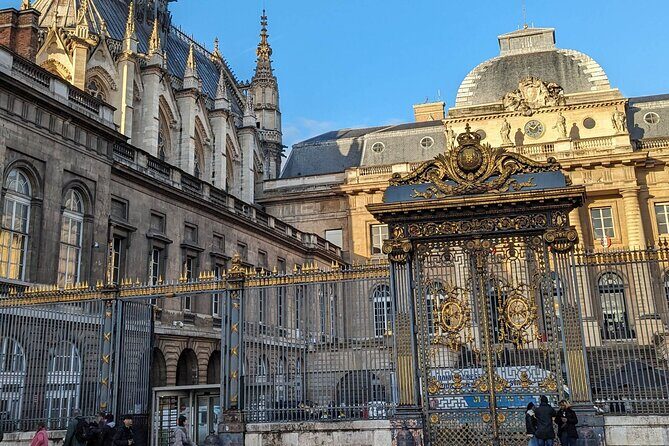
The walk ends at the Palais de Justice de Paris (Paris Law Courthouse). This finish matters because it points you toward the Revolution’s legal aftermath—the way politics becomes procedures, trials, and enforcement.
The narration also ties in climatic events and social injustice, which helps you understand the Revolution as a system under strain rather than a single stunt or speech. People were dealing with unstable conditions and unfair realities, and the tour uses the courthouse setting to pull those threads together.
If you can, finish with a short pause rather than immediately trying to rush out. The end location is dramatic, and it makes a strong last note: the Revolution changed more than who ruled. It changed how society argued about justice itself.
Price and value: a $19.99 audio route that replaces a bus tour
At $19.99 per person, this is priced like a low-friction add-on that can turn into your main sightseeing plan if you want a focused history walk. You are paying for:
- Lifetime access to the English audio tour (and a virtual tour)
- Offline audio, maps, and geodata
- VoiceMap app delivery with automatic GPS playback
What you are not paying for is museum entries, transport, or food. And that is fine, because the tour’s value is in the street-level context. If you already planned to explore the Marais anyway, this gives you a guided way to understand what those streets meant during revolutionary upheaval.
Also: the reviews highlight that the app works well and the narration lands clearly. For me, that is crucial. A self-guided tour is only as good as the audio timing and the clarity of what it tells you while you are walking.
Who should book this, and who should skip it
You will probably love this if you:
- Want a self-paced history experience with offline support
- Like walking the Marais and learning while you look at real locations
- Bring teens who enjoy stories with a clear plot and real-world places
- Prefer narration over group tours where you are always waiting
You might want to skip it if:
- You hate using your phone for navigation and audio
- You are expecting museum-style entry time with tickets included (it is not that kind of tour)
- You want long stops inside major buildings instead of street-level context
Should you book this French Revolution audio tour?
I think it is a good booking choice if you want a smart, story-driven way to see the Marais and central Paris without committing to a full-day museum plan. The offline audio and maps, the turn-by-turn feel, and the clear focus on major revolutionary sites make it feel practical rather than just interesting.
If you have been wanting to connect iconic names like Bastille to the neighborhoods where the Revolution played out, this tour gives you that link in a way you can actually experience on foot.
FAQ
How long is the French Revolution self-guided audio tour of Paris?
It’s approximately 1 hour 30 minutes to 1 hour 45 minutes.
Where does the tour start and end?
It starts at Place de la Bastille and ends at the Palais de Justice de Paris (08 Bd du Palais, 75001 Paris).
Is the tour in English?
Yes. You get lifetime access in English.
Do I need an internet connection while walking?
No. It includes offline access to audio, maps, and geodata.
Are museum tickets included?
No. Tickets or entrance fees to museums or other attractions are not included.
Do I need to bring a smartphone and headphones?
Yes. A smartphone and headphones are not included, so you’ll need to bring your own.
Is food included?
No. Food and drink are not included.
Is this tour shared with other groups?
It’s described as private, and only your group will participate.