REVIEW · PARIS
Versailles Private Day Excursion with Palace, Gardens & Trianon
Book on Viator →Operated by Normandy Melody · Bookable on Viator
Versailles turns into a full story in a day. This private excursion is built around skip-the-line palace time plus guided stops that connect Louis XIV’s power to what you see in marble and gardens. You get hotel pickup and drop-off, which matters because Versailles days can feel like a commute marathon.
What I like most is the way you move through Versailles with a licensed, commentary-style guide, so the rooms aren’t just decoration. You’ll also get a long, structured visit to the gardens and Trianon domain, not a quick photo loop. One drawback to plan for: it’s a lot of walking, and the pace may be tough if your group needs lots of frequent breaks.
In This Review
- Key highlights worth caring about
- Private tour flow: how the day stays organized
- The Palace of Versailles: skip the line, then go room by room
- Royal Chapel and Royal Opera: small stops with real context
- Royal Chapel (about 10 minutes)
- Royal Opera (about 10 minutes)
- Jardins du Château de Versailles: Le Nôtre’s geometry and the big views
- Music and fountain shows (season-dependent)
- Trianon and Hameau: Versailles goes intimate
- Petit Trianon: Marie Antoinette’s daily-life story
- Grand Trianon: pink marble, controlled luxury
- Queen’s Hamlet (Le Hameau): pretend countryside, real power games
- Time, walking, and season reality checks
- Price and value: what $777.76 really buys
- Who this Versailles day works best for
- Should you book this private Versailles excursion?
- FAQ
- What time does the Versailles tour start, and when is pickup?
- Is skip-the-line access included?
- What parts of Versailles are included besides the palace?
- Is lunch included?
- What language is the tour offered in?
- Can I get a refund if I cancel?
Key highlights worth caring about
- Skip-the-line access to the Palace of Versailles so you spend more time inside the real showrooms
- A private, accredited guide who narrates what you’re seeing and why it mattered
- Gardens time built in, with access even during specific events
- Royal Chapel and Royal Opera included as short, focused interiors (not skipped)
- Trianon and Marie Antoinette’s domain in the same day, so you see Versailles beyond the main palace
- Musical gardens and fountain shows may be part of your timing depending on season
Private tour flow: how the day stays organized
This is designed for the simplest possible logistics for a 9-hour day. Your start is 8:00 am, and pickup begins 15 to 30 minutes before that (you get the exact time after reconfirmation). From there, you’re in an air-conditioned minibus with a private guide and your group.
The real value here is not just the ride. Versailles is a place where timing affects everything: entry lines, how full the gardens feel, and whether you can actually see what’s open that day. A private format helps you keep the day from turning into random wandering. You’re still walking, still dealing with crowds, and still respecting museum hours, but the route is planned around the big sections: palace, key interiors, gardens, then the Trianon domain.
You can also read our reviews of more private tours in Paris



The Palace of Versailles: skip the line, then go room by room
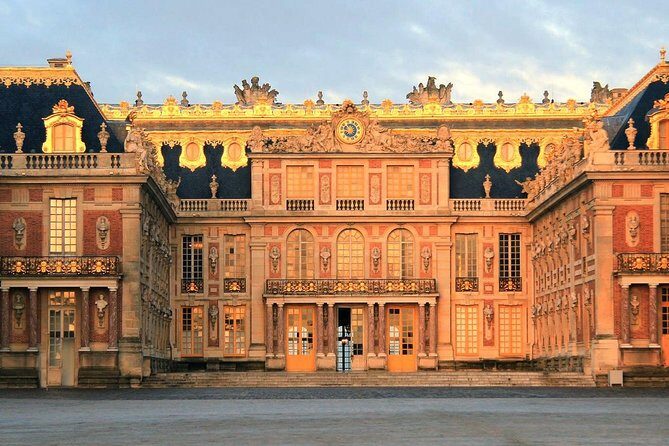
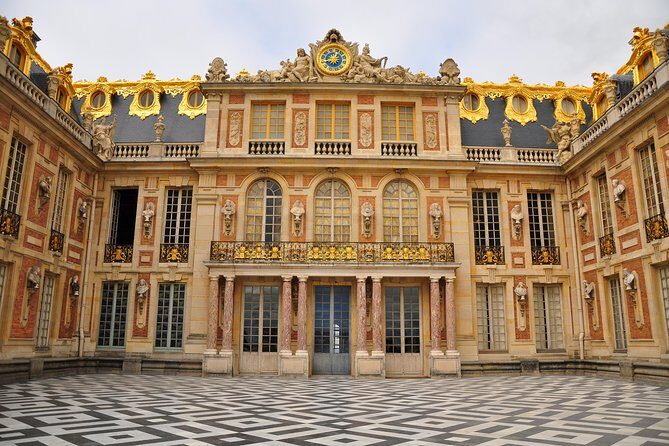
The big win is the palace portion: about 2 hours with admission ticket included and skip-the-line access. Instead of waiting out in the world’s most glamorous queue, you’re guided into the Royal Apartments and given a sense of what you’re looking at.
Here’s what your palace visit is built around:
- the King and Queen’s apartments, plus living rooms tied to the court’s daily life
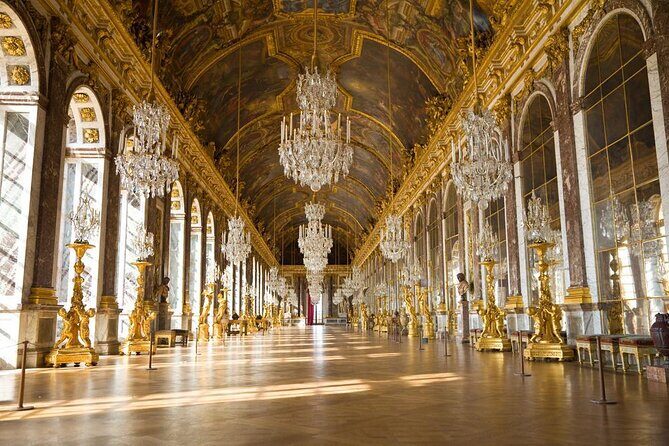
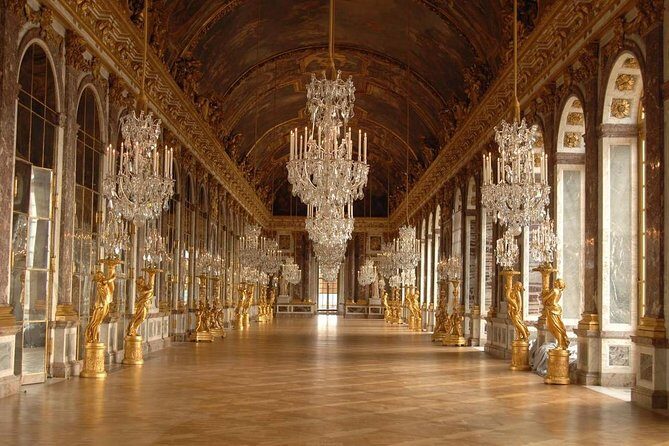
- the Mirror Hall and its famous visual trick (the hall is designed with 357 mirrors)
- marble and bronze decoration, plus gilded bronze sculptural details
- a guided lead-in to the gardens at the end, so you don’t feel like you’re dropped after the palace
The way this works for you: you don’t just see a grand room. You understand what Louis XIV was doing by building a palace that functioned like a political stage. The guide’s commentary is the difference between Versailles as a pretty landmark and Versailles as the machine of power it was.
A practical note: you’ll be on your feet. Even when the pace is well managed, palace interiors plus moving between sections adds up fast. If your group has any mobility limits, this is where you’ll want to talk with your operator in advance so the plan can reflect your needs.
Royal Chapel and Royal Opera: small stops with real context
After the palace, the itinerary includes two short but meaningful interiors.
Royal Chapel (about 10 minutes)
The Royal Chapel was completed in 1710, during the end of Louis XIV’s reign. It’s described as the fifth—and final—chapel built in the palace since Louis XIII. The design was presented in 1699 by Jules Hardouin-Mansart, and the project was finished after his death by Robert de Cotte.
Even if you only spend about 10 minutes here, it helps you connect palace life to religious ritual and court ceremony. The point isn’t length; it’s meaning. This is the kind of stop where a guide can point out what changed over time and how architecture served the monarchy’s image.
Royal Opera (about 10 minutes)
The Royal Opera is credited to architect Ange-Jacques Gabriel and was inaugurated in 1770 under Louis XV. The tour framing here is useful: it wasn’t only for performances. It served political and ceremonial life, including celebrations, shows, and parliamentary debates as the building passed between monarchic and republican uses.
For you, this short stop is a reminder that Versailles wasn’t frozen in Louis XIV’s era. It kept adapting—just in more elaborate ways than most people can imagine.





Jardins du Château de Versailles: Le Nôtre’s geometry and the big views
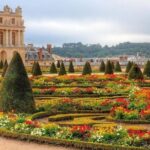
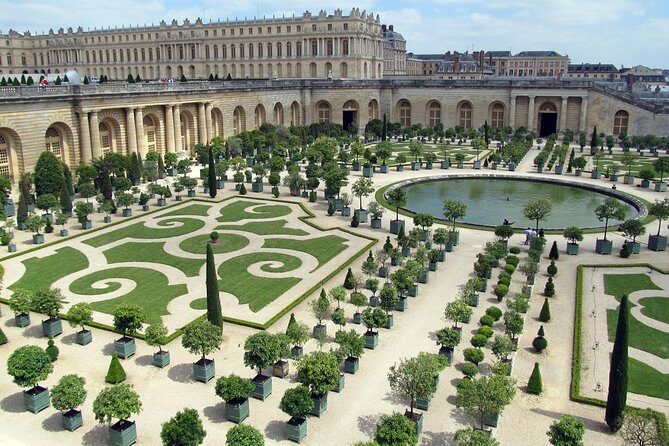
The gardens are where many visitors lose time. This tour gives you about 2 hours here, and the guide focuses on what’s most worth seeing. That’s important, because Versailles gardens are laid out with an axis-and-perspective logic. If you don’t understand how it’s organized, you can walk a lot and still feel like you saw the “same” lawn from different angles.
What you’ll learn as you go:
- Louis XIV charged André Le Nôtre in 1661 to create the gardens
- it took about 40 years of leveling, landscaping, water features, ponds, and the canal system
- the gardens are designed like a building: terrace viewpoints, strong geometry, and long sight lines
- there are 221 sculptures, described as making Versailles the world’s largest open-air museum of sculptures
The gardens are also tied to entertainment. Groves hosted the king’s walk and court pleasures, and the tour can line up with seasonal offerings.
Music and fountain shows (season-dependent)
The tour description notes:
- musical gardens on Tuesday from June to October
- musical fountains on Saturdays and Sundays from April to October
If your travel dates line up, you’ll likely get a more vivid Versailles “in action” moment rather than a static stroll. If they don’t, the best move is still to keep your expectations flexible and treat the gardens as a visual system—axes, terraces, and sculpture—rather than assuming every water effect runs every day.
Trianon and Hameau: Versailles goes intimate
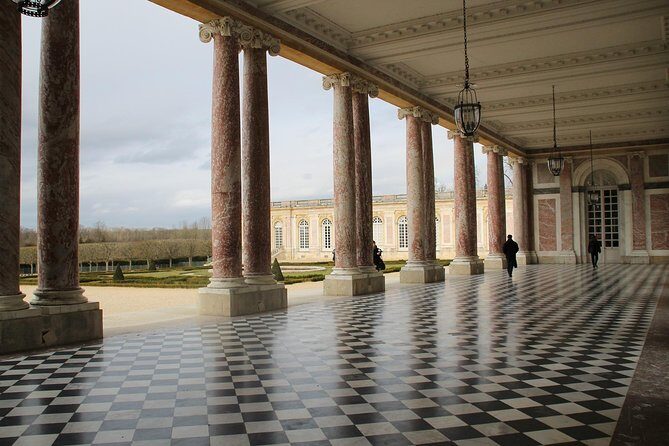
After the palace and gardens, the tour shifts tone. The Trianon domain is where Versailles stops feeling like a giant public stage and starts feeling like a private world.
You get about 2 hours for:
- Petit Trianon
- Grand Trianon
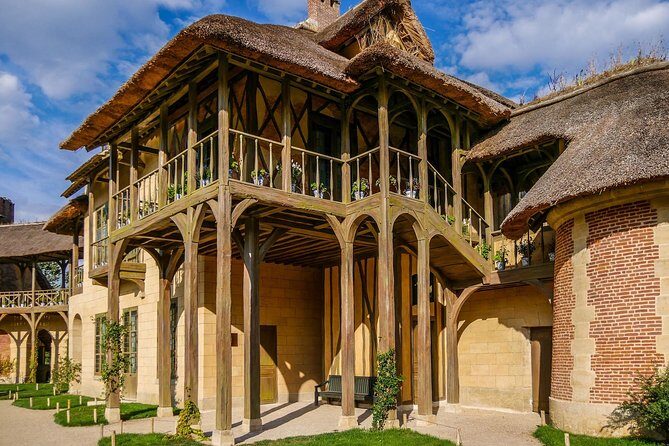
- Queen’s Hamlet (Le Hameau)
Petit Trianon: Marie Antoinette’s daily-life story
Petit Trianon starts with Louis XV’s plan in 1758, when he orders a small castle/pavilion linked to the private life of his favorite, Madame de Pompadour. The architecture is described as neo-classical, and the narrative moves forward when Louis XVI gives it to his young wife, Marie Antoinette.
From there, the garden changes into an Anglo-Chinese style. The tour framing emphasizes a human side to Marie Antoinette, and you’ll visit garden highlights connected to her tastes, including the Temple of Love and Belvedere.
What this gives you: the best contrast to the palace. If the palace is politics, Petit Trianon is emotion, leisure, and personal influence.
Grand Trianon: pink marble, controlled luxury
The Grand Trianon is tied to Louis XIV’s 1687 order for a small palace of pink marble and porphyritic with refined gardens. It’s often called the Marble Trianon in the description. You’ll see sculptural decorations and Empire furniture inside.
The key idea for your visit: it’s luxurious but calmer than the palace. The central loggia creates transparency between courtyard and gardens, so the architecture feels more like a frame for the outdoors.
Queen’s Hamlet (Le Hameau): pretend countryside, real power games
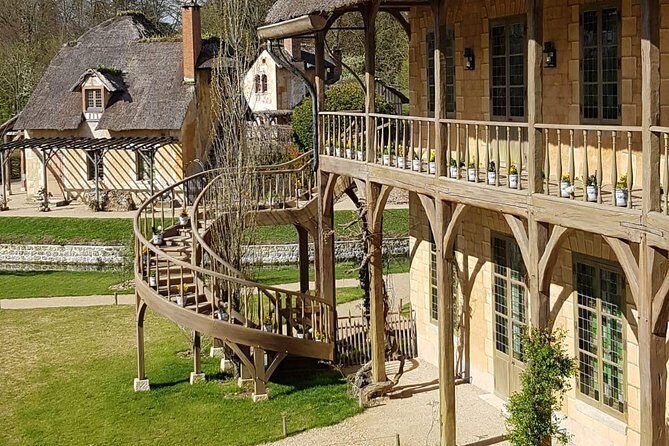
This is the quirky, very memorable part. Queen’s Hamlet was built between 1783 and 1786 by Richard Mique. The design matches a late-18th-century taste for rural life. The houses include spaces for entertainment, like a billiard room, and functional areas like dairies and a farm.
This stop matters because it shows a different Versailles trick: the monarchy could shape culture by staging it. Even the countryside here is curated by royal planning.
Time, walking, and season reality checks
Let’s talk about the hard part. Versailles is not a “stand and admire” destination. You’re moving from palace to chapel/opera, then out into the gardens, then into the Trianon domain. The walking is real.
One review detail that’s worth taking seriously: someone counted about 6 miles across the day. That’s why I strongly recommend comfortable shoes. Even with a guide who adjusts pacing, you’re still covering distance, and there are slopes—especially in garden areas.
Season can also change what you experience. The tour includes fountain-related programming depending on dates, but if you’re traveling outside those windows, you might not see the same water effects. Also, the availability of certain palace areas can depend on what’s open that day.
If your group includes:
- older travelers
- anyone using a stroller
- someone with mobility concerns
…plan for extra time and breaks, and consider whether you want a shorter garden stretch even if it means skipping a few garden priorities.
Price and value: what $777.76 really buys
This tour runs $777.76 per person and lasts about 9 hours. That sounds steep until you map out what’s included.
Here’s what you’re paying for, in plain terms:
- private, exclusive services (your group only)
- an accredited professional guide
- pickup and drop-off from your Paris accommodation
- air-conditioned transport by minibus
- skip-the-line access for the palace
- admission tickets included for the palace and major interior stops
- gardens access all the time, including during specific events
- a guided, timed route that prevents you from spending hours guessing
The financial value angle depends on how many people you bring and how much you hate transit stress. For two or more people, a private guide plus dedicated transport can feel more reasonable than going it alone with multiple ticket queues and no plan. For solo travelers, you’re paying extra for privacy and for that guide-led flow.
My rule: if you want the palace plus Trianon domain in one day without logistical headaches, this price can make sense. If you’re the type who wants slow self-guided wandering, you might find better value elsewhere.
Who this Versailles day works best for
This tour is a great fit if you want:
- a guided narrative that explains why Versailles looks the way it does
- a route that covers both the palace and the Trianon world
- hotel pickup and drop-off to reduce transit friction
- a private format where your guide can match your pace
It’s also ideal if you care about the details. You’ll get specifics like the 357 mirrors in the Mirror Hall, the chapel’s completion in 1710, and the opera’s 1770 inauguration under Louis XV.
If your priority is to see one area in depth and take lots of breaks, you may want to confirm whether you’re comfortable with a full day and significant walking across different terrains.
Should you book this private Versailles excursion?
Yes, if you want Versailles to feel like a real story and not just a photo stop. The skip-the-line palace access, the guided connection from the palace to the gardens, and the inclusion of Petit Trianon, Grand Trianon, and the Queen’s Hamlet makes it a stronger full-day package than a lot of “main palace only” tours.
I’d book with extra care if you or someone in your group has mobility limits. Ask ahead how the route will be handled, and be clear about needs early. Also, go in with smart expectations about what the gardens show on your date.
If you want Versailles at its best with a structured day and a guide who can turn rooms and axes into meaning, this is a solid pick.
FAQ
What time does the Versailles tour start, and when is pickup?
The tour start time is 8:00 am. Hotel pickup begins about 15 to 30 minutes before that time, and the exact pickup time is shared after reconfirmation.
Is skip-the-line access included?
Yes. The tour description includes skip the line access for the Palace visit.
What parts of Versailles are included besides the palace?
You’ll also visit the Royal Chapel, the Royal Opera, the Gardens, and the Trianon domain, including Petit Trianon, Grand Trianon, and the Queen’s Hamlet.
Is lunch included?
No. Lunch is not included.
What language is the tour offered in?
The tour is offered in English.
Can I get a refund if I cancel?
Yes. You can cancel for a full refund if you cancel at least 24 hours before the experience’s start time.