REVIEW · PARIS
Walking tour of the Covered Passages of Paris -10 people max
Book on Viator →Operated by SLL Paris Tours · Bookable on Viator
Paris has secret roofs.
That’s what I love about this small-group Covered Passages of Paris walk: you trace the city through glass-and-metal corridors and arcade-like lanes that feel calmer than the streets. You get a smart intro at Palais-Royal, then a string of passageways that each have their own vibe, from the smallest to the oldest. The guiding style matters too, because the tour turns architectural details into a clear story you can actually remember.
I also like the human touch from guide Sebastien. On a hot day, he was prepared with bottled water and kept an eye on the group’s comfort, including finding cooler spots and adjusting on the fly (even adding a stop for Jellycat Patisserie when the mood struck). One consideration: the walking is short overall, but it is still a steady stroll with multiple street crossings, so if you’re nursing knee issues, you’ll want to move at a gentle pace.
This is built for real vacation schedules: about 1 hour 40 minutes, English-speaking guide, and a capped group of 10 people max. Each stop is designed to be quick, so you can fit it in without burning half a day.
In This Review
- Key highlights
- Why these covered passages are worth 1 hour 40
- Price and value: what $59.17 buys you
- Group size and comfort: capped at 10, paced for humans
- Start at Palais-Royal: the opening move that sets the theme
- Galerie Vivienne and the mosaic-floor moment
- Passage des 2 Pavillons: tiny, focused, memorable
- Place de la Bourse: the business angle
- Passage des Panoramas: oldest covered passage energy
- Passage Jouffroy: canopies, metal and glass, and more shopping
- Passage Verdeau: art galleries and a picturesque feel
- Final stretch to Rue Faubourg-Montmartre: end with good value food
- Sebastien’s guiding style: clear English, real practical help
- What to bring (and how to plan your day)
- Who should book this covered passages walk?
- Should you book the Covered Passages of Paris walking tour?
- FAQ
- How long is the Walking Tour of the Covered Passages of Paris?
- What is the group size limit?
- What language is the tour offered in?
- What does the price include?
- Are admission tickets included for the stops?
- Where does the tour start and end?
- Do I need a physical ticket?
- Are service animals allowed?
- Is the tour refundable if I cancel?
Key highlights
- Max 10 people keeps the pace friendly and the questions easy
- Sebastien guides in clear English and adapts to the group
- Free entry at each stop means you’re paying for the walk, not tickets
- A mix of iconic and tiny passages (including Passage des 2 Pavillons)
- Hot-day practical help like water and cooler, shaded moments
- End near a traditional French restaurant with good value food
Why these covered passages are worth 1 hour 40
Paris can feel like a blur: big monuments, big lines, big plans. This tour gives you something quieter and more intimate: pedestrian corridors that turn shopping and strolling into a short, sheltered journey. It’s not trying to be a museum stop after museum stop. Instead, it’s more like walking through different design eras of Paris commerce and daily life.
You also get a sense of how these passages connect. They’re small, but the route links them in a way that helps you build a map in your head. That matters on a first trip, when you’re still learning where everything actually sits.
And since it’s a walkable route that’s not too long, it works if you want to do something meaningful without turning your day into endurance training.
You can also read our reviews of more walking tours in Paris


Price and value: what $59.17 buys you
At $59.17 per person for about 1 hour 40 minutes, you’re paying for three things: a guide, small-group attention, and logistics that keep the stops smooth.
The value gets better because the tour includes a guide and bottled water, and the stops list shows admission ticket fees as free at each location. So you’re not stacking extra costs on top of the price.
Is it the cheapest thing in Paris? Probably not. But it’s priced like an experience that saves you time: you get context at each stop, not just a photo walk. For people who enjoy history mixed with street-level details, that usually feels like a fair trade.
Group size and comfort: capped at 10, paced for humans
This is a 10-person max tour, and that changes the feel immediately. In a big group, you spend time waiting and repeating instructions. In a small group, you can actually hear the guide and ask questions without shouting.
I especially like how the tour is built to handle real conditions. One review highlights that the guide was sensitive to group needs and adjusted where to pause, including finding shaded spots on a hot day. That’s not just nice service. It means the tour won’t be stuck on an inflexible script.
Expect it to be mostly easy walking, but you will still be moving through passages, then back out onto streets, then into the next corridor. It’s short segments all day, which keeps energy from draining too fast.
Start at Palais-Royal: the opening move that sets the theme
The tour begins at Palais Royal – Musée du Louvre (75001 Paris). Starting here is smart because it frames what you’re about to see. You don’t jump straight into random corridors. You first get an intro to the covered galleries and a dose of the key Paris background that makes the whole route click.
This opening stop is about 20 minutes, and it’s the part where you learn the vocabulary of what these places are. You also learn some important history of Paris, but in a way that stays connected to what you’re looking at.
A practical tip: if you’re arriving early, give yourself a few minutes to find the meeting spot and settle your group. Starting calmly makes the first explanation land better.
Galerie Vivienne and the mosaic-floor moment
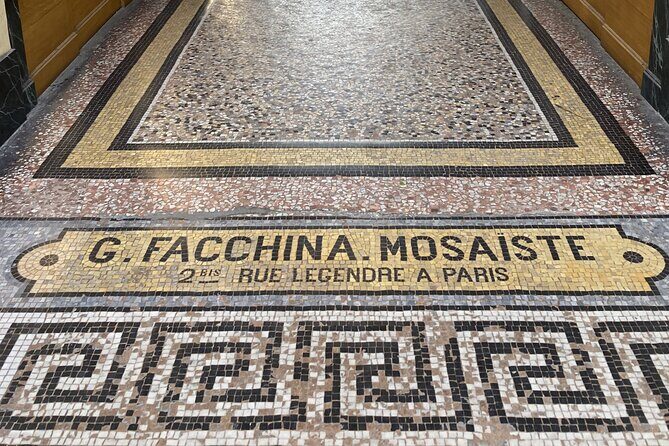
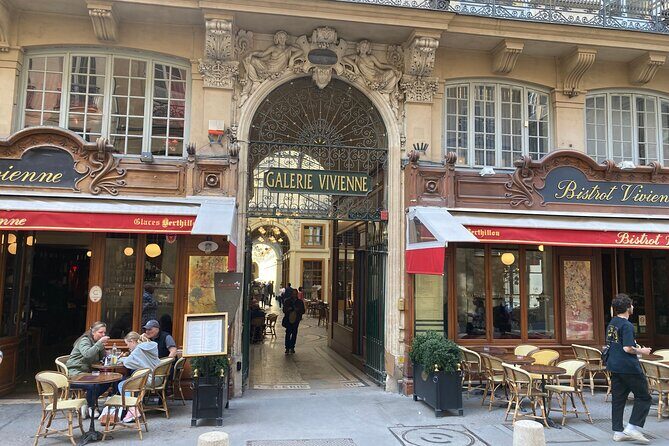
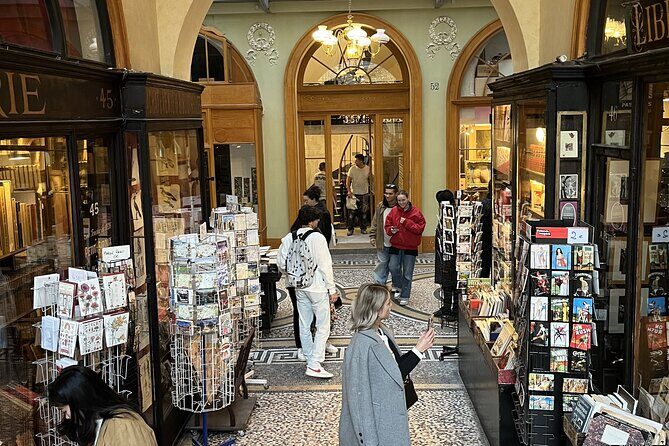
After the route has you moving through smaller passages, you reach Galerie Vivienne for a 15-minute stop. This is one of the places where the visual details do the work. The mosaic floor is specifically called out, and it’s the kind of feature that makes people slow down naturally.
What I like here is the balance. This stop isn’t only about seeing something pretty. The guide helps you connect the space to why covered passages became such practical shopping environments.
If you want photos, this is a strong time to grab them because the floor detail gives you something distinct to frame beyond the usual storefront shot. Keep your phone camera handy, but also take a moment to look up. Covered spaces reward eye-level attention.






Passage des 2 Pavillons: tiny, focused, memorable
One of the most fun parts of this walk is that it includes the Passage des 2 Pavillons, billed as the smallest covered passage in Paris. That’s a quick 3-minute stop, but small doesn’t mean forgettable.
Short stops like this are good for your brain. You get a burst of discovery, then you move on immediately to the next space. It keeps the pacing light and helps the route feel like a series of discoveries instead of one long tour.
Also, when a passage is tiny, the guide’s explanations matter more. You can actually understand the layout fast, because you’re not standing in a huge area trying to figure it out.
Place de la Bourse: the business angle
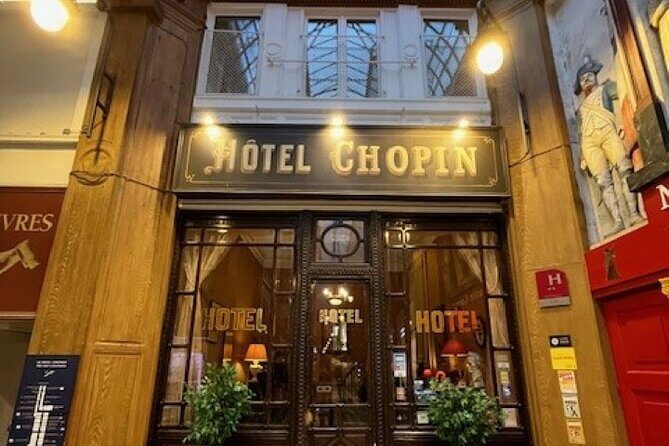
Then you swing to Place de la Bourse, a 5-minute stop. This is where the tour adds a business-history note: it’s home to Paris’ old stock exchange.
That small detour is worth it. It reminds you that these passages weren’t only about browsing. They grew up around real commerce and real city life. It helps you stop thinking of passages as just pretty walkways and start seeing them as part of how Paris moved money, people, and goods.
Even if you’re not a history nerd, this stop gives context without dragging. You get the idea, then you head back into the covered passages again.
Passage des Panoramas: oldest covered passage energy
Next comes Passage des Panoramas for 15 minutes. The key detail here is that it’s described as the oldest of the covered passages of Paris. That instantly gives this stop a sense of importance even before you learn anything else.
The guide’s job is to help you notice what changes and what repeats across different passages. You’ll see how the city reused and refined the covered concept over time, and you’ll probably start spotting patterns in the structure and shopfront rhythm as you go.
One note: since it’s framed as the oldest, it can feel a little more historic and less playful than the later stops. If you love design details, you’ll likely enjoy lingering a bit. If you prefer modern, shop-heavy spaces, you might just use this as a “get the story” stop and keep moving.
Passage Jouffroy: canopies, metal and glass, and more shopping
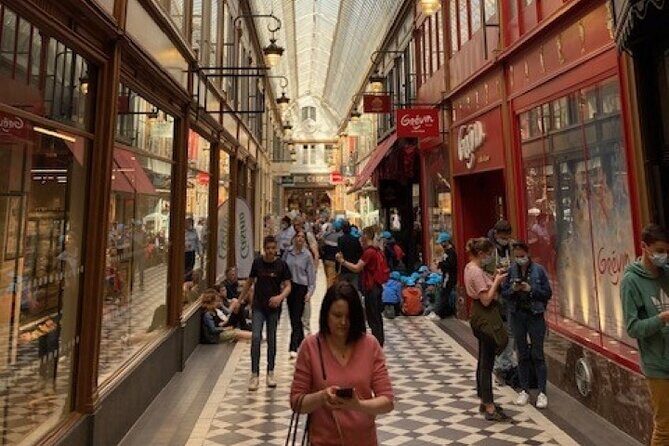
Then you head into Passage Jouffroy for 15 minutes. This is described as a covered walkway with fun shops under a canopy of metal and glass.
I like this stop because it’s the tour shifting from story into vibe. It’s easier to feel the purpose here: covered strolling plus storefront energy. The guide gives you the historical or developmental context, but the space itself does a lot of the entertaining.
If your travel style includes browsing and snacks, this is a good place to slow down slightly. You might not want to shop at every stop, but looking around helps the guide’s explanations stick.
Passage Verdeau: art galleries and a picturesque feel
The tour ends the passage-run with Passage Verdeau for about 10 minutes, where there are many art galleries. The tour description calls it picturesque, and that matches the kind of place where a quick look turns into a “wait, stop—there’s more here” moment.
This is a solid stop for travelers who like creative spaces. You’ll likely see more art-focused storefronts than purely souvenir-style shops, and that gives the route a slightly different tone before you wrap up.
It’s also a practical mental breather. After several stops in succession, a shorter art-oriented segment helps you finish the walk feeling satisfied instead of rushed.
Final stretch to Rue Faubourg-Montmartre: end with good value food
The last leg moves toward rue Faubourg-Montmartre. The tour ends in front of a traditional French restaurant described as having reasonable prices and good food.
I like ending this way. It stops the tour from feeling like it just drops you in a random place. Instead, you get a clear next step: food that matches the “value and real Paris” theme of the experience.
Plus, at the end, you’re already in the mood for a sit-down meal. You’ve spent the last part of your time walking under canopies and looking at small spaces. A restaurant stop is the natural reset.
Sebastien’s guiding style: clear English, real practical help
The standout recurring detail is the guide himself: Sebastien. People describe him as personable, attentive to group needs, and happy to answer questions about French culture, food, and daily life basics.
Two practical strengths show up in the experience details. First, his English is described as impeccable and easy to understand, which matters when you’re listening to architecture-and-history explanations while walking. Second, he’s flexible about what the group wants to do. One account even includes a detour to Jellycat Patisserie, which tells you he’s not forcing a rigid script.
There’s also a strong “help you enjoy Paris” angle. Sebastien is described as an incredible resource for restaurants, customs, and basic need-to-know French words and phrases. That kind of guidance can save you time later in the trip, especially when you want a meal that fits your schedule and budget.
What to bring (and how to plan your day)
The tour includes bottled water, but I still think you should plan for comfort. Wear shoes you’re happy to walk in for the day, even if the total duration is under two hours. Covered passages sound sheltered, but you still spend time transitioning in and out of outdoor light.
If you’re traveling in warmer months, consider going earlier in the day. Even with shade and water, Paris heat can still feel intense. The guide’s ability to find cooler spots helps, but smart timing keeps the whole experience comfortable.
For photo lovers: keep your expectations realistic. These are narrow, covered spaces. You’ll get great shots, but you’ll also get moments where you need to step aside for others to pass. A calm photo rhythm makes the tour smoother.
And if shopping is your thing, bring some flexibility. A guide who adapts to requests can turn one or two stops into extra time for browsing. Just don’t try to control everything. The best results come when you let the route guide your choices.
Who should book this covered passages walk?
This works best if you want a mix of history and street-level discovery without committing to a long day. If you like small-group pacing, clear guiding, and the kind of Paris that’s off the main monument circuit, you’ll probably enjoy it.
It’s also a good fit for families and mixed ages, since the stops are short and the route doesn’t sound like a marathon. If your group has different interests—architecture, browsing, food, language practice—this tour format gives you room to breathe and ask questions.
Should you book the Covered Passages of Paris walking tour?
Book it if you want:
- a small-group walk that stays manageable
- a guide who gives clear context while you explore
- multiple stops that feel different from each other, not repetitive
- a good end point near a restaurant for a low-stress meal
Skip it if you want an all-day deep-history program or you dislike walking segments that require staying near the group. This is designed as a focused stroll, not a long academic tour.
Overall, for the price, the included guide + bottled water, and the string of free-entry stops, it’s a strong way to see Paris in a format that feels practical and genuinely fun.
FAQ
How long is the Walking Tour of the Covered Passages of Paris?
It’s approximately 1 hour 40 minutes.
What is the group size limit?
The tour has a maximum of 10 travelers.
What language is the tour offered in?
The tour is offered in English.
What does the price include?
The price includes bottled water and a guide.
Are admission tickets included for the stops?
Admission tickets are listed as free at each stop.
Where does the tour start and end?
It starts at Palais Royal – Musée du Louvre, 75001 Paris and ends at 7 Rue du Faubourg Montmartre, 75009 Paris.
Do I need a physical ticket?
You receive a mobile ticket.
Are service animals allowed?
Yes, service animals are allowed.
Is the tour refundable if I cancel?
You can cancel for a full refund up to 24 hours in advance of the experience start time.