REVIEW · PARIS
1.5 Hour Private Tour in Paris in a Classic Citroën
Book on Viator →Operated by So French Tour · Bookable on Viator
A 2CV ride makes Paris feel personal. This private Citroën 2CV daytime tour gives you a friendly, funny little way to take in the city’s main icons, with a convertible roof that turns street corners into photo moments.
I like two things a lot. First, you get a day-focused route where the big landmarks are still operating in daylight, so the city’s energy matches the views. Second, the setup is built for people: I’ve seen guides like Pierre take photos at each stop, and even handle rain smartly by getting the roof down and using warm blankets.
One thing to consider: this is a fast circuit. You’ll see a lot from the outside and from the road, so if you want long museum time or in-depth monument visits, this won’t replace a full sightseeing day.
In This Review
- Key highlights worth planning for
- Why a daytime 2CV loop feels like the right kind of Paris
- Comfort and atmosphere in a classic Citroën
- Your fast route: from department store grandeur to golden-domed churches
- Galeries Lafayette and Palais Garnier: Paris’s grand show-off era
- Place Vendôme and the Tuileries: royalty lines up with street elegance
- Concorde to the Arc de Triomphe: the big squares and big monuments
- Fashion and the Eiffel Tower: iconic views, quick timing
- St-Germain-des-Prés: cafés, bookshops, and film-set streets
- Notre-Dame to Champs-Élysées: two different tones in one move
- Invalides and the grand exhibition era: architecture you can feel
- The President’s avenue and Madeleine’s temple look
- Shakespeare and Company to Odeon/Saint-Michel: literature as a navigation tool
- Saint-Germain café legends: Café de Flore and Deux Magots
- Rue de Furstemberg and Rue de Buci: charming squares and café-lined streets
- A cruise on wheels along the Seine: Pont Neuf, Pont des Arts, and more
- Is the price worth it for a 1.5-hour private 2CV tour?
- Should you book this Paris 2CV classic circuit?
- FAQ
- How many people can fit in the tour?
- How long is the 2CV tour?
- Do we go inside monuments and museums?
- Is pickup included?
- What languages are available for the commentary?
- Is the tour ticket mobile?
- What happens if the weather is bad?
Key highlights worth planning for
- Classic 2CV + roof-down sightseeing for a different feel than sitting in a normal van
- Fast photo stops at major landmarks rather than long lines or museum tickets
- A smart mix of icons and Left Bank corners, including St-Germain cafés and bookstores
- Expert commentary in French, English, or Spanish during the ride
- Rain-friendly attitude from the guides, including roof adjustments and warm blankets in bad weather
- A private group of up to 3, so you’re not squeezing in with strangers
Why a daytime 2CV loop feels like the right kind of Paris
Paris is at its best when you can actually see what you’re driving past. This tour is timed for daytime, so you get daylight views of the big monuments and the streets around them still feel alive. You’re not just collecting names from a map; you’re watching the rhythm of the city from a classic car that people notice and remember.
The 2CV itself is part of the charm. It’s low, quirky, and it changes your perspective instantly. Instead of a high bus window, you’re closer to buildings, balconies, and the little street details that make Paris look like Paris.
The private format also matters for value. At $289.73 per group (up to 3), you’re paying for flexibility and a dedicated driver/guide experience, not a seat on a crowded bus. For families, couples, or small groups who want the whole route without negotiation, that price can feel pretty reasonable.
You can also read our reviews of more private tours in Paris



Comfort and atmosphere in a classic Citroën
This is private transportation, and it comes with pickup, which is a big deal in Paris. You avoid the stress of assembling near multiple monuments and you can start with one clear rendezvous point.
The convertible roof is where you’ll feel the difference. When it’s open, the air and light make the photos look more natural, and it’s easier to shoot without reflections. If weather turns, the guides’ response is part of the strong feedback: Pierre, for example, was described as getting out to remove the top during rain showers and providing warm blankets. So yes, Paris can be unpredictable, but the experience is designed to keep moving instead of shutting down.
You won’t get a silent, stiff museum vibe. This car-and-commentary style tour works best when you’re okay with short stops, quick looks, and lots of “keep your camera ready” moments.
Your fast route: from department store grandeur to golden-domed churches
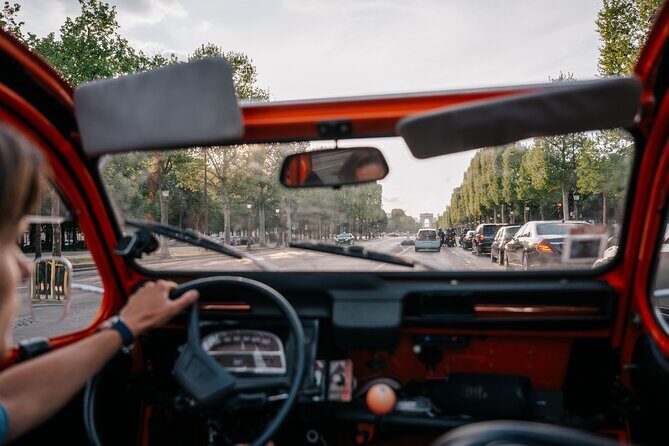
This circuit is built around recognition. You’ll pass through the places that define postcard Paris, but it’s not just icons. You’ll also glide through fashion streets, parliament-side grandeur, and the literary Left Bank, where cafés and bookshops anchor the atmosphere.
Galeries Lafayette and Palais Garnier: Paris’s grand show-off era
You start near Galeries Lafayette Paris Haussmann, in front of the famous Art Nouveau-style building. It’s one of the largest stores in Europe, and even if you don’t go inside, the facade is eye candy and an easy reference point for orientation.
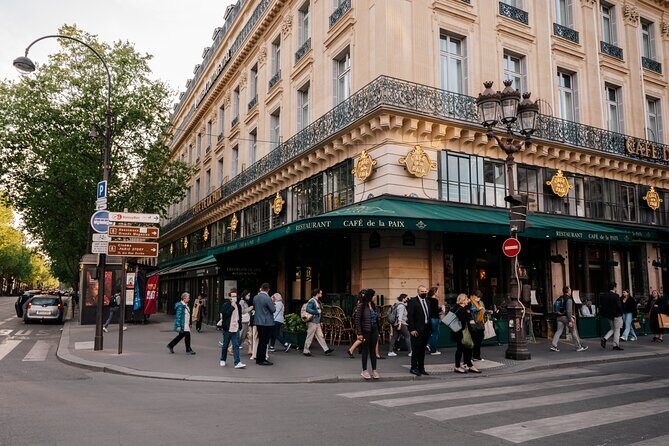
Then you pass Palais Garnier (the Paris Opera). The exterior alone is a lesson in how Paris put on a performance in the 19th century. Near it, you’ll also catch Café de la Paix, remembered in a Napoleon III style setting. The standout here is that this area gives you both architecture and cultural context without committing to tickets.
Practical note: with a short stop style, you’ll be scanning details fast. If you love facades and want to read every flourish, you might wish you had more time.
Place Vendôme and the Tuileries: royalty lines up with street elegance
Next comes Place Vendôme, a former royal square turned jewelry-focused center. You’ll see the column associated with Napoleon, built from melted cannonballs of his enemies, which adds a sharp historical edge to what looks like a luxury-shopping square.
From there, the route slides toward the Jardin des Tuileries, a garden rooted in the 1500s, associated with Marie de Medici and designed by Le Nôtre, who also shaped Versailles gardens. You’re getting a quick sense of the palace-to-parterre planning that still influences Paris today.
The Tuileries-to-Concorde area is one of the easiest stretches to understand Paris’s “great axis” idea. Even from the outside, it helps you connect why these places line up the way they do.




Concorde to the Arc de Triomphe: the big squares and big monuments
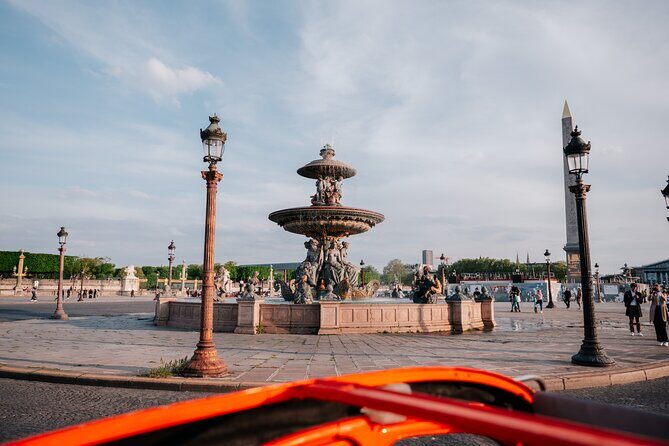
At Place de la Concorde, you’ll see the largest square in Paris and the Obelisk of Luxor, brought from Egypt and installed as a massive centerpiece. It’s the kind of monument you notice more than you plan to.
You’ll also pass Hôtel de la Marine and the Crillon area, where the piano-lessons legend tied to Marie-Antoinette adds a human storyline to the stone.
Then it’s on to the Arc de Triomphe, built under Napoleon I and completed later. The sheer scale is the point here: a 50-meter-high landmark meant to keep victory memories visible. Even passing by, you’ll spot the engraved names connected to Napoleon’s officers.
Drawback to keep in mind: because this is an exterior, short-stop tour, you won’t climb to viewpoints. If you want heights, plan a separate ticketed activity.
Fashion and the Eiffel Tower: iconic views, quick timing
Avenue Montaigne is next, with its luxury retail energy. It’s one of the fashion centers that gives Paris its global “style capital” reputation, and passing by is often enough to get the vibe even if you don’t shop.
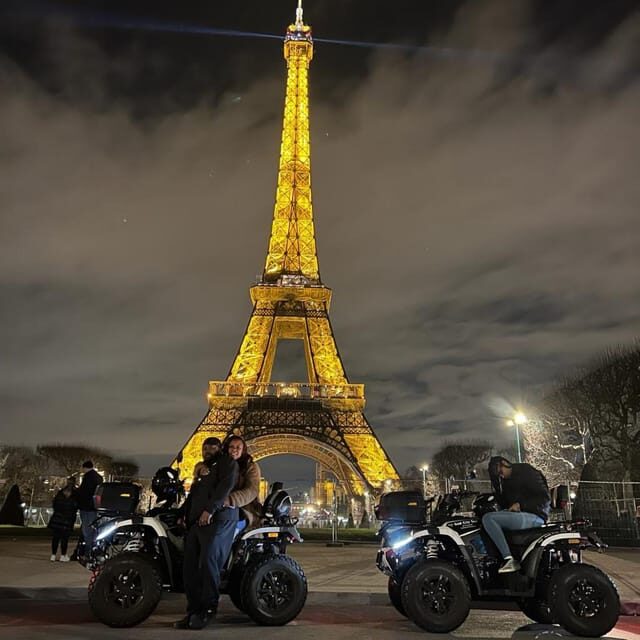
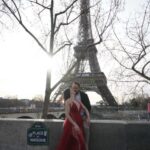
Then you reach the Eiffel Tower area. It’s nicknamed the 300-meter tower and was built in two years for the 1889 Universal Exhibition. This is one of those moments where you’ll likely slow down your pace because it’s the most recognizable skyline element in France.
You’ll get a short stop rather than a full Eiffel Tower experience, though. So treat it as a photo-and-spotting moment, not an observation-deck plan.
St-Germain-des-Prés: cafés, bookshops, and film-set streets
After the big monuments, the tour shifts into one of the most charming Paris modes: small streets and literary Left Bank energy. St-Germain-des-Prés is where Paris starts feeling like stories you’ve already heard.
Notre-Dame to Champs-Élysées: two different tones in one move
You pass Notre-Dame de Paris, begun in 1153 and completed over centuries. It’s also linked with Napoleon I’s imperial coronation choice, giving the building an emotional weight beyond pure architecture.
Then you cross into Champs-Élysées territory. The avenue is part of the historic axis of western Paris, stretching about 2 kilometers. Even if the sidewalks are busy, a drive-by gives you a strong sense of the city’s grand planning.
Invalides and the grand exhibition era: architecture you can feel
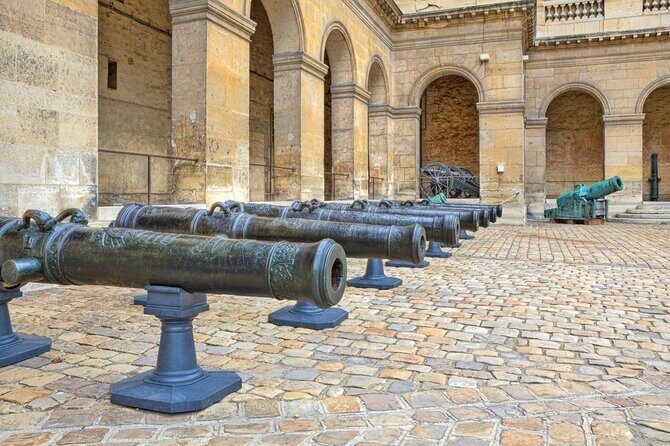
Next is Musée de l’Armée des Invalides, ordered by Louis XIV and built to house disabled soldiers. Today it’s home to Napoleon’s tomb, and the complex includes the Saint-Louis-des-Invalides Cathedral with its golden dome. Passing it gives you a sense of how much Paris invested in monumental care for its own past.
Then you’ll head toward Pont Alexandre III, a bridge intended to symbolize Franco-Russian friendship. It was inaugurated for the 1900 Universal Exhibition. If you like symbolic history, this one is packed with it.
From there, you see Grand Palais and Petit Palais. Grand Palais was built for the Universal Exhibition, dedicated to French art, and its glass-and-natural-light roof was kept rather than removed. Petit Palais follows the same exhibition origin but now serves as the Palace of Fine Arts of the City of Paris, with a garden and a Golden Gate detail.
Practical reality: this is a “notice it, don’t tour it” segment. If you’re hoping to step inside, you’ll need separate museum time.
The President’s avenue and Madeleine’s temple look
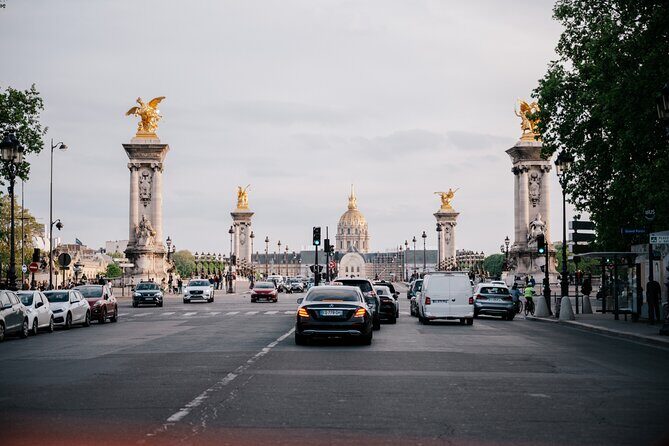
As you keep moving, the route passes Elysee Palace (the President’s resident), then La Madeleine. La Madeleine is designed like a Greek temple and has Napoleon I’s military glory theme in its origin story.
These exterior pass-bys are useful for two kinds of visitors: first-timers who want instant landmarks, and repeat visitors who want a smooth line connecting the dots without fighting traffic.
Shakespeare and Company to Odeon/Saint-Michel: literature as a navigation tool
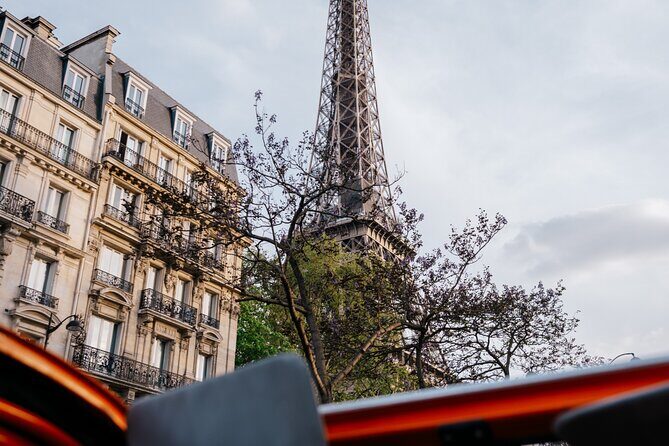
Now the tour leans hard into the Paris you picture from books. Shakespeare and Company is a world-famous bookstore connected with Ernest Hemingway and F. Scott Fitzgerald, and passing by it sets an immediate tone for the Latin Quarter.
You also go through Odeon / Saint-Michel, a lively area around a fountain with an Archangel Michael effigy. Even as a quick stop, this is one of the easier places to picture as a meeting point in real daily life, not just a postcard.
Then you reach Place Dauphine, a triangular square named after the dauphin Louis XIII. Today it’s known for pétanque players and people hanging out on benches and restaurant terraces. Again, it’s a quick snapshot, but it’s a good one.
Saint-Germain café legends: Café de Flore and Deux Magots
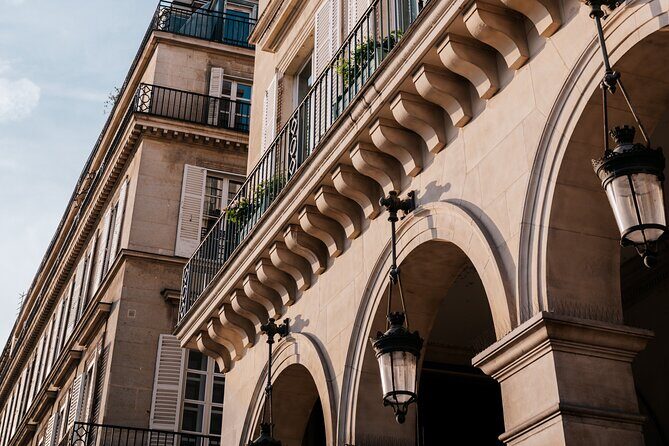
This is the segment that will likely make you smile the most, because the names are famous for a reason. You’ll pass Church of Saint-Germain-des-Prés, connected to a royal abbey tradition and relic veneration.
Then comes Café de Flore, repeatedly tied to Hemingway, Ella, and Scott Fitzgerald during the Belle Époque years. Right after that is Les Deux Magots, another long-running Left Bank café linked with writers and thinkers like Apollinaire, Sartre, and Simone de Beauvoir. The route also mentions inspiration connections to Madame Bovary here, which helps you connect literary myth to physical space.
These cafés are good for a quick look and a photo, but don’t confuse pass-by sightseeing with a full sit-down café break. If you want coffee time, budget it after the ride.
Rue de Furstemberg and Rue de Buci: charming squares and café-lined streets
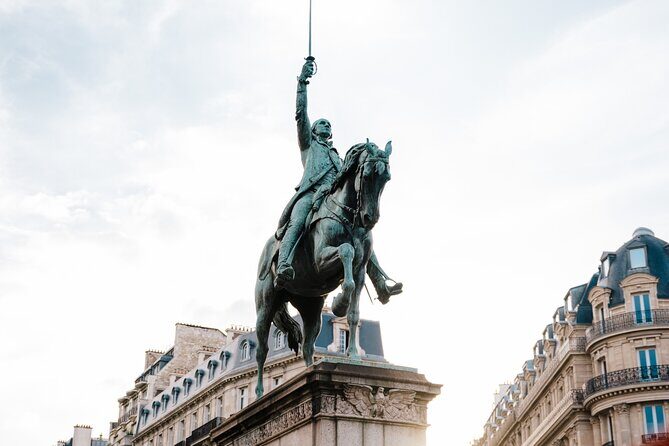
Place Furstemberg is one of the route’s romantic pauses. It’s decorated with oriental trees planted under Napoleon, and it’s tied to the Eugène Delacroix museum former residence. Nearby, Rue de Buci brings the more modern café-and-restaurant street feel that keeps St-Germain alive.
Then you hit Le Procope, described as the oldest restaurant in Paris, dating to 1686 and frequented by Franklin Roosevelt and Napoleon. That kind of detail matters because it turns a “pretty street” into a place with a timeline.
And yes, the tour also notes it goes down one of the smallest streets in Paris. That micro-scale shift is exactly why this kind of car tour works: you see both the famous monuments and the tight little spaces between them.
A cruise on wheels along the Seine: Pont Neuf, Pont des Arts, and more
Finally, the route follows the Seine with the energy of a cruise on wheels. You’ll pass under Pont Neuf and Pont des Arts. Pont des Arts is also nicknamed Pont des Amoureux, with a romantic padlock history tied to film and symbolism. Pont Neuf is one of the oldest bridges in Paris and a frequent film scene, which is why it feels like more than just infrastructure.
As you wrap up, you pass Palais de l’Institut de France. It houses the Mazarine library, described as the oldest library in France. The route also mentions that this is where the dictionary was invented, which is the kind of surprising detail that makes a quick stop feel memorable.
Is the price worth it for a 1.5-hour private 2CV tour?
$289.73 per group for up to 3 people is the key number, and it helps to frame it by what you’re buying.
You’re paying for:
- Private transportation with pickup and a dedicated guide voice
- A classic car experience with convertible roof sightseeing
- A high-density route that covers major landmarks and Left Bank culture in just 90 minutes
If you were paying separate admission tickets and spending hours lining up for transit and entry points, you’d likely spend more time and money. If you want a relaxed, guided “see the big stuff and the literary stuff” overview, the price starts to make sense.
If you’re the type who wants to stop every time you see something interesting, this might feel rushed. The tour is built to be efficient, not leisurely.
So the best match is usually:
- couples or small groups who want a curated highlight run
- people staying a short time in Paris
- visitors who want the classic-car story without planning 10 separate stops
Should you book this Paris 2CV classic circuit?
Book it if you want a private, classic-car way to get your bearings fast and hit Paris’s top icons plus St-Germain’s café-and-bookshop vibe. It’s especially appealing if you’re flexible about short exterior views and you want a guide’s commentary to connect monuments, legends, and neighborhood feel.
Skip it (or pair it with other plans) if your dream day is mostly museums, long entry lines, or lots of time at one landmark. This experience is about motion, photos, and context, not prolonged inside-the-building sightseeing.
If you do book, I’d suggest planning a second stop later in the day on whichever neighborhood you liked most—St-Germain for cafés, or another plan for Notre-Dame/Opéra areas if you want interior time.
FAQ
How many people can fit in the tour?
The tour price is per group for up to 3 people, and it is private, so only your group participates.
How long is the 2CV tour?
It’s about 1 hour 30 minutes.
Do we go inside monuments and museums?
No. The tour focuses on exterior passage and quick views, and monument entrances are not included.
Is pickup included?
Pickup is offered.
What languages are available for the commentary?
Comments are available in French, English, or Spanish.
Is the tour ticket mobile?
Yes, it includes a mobile ticket.
What happens if the weather is bad?
This experience requires good weather. If it’s canceled due to poor weather, you’ll be offered a different date or a full refund.