Paris macarons can look fancy, but the real magic is technique. This hands-on workshop is built around how the batter behaves, how shells develop, and how to finish with a smooth, balanced filling. You’ll work in a tight group (max ten), guided in English by a Chef Patissier, with names you might recognize from past classes like Chef Vivian, Chef Maria/Marie, and Chef Leo.
What I like most is the focus on the small moves that change results. You’ll learn the key step called macaronage and get step-by-step coaching on texture and appearance, not just a printed recipe. Second, I love that you leave with real output: you don’t do a demo and watch. You bake, you pipe, you assemble, and you take your macarons home.
One thing to consider: start time matters. The class is hands-on with a strict flow, so if you arrive late, you may miss part or all of the workshop. That’s especially relevant at the meeting point on Rue de Rome—give yourself a little extra buffer.
In This Review
- Key takeaways before you go
- Paris Macaron Class With a Chef Patissier: What You’re Really Learning
- Where the Workshop Starts on Rue de Rome (and Why Location Matters)
- The 2.5-Hour Flow: From Mixing Batter to Finishing Filled Macarons
- 1) Getting set up: tools, ingredients, and your station
- 2) Mastering macaronage: the consistency moment
- 3) Piping and portioning: making the shells look right
- 4) Baking and waiting: the tempo of patience
- 5) Filling and assembly: turning shells into the real thing
- Flavor Choices and Take-Home Macarons: What You’ll Actually Get
- How to think about the “sharing” parts
- The Real Value: Why This Class Can Be Worth $113
- Who This Workshop Fits Best (and Who Might Want to Rethink It)
- How to Prepare So You Don’t Miss a Minute
- Booking and Group Size: Small Is the Point
- Should You Book This Paris Macaron Baking Workshop?
- FAQ
- How long is the Paris macaron baking class?
- What is the group size?
- Is the class offered in English?
- What does the class include?
- Can I choose flavors?
- How many macarons will I take home?
- Where does the class meet?
- What if I’m traveling in an odd-number group?
- Is free cancellation available?
- FAQ
- Is the workshop strict about start time?
Key takeaways before you go
- Max 10 people means you get personal help while you’re actually mixing and piping
- Macaronage coaching focuses on texture and consistency, which is where most people fail
- Chef Patissier instruction in English makes the technique easier to follow without guessing
- Filled macarons to take home (often around 15 to 22 per person, depending on the batch)
- Flavor choice: you can pick flavors, and some classes use options like black currant and white chocolate
- Coffee/tea plus soda keeps you fueled during the work-and-wait rhythm
Paris Macaron Class With a Chef Patissier: What You’re Really Learning
Macarons have a reputation for being impossible. This class quietly attacks that problem. You’re not just making cookies. You’re learning a controlled process where small changes affect everything: shell thickness, the foot (the little “skirt”), and the chew on the inside.
The heart of the lesson is technique—especially macaronage, the folding and mixing step that sets the batter’s flow. Get this right and you’re suddenly in the right neighborhood for success. Get it wrong and you’ll see it in the shells. By the end, you’ll know what to look for, how the batter should behave, and how to adjust when things feel off.
You’ll also cover how to build a complete macaron: shells, then the filling. The workshop emphasizes a science-and-precision mindset—timing, mixing texture, and careful assembly—so you can recreate the results back home instead of just hoping for luck.
You can also read our reviews of more cooking classes in Paris
Where the Workshop Starts on Rue de Rome (and Why Location Matters)
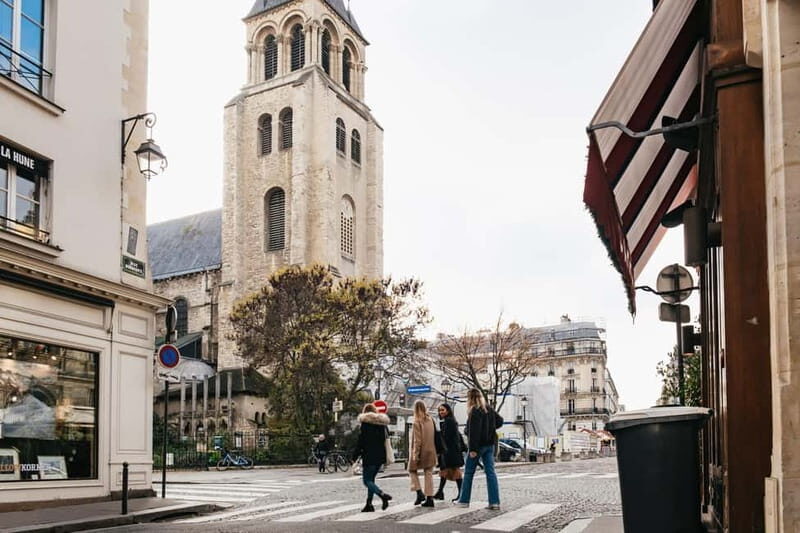
Your session begins at 85 Rue de Rome, 75017 Paris. This matters more than it sounds. A 2.5-hour workshop is short, and macarons don’t like to be rushed or delayed. You’ll want to arrive settled, not sprinting.
This is also in a neighborhood that’s practical for getting around. The class is near public transportation, so you can usually plan a straightforward route without long transfers. You’ll also be in the right mindset faster because you’ll be walking into a live baking space with everything prepared for you—ingredients, tools, and guidance already set up.
One more real-world tip: bring your best “arrive early” energy. One negative experience involved confusion about directions and arriving late, and because the class is live and time-sensitive, you can’t always catch up after the workshop has started.
The 2.5-Hour Flow: From Mixing Batter to Finishing Filled Macarons
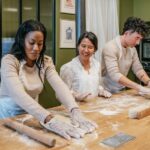
This workshop runs about 2 hours 30 minutes, and it follows the natural rhythm of macaron making: mix, pipe, bake, and assemble. You won’t be stuck watching the chef do everything. You’ll be at the station, moving through the steps as you learn what each step is supposed to accomplish.
Here’s how the experience typically feels, step by step:
1) Getting set up: tools, ingredients, and your station
The class provides all baking ingredients and utensils. That’s a big deal for value. In Paris, buying ingredients for macarons yourself can turn into a scavenger hunt. Here, you show up ready to work.
You’ll also get the benefit of doing this in a trained kitchen environment. The workspace is set up so you can focus on technique, not logistics.
2) Mastering macaronage: the consistency moment
This is the step most people learn by either guessing or copying a recipe. Here, you get coaching. You’ll be guided through the process that leads to the right texture—the batter should move with purpose, not be stiff, not be watery. The goal is to create shells that rise correctly and form a smooth surface.
When instruction is good, you feel it. In several classes, the standout praise was about how the chef taught the technique and the “small details” you won’t find in a cookbook. Expect that kind of guidance: how you fold, how you stop, what visual cues tell you you’re on track.
You can also read our reviews of more tours and experiences in Paris




3) Piping and portioning: making the shells look right
Once the batter is ready, you pipe. This is where macarons stop being “batter in a bowl” and start becoming actual cookies. You’ll learn pacing and how to keep your piping consistent. Even if you’re not a baker, the chef’s job is to help you get repeatable results.
A few people in prior experiences emphasized that the class feels approachable even for non-bakers and families. That’s a good sign: piping can be intimidating, but it’s learnable when the pace is calm and the teacher watches you.
4) Baking and waiting: the tempo of patience
Macaron baking has a waiting phase. You’ll bake the shells and then let them cool before filling. This matters because you want a clean assembly: filling shouldn’t soak shells the wrong way, and the texture should set.
The class keeps you comfortable during the wait with coffee and/or tea, plus soda/pop. It’s a small inclusion, but it helps the “work-with-breaks” tempo.
5) Filling and assembly: turning shells into the real thing
Finally comes the part that makes macarons worth the effort: the filling. You’ll make a luscious filling and assemble the sandwich.
One thing to know: many classes let you choose flavors. Options mentioned in past classes include combinations like black currant and white chocolate. That choice makes the class feel more personal, and it also means you’ll taste the difference between fillings, not just shells.
You’ll also receive a chef’s secret recipe for you to make at home. That transforms the experience into something useful after the workshop, not just a sweet souvenir.
Flavor Choices and Take-Home Macarons: What You’ll Actually Get
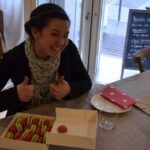
You’re not leaving empty-handed. You’ll take your macarons with you in a way meant for enjoying later. Multiple experiences highlight leaving with around two dozen-ish macarons per person—some classes specifically mention 22 each, while others mention different counts like about 15 pastries per person.
Because these batches can vary based on timing and how the process goes that day, I wouldn’t obsess over an exact number. I’d treat it as: you should expect a generous take-home box with enough macarons to share.
How to think about the “sharing” parts
Some classes include a social element where participants exchange certain macarons. That can be fun, but it might not be your style.
If you’d rather keep everything you made (or you have a comfort level around sharing food with strangers), it’s smart to say so early. The goal is to keep the workshop enjoyable for you. You can still participate fully—just be clear on what makes you comfortable.
The Real Value: Why This Class Can Be Worth $113
At $113.20 per person for about 2.5 hours, you’re paying for more than ingredients. You’re paying for:
- Direct coaching at the exact steps where mistakes happen
- A small group size (max ten), which creates time for questions
- A trained pastry chef’s guidance on technique and precision
- A take-home batch of macarons you didn’t have to source or bake from scratch
- A recipe you can use later, including the chef’s own guidance
If you’ve ever tried macarons at home, you know the “cheap mistake tax” is real. One bad batch can waste time, eggs, almonds, and your patience. Here, you’re in the middle of an efficient process with coaching that helps you avoid the most common failure points.
And for people who don’t bake much: this is one of those rare classes where you leave feeling capable. Multiple experiences emphasize that it’s not stressful and not reserved only for pastry nerds.
Who This Workshop Fits Best (and Who Might Want to Rethink It)
This class is a strong fit if you want an authentic Paris food experience that’s practical, not just photo-friendly.
You’ll enjoy it most if:
- You’re a fan of French pastries and want to understand how macarons work
- You’re traveling with someone and you want a shared activity that’s actually productive
- You’re a beginner who likes step-by-step teaching
- You want skills you can reuse at home with the included recipe
It may be less ideal if:
- You hate time pressure or you’re likely to arrive late
- You strongly prefer zero food exchange or you don’t want any swapping elements between participants
- You’re looking for a long, slow tasting tour. This is hands-on baking with a clear workflow
For families, it can work well. Past experiences include kids in the class, and the teaching style was praised as patient and friendly. Just remember that piping and careful timing take attention—so your kid will do best if they enjoy a focused task.
How to Prepare So You Don’t Miss a Minute
Here’s how I’d set yourself up for success, based on what can derail a workshop:
- Arrive early. Because the class is hands-on, the first minutes matter.
- Plan around transit time. Even if you’re near public transportation, route changes happen.
- Wear something you can work in. You’ll be standing at your station doing real kitchen tasks.
- Bring a curious attitude. Ask questions when the chef points out consistency cues or timing decisions.
Also, if you’re booking on a trip packed with other activities, keep some breathing room after the class. You’ll have macarons to manage, and you’ll probably want to eat one immediately.
Booking and Group Size: Small Is the Point
The experience is capped at 10 travelers. That’s why the teaching can be personal. In a tiny group, your chef can correct your technique before you lock in a mistake.
It’s also why this tends to score highly with people who want real feedback. You’re not just blending ingredients while hoping for the best—you’re learning while someone watches you do it.
The class is offered in English, and you’ll get confirmation at booking time. If you’re traveling as an odd number, you may be paired with another participant or with the chef for interaction. That can be a plus if you like meeting people, and it’s another reason the group stays small.
Should You Book This Paris Macaron Baking Workshop?
I’d book it if you want the best kind of souvenir: a skill. The standout theme here is technique—learning the steps that actually control the results, especially macaronage—and doing it with a chef who teaches clearly and keeps the class light.
It’s also a good value proposition if you’d otherwise spend money trying to figure out macarons on your own. For a single day, you get coaching, a chef’s recipe, and a take-home batch—plus a fun small-group atmosphere.
Skip it or be extra cautious if you know you’ll be late, stressed, or strongly uncomfortable with any optional swapping element. In those cases, message your preferences ahead of time and plan your arrival like you mean it.
If you’re even slightly curious about French baking beyond the usual pastry shop stop, this is one of the more rewarding ways to spend a morning or afternoon in Paris.
FAQ
How long is the Paris macaron baking class?
It runs for about 2 hours 30 minutes.
What is the group size?
The class has a maximum of 10 travelers.
Is the class offered in English?
Yes, it is offered in English.
What does the class include?
Coffee and/or tea, soda/pop, plus all baking ingredients and utensils are provided. You also receive a chef’s secret recipe to make macarons at home.
Can I choose flavors?
Yes, you can choose the flavors.
How many macarons will I take home?
You’ll leave with a substantial batch of macarons, with prior participants reporting roughly 15 to around 22 per person depending on the batch.
Where does the class meet?
It starts at 85 Rue de Rome, 75017 Paris, France, and ends back at the meeting point.
What if I’m traveling in an odd-number group?
For odd numbers or single participants, you may be paired with another participant or with the chef.
Is free cancellation available?
Yes. You can cancel up to 24 hours in advance for a full refund.
FAQ
Is the workshop strict about start time?
Yes. This is a live, hands-on workshop with a set start time, and late arrival can prevent entry once the class has begun.