REVIEW · PARIS
Area ,Opera, Jewellery,Fashion,Palais Royal walking tour
Book on Viator →Operated by Ned · Bookable on Viator
Paris turns luxury into a street map.
This small-group walk is a fast way to connect the Opéra area with the fashion and jewellery vibe, while you also get story-rich stops like the Jardin du Palais Royal and the Palais Garnier zone. I love how the pace feels relaxed and easy to ask questions, and I love that you’re not stuck in one museum room. One thing to keep in mind: it’s mostly an outside-and-street tour, and a true inside visit to the Opera House costs extra.
With a maximum of 5 people, the guide can actually tailor answers to what you care about. I also like that the tour is in English, uses a mobile ticket, and keeps most sights free so you can spend your money where you want. If you’re expecting a long deep museum day, you might feel the time is short—this is built for getting your bearings and moving.
In This Review
- Key highlights at a glance
- The 2 hours 10 minutes plan that actually feels like Paris
- Jardin du Palais Royal: power politics meets a calm garden
- La Comédie-Française: where Molière still matters
- Rue Saint-Honoré and Place Vendôme: where luxury history turns into jewellery streets
- Eglise Saint-Roch: one church, two styles, and a reason for the mix
- Palais Garnier: the Opera House as a city project
- Musée du Parfum (Fragonard): perfume history you can smell in your head
- Price and value: why $74.49 can work well for this route
- Who should book this Opéra fashion and jewellery walking tour
- Should you book this tour
- FAQ
- What is the duration of the tour?
- How much does the tour cost?
- Is the tour in English?
- How big is the group?
- Are admissions included for the stops?
- Where does the tour start and end?
- Can I cancel for a full refund?
Key highlights at a glance
- Small group (max 5) for real Q&A around fashion, architecture, and culture
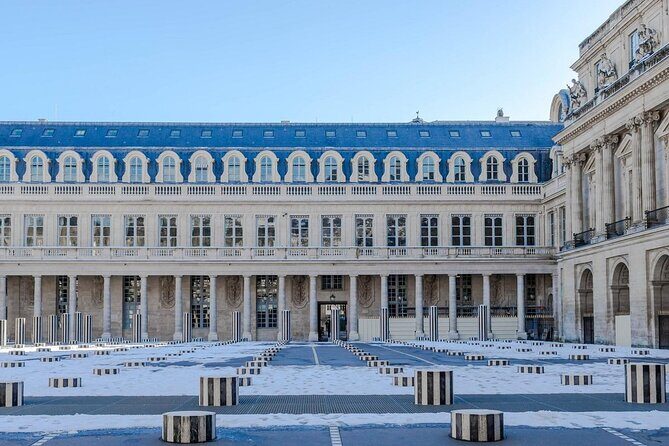
- Palais Royal gardens right by major institutions, but calmer than the crowds
- Rue Saint-Honoré + Place Vendôme for the Paris jewellery and luxury-shopping atmosphere
- Palais Garnier’s story (Napoleon III, a 1860 design competition, and its ongoing role)
- Fragonard perfume museum with a walk-through of perfume history through objects
- Mostly free admissions, with the one notable extra cost being inside the Opera House
The 2 hours 10 minutes plan that actually feels like Paris
This tour is short on purpose. You’re out for about 2 hours 10 minutes, moving at a steady walking pace, with stops that last long enough to look around and reset. That timing matters in Paris: the Opéra area can feel huge, and a good guide helps you sort what’s important from what’s just pretty.
You’ll also appreciate the group size. With a maximum of 5 people, you’re not shouted over. You can ask a question when it comes up—about why a building looks the way it does, or why certain streets became the luxury address of choice.
One practical tip: bring comfy shoes and plan to use the walking time to people-watch. This isn’t a “race to the next photo” route. It’s built for looking, listening, and then looking some more.
You can also read our reviews of more walking tours in Paris


Jardin du Palais Royal: power politics meets a calm garden
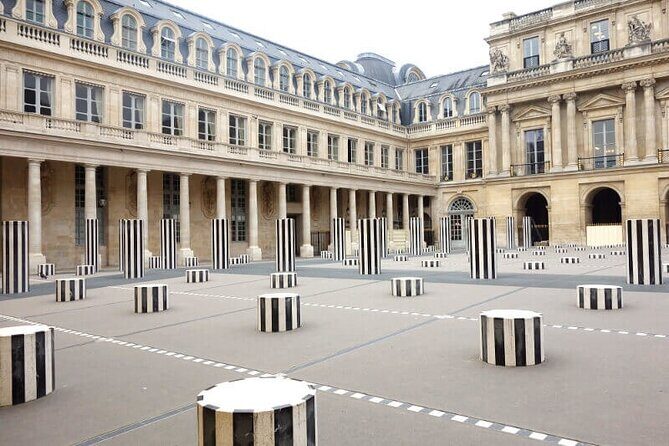
The walk begins at the Jardin du Palais Royal, connected to the Palais Royal complex and tucked in the heart of government and culture buildings. This place has a magnet for anyone who likes Paris more than just the postcard views.
The setting starts with a big-name political story. The palace area was ordered by Cardinal de Richelieu in 1633, and it was built close to the Louvre so he could stay near the king. That’s the kind of context that makes the street feel like it has layers, not just stone.
You’ll get the sense of why this spot works even for first-timers. It sits near big institutions, yet it feels quieter than you’d expect. And since the garden admission is free, it’s a low-effort stop that pays off in atmosphere.
La Comédie-Française: where Molière still matters
From the garden, you head toward La Comédie-Française, the theatre tied to France’s literary giants. Here, the emphasis is on Molière, and how his plays remain a core reference point in France’s performing arts.
You’ll also hear why this troupe is treated like a pillar: it’s described as the oldest active theatre company in the world. That’s not just trivia. It explains why the company has the cultural weight it does, and why the building and its surrounding streets matter as more than just a stop on a walking route.
This is a short moment, but it’s a smart one. It places the neighbourhood in a cultural frame, not just a shopping frame.
Rue Saint-Honoré and Place Vendôme: where luxury history turns into jewellery streets
If you’re coming for fashion and jewellery, this is the core section.
First up is Rue Saint-Honoré, a long stretch of street life linking central Paris to the 8th arrondissement. What I like about this part of the route is that it’s not only about stores. You also get the sense of the boulevard style—its Haussmann-style façades set the stage for boutiques that feel chic day or night.
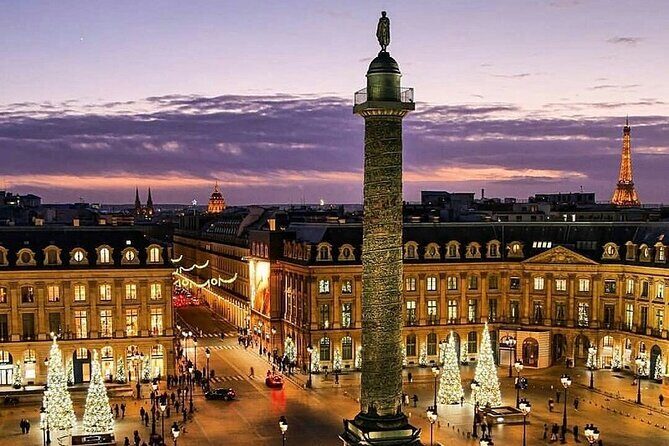
Then you arrive at Place-Vendôme, a square with real imperial-era backstory behind the polished surfaces. The square was laid out in 1702 as a monument connected to Louis XIV and the glory of his armies. Later, the Vendôme Column replaced the earlier plan elements and was modeled after Trajan’s Column in Rome—with the column celebrating Napoleon Bonaparte’s victory at Austerlitz in 1805.
Today, the square is known for luxury boutiques, and that’s where the jewellery angle becomes obvious. Even if you don’t plan to shop, this stop helps you understand why Paris luxury concentrates here: history gave the location status, and commerce followed.
Possible drawback: if you’re on a budget day and hoping for “free shopping” thrills only, this section may feel more like window-timing than bargain-hunting. Still, it’s a strong cultural lesson in how fashion spaces grow.
Eglise Saint-Roch: one church, two styles, and a reason for the mix
Next comes Eglise Saint-Roch, one of the larger churches in Paris. It’s 126 meters long, and the layout is inspired by the plan of Notre-Dame-de-Paris. That alone gives you a visual anchor: this isn’t some tiny stop; it’s a serious architectural presence.
What I find useful here is the explanation for the look. Because the church took many decades to build, you get mixed architectural styles—specifically classical and baroque influences. When you can point to a reason for the mix, the building becomes easier to read while you’re standing in front of it.
This is also a nice break from luxury streets. You’re getting a different texture of Paris life: faith, design, and long construction timelines, all in one view.


Palais Garnier: the Opera House as a city project
Then you reach Palais Garnier, the glamorous Opera House commissioned under Napoleon III as part of the reconstruction of Paris. There was a design competition in 1860, and the building became a major cultural address for opera and ballet.
Even if you’re not booking tickets for a performance, this exterior stop matters. It’s one of those Paris landmarks where the story helps you see the details more clearly: it’s not just fancy architecture, it’s a symbol of how the city wanted to reinvent itself.
Important cost note: the tour does not include an inside visit to the Opera House. An inside visit costs 14 Euro. If you want to see more than the façade and surroundings, budget for that extra ticket.
Musée du Parfum (Fragonard): perfume history you can smell in your head

Your last stop is the Musée du Parfum – Fragonard, close to Opera Garnier. This museum is built around one simple idea: perfume is a luxury object with a long timeline, and you can track that story through objects and containers.
The museum is described as fun and instructive, and the focus is very concrete—how perfume was made and how it evolved into something many people experience today. You’ll see ancient and historical items, including kohl pots, pomanders, vinaigrettes, perfume burners, pots-pourris, and even travel and smelling-related accessories like travel sets and smelling salt bottles.
The timeline spans from Ancient Egypt to the 20th century, including precious flasks and collectible-style pieces. If you’re pairing this tour with fashion/jewellery stops, this museum also makes a practical kind of sense: perfume is part of the same Paris luxury language—identity, presentation, and taste.
Price and value: why $74.49 can work well for this route
At $74.49 per person, this isn’t a “cheap walk,” but it also isn’t a full museum day. It’s paying for something specific: a guided route that connects Opéra to the luxury streets and adds context you’d struggle to assemble alone in the same short window.
Here’s where the value comes from:
- Most stops are free admissions (including the garden and the theatre exterior/cultural stops)
- You get a guided flow through major sights instead of piecing together your own itinerary
- The small group helps you get answers, not just move as a crowd
- You end with a unique museum concept that isn’t typical “check a box” sightseeing
The extra potential cost is the one thing that can change how much you spend: if you add an inside Opera House visit, that’s 14 Euro. So think of the tour price as the base, with a clear optional add-on if the Opera interior is a must for you.
Who should book this Opéra fashion and jewellery walking tour
This tour fits best if you want:
- A quick way to understand why the Opéra area is tied to fashion, jewellery, and luxury culture
- A guided route with enough stops to feel like more than just a photo walk
- An ending that goes beyond architecture—by adding perfume history through the Musée du Parfum
- A small-group experience in English where you can ask questions
It may not fit as well if you want:
- A long, slow paced tour with major inside museum time
- Deep time in the Opera House itself (since that interior visit costs extra)
- A “shopping-only” route where every minute is designed for store browsing
One more data point that matters: this experience runs with a very high satisfaction score (4.9) and is recommended by 98% based on the supplied rating summary. That doesn’t guarantee perfection, but it’s a strong sign this format usually works.
Should you book this tour
Yes—if you want your Paris Opéra day to feel connected. This walk gives you a structured route through major landmarks while still keeping things relaxed and interactive. You also get that satisfying mix of street architecture, theatre culture, luxury addresses, and perfume history without needing to plan a complex itinerary.
Book it if you’re the type of traveler who likes understanding what you’re seeing, not just photographing it. And if you care about the Opera interior, plan for the 14 Euro add-on so you don’t feel surprised later.
FAQ
What is the duration of the tour?
The tour is about 2 hours 10 minutes.
How much does the tour cost?
It costs $74.49 per person.
Is the tour in English?
Yes, it is offered in English.
How big is the group?
This experience has a maximum of 5 travelers.
Are admissions included for the stops?
Most stops are listed as free. The one noted exception is the Opera House interior, which is 14 Euro and not included.
Where does the tour start and end?
It starts at Le Nemours 2 à 7, Galerie de Nemours, 2 Place Colette, 75001 Paris and ends at Palais Garnier, Pl. de l’Opéra, 75009 Paris.
Can I cancel for a full refund?
Yes. You can cancel for a full refund up to 24 hours before the experience start time.