REVIEW · PARIS
Haussmannian Paris 2-Hour Private Walking Tour
Book on GetYourGuide →Operated by Paris in person private tours · Bookable on GetYourGuide
Haussmann’s lines are still walking with you. In just two hours, this private tour turns famous streets and buildings into a clear story about the 19th-century redesign that remade Paris. You get the big-picture plan, then you see the results right in front of you.
I especially like seeing Opéra Garnier up close, because the façade feels like a manifesto in stone. I also love how the walk uses Boulevard Haussmann as a visual guide, so the Haussmann style starts making sense instead of feeling like random pretty architecture.
One caution: at $176 per person, it’s not the cheapest way to see the area. If you’re mainly after quick photo stops, you may feel the time and money skew toward history-and-design lovers rather than casual sightseers.
In This Review
- Key points at a glance
- Why Haussmann’s Paris Still Changes How You Walk
- Starting at Métro Opéra and Getting Your Bearings Fast
- Opéra Garnier: The Grand Façade That Explains an Era
- Boulevard Haussmann: Seeing City Planning in Real Time
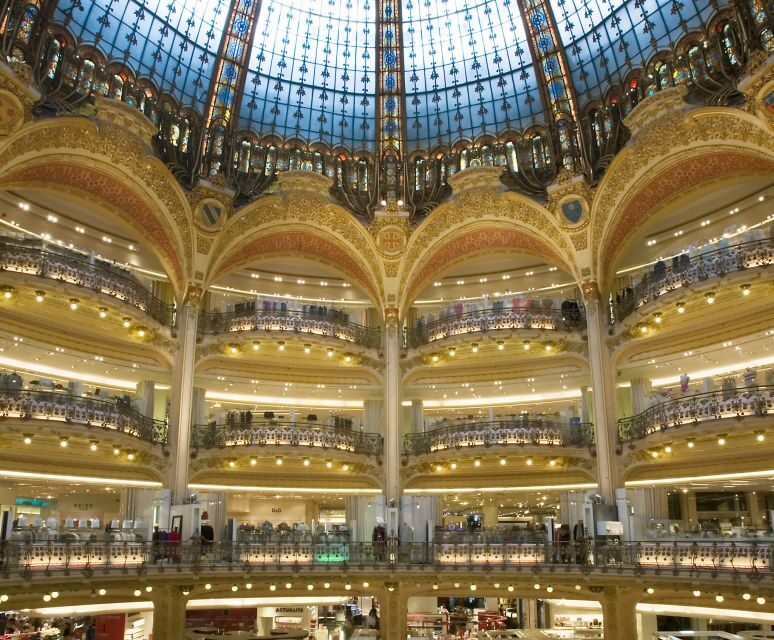
- Galeries Lafayette: Parisian Elegance You Can Walk Through
- Museum of Jacquemart-André: A Lavish Villa Moment on the Route
- Church of Saint Augustin: An Architectural Marvel in Plain View
- Park Monceau: The Elegant Pause That Makes the Tour Feel Complete
- Picasso’s Favorite Drinking Dens: The City’s Human Side
- Price and Time: Is $176 Per Person Worth It?
- Who This Tour Suits Best (and Who Might Skip It)
- What the Guide Adds (Tina, Hanna, and the Style of the Walk)
- Should You Book This Haussmannian Paris Walking Tour?
- FAQ
- Where is the meeting point?
- How long is the tour?
- Is this a private tour?
- What’s included in the price?
- Is food or drinks included?
- What languages are available?
- Does the tour run in bad weather?
- What is the cancellation policy?
Key points at a glance
- Start where Paris makes sense: You meet at Métro Opéra, in front of Café de la Paix, and your guide carries a red canvas tote bag.
- Opéra Garnier first: The tour highlights the building often described as Europe’s most beautiful.
- Haussmann’s urban logic: You’ll learn what changed across Paris and what was lost in the process.
- Boulevard Haussmann’s scale: This is where the Haussmann style reads like city planning you can walk through.
- Galeries Lafayette elegance: You’ll see why this shopping landmark became part of Paris identity.
- Park Monceau reset: A stop in the city’s most elegant park gives your feet a breather and your eyes a new rhythm.
Why Haussmann’s Paris Still Changes How You Walk
The Haussmann makeover wasn’t just a building spree. It was an attempt to flatten the old city map and rebuild for function, movement, and unified beauty. That’s the core idea behind this tour, and it’s why it feels different from a typical sightseeing loop: you’re not just looking, you’re learning how the city was engineered.
The best part is that you can actually see the outcome. In a concentrated 2-hour walk, you’ll move between major monuments and the streets that connect them, with a guide translating the design choices into plain language. When you’re done, Paris feels less like a maze and more like a plan you can trace.
You can also read our reviews of more walking tours in Paris

Starting at Métro Opéra and Getting Your Bearings Fast
Your tour begins at Métro Opéra, right in front of Café de la Paix. That’s a smart choice, because the Opéra area is where multiple layers of Paris history overlap: grand architecture, lively streets, and shopping that grew into its own kind of landmark.
Bring comfortable shoes. Even with a private group and a tight route, you’re still walking through a dense central zone. Since the tour runs rain or shine, consider packing a compact umbrella or rain shell so you stay focused on the architecture instead of your wet sleeves.
Opéra Garnier: The Grand Façade That Explains an Era
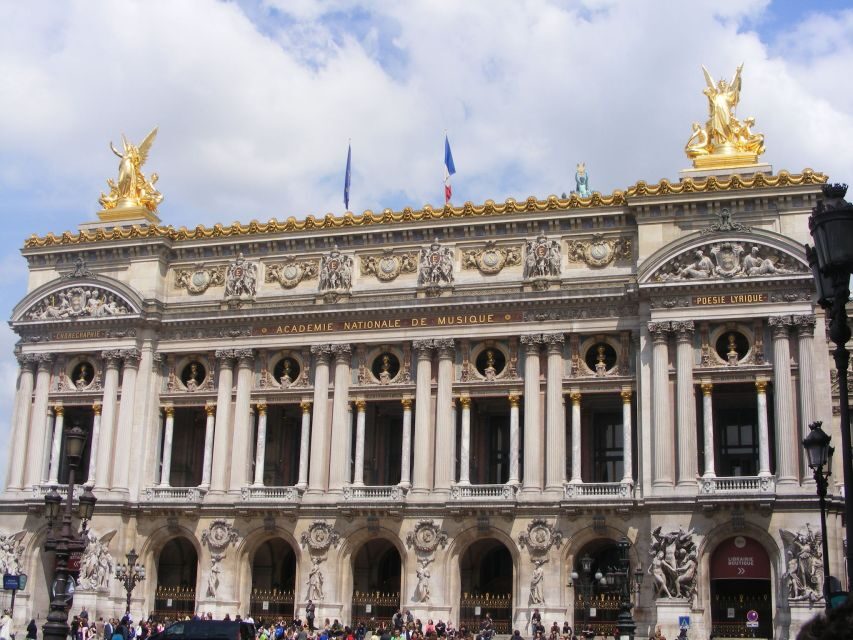
Opéra Garnier is the tour’s emotional anchor. The building is famous for its theatrical scale, but it’s also important because it represents what Haussmann-era Paris wanted to project: confidence, sophistication, and a city built to impress.
What I like about this stop is how it sets the tone for everything that comes after. Once you’ve seen Garnier’s dramatic details, Haussmann’s style stops being an abstract idea. You start noticing the way the city creates visual order—wide perspectives, aligned streets, and buildings designed to be seen from across the boulevard.
You’ll also get the kind of context that makes the façade feel less like decoration and more like a decision. In plain terms: the city wasn’t just rebuilt, it was marketed—using architecture as the message.
Boulevard Haussmann: Seeing City Planning in Real Time
After Opéra, the walk focuses on Boulevard Haussmann, named after the man who drove the redesign. This is the street where Haussmann’s approach becomes obvious: the boulevard is straight, wide, and purposeful, built for movement and visibility rather than winding medieval shortcuts.
Here’s the practical value for you: if you’re new to Paris, this is where you learn how to orient yourself visually. You can understand distances and directions faster because the layout is so coherent. If you’ve been overwhelmed by how many streets crisscross in central Paris, this stop gives you a tool for reading the city.
There’s also a more serious side. The plan was ambitious, and the program took a toll on older streets and buildings that were lost. Your guide’s job is to show both sides: the excess and the unity, the ambition and the cost.
Galeries Lafayette: Parisian Elegance You Can Walk Through
The tour then moves toward Galeries Lafayette, highlighted as the most elegant shopping mall in Paris. Even if shopping isn’t your thing, this is still an architecture moment. This is where Paris shows that commerce can become a cultural stage.
You’ll see why the place belongs on a Haussmann tour. It’s not only about goods; it’s about layout, light, and atmosphere—elements that fit the broader idea of a city built for beauty and flow. In other words, it’s urban design working for more than museums and churches.
Keep an eye on how the space pulls people toward focal points. That’s the same logic Haussmann used in streets and public areas, just adapted to a different kind of building.
You can also read our reviews of more private tours in Paris




Museum of Jacquemart-André: A Lavish Villa Moment on the Route
At some point, you’ll pass by the Museum of Jacquemart-André, described as a lavish and opulent villa of the period. This stop matters because it adds contrast. Haussmann-era Paris isn’t only big public statements and grand boulevards—it’s also private wealth expressed through taste and detail.
I like this kind of stop during a short walk because it prevents the story from becoming one-note. You get the citywide plan, then you see how individual buildings reflected status and style. It’s a reminder that urban redesign affected how people lived, displayed wealth, and built their world.
Church of Saint Augustin: An Architectural Marvel in Plain View
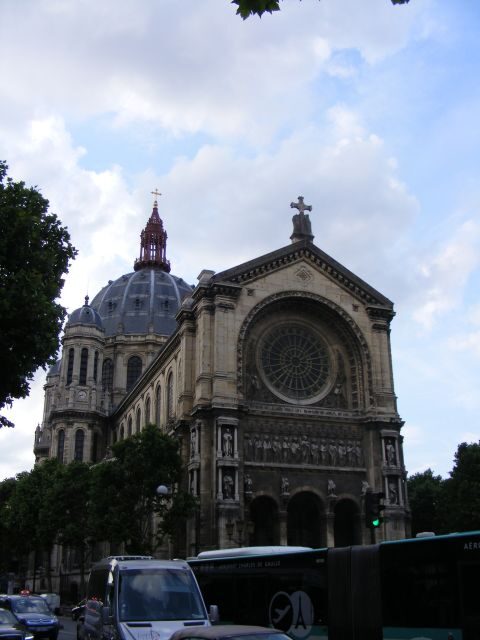
The Church of Saint Augustin is next on the theme list: this city doesn’t do modest when it wants to be seen. The tour frames it as an architectural marvel, and that description makes sense once you’re actually in the area—its presence pulls your attention and gives the walk an extra sense of drama.
For you, the value here is learning what to notice. Instead of just admiring the look, your guide will point you toward how the building fits the broader Haussmann city idea: monumental, readable from key angles, and designed so the city feels composed.
Saint Augustin also helps you stretch your perspective. After watching boulevards and shopping grandeur, you get a different “scale lesson” in how architecture claims space.
Park Monceau: The Elegant Pause That Makes the Tour Feel Complete
A walk can be tiring, and Paris is deceptive: it looks compact until you’re doing it on foot. That’s why Park Monceau is an excellent choice for a mid-to-late tour stop, especially since it’s described as the city’s most elegant park.
This isn’t just a break. It’s a reset. The Haussmann story is about streets and built form, so the park gives you the counterpart: green space planned inside a city that otherwise feels engineered. You’ll likely appreciate the softer rhythm, the change in views, and the chance to look upward without constantly scanning for traffic.
If you’re traveling with someone who finds grand buildings tiring, this is the part that often keeps them happy. Even if you’re focused on design, the park helps you absorb the story at a human pace.
Picasso’s Favorite Drinking Dens: The City’s Human Side
The tour also includes the theme of Picasso and the neighborhood’s favorite drinking dens. This matters because it connects Haussmann-era space to people who actually used it. A boulevard isn’t just a line on a map; it becomes a stage where artists, nightlife, and everyday life happen.
In practical terms, this kind of stop helps you understand why Paris stays culturally alive. The 19th-century redesign created a framework, but later generations filled that framework with new meaning. That’s the connection I like most here.
If you’re the type who likes to “see the present through the past,” these Picasso-era stories give you a second lens for your walk. You’re not only learning why the city looks the way it looks; you’re learning what it enabled.
Price and Time: Is $176 Per Person Worth It?
At $176 per person for a 2-hour private walking tour, you’re paying for three things at once: guide time, a focused route, and private pacing. That makes it value-forward if you care about architecture, urban planning, and learning how Paris was shaped.
Here’s how to think about it. If you were to explore these stops on your own, you’d likely spend time figuring out what to look for and which buildings connect to the Haussmann story. This tour compresses that learning into a short window, with a guide who ties together the major landmarks and the logic behind them.
It’s probably not the best fit if your priorities are mostly casual wandering and free-flow flexibility with minimal structure. But if you want the city explained clearly, this price can feel reasonable for what you get: concentrated insight in a compact time slot.
Who This Tour Suits Best (and Who Might Skip It)
This experience fits you best if you’re one of these types:
- You love architecture and want to learn what you’re looking at, not just take pictures.
- You’re short on time and want a tight route that still feels meaningful.
- You like context: how streets and buildings reflect decisions made for function, movement, and aesthetics.
- You want a private group pace, with a guide who can answer your questions in real time.
It’s less ideal if your main goal is broad, free roaming across many neighborhoods. With only two hours, you’ll cover a focused slice of Paris, and the tour stays committed to the Haussmann theme.
What the Guide Adds (Tina, Hanna, and the Style of the Walk)
One of the strongest signals from the experience is the way the guide handles explanation. Guides such as Tina are described as friendly, and Hanna is noted for strong communication about city planning, city history, and architecture, plus helpful tips for a Paris stay.
That matters because Haussmann’s story can sound complicated. A good guide turns it into something you can actually picture: flattening and rebuilding at massive scale, the sense of excess alongside unified design, and the reasons certain parts of Paris work so well when you walk them.
Even if you’re not an architecture student, you’ll likely appreciate the clarity. The tour feels designed to make your observations sharper, faster.
Should You Book This Haussmannian Paris Walking Tour?
Book it if you want a short, high-impact way to understand why Paris looks the way it does. You’ll cover the big landmarks that anchor the Haussmann story—Opéra Garnier, Boulevard Haussmann, Galeries Lafayette, Museum of Jacquemart-André, Saint Augustin, Park Monceau—and you’ll get human-scale context with the Picasso drinking dens theme.
Skip it if you’d rather spend your money on longer days, deeper museum time, or a more flexible neighborhood itinerary without a guiding narrative. At $176 per person, this is a commitment to a specific kind of experience.
My take: if you’re curious about how cities get designed—and you want your curiosity satisfied quickly—this tour is a solid bet.
FAQ
Where is the meeting point?
You meet at Métro Opéra, in front of Café de la Paix.
How long is the tour?
The tour lasts 2 hours.
Is this a private tour?
Yes. It’s listed as a private group.
What’s included in the price?
The guided walking tour is included.
Is food or drinks included?
No. Food, snacks, and drinks are not included.
What languages are available?
The live guide offers English and French.
Does the tour run in bad weather?
Yes, it operates rain or shine.
What is the cancellation policy?
You can cancel up to 24 hours in advance for a full refund.