REVIEW · PARIS
History of Paris City Center w/ Notre Dame Semi-Private 12ppl Max
Book on Viator →Operated by Babylon Tours Paris · Bookable on Viator
Paris can feel huge on day one. This tour helps you get bearings fast with a tight route through the city’s most storied blocks, from Île de la Cité to Place de la Concorde.
I really like the small semi-private group cap of 12. It keeps the pace human and makes it easier to ask questions instead of shouting over dozens of people.
My other favorite part is the local guide storytelling, which turns famous names into scenes you can picture—Napoleon, Louis XIV, Henri IV, and Revolution figures. One thing to consider: a lot of stops are view-and-walk-by, and not every paid interior is included (even though you’ll get great orientation).
In This Review
- Key things that make this tour worth your time
- Getting your bearings: Cité Metro to Île de la Cité
- Notre-Dame after the 2019 fire: what you can do inside
- Palais de Justice, Sainte-Chapelle, and the Conciergerie
- Palais de Justice (Palais de la Cité area)
- Sainte-Chapelle
- Conciergerie
- Saint-Michel to Place Dauphine: fountains, kings, and calmer streets
- Pont Neuf, Pont des Arts, and the Louvre approach
- Henri IV statue and Pont Neuf
- Pont des Arts
- Louvre area, Cour Carrée, and the Pyramid
- Palais-Royal to Tuileries: from royal grounds to garden calm
- Place de la Concorde: the Revolution site that anchors your walk
- Who this tour fits best (and who might want a different format)
- Price and value: what $59.69 gets you in 2.5 hours
- Quick practical notes before you go
- Should you book this History of Paris City Center with Notre-Dame (Semi-Private, max 12)?
- FAQ
- FAQ
- How many people are on the semi-private tour?
- How long is the tour?
- What language is the tour offered in?
- Where do I meet the guide, and where does the tour end?
- Is Notre-Dame Cathedral interior access included?
- Are tickets for Sainte-Chapelle and the Conciergerie included?
- Does the tour run in bad weather?
- How much walking is involved?
- Do I need a mobile ticket or mobile phone number for booking?
- What if the tour doesn’t run or I need to cancel?
Key things that make this tour worth your time
- Semi-private max of 12 keeps the walk lively but not crowded
- Notre-Dame interior visit is included, though it’s unguided due to regulations
- You’ll cover Île de la Cité to Tuileries to Concorde without backtracking
- Oldest bridges and classic squares get connected into one easy story
- The route runs rain or shine, so plan for weather and good shoes
Getting your bearings: Cité Metro to Île de la Cité
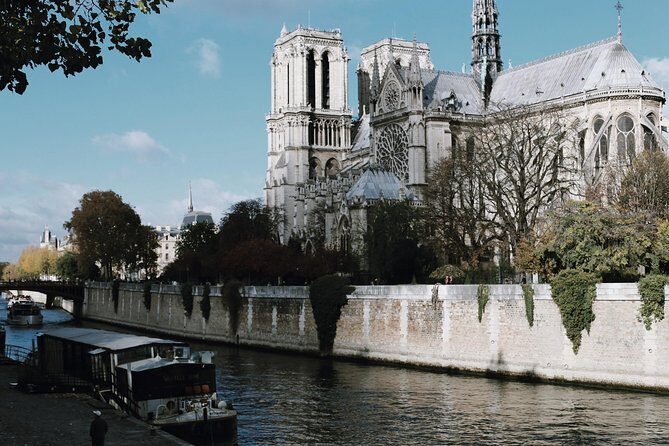
The tour starts at the Cité Métro station area on Île de la Cité, where Paris’s oldest layers are still visible if you know where to look. You begin on foot with your small group, and the guide sets the tone right away by explaining how this island became the seed of the city.
From the start, the format is simple: you walk, you stop, you look, you learn. It’s a smart choice if you want the “first-day Paris” overview without feeling like you’re sprinting. And because it’s capped at 12, you’re less likely to get swallowed by the crowd.
Tip: wear shoes you trust. This is a sightseeing walk with a moderate physical level, and you’ll be on your feet through multiple classic neighborhoods.
You can also read our reviews of more city tours in Paris


Notre-Dame after the 2019 fire: what you can do inside

No Paris itinerary starts the way this one does without Notre-Dame. You’ll head straight to the Cathedrale Notre-Dame de Paris and spend time admiring the 800-year-old Gothic structure and its place in modern Paris.
Here’s the practical part: the Notre-Dame interior visit is included but unguided. Regulations limit how guides can operate inside, so you’ll go in on your own while your guide provides the context before you enter. The good news is that the interior access is still free, and the tour doesn’t leave you outside staring at doors.
What to expect visually: Notre-Dame can be one of those places where you think you already know the look. Then you start paying attention to the details—scale, stonework, and the feel of the space—and it hits differently in person. Your guide also helps you understand why this church keeps pulling people back into its orbit.
Possible drawback: if you’re hoping for a fully guided interior at Notre-Dame, this tour can’t offer that. You’re getting the best compromise available—entry included, guide context around the experience.
Palais de Justice, Sainte-Chapelle, and the Conciergerie
After Notre-Dame, the route stays on Île de la Cité and moves into the “power and punishment” zone of medieval and Revolutionary Paris.
Palais de Justice (Palais de la Cité area)
You’ll pass by the Palais de Justice area, once known as the Palais de la Cité, and get orientation around some of the oldest surviving buildings on the island. Since entry tickets for this stop are not included, treat it as a guided look-and-learn moment rather than a full interior visit.
Why it’s worth it: these are the buildings where politics becomes architecture. Even without going inside, you’ll come away with a clearer map of where courts and royal authority used to live on top of the same ground.
Sainte-Chapelle
Next is Sainte-Chapelle, a fast detour in distance but a big jump in style. It was built in seven years and designed to house precious Christian relics, including Christ’s crown of thorns, acquired by Saint Louis.
Tickets for this stop are also not included, so you’re not buying museum access through the tour price. Still, this is one of those places where seeing the Gothic structure from the right angle makes you understand why Parisians protect it so fiercely.
You can also read our reviews of more private tours in Paris






Conciergerie
Then you reach the Conciergerie, known as the oldest remaining part of the Palais de la Cité. During the Revolution, it functioned as one of France’s most notorious prisons, holding over a thousand “enemies of the Revolution,” including famous end-of-the-road stories like Marie Antoinette.
Again, the stop is not included for paid entry, so you may mostly focus on the exterior and the story your guide connects to the spot. But that’s exactly why this tour format works: it turns a building you’d otherwise skim into a location with stakes.
This is also where I’d lean in and listen closely. The guide’s narration is the difference between seeing a landmark and understanding what it meant.
Saint-Michel to Place Dauphine: fountains, kings, and calmer streets
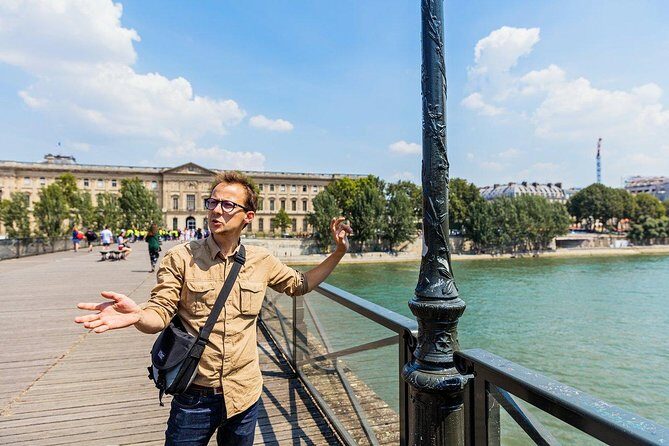
Once you leave the heavy-hitter sites, the walk becomes more like exploring Paris’s “everyday romance,” with landmarks that feel lighter but still loaded with meaning.
You pass by the Fontaine Saint-Michel, commissioned by Haussmann under Napoleon III. The fountain’s design shows archangel Michael vanquishing the devil, which is a nice reminder that Paris decoration often carries a point—even when it looks like pure spectacle.
Then you reach Place Dauphine, tucked away on Île de la Cité near the Seine. This is the kind of square you slow down for. It was commissioned by Henri IV, and it feels like a quiet pocket compared with the louder headline streets.
These are great stops for two reasons:
1) they break up the intensity of the Gothic and Revolution sites, and
2) they show you Paris beyond the “big names,” which helps when you later plan where to wander on your own.
Pont Neuf, Pont des Arts, and the Louvre approach

From Place Dauphine, you move toward the bridges. The walk across bridges is a big part of the value here because it connects eras, rivers, and viewpoints without forcing you to add extra transportation.
Henri IV statue and Pont Neuf
You’ll stop for the equestrian statue of Henri IV in the middle of the bridge. The current statue is a replica of an original from the 1600s, since the first was destroyed during the French Revolution.
Then you reach Pont Neuf, considered the oldest stone bridge in Paris. Your guide also ties it to the UNESCO-listed Seine riverbanks, which helps you understand why these river views matter beyond sightseeing.
Pont des Arts
Next comes Pont des Arts, a bridge connecting the Institut de France and the Louvre area. It was built between 1801 and 1804 and was the first iron bridge in Paris. That’s a fun contrast point: you’re walking on modern engineering layered over old-world city structure.
Louvre area, Cour Carrée, and the Pyramid
The tour heads toward the Louvre and focuses on the approach—passing through Cour Carrée and seeing the Louvre Pyramid designed by I.M. Pei. Louvre museum entry is not included, so you’re not getting a full-ticket gallery experience in this price.
Why I like this setup: it gives you the orientation you need. You can decide afterward if you want to return with a ticket and a plan, rather than guessing during your first hours in Paris.
If you’re the type who hates waiting and loves planning, this is a friendly compromise.
Palais-Royal to Tuileries: from royal grounds to garden calm
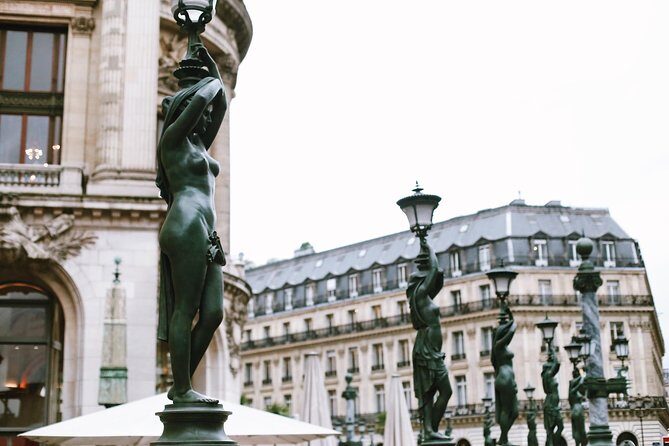
After the Louvre approach, the tour continues in a way that feels like a gentle shift from museums to living city space.
You’ll pass the Palais-Royal area (tickets not included). The palace was tied to royal families before Versailles took over, and you’ll also have a chance to notice the contrast between classic palace planning and later design elements, including contemporary sculptures you’ll see in the complex.
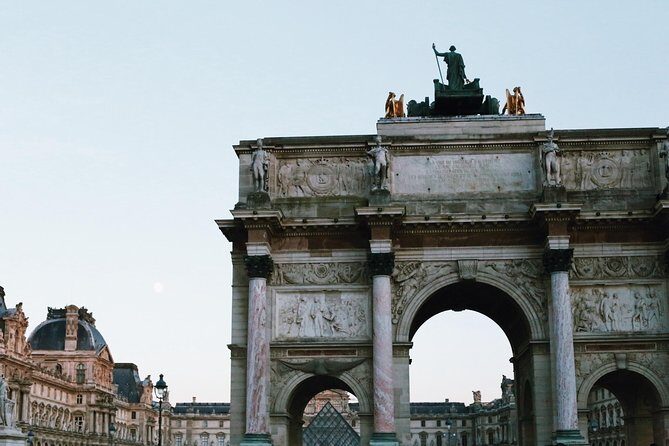
Then comes the walk toward the Arc du Carrousel, built to commemorate Napoleon’s military victories. Even if you’re not “into arches,” it’s a useful marker to help you orient your route through central Paris.
Finally, you enter the Jardin des Tuileries, the oldest park in Paris, with roots in the 17th century. Your pace slows slightly because gardens reward pausing.
There’s also a small, very Paris moment: you’ll pass by the Tuileries Gardens Bookstore, a neat corner stop with gardening and landscape design books and related gifts. It’s not a major “must see,” but it’s the kind of stop that turns a routine walk into a more personal memory.
Place de la Concorde: the Revolution site that anchors your walk
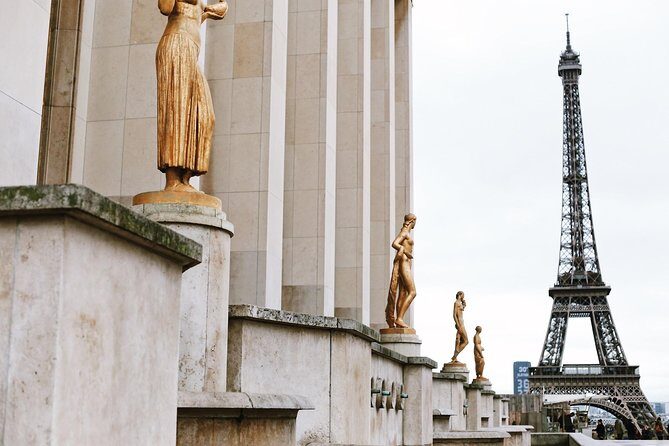
The tour ends at Place de la Concorde, starting from the spot’s earlier identity as an execution site during the French Revolution. From there, it also marks the start of the Champs-Élysées, so it’s a very clean landing point for whatever you do next.
Your guide connects the place to famous residents and political drama—names like Henri IV, Louis XIV, and Napoleon come up in the narration. The result is that you’re not just standing in a big traffic circle. You’re standing at a historical hinge.
From a practical point of view, this finish location is also handy. You’re close to major lines of movement for your next meal, museum, or evening plan.
Who this tour fits best (and who might want a different format)
This tour is ideal if you want:
- a first-time Paris orientation through central sights
- a guided walk that feels friendly, with a max of 12
- a route that covers Île de la Cité, major bridges, the Tuileries, and Concorde in one go
- help turning landmarks into stories you can repeat later
It may be less ideal if you want long interior time inside multiple paid attractions. This walk is designed to cover highlights efficiently, not to linger all day with ticketed museum-level experiences.
If your group is small and you want total control over pacing and priorities, the tour itself offers an upgrade path to a private format. That’s the best match for anyone who wants fewer stops, more time inside, or a theme like architecture only.
Price and value: what $59.69 gets you in 2.5 hours
At $59.69 per person, you’re paying for more than “someone walks with you.” You’re paying for:
- a guide to connect the sites into a story (not just a list of names)
- route efficiency across central landmarks
- the benefit of a semi-private group size that keeps attention focused
- a setup that runs rain or shine
A big value point is time. In Paris, the difference between a good route and a frustrating one can be hours. This one is structured so you’re not constantly backtracking to cover iconic areas like Notre-Dame, Pont Neuf, and the Tuileries.
One more value note: this tour is often booked about 50 days in advance. That suggests it’s a popular first-day option, so if your dates are fixed, lock it in sooner rather than later.
Quick practical notes before you go
This tour is designed to run in all weather, so bring what you need for comfort. You’ll also want a bottle of water and a small umbrella if rain is in the forecast.
Security and rules matter in central Paris. The tour notes say no large bags or suitcases. Also, some attractions may not allow inside visits due to security measures, so plan around seeing key areas up close rather than expecting every doorway to open.
You’ll also need a mobile phone number (with country code). And the ticket is mobile, so you’ll want your phone charged.
Should you book this History of Paris City Center with Notre-Dame (Semi-Private, max 12)?
I’d book it if you’re in Paris for a short visit and you want to understand the city’s core geography without wasting your first day guessing. The mix of Île de la Cité gravitas, bridge views, and Tuileries calm is a strong combo, and the small group limit makes the whole experience feel more personal.
I’d reconsider if you’re aiming for deep interior time at multiple paid landmarks. This tour is built for smart orientation and highlight coverage, with some interiors either unguided or not included.
FAQ
FAQ
How many people are on the semi-private tour?
The group is capped at a maximum of 12 people.
How long is the tour?
It’s about 2 hours 40 minutes (listed as 2.5 hours).
What language is the tour offered in?
The tour is offered in English.
Where do I meet the guide, and where does the tour end?
You start at the Cité Métro station area in Paris (75004) and end at Place de la Concorde (75008).
Is Notre-Dame Cathedral interior access included?
Yes, the Notre-Dame interior visit is included, but it is unguided due to regulations.
Are tickets for Sainte-Chapelle and the Conciergerie included?
No. Sainte-Chapelle and the Conciergerie are listed as admission ticket not included.
Does the tour run in bad weather?
Yes, the tour runs rain or shine.
How much walking is involved?
The tour requires a moderate physical fitness level, and it’s a walking route through central Paris.
Do I need a mobile ticket or mobile phone number for booking?
Yes. You need a mobile phone number (including country code), and the tour uses a mobile ticket.
What if the tour doesn’t run or I need to cancel?
The tour requires a minimum of 2 guests to run. If it can’t operate, you’ll be offered an alternative date or a full refund. You can cancel for a full refund up to 24 hours in advance.