REVIEW · PARIS
Louvre Museum Private Guided Tour | Expert Guide | Reserved Entry
Book on Viator →Operated by HandMedinaCo Tours · Bookable on Viator
The Louvre feels less like a maze.
This private, reserved-entry tour turns the museum into a guided story, starting at the pyramid and ending with time to wander. You skip a big chunk of stress because you’re timed in, and your guide can tailor what you slow down for. You also get a mobile ticket setup that keeps things straightforward.
I love the reserved entry angle because it helps you get moving faster and spend more time looking. I also love the expert art historian perspective, which connects eras—from ancient Egyptian pieces to Renaissance works—so the museum clicks instead of feeling like random masterpieces stacked together.
The main drawback is the price. At about $358.86 per person, this feels best when you’ll really use the full 3 hours to ask questions and linger. You’ll still need to clear Louvre security and follow bag limits, so plan light.
In This Review
- Key things to know before you go
- Why this private Louvre tour can feel worth the money
- Meeting at the Louvre Pyramid (and how to avoid last-minute confusion)
- Getting oriented: the short Pyramide Du Louvre start
- The main event: a guided circuit through the Louvre’s best-known masterpieces
- What “private” changes in your visit
- One realistic consideration: speaking restrictions
- After the tour: using your remaining museum time well
- What’s included (and what you may need to buy separately)
- Practical Louvre rules that can make or break your day
- Bags, suitcases, and lockers
- Photos and videos: the rules you should follow
- ID and security
- Mobile ticket, timing, and how the tour runs in the real world
- Who this Louvre private guide is best for
- A balanced word about risk: no-show complaints and what you can do
- Should you book this private Louvre experience?
- FAQ
- Where do I meet the guide?
- How long is the tour?
- Is admission to the Louvre included?
- Is this tour private?
- Will the guide provide commentary during the visit?
- Do I get time to explore after the guided part?
- What about food and drinks?
- Can I take photos and videos?
- Are there bag size limits?
- What should I bring for entry?
Key things to know before you go
- Reserved timed entry helps reduce your wait and keeps the schedule calmer.
- Private guide + art historian focus means your route can match your interests.
- 3 hours total gives guided highlights and then time to roam after.
- Main collections included, temporary shows not included unless you buy extra tickets.
- Lockers are free for smaller items, but you must use the size rules.
- Photo rules are specific in permanent galleries and can vary in temporary rooms.
Why this private Louvre tour can feel worth the money
The Louvre is famous for a reason, but it’s also famous for crowds and decision fatigue. A private guided format matters here because it gives you structure in a place that can swallow your day. Instead of running from Room A to Room B, you’re led toward the most important stops in a way that makes sense.
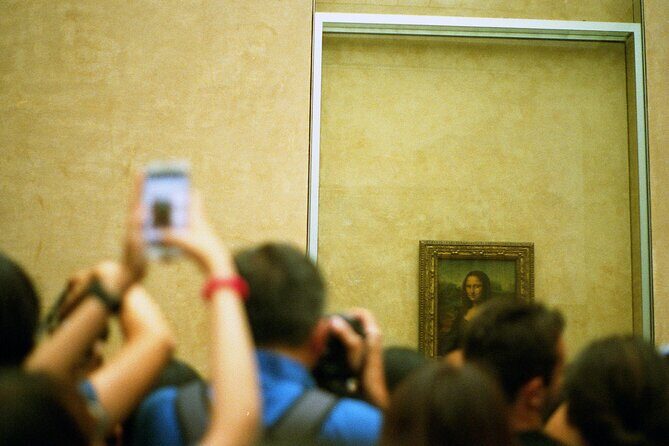
This tour is positioned for people who want more than a checklist. You’re not just seeing the Mona Lisa and moving on; you’re getting context that helps you understand why artists used certain techniques, how styles changed over time, and what the museum collections are trying to show.
The cost is steep at $358.86 per person, so value comes down to your pace. If you like asking questions, comparing artworks, and staying in front of pieces longer than a quick selfie stop, that’s where the price can start to make sense.
You can also read our reviews of more guided tours in Paris



Meeting at the Louvre Pyramid (and how to avoid last-minute confusion)
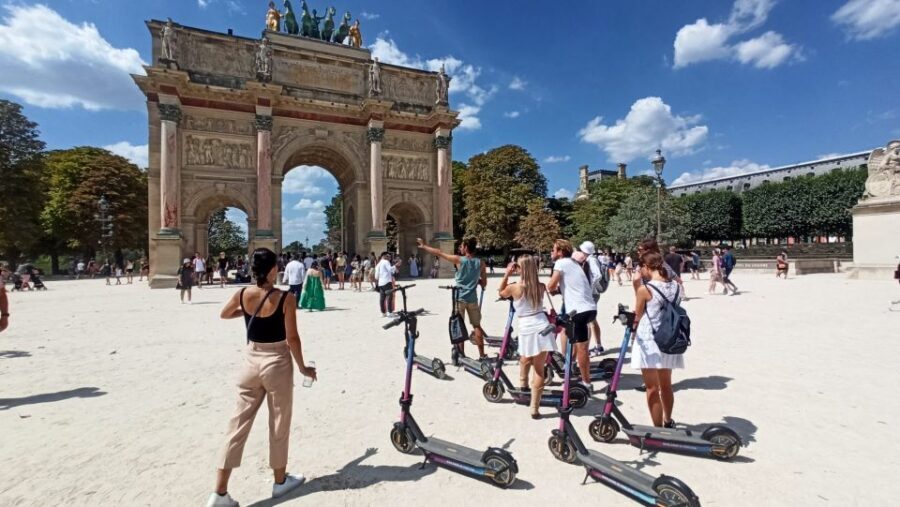
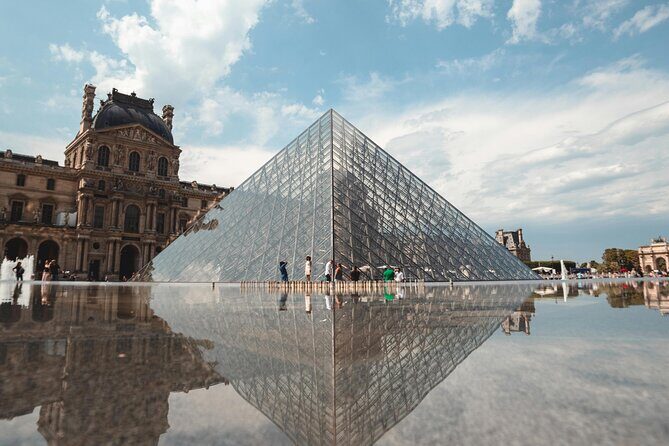
You’ll meet at Louvre Pyramid (75001 Paris), with your guide waiting outside the Louvre at the Arc de Triomphe du Carrousel. It’s a small detail, but it’s the kind that can cause real stress if you’re unsure where to stand.
Before you go, double-check the phone number you provided. The guide is set to contact you before the tour, and that contact matters in a timed-entry world.
Once you arrive, expect the normal Louvre reality: you must go through security. That’s not part of the tour magic, but planning for it is. With a reserved timed entry, you can still hit the ground running once you’re inside.
Getting oriented: the short Pyramide Du Louvre start

That first segment is only about 15 minutes at the pyramid area, but it’s not filler. This is where your guide helps you get bearings fast—how to read what you’re seeing, which direction to head, and what to expect once you step deeper into the museum.
Think of this moment as your set-up. The Louvre has lots of visual drama, and it’s easy to lose your place. A quick orientation helps you avoid the slow-motion problem where you spend 30 minutes orienting yourself when you really wanted to spend that time looking at art.
Also, since the entry is timed, you’ll want to be on schedule. Even small delays can feel bigger in a museum where lines move at their own pace.
The main event: a guided circuit through the Louvre’s best-known masterpieces
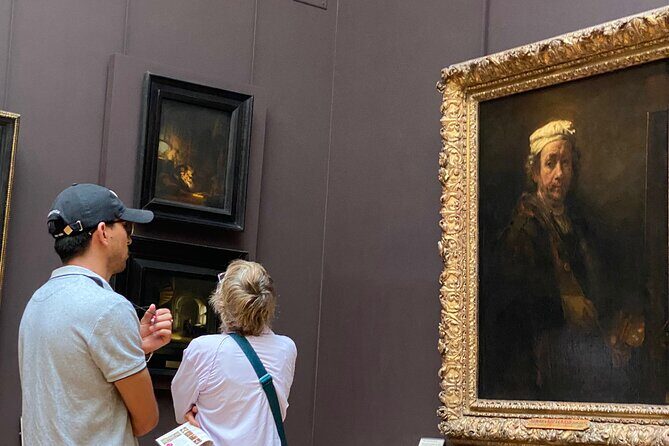
The guided portion is about 2 hours 45 minutes inside the Louvre, with admission included for the main exhibits. Your guide—an expert art historian—leads you through famous halls and also into lesser-expected corners where stories live.
The tour highlights the kinds of works that define the museum in most people’s minds:
- Mona Lisa: famous face, but the guide’s job is to help you understand what you’re actually looking at and why it’s memorable.
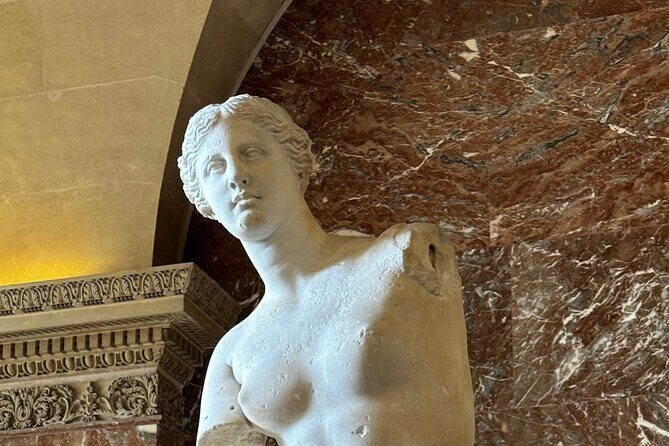
- Venus de Milo: a key example of classical sculptural influence and how ancient ideals shaped later art.
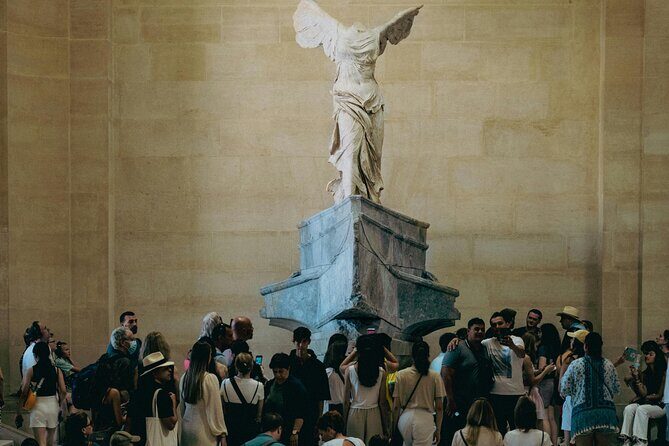
- Winged Victory of Samothrace: dramatic presence that’s easier to appreciate when you know what makes it powerful visually.
But the value is not just name recognition. You’ll also move across major collections, from ancient Egyptian artifacts to Renaissance masterpieces. When the guide ties those eras together, you start noticing patterns—how the museum groups objects, how historical context changes interpretation, and why particular styles became important.
What “private” changes in your visit
In a big public museum, your brain spends too much time negotiating: waiting, squeezing, checking signs, and trying to remember where you were. In a private format, your guide can adjust the flow so you can slow down without falling behind.
That means more time in front of fewer pieces, plus space to ask questions. If you’re the type who likes to understand the meaning behind details—materials, symbolism, technique—this kind of guided pace is a gift.
You can also read our reviews of more private tours in Paris






One realistic consideration: speaking restrictions
Some rooms may have speaking restrictions, and the guide will provide info beforehand. This is normal for certain museum areas and events, but it’s worth knowing so you’re not surprised if your ability to hear explanations changes for a specific section.
After the tour: using your remaining museum time well
Once the guided portion ends, you still get something important: you can take advantage of free time to explore on your own. Your ticket allows you to remain in the museum even after the tour concludes.
This is where you can steer your day. If there were works you liked during the guide’s stops, you can go back. Or you can follow your curiosity to nearby rooms that match your interest level—painting, sculpture, or older civilizations.
Here’s the practical move I suggest: before your tour finishes, decide what you want your extra time to accomplish. Do you want one more major highlight, or do you want deeper browsing with fewer targets? You’ll lose less time when you already know your plan.
What’s included (and what you may need to buy separately)

Included items are clearly aimed at the core museum experience:
- Private guided tour with an expert art historian
- Timed reserved entry tickets
- Personalized, tailored commentary
- Admission to main exhibits
The one thing to watch: additional temporary exhibitions are not included. If you care about a specific temporary show, check ahead so you don’t assume it’s part of your entry.
Also, food and beverages aren’t included. In Paris, you’ll find options nearby, but planning a break matters because you’ll be on your feet. Bring water when you can, and don’t wait until you’re starving to find a spot.
Practical Louvre rules that can make or break your day
The Louvre has strict limits, and you’ll feel them quickly once you start moving. The tour makes this easier by being clear about what’s allowed, especially for bags and photos.
Bags, suitcases, and lockers
You cannot bring large bags or suitcases into the museum. Lockers are available free of charge for smaller items, but there are strict size limits:
- Items exceeding 55 x 35 x 20 cm are not permitted.
- Any items left in lockers must be collected the same day.
- The museum won’t be held responsible for valuables left in lockers.
So pack like a minimalist. If you bring a bag, choose something that clearly fits the size rule. If you’re unsure, it’s better to travel lighter than to gamble with what fits.
Photos and videos: the rules you should follow
You can take photos and videos in the permanent collections for personal use. You are not allowed to use:
- selfie sticks
- flash or lighting
In some temporary exhibitions, photo or video access for certain artworks can be restricted. If you’re planning to photograph lots of pieces, treat the temporary rooms as a “maybe” zone.
ID and security
Bring an up-to-date passport or ID. And yes—you’ll go through security like everyone else. That’s not unique to this tour, but it affects your pacing.
Mobile ticket, timing, and how the tour runs in the real world
This experience uses a mobile ticket, which helps with day-of entry because you’re not hunting for paper. The guide is also expected to contact you before the tour—again, only if the phone number you provided is correct.
On timing: you’ll have a short initial meet-up, then the main museum time. With reserved entry, you should be able to start in motion without waiting through the worst crush, but the Louvre can still slow things down at security.
If you’re the kind of person who likes to arrive early everywhere, great—just keep it practical. If you show up too early, you may still be waiting at the perimeter, so aim for a sensible arrival window.
Who this Louvre private guide is best for
This tour is ideal if you:
- Want more than highlights and prefer interpretation over browsing
- Like asking questions and hearing an art-historian style explanation
- Have limited time in Paris and want a focused plan
- Prefer a calmer museum experience instead of fighting through crowds
It may be less ideal if you:
- Mostly want a self-paced checklist and don’t care about context
- Are on a strict budget (this is premium pricing)
- Expect the museum to feel effortless without security and rules (it won’t)
The free time after the guided portion is a smart feature for people who like to control the final part of their day. You don’t feel locked into a single route until closing time.
A balanced word about risk: no-show complaints and what you can do
There is at least one serious complaint tied to a no-show situation. I can’t verify any specific cause from the information here, but timed-entry tours make you dependent on confirmation and communication.
My practical advice is simple:
- Confirm your details right after booking.
- Make sure your phone number works on arrival day.
- Keep an eye on any messages from the provider before you head over.
- If you’re worried, note that free cancellation is available if you cancel at least 24 hours in advance.
That last point can’t fix a bad day, but it does give you a safer safety net than some rigid bookings.
Should you book this private Louvre experience?
If you want the Louvre to feel guided, not chaotic, I’d lean toward booking. The mix of reserved timed entry, a private art historian, and a structured visit with time left over afterward is exactly how you turn a huge museum into a satisfying experience.
It’s also a good match if you’re the sort of person who notices details: faces, materials, composition, historical shifts. This tour is built for that mind.
If you’re hoping to do the Louvre as a pure wander with minimal direction, the price may feel hard to justify. In that case, you might prefer a lower-cost entry option and then buy a general museum audio guide.
My call: book this if you’ll use the guide time to learn and slow down. Pass if you mainly want to rush through icons and you’re not paying for context.
FAQ
Where do I meet the guide?
You meet at the Louvre Pyramid area (75001 Paris). The guide will be waiting outside the Louvre at the Arc de Triomphe du Carrousel.
How long is the tour?
The experience is about 3 hours total, with roughly 15 minutes at the first stop and about 2 hours 45 minutes inside the Louvre.
Is admission to the Louvre included?
Yes. The tour includes timed reserved entry tickets and admission to the main exhibits. Additional temporary exhibitions are not included.
Is this tour private?
Yes. It’s private for your booking, and only your group will participate.
Will the guide provide commentary during the visit?
Yes. It’s a private guided tour led by an expert art historian, with a personalized and tailored experience.
Do I get time to explore after the guided part?
Yes. After the guided tour, you’ll have free time to explore at your own pace. Your ticket allows you to remain in the museum after the tour ends.
What about food and drinks?
Food and beverages are not included.
Can I take photos and videos?
In the permanent collections, you can take photos and videos for personal use. You can’t use selfie sticks, and you can’t use flash or lighting. Temporary exhibitions may have additional restrictions.
Are there bag size limits?
Yes. Large bags and suitcases aren’t allowed. Lockers are available for smaller items, and items larger than 55 x 35 x 20 cm aren’t permitted. Lockers are free but must be cleared the same day.
What should I bring for entry?
Bring an up-to-date passport or ID. Also, make sure your phone number is correct since the guide will contact you before the tour.