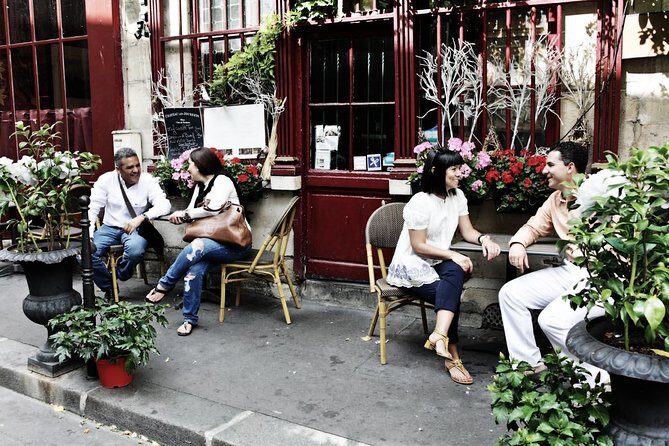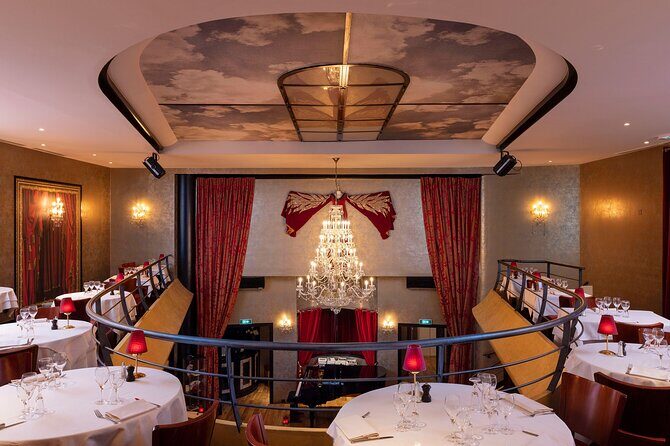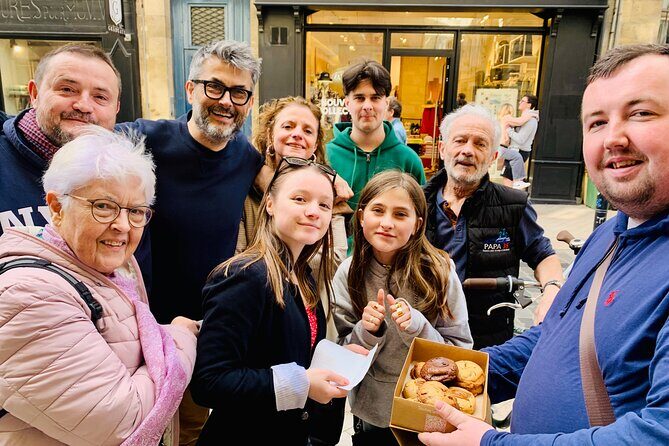
That quieter Marais side feels like a secret.
This Marais HiddenTreasures walk uses the Rewind app so the audio cues trigger right where you pass key spots, turning a self-guided stroll into a guided-feeling route. You get a real sense of Marais Sud’s smaller passages and lesser-seen corners, with stops built around mansions, gardens, and old city features.
What I like most is how easy it is to move at your pace. Two things I’m especially happy about: the automatic, location-based audio that plays when you’re in the right spot, and the ability to pause mid-walk (for a terrace or shop stop) then resume where you left off.
One drawback to factor in: the experience depends on your phone working well and on having the correct Rewind access before you start. A few people reported missing login links or trouble getting started on-site, so I’d treat getting set up ahead of time as part of your plan.
In This Review
- Key things to know before you start
- Marais Sud: The quieter route where the streets make sense
- The Rewind app approach: the value is hands-free timing
- Where the walk begins: Rue des Nonnains d’Hyères to the Cité Internationale des Arts
- Hôtel d’Aumont and the garden “painting” moment
- The Marais Sud street logic: how Paris first grew
- 12th-century city walls: the big visual lesson
- Ending at Place des Vosges: set yourself up for the next step
- Price and time: why $11.56 can make sense here
- When this tour is a smart match for you
- Practical prep so the walk goes smoothly
- Should you book Marais HiddenTreasures?
- FAQ
- How long is the Marais HiddenTreasures audioguided walking tour?
- Where does the tour start and end?
- What does the tour cost?
- What app is used for the audio guidance?
- Do the audio commentaries play automatically?
- Can I pause the tour and resume later?
- Is there a way to avoid getting lost?
- What kind of sights are included?
- Is this a guided group tour?
- Are there any date/time details for when it runs?
Key things to know before you start
- Audio triggers in the right place so you don’t have to stare at your screen every minute
- Hands-free pacing: pause, resume, and keep walking when you want
- Clear navigation support via an on-screen map and geo-localization if you drift off
- Marais Sud highlights like private mansions and garden views in a calmer pocket of the district
- History you can actually see around 12th-century walls and older street layouts
- A simple endpoint at Place des Vosges (very convenient for your next move)
Marais Sud: The quieter route where the streets make sense
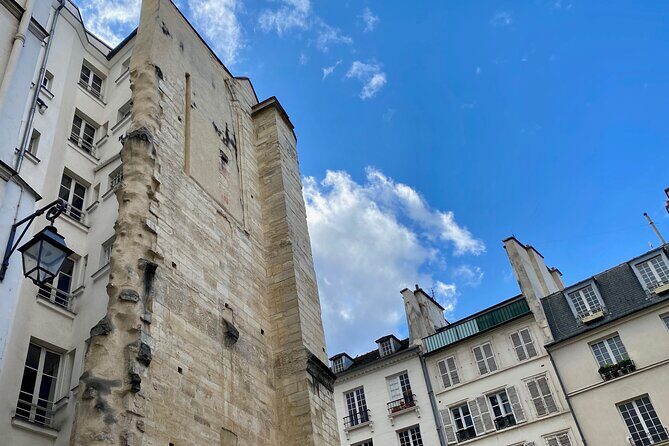
The Marais can feel like a theme park if you hit it at peak hours. This route steers you toward South Marais (a calmer slice) where the streets feel more lived-in and the buildings look like they’ve been quietly holding stories for centuries.
Instead of bouncing between the biggest monuments, this walk centers on the kind of Paris you notice slowly: private mansions you can catch from the street, garden spaces that feel tucked away, and small connective passages that help you understand how neighborhoods grew. The result is less check-list tourism and more “wait, how old is that wall?” curiosity—exactly what a good audio walk should do for you.
A big plus for many people: it’s designed to work as a stroll, not a sprint. The time window (about 1 to 1.5 hours) is long enough to enjoy pauses, short enough that you don’t feel trapped inside someone else’s schedule.
You can also read our reviews of more walking tours in Paris



The Rewind app approach: the value is hands-free timing
This is not a “hit play and wander” audio tour. The hook is that the narration is meant to trigger automatically right where the story is happening. Practically, that means you can glance less, walk more, and spend your attention on what’s in front of you—facades, gates, courtyards, and street alignments.
You also get navigation help in two ways:
- A map that provides clear directions in real time
- An integrated geo-localization feature designed to get you back on track if you turn the wrong way
I like this setup because it reduces one of the main frustrations of DIY walking tours: the moment you’re lost, the tour stops being fun. Here, the goal is to keep the experience flowing.
Another smart detail is that you can treat the walk like a flexible loop. If you want a quick drink on a terrace or a short stop in a shop, you don’t have to “restart” from memory. You can pause and then resume right where you paused.
Where the walk begins: Rue des Nonnains d’Hyères to the Cité Internationale des Arts

Your starting point is 1 Rue des Nonnains d’Hyères, 75004 Paris. From there, the first stretch leads into an area tied to the Cité Internationale des Arts, which hosts more than 300 artists with regular exhibitions.
This matters more than it sounds. When a building is active—artists working, exhibiting—it’s harder for the street scene to turn into a museum-only vibe. You’re not just looking at history; you’re seeing how culture continues in the present.
Right away, the walk sets a tone you’ll keep feeling throughout: Marais Sud as a neighborhood with layered uses—residences turned institutions, architecture that still shapes movement, and courtyard-like spaces that hint at what’s hidden behind the street.
Practical note: the area around your start is dense with small streets. That’s exactly why the app’s map and auto-trigger features are so important. If you show up without having your phone ready, you may spend more time troubleshooting than enjoying.
Hôtel d’Aumont and the garden “painting” moment
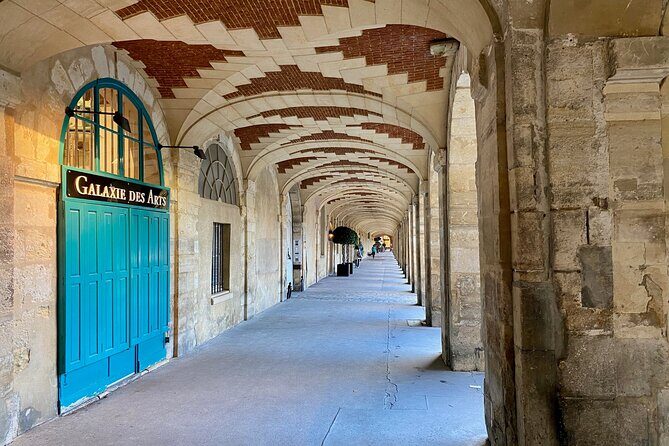
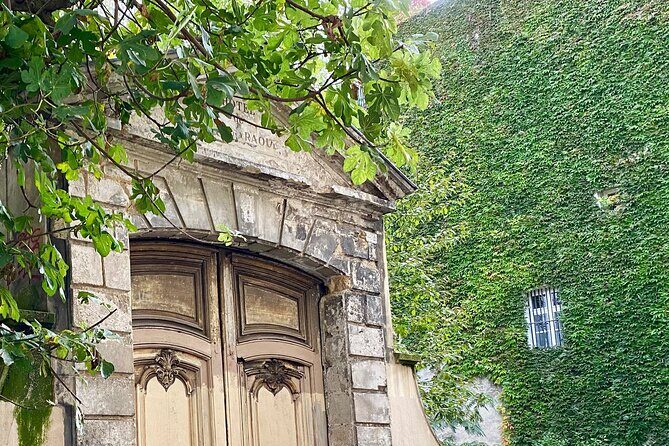
One of the standout themes of this walk is private mansions—and the route highlights at least one you’ll want to look for: Hôtel d’Aumont, associated with an architect also credited with work connected to Versailles.
You won’t necessarily have full access inside everything from the street, but the real value is training your eyes. The mansion concept in Paris isn’t just a big house; it’s a whole design philosophy—gates, proportions, interior-facing spaces, and that classic sense of “you only see the public face.”
The route also points you toward a French-style garden that’s described as looking almost like a painting. Even if you only get views from outside, gardens in the Marais are a big part of why the neighborhood feels romantic without being overdone. They also help you understand why these mansions were built where they were: space for air and light, tucked into an urban fabric.
What to do here:
- Slow down at gates and boundaries. A mansion is often more revealing at the edges than in the middle of the property.
- Listen for the architectural context. Audio tours tend to make these details click because the story is timed to the view.
A small caution: if your phone is low on battery, this section can feel stressful. Several people in feedback mentioned app connectivity and battery issues. I’d treat battery life as part of your outfit for the day.
The Marais Sud street logic: how Paris first grew
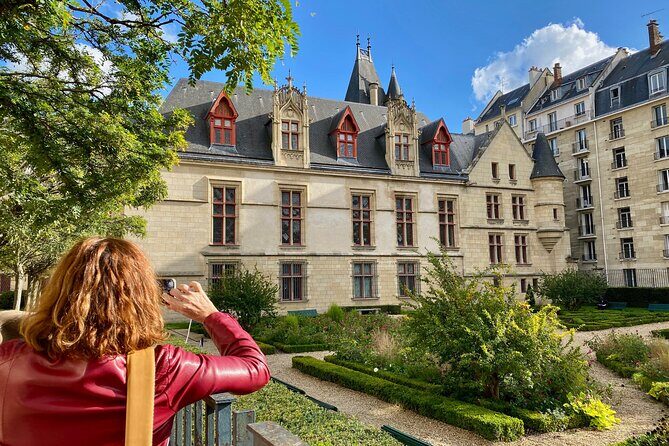
As you continue, the walk shifts from “spot viewing” into “how the city formed.” You’ll learn about how Paris was first built in the Marais Sud before expanding outward around areas such as the Louvre.
That’s a good shift. In a neighborhood like the Marais, it’s tempting to only notice beauty. This kind of historical framing makes your walk more satisfying because it explains why the streets and boundaries feel the way they do.
You’ll also encounter the neighborhood of Saint-Paul, tied to a story connected to King Charles VI—a ball organized in the area is mentioned as part of what made Saint-Paul notable.
The reason I think this works for most visitors: Paris history stops being a list and starts being tied to a place you can physically navigate. Even if you only catch portions of the story, the city-layout explanation helps you remember what you saw.






12th-century city walls: the big visual lesson

One of the most tangible “wow” elements in this route is the mention of the 12th-century Parisian city walls, described as being almost 1000 years old.
Walls like this are the kind of feature that can feel invisible if you’re not told what to look for. A good audio walk helps here by giving you permission to slow down and inspect—brickwork, alignment, and the way older boundaries still influence modern streets.
I’d approach this section with a simple mindset:
- Walk a bit slower than you normally would.
- Look for where the street seems to change character or direction.
- Use the audio trigger as your cue that you’re at the right “history angle,” not just another old wall.
This is also where the automatic playback is most useful. You don’t want to be searching your phone while trying to register a subtle architectural clue.
Ending at Place des Vosges: set yourself up for the next step
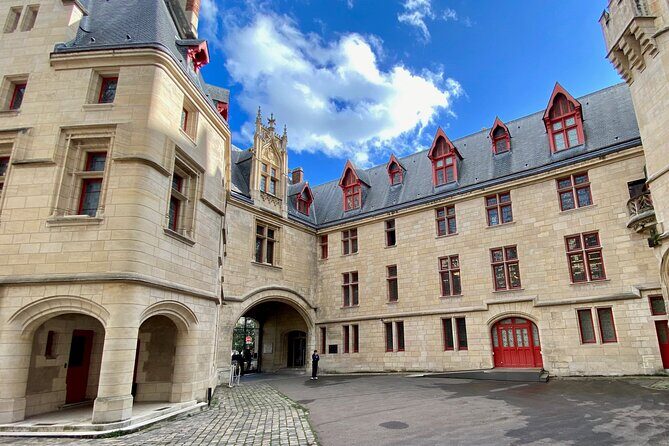
The tour ends at 3 Pl. des Vosges, 75004 Paris, at Place des Vosges (with the metro options Saint-Paul or Bastille mentioned).
Ending here is practical. Place des Vosges isn’t just scenic—it’s a great “reset button” for your day because it’s easy to reorient. You can grab a snack, branch toward museums, or head back across the city without feeling like you got dropped into an inconvenient alley.
If you want to maximize value, keep this in mind:
- Plan your next activity near Place des Vosges.
- Use the last minutes of the walk to pick your direction while the area is still fresh in your mind.
Price and time: why $11.56 can make sense here

At about $11.56 per person, this sits in the budget-friendly zone for Paris audio experiences. The value isn’t that it’s “cheap.” It’s that it’s built to reduce the biggest costs of self-guiding: confusion and wasted time.
You’re paying for:
- The Rewind app experience
- Automatic audio triggering designed for your exact location
- Navigation help that tries to prevent getting lost
- A route length that doesn’t overstay your welcome (roughly 1 to 1.5 hours)
If you’ve ever spent money on a guided walk where the guide focused on a few major landmarks but left you bored at the edges, this kind of tour can feel more efficient. You still get storytelling, but the pace is controlled by you.
Where the value can slip: if you can’t get the app access working quickly at the start, you’ll feel like you paid for instructions you never received. Because of that, I’d recommend arriving prepared, not improvising.
When this tour is a smart match for you
This is best if you like your sightseeing with:
- Your own pace (not a group herd)
- More attention to architecture and neighborhood texture than big-ticket monuments
- A low-stress way to explore beyond the most obvious tourist paths
It also fits well for couples, solo walkers, and people who want to learn without turning every stop into a long museum-style detour. The “private tour/activity” format (only your group participates) can help you feel calmer even in a crowded city.
You might want to skip it—or plan extra time—if:
- Your phone battery is unreliable
- You expect staff to be on-site to help you troubleshoot app access
- You prefer fully spoken human guidance the whole way
Practical prep so the walk goes smoothly
A few prep steps can turn this from “cool idea” into a smooth win.
- Test your setup before you leave: make sure you can open Rewind and access the audio tour.
- Bring a charged phone and a power bank if you have one. A walking audio tour can eat battery faster than you think.
- Use the exact meeting address: 1 Rue des Nonnains d’Hyères. The Marais has lots of similar lanes; small errors can cost time.
- Expect an easy walk, not a shuttle day: this is a walking tour where the fun comes from moving street to street and letting the audio lead you.
One more thing: some feedback indicates a few people had trouble with startup links or contact details. I can’t promise that will happen to you, but it’s worth taking seriously. If anything looks missing in your confirmation materials, solve that before you start walking.
Should you book Marais HiddenTreasures?
I’d book this if you want a calm, story-led Marais walk built around private mansions, gardens, and the kind of architecture that rewards slow looking. The automatic audio and pause/resume flexibility are the heart of the experience, and at this price, it’s an easy way to add depth without adding stress.
I’d think twice if you’re the type who hates phone dependence or who struggles with tech setup on travel days. If your phone works well, your battery is topped up, and you can access the Rewind audio before the start, you’ll get a lot out of this 1–1.5 hour route.
FAQ
How long is the Marais HiddenTreasures audioguided walking tour?
It’s approximately 1 hour to 1 hour 30 minutes.
Where does the tour start and end?
The start is 1 Rue des Nonnains d’Hyères, 75004 Paris, and the tour ends at 3 Pl. des Vosges, 75004 Paris near Place des Vosges.
What does the tour cost?
The price is $11.56 per person.
What app is used for the audio guidance?
The tour is done through Rewind’s app on your smartphone.
Do the audio commentaries play automatically?
Yes. The audio commentaries are designed to trigger automatically when you reach the locations.
Can I pause the tour and resume later?
Yes. You can take a short break and then resume right where you paused, in the same spot.
Is there a way to avoid getting lost?
Yes. The experience includes a map for real-time directions and an integrated geo-localization feature if you take a wrong turn.
What kind of sights are included?
The walk focuses on private mansions, a French-style garden, 12th-century city walls, and the Saint-Paul area, ending at Place des Vosges.
Is this a guided group tour?
It’s listed as a private tour/activity, meaning only your group will participate.
Are there any date/time details for when it runs?
Opening hours are listed as 8:30 AM to 5:30 PM, Monday through Sunday, for the stated availability window (12/02/2020 – 06/16/2026).