REVIEW · PARIS
Medieval Paris Private Walking Tour
Book on GetYourGuide →Operated by Paris in person private tours · Bookable on GetYourGuide
Paris has layers. This tour shows the seams.
In just two hours, you walk through parts of Paris where the Middle Ages still show up in stone, street patterns, and building façades. I like that the route focuses on major medieval anchors like Notre-Dame Cathedral and the Latin Quarter, not random photo stops. I also like the mix of sights and “how to look” details, so you know what you’re seeing when a medieval symbol appears on a façade. One thing to consider: it’s rain or shine, so plan for weather and comfortable walking shoes.
I especially like the private format. Your guide can set the pace and explain the connections between places while you’re actually in front of them. I also like that the tour includes places that connect the medieval city to what you see today, including a guided explanation of how the Middle Ages connect to the Centre Pompidou. The possible drawback is simple: with only 2 hours, you’ll get focused highlights, not a slow, sit-down museum day.
Key points to know before you go
- Notre-Dame de Paris is the emotional center of the medieval story here.
- Hotel de Cluny gives you a medieval “power base” feel, not just sightseeing.
- The Latin Quarter helps you picture daily life in the Middle Ages where it still lingers.
- You’ll see the Sorbonne, one of Europe’s oldest universities, for context on ideas and education.
- The Fontaine des Innocents is the oldest intact fountain in Paris, and it’s a great quick-history stop.
- The guide explains the surprising link between medieval Paris and the modern Centre Pompidou.
In This Review
- What makes this Medieval Paris private walk a smart use of 2 hours
- Starting at Cluny la Sorbonne: an easy meeting point and a good vibe
- Hotel de Cluny: medieval abbots, not just medieval walls
- Notre-Dame Cathedral: why the medieval heart still hits today
- Latin Quarter streets: where you can still picture medieval daily life
- Sorbonne and the medieval university mindset
- Saint-Jacques Tower: flamboyant Gothic, and a church that didn’t survive
- Les Halles and the Fountain of the Innocents: commerce and daily rhythms
- The Pompidou connection: old Paris explained through modern landmarks
- Guide-led value: what you’re really paying for
- Who this tour is best for (and who might want something else)
- Practical details that keep the walk stress-free
- Should you book Medieval Paris Private Walking Tour?
- FAQ
- How long is the Medieval Paris private walking tour?
- Where does the tour start and end?
- Is the tour private?
- What languages is the tour available in?
- Does the tour run in bad weather?
- What’s included in the price?
- Is food or drink included?
- What’s the cancellation policy?
What makes this Medieval Paris private walk a smart use of 2 hours
If you want medieval Paris, but you don’t want a full-day grind, this works. The tour is built around the idea that the city is your textbook: you walk between key sites and learn what to notice as you go.
At 171 USD per person, you’re paying for a private guide and a tight route through top medieval highlights. In practical terms, it’s best when you value interpretation—someone pointing out what matters—over wandering and guessing on your own.
Also, this operator has been recognized as a top small tour company in Europe, which fits the “small, focused, guide-led” style this route aims for. You’ll see a lot of ground, but it’s not the kind of route that feels like a checklist.
Starting at Cluny la Sorbonne: an easy meeting point and a good vibe
The tour starts in front of McDonald’s at Cluny la Sorbonne Metro Station (Line 10). Look for the guide with a red canvas tote bag, which makes it easy to spot them quickly even if you’re arriving a little late.
This is a smart starting location because you’re launching in an area that already feels historic and walkable. You’re also positioned well for getting into the older fabric of the city—streets that feel less like modern Paris and more like the medieval version of it.
One small practical note: since the tour operates rain or shine, arriving a few minutes early helps you get your bearings before you start moving.
You can also read our reviews of more walking tours in Paris



Hotel de Cluny: medieval abbots, not just medieval walls
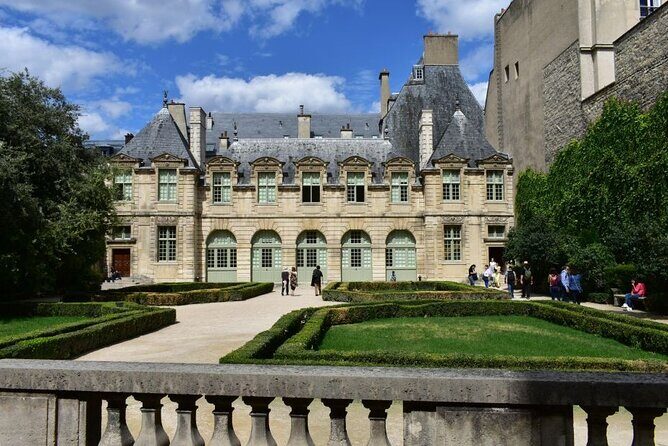
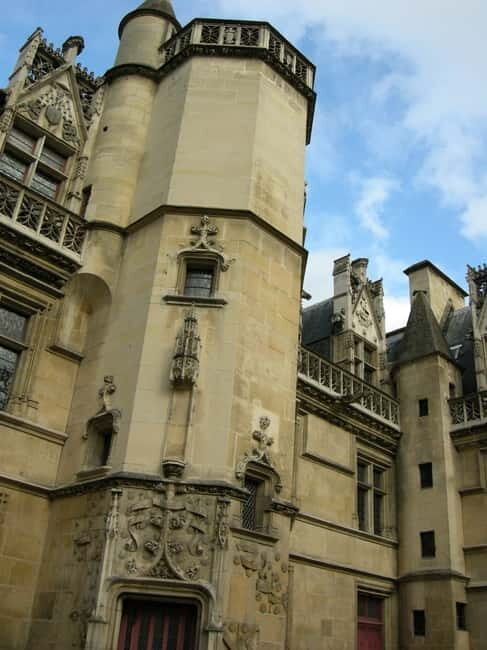
One of my favorite kinds of stops on walking tours is a place that explains who had influence. The tour includes the Hotel de Cluny, the former mansion of the Cluny abbots, now the Museum of the Middle Ages.
Even without turning it into a long museum visit, the setting does a lot for the story. A mansion like this signals power, wealth, and organization. It’s not just a random old building; it helps you understand the Middle Ages as an era with institutions, patrons, and politics.
Expect your guide to connect the architectural cues you see around the area to the way medieval people lived and worked. In other words, you’re learning to read the city, not just visiting a name on a map.
Notre-Dame Cathedral: why the medieval heart still hits today
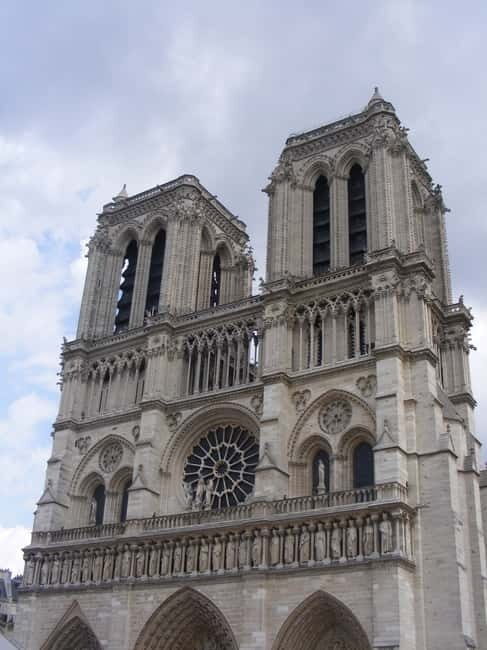
The centerpiece is Notre-Dame de Paris—the most important monument to medieval Paris in this route. It’s the kind of place where the scale can overwhelm you unless someone explains what you’re looking at.
What I like about including Notre-Dame here is the framing: you’re arriving with medieval context from the streets and earlier stops. That matters. Otherwise, you might enjoy the building, take photos, and move on. With this tour’s approach, you’re more likely to notice how medieval design choices tell you something about beliefs, craftsmanship, and the role of the cathedral in city life.
A practical tip: Notre-Dame is a popular area, and crowds happen. The private format helps because your guide can manage the pace and keep you oriented while you’re there.
Latin Quarter streets: where you can still picture medieval daily life
After Notre-Dame, you’ll wander the Latin Quarter, one of the oldest parts of the city. This is where the tour’s walking style really earns its keep.
Instead of only focusing on one landmark, you’re moving through streets where the medieval city plan and building façades help you imagine everyday life 800 years ago. The tour description specifically calls out façades that retain medieval symbols, which is exactly the kind of detail that changes a stroll into a story.
If you like “how people lived” history—who lived where, what the buildings suggest, what the streets imply—this section tends to be the best fit. It’s also a nice balance after Notre-Dame because it slows the emotional intensity and shifts you into observation mode.
Sorbonne and the medieval university mindset
You’ll then go to the Sorbonne, described as one of Europe’s oldest universities. Even if you don’t think of yourself as a “school history” person, this stop can click fast.
Universities shape cities. They pull in ideas, people, debates, and resources. In medieval times, that meant learning wasn’t separate from politics, religion, and urban life—it was tied to everything.
On this tour, the Sorbonne adds another key medieval theme: education and institutions. It’s not just about where medieval power lived (like at Hotel de Cluny), but where medieval minds formed.
You can also read our reviews of more private tours in Paris






Saint-Jacques Tower: flamboyant Gothic, and a church that didn’t survive
Next up is the Saint-Jacques Tower, described as Flamboyant Gothic and the last major remnant of the 16th-century Church of Saint-Jacques-de-la-Boucherie.
I like this stop because it teaches a subtle lesson: history isn’t only what remains; it’s also what changed. When a tower is all that’s left, you’re looking at a partial survival—and that helps you think about how the city evolved after the Middle Ages.
Flamboyant Gothic, as a term, points to a style with strong ornament and dramatic forms. On the ground, your guide can help you connect those stylistic choices to the era that produced them, and to what people wanted a church to communicate in that period.
Les Halles and the Fountain of the Innocents: commerce and daily rhythms
The tour includes Les Halles, focusing on its mercantile history. Think of this stop as the Middle Ages through the lens of daily needs: markets, goods, and the flow of people.
Then you’ll head to the Fontaine des Innocents, described as the oldest intact fountain in Paris. This is a great kind of stop because it’s specific and human-scale. A fountain is a functional object tied to street life, not just grand monuments tied to ceremonies.
Together, Les Halles and the Fountain of the Innocents help you build a more complete picture of medieval Paris. You’re not only seeing religious power and education. You’re also seeing the economic engine and the everyday infrastructure that supported life.
The Pompidou connection: old Paris explained through modern landmarks
One of the most interesting parts is also the least visual to predict: you’ll learn the connection between the Middle Ages and the modern Centre Pompidou.
Since the tour promises a guided explanation, you’ll want to stay with your guide’s storyline rather than trying to force the connection yourself. This is the kind of learning that makes later sightseeing easier, because you start to notice how the modern city keeps layers underneath.
If you’re the type who likes to understand why cities look the way they do, this stop is worth paying attention to. It turns Pompidou from a standalone modern box into another chapter in Paris’s long urban evolution.
Guide-led value: what you’re really paying for
This is a private group tour with a live guide, and that matters at this price point. For 171 USD per person, the value isn’t only the number of famous sites—it’s the way a guide helps you interpret them while you’re standing in the right place.
The tour also includes key highlights that typically require separate planning: Notre-Dame, Hotel de Cluny, the Latin Quarter, the Sorbonne area, and the Fontaine des Innocents. Putting that in one 2-hour walk is the practical win.
On the quality side, the tour has a 4.9 rating across 12 reviews, which is a strong signal for a guide-led experience. One review specifically singled out the guide Isabella for being nice and very knowledgeable, which matches what you need for a fast-paced walking tour: clear explanations and a friendly pace.
Who this tour is best for (and who might want something else)
This tour fits best if you:
- Want major medieval sites without spending a whole day bouncing between neighborhoods
- Like history that’s anchored to what you can see in front of you
- Prefer a private guide who can keep the route moving and make sense of architecture and symbols
You might choose a different format if you:
- Want long museum time and deep interior viewing
- Don’t do well with walking in rain (the tour runs rain or shine)
- Are hoping for a slow, sit-everywhere pace—this is 2 hours, so it’s designed for momentum
Practical details that keep the walk stress-free
The tour is 2 hours, and starting times vary (check availability). It’s led in English and French, and the guide meets you at the Cluny la Sorbonne Metro (Line 10) area, in front of McDonald’s.
It ends back at the meeting point. The tour includes the guide only; food and drinks aren’t included, so plan to grab a snack on your schedule before or after.
Since it operates rain or shine, bring a light jacket or rain gear. And because you’re covering multiple stops, comfortable shoes aren’t optional—they’re the difference between a fun walk and a grumpy one.
Should you book Medieval Paris Private Walking Tour?
I’d book it if you want medieval Paris to make sense quickly. It’s a compact route through the big names—Notre-Dame, the Latin Quarter, the Sorbonne area, Hotel de Cluny—and it adds texture with places like the Fontaine des Innocents and the Saint-Jacques Tower remains.
The private format is a big reason to pick this over a generic group walk. You get guided explanations while the city is right there in front of you, and the route includes a modern twist through the Centre Pompidou connection.
If you’re short on time but want a strong medieval foundation, this is a very reasonable way to spend it.
FAQ
How long is the Medieval Paris private walking tour?
The tour lasts 2 hours.
Where does the tour start and end?
It starts at McDonald’s in front of Cluny la Sorbonne Metro Station (Line 10). It ends back at the same meeting point.
Is the tour private?
Yes. It’s a private group tour.
What languages is the tour available in?
The guide offers the tour in English and French.
Does the tour run in bad weather?
Yes. It operates rain or shine.
What’s included in the price?
The tour includes a guide.
Is food or drink included?
No. Food and drinks are not included.
What’s the cancellation policy?
You can cancel up to 24 hours in advance for a full refund.