REVIEW · PARIS
Paris and the Art of Music, 1.30 hour Walking Tour
Book on GetYourGuide →Operated by Not a Tourist Destination · Bookable on GetYourGuide
Paris sings when you walk its streets. This 2-hour small-group walk ties Mozart, Stravinsky, Edith Piaf, Maurice Chevalier, George Gershwin, and Cole Porter to actual Paris addresses. I love how the guide can personalize the story to your interests, and I love that the route mixes big-name sites with street-level details you can feel.
One thing to plan around: it’s a walking tour, so you’ll want comfortable shoes, and there’s no hotel pick-up. If you’re craving long indoor time, this is more about seeing places and hearing the connections out loud.
In This Review
- Key highlights at a glance
- Why Paris Music Lore Works Best on Foot
- Meeting at Relais Odeon Café and Getting Your Bearings Fast
- Saint-Germain-des-Prés Abbey: Where Troubadours Start to Make Sense
- Luxembourg Gardens and Marie de Medici’s Music Connections
- Carrefour de Buci: Paris Cabaret Years at a Busy Crossroads
- Cour du Commerce Saint-André: The Oldest Café Moment
- Saint-Sulpice Church and the 7,000-Pipe Organ Story
- Furstenberg Square: Where Piaf and Chevalier Land the Tour
- Price and Value: Is $99 Fair for a Two-Hour Music Walk?
- What I’d Do Differently Before You Book
- Who This Tour Fits Best (and Who Might Pass)
- Quick Practical Notes So You Don’t Waste Time
- Should You Book Paris and the Art of Music?
- FAQ
- How long is the Paris and the Art of Music walking tour?
- How big is the group, and how many people will be with us?
- Where do we meet the guide?
- What languages are the tours offered in?
- What should I bring, and is luggage allowed?
- Is there free cancellation, and can I pay later?
Key highlights at a glance
- Mozart to Piaf in one compact walk: famous names, placed in the real neighborhoods they’re linked to
- Personalized guiding: the small group format often turns into a tailored conversation
- Saint-Sulpice’s organ story: 7,000 pipes and a film cameo fact you’ll remember
- The oldest café setting: street musicians met here during the French Revolution
- Carrefour de Buci’s cabaret years: a dramatic crossroads between the world wars
- A romantic ending at Furstenberg Square: associated with both Edith Piaf and Maurice Chevalier
Why Paris Music Lore Works Best on Foot
This tour is built around one smart idea: Paris music history makes more sense when you can stand where the soundmakers once gathered. Instead of a list of composers, you get a route that moves through the places tied to troubadours, court music, Revolution-era street performers, cabarets, and the postwar performers who helped define Paris nightlife.
The walk also keeps the pacing friendly. Two hours is long enough to connect the dots, but short enough that you can still enjoy the rest of your day without feeling like you’re sprinting from stop to stop.
And yes, the “big names” are part of the pitch. You’ll hear about Mozart and Stravinsky, then glide toward Edith Piaf, Maurice Chevalier, George Gershwin, and Cole Porter. What makes it satisfying is that the tour doesn’t treat those names like museum labels. It uses the city as the stage.
You can also read our reviews of more walking tours in Paris



Meeting at Relais Odeon Café and Getting Your Bearings Fast

You meet at Relais Odeon Café, 132 Boulevard Saint-Germain, in the 6th arrondissement. The closest metro is Odeon (line 4). You’ll be starting in a part of Paris that’s already steeped in arts and ideas, so you don’t have to travel far to start your music story.
Because it’s small group, up to 8 people, the guide can shape the conversation. One of the standout themes from past tour experiences is personalization. In a couple cases, the group was tiny enough that the guide could tailor explanations to what people wanted to hear, and the walk felt more like a focused chat than a lecture.
Logistically, there’s no hotel pick-up or drop-off. You’re walking from a central meeting point, so I’d plan to arrive a few minutes early. Also, bring comfortable shoes. This is a city-walk tour, not a “sit and admire” tour.
Saint-Germain-des-Prés Abbey: Where Troubadours Start to Make Sense
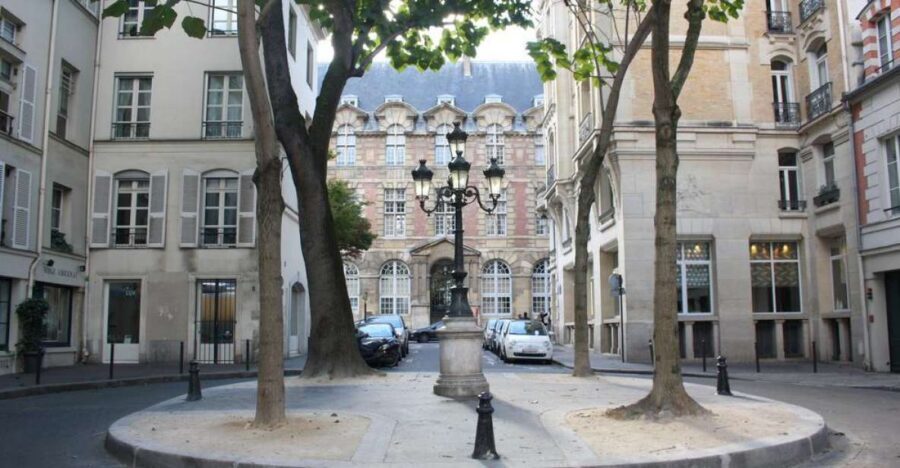
The route begins around the 6th-century Benedictine Abbey of Saint-Germain-des-Prés and the surrounding area, including Paris’s oldest church site tied to medieval performances. This is one of the best ways to start a music-themed walk because it grounds you in a time when music wasn’t background entertainment. It was tied to worship, ritual, and community life.
What I like about this stop is the way it reframes the Middle Ages. Instead of thinking of medieval Paris as stone and silence, you get the idea of music as part of the daily texture. You’ll hear about troubadours performing here during the Middle Ages, which helps you connect later eras—when music becomes more public, more theatrical, and more “Paris at night.”
Practical tip: this is an area where you can look up and around while still keeping your pace. Use the slow moments to spot street layout and building scale. Those small observations help the guide’s stories land.
Luxembourg Gardens and Marie de Medici’s Music Connections
Next up is Marie de Medici’s Luxembourg Gardens and Palace. This part of the tour is where you see music shift from church-centered performance toward court culture and patronage.
The Luxembourg Palace area is tied to Renaissance court music, which matters because it shows how composers and performers often depended on power and protection. In other words: if you want to understand why certain musical styles spread, you have to understand the social machinery behind them.
If you’ve visited formal gardens in Paris before, you’ll recognize the “designed for strolling” feeling here. The difference is that you’re not just looking at beauty. You’re tracing a system: who paid, who performed, and why it mattered.
This stop also sets you up for the next section of the walk, because after court music comes the messier, noisier world—where cabarets and crossroads shape the sound.
Carrefour de Buci: Paris Cabaret Years at a Busy Crossroads
You’ll pass by Carrefour de Buci, described as a colorful crossroads notorious for its cabarets between WWI and WWII. This is the stop where Paris music history starts to feel like a movie set—smoky venues, loud nights, and a city that knows how to turn hardship into art.
Carrefour de Buci matters because it shows how music culture lives in neighborhoods, not just in grand halls. Crossroads are where people meet, rumors travel, and new acts test their material. It’s a reminder that the Paris “music scene” wasn’t only royal or religious. It was street-adjacent and always changing.
When you’re standing at this corner, think of it less like a fixed “historical spot” and more like a recurring pattern in Paris: new styles sprout where people gather and where the city is slightly off-balance.





Cour du Commerce Saint-André: The Oldest Café Moment
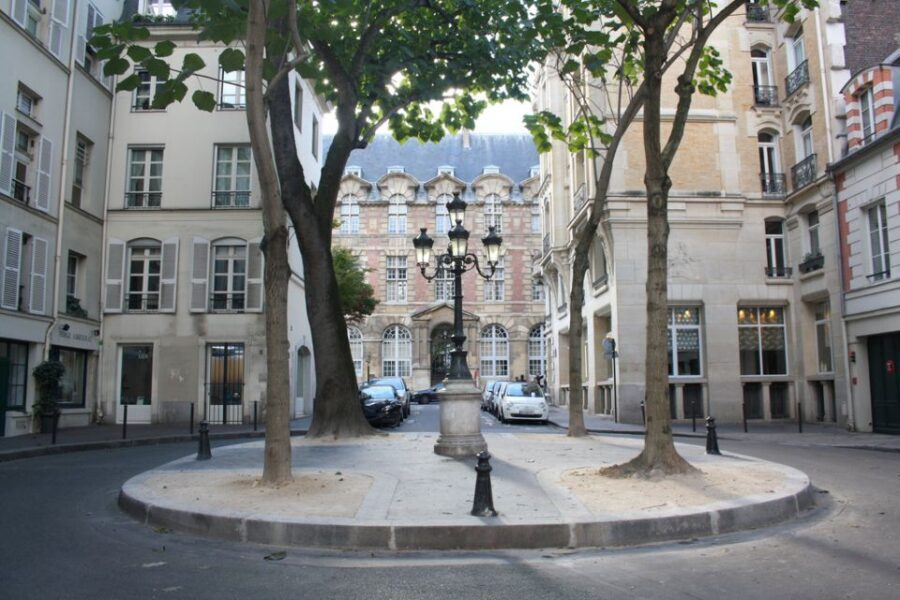
One of the most memorable parts of this tour is the visit to Cour du Commerce Saint-André, a charming street arcade and home to Paris’s oldest café. The idea here is simple and powerful: the music story isn’t complete without the meeting places.
This is where street musicians met during the French Revolution. Even if you don’t memorize a date, you’ll feel why a café mattered. It was a daytime meeting point and a nighttime gossip machine. Performers could connect, audiences could find out what was playing, and ideas moved faster than official channels.
Cour du Commerce Saint-André is also visually satisfying in a very practical way. It gives you a break from big avenues and lets you look at Paris at a human scale—arches, narrow space, and that “small world” feeling you rarely get from the major monuments.
If you want a souvenir of the day, this is the kind of place you can imagine returning to later. Not because it’s a theme park, but because it’s still a working Paris courtyard feel.
Saint-Sulpice Church and the 7,000-Pipe Organ Story
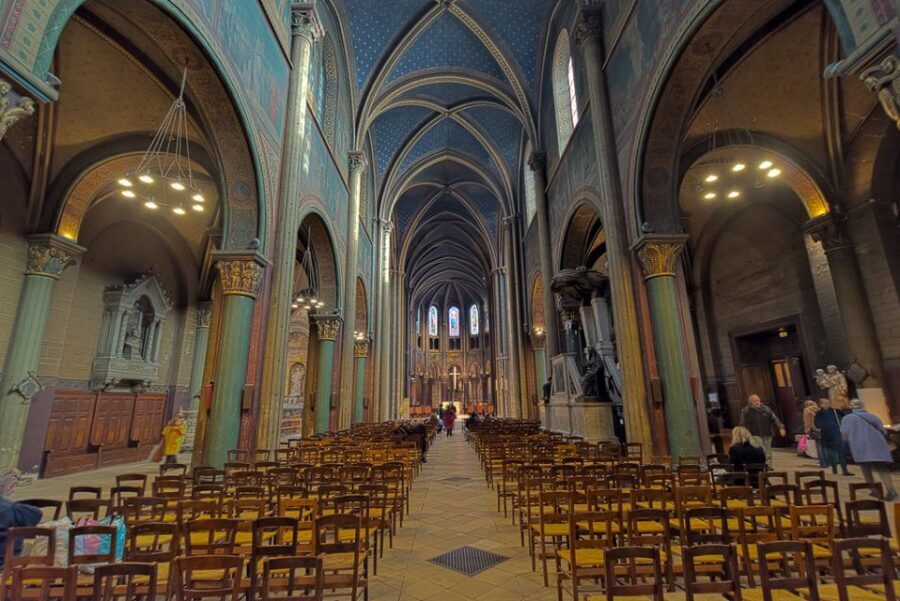
The tour includes Saint-Sulpice Church, a huge 17th-century Baroque site with a 7,000-pipe organ. The organ detail is the kind you remember later: it’s noted for having one of only three 100-stop organs in the world.
This stop does two things at once. First, it gives you a sense of the scale of religious music in Paris, when organs weren’t just instruments—they were statements. Second, it adds a modern pop-culture connection: the church has appeared in a supporting role in The Da Vinci Code.
That mix is useful for you as a visitor. If you’re not a classical-music nerd, you still get an easy entry point because pop culture makes people pay attention. If you are into classical music, the organ specifics give you something solid to latch onto, not just vibes.
Practical note: it’s a major church, so dress and behavior standards apply. Wear shoes that let you stand comfortably, since church interiors often involve a bit of waiting for the group and guide explanations.
Furstenberg Square: Where Piaf and Chevalier Land the Tour
The walking tour finishes at Furstenberg Square, a small, romantic square that’s a favorite of both Edith Piaf and Maurice Chevalier. Ending here is smart because it gives you a softer landing after the big architectural stops.
You also end in a space that feels like it belongs to performers. Squares are where you can picture gathering, lingering, and late-night storytelling. It’s a fitting wrap because the tour started in early religious and medieval contexts and ends in an intimate Paris “after hours” mood linked to Piaf and Chevalier.
I like that the ending isn’t another lecture. It’s a place to look around, slow down, and decide what you want to do next on your own—grab a drink nearby, keep walking, or just soak up the atmosphere.
Price and Value: Is $99 Fair for a Two-Hour Music Walk?
At $99 per person for a 2-hour walking tour, the value depends on what you want from Paris experiences.
Here’s what you’re paying for, in plain terms:
- An expert English-speaking local guide leading a focused route
- A small group limited to 8, which helps you get answers instead of just background noise
- A curated set of stops that connect music, performance spaces, and the changing role of entertainment across eras
I’d say it’s good value if you like guided context—especially if you’re the type who wants to know why a street corner matters. The reviews also highlight personalization, which can matter a lot when you’re spending time with a guide in a small group. When the group is tiny, you’re more likely to get explanations that match your taste.
Where it might feel pricey is if you only want to “see pretty places” and don’t care about music history. In that case, you can walk the same areas on your own. But if you want the connections explained, $99 buys you structure and storytelling that would take you a long time to assemble alone.
What I’d Do Differently Before You Book
This tour has a clear shape: walking + stories + specific music-linked addresses. So you’ll enjoy it more if you do a little prep.
- Skim your favorite music eras. Even knowing whether you like medieval, classical, or cabaret helps the guide tailor the talk.
- Bring comfortable shoes and wear layers. Paris weather can change fast, and you’ll be outside most of the time.
- Keep your hands free. The tour notes that luggage or large bags aren’t allowed, so travel light for this one.
Also, think about your group size expectations. Since the maximum is 8, you’ll likely get a warmer feel than big coach tours. One past experience described an unusually small group setup, and that’s where a tour like this can turn into something close to a private walk.
Who This Tour Fits Best (and Who Might Pass)
This is ideal if you:
- Love Paris streets but want meaning, not just scenery
- Enjoy music history across eras—church to court to cabaret to iconic performers
- Prefer a guide who can adapt to your interests
It may not be ideal if you:
- Want lots of museum time, long indoor stops, or lots of sitting
- Are traveling with heavy bags and don’t want to manage luggage during a walking-only route
If you’re visiting for a first trip and you want one experience that ties together multiple “Paris themes,” this tour works well. It’s also a good add-on if you already plan to spend time in the Latin Quarter area, since the meeting point and route place you right in that thick-of-it zone.
Quick Practical Notes So You Don’t Waste Time
A few details that make a difference on a city walk:
- Duration: listed as 2 hours
- Languages: English and Spanish
- Meeting point: Relais Odeon Café, 132 Boulevard Saint-Germain, 75006
- Group size: up to 8 participants
- What to bring: comfortable shoes
- Not allowed: luggage or large bags
It’s a good “day plan organizer” too. After a tour like this, you’ll know which areas you want to return to later with your own agenda.
Should You Book Paris and the Art of Music?
If you’re the kind of traveler who likes walking tours with a mission, I’d book this. The best part isn’t just that famous composers get mentioned. It’s that the guide connects the names to places you can actually stand in: a medieval church setting, a court garden area, a cabaret crossroads, an arcade café courtyard tied to Revolution-era street musicians, and Saint-Sulpice with its famously massive organ.
The risk is mainly logistical and personal preference: you need to be comfortable walking, and you should want stories more than sitting. For most people who love Paris and want music history with real addresses, it’s a strong pick.
FAQ
How long is the Paris and the Art of Music walking tour?
The tour is listed as 2 hours long.
How big is the group, and how many people will be with us?
It’s a small group limited to 8 participants.
Where do we meet the guide?
You meet at Relais Odeon Café, 132 Boulevard Saint-Germain, 75006, near Odeon (Metro line 4).
What languages are the tours offered in?
The guide speaks English and Spanish.
What should I bring, and is luggage allowed?
Wear comfortable shoes. Luggage or large bags are not allowed.
Is there free cancellation, and can I pay later?
Yes. You can cancel up to 24 hours in advance for a full refund. You can also reserve now & pay later, meaning you can book without paying today.