REVIEW · PARIS
Paris Champs-Élysées 2-Hour Private Walking Tour
Book on GetYourGuide →Operated by Paris in person private tours · Bookable on GetYourGuide
Paris’s main boulevard has a secret life.
This 2-hour private Champs-Élysées walk is built for first-time context, with your guide connecting the avenue to Roman mythology and Napoleon while still pointing out the big, beautiful architecture. I also like the way it mixes famous stops with more human Paris moments, including stories tied to Picasso’s favorite drinking dens. One possible drawback: it’s a tight loop, so if you want long shopping breaks or long, slow photo sessions at each monument, you’ll need to plan extra time on your own.
You’ll start at Place de la Concorde, under serious “Paris-planning” energy, and then move through the museum pair of Grand Palais and Petit Palais on the way to the iconic shopping stretch. It’s rain or shine, and because it’s private, your guide can pace it for your group—but the flip side is you’ll want comfortable shoes, since this is still a walking tour.
In This Review
- Key things I’d watch for on this private Champs-Élysées route
- A 2-hour private Champs-Élysées tour that teaches the boulevard
- Meeting at Place de la Concorde (and finding your guide fast)
- Place de la Concorde: the neoclassical groundwork you’ll keep using
- The Luxor Obelisk and Hôtel de Crillon: iconic neighbors with different vibes
- Petit Palais and Grand Palais: museum stops with real context
- Walking the Champs-Élysées: from myth to Napoleon to today
- Ladurée on Avenue Montaigne: a useful break, not a mandatory detour
- The Arc de Triomphe: ending at Napoleon’s monolithic monument
- Picasso’s drinking dens: how small stories make big monuments human
- Languages, private group pacing, and what the 2 hours really means
- Price and value: is $176 per person worth it?
- Should you book this Champs-Élysées private walking tour?
- FAQ
- How long is the Paris Champs-Élysées private walking tour?
- Where does the tour meet?
- Is this tour private?
- What languages are available?
- What are the main sights on the route?
- Is food or drink included?
- Does the tour run in bad weather?
- Is the tour wheelchair accessible?
- Can I cancel for a refund?
- Is reserve now and pay later available?
Key things I’d watch for on this private Champs-Élysées route
- You’ll get both sides of the story, from myth connections to Napoleon-era meaning, not just postcard views.
- Place de la Concorde sets the tone fast, with the neoclassical planning you’ll keep noticing as you walk.
- Grand Palais and Petit Palais are museum stops, so you’re not only outside admiring façades.
- You’ll learn what changed over time, including how the avenue shifted from park-like roots to today’s celebrity shopping street.
- There’s a sweet and practical pause, with time near Ladurée for a macarons stop if it fits your pace.
- A private format means your guide can steer attention to what you care about most.
A 2-hour private Champs-Élysées tour that teaches the boulevard
Champs-Élysées can feel like one long “look at that” street. This tour does something smarter: it gives you the map in your head first, then you walk it in real time. You’ll get the main sights in a compact window, with your guide explaining how the avenue links to major eras—both the grand political drama of Napoleon and the older imaginative threads people associate with Roman mythology.
The private format matters here. In two hours, group tours can feel like a constant catch-up game. With a private group, you’re more likely to get answers as you go—especially when you’re trying to understand why these buildings and spaces are where they are, and why the boulevard means what it means.
You can also read our reviews of more walking tours in Paris



Meeting at Place de la Concorde (and finding your guide fast)
Your tour starts in front of the Luxor Obelisk at Place de la Concorde. That’s useful, because it’s a landmark you can spot without guesswork once you’re there. Your guide will be carrying a red canvas tote bag, so look for that color first before you worry about matching faces or uniforms.
This start is also a smart choice. Place de la Concorde is the kind of place where Paris planning is obvious: big space, clear alignment, and architecture that’s meant to feel monumental. Getting your bearings here makes everything that follows easier, especially once you begin walking the avenue’s long sightlines.
Place de la Concorde: the neoclassical groundwork you’ll keep using
The tour highlights Place de la Concorde as a neoclassical masterpiece of architecture and planning, and that’s exactly what you’re walking into. The value isn’t just aesthetics. It’s learning how Paris designed major public space to create order and perspective—so when you later see the Arc de Triomphe, the geometry won’t feel random.
In practice, I think this stop pays off because it gives you a reference point. You’ll understand how the city’s grand spaces are laid out to “pull” you forward, and why the Champs-Élysées isn’t only a shopping street—it’s a designed corridor with a long political and cultural role.
The Luxor Obelisk and Hôtel de Crillon: iconic neighbors with different vibes
From the obelisk area, the tour threads into nearby sights like Hôtel de Crillon. You’re not meant to treat this as a checklist. The guide’s job is to connect details into a bigger picture: what you’re seeing in the present, and what those same surroundings once represented.
Even if you’ve only seen these places from a distance on postcards, you’ll notice how the setting changes your perspective. The obelisk gives you height and drama; the hotel brings the sense of prestige and the way Paris layers “serious” architecture near everyday life. It’s a helpful contrast before you hit the full momentum of the Champs-Élysées itself.
Petit Palais and Grand Palais: museum stops with real context
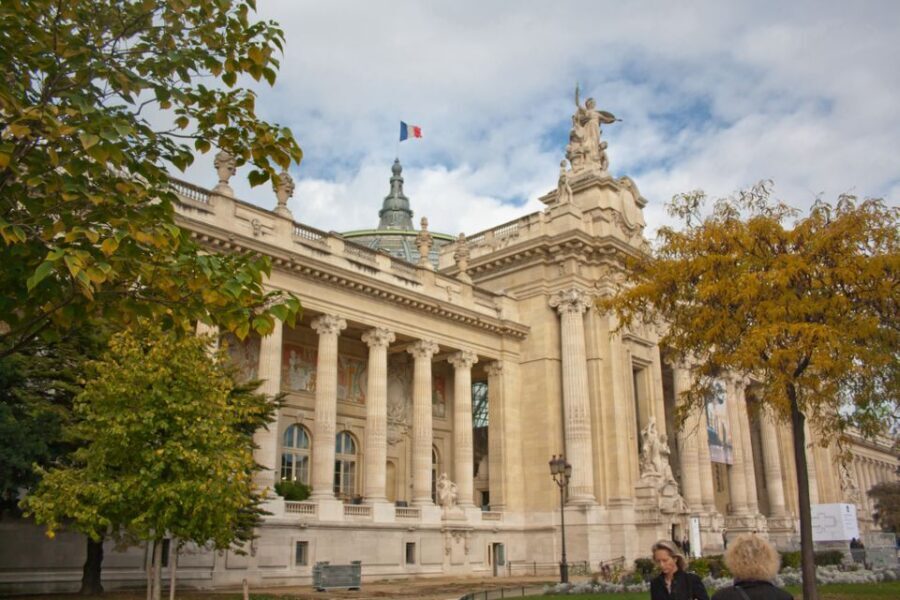
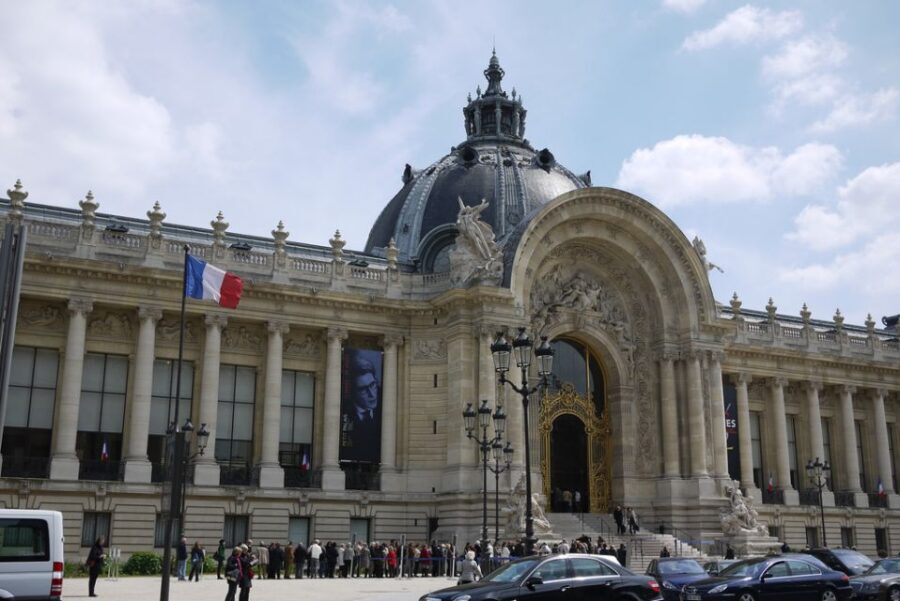
One of the best parts of this walk is that it includes Petit Palais and Grand Palais, both described here as now museums. You’re getting more than an outside look at famous façades; you’re getting a cue that Paris doesn’t just build monuments for viewing—it keeps them functioning.
Why this is valuable: museums often make you slow down. Even if your time inside is limited (this is a 2-hour tour), the guide can help you understand what you’re looking at so you’re not just passing by as a tourist-shaped blur. You’ll also get practice noticing architectural cues—symmetry, scale, and how these buildings relate to the avenue corridor.
If you’re the type who wants to understand what you’re standing in front of, these two stops do a lot of heavy lifting.
You can also read our reviews of more private tours in Paris





Walking the Champs-Élysées: from myth to Napoleon to today
Now you’re on the main event: Avenue des Champs-Élysées, plus Avenue Montaigne as part of the route. The guide will explain the “two-sided” feel of the avenue—its connection to Roman mythology on one thread, and Napoleon on another.
The tour also doesn’t pretend the Champs-Élysées was always a top shopping boulevard. You may be surprised to learn it used to be something simpler: a park setting with bars and third-rate theaters. That detail matters because it reframes what you’re seeing now. You’re not just admiring luxury storefronts; you’re watching a street that evolved from more casual entertainment and public space into a high-visibility Paris symbol.
And yes, you’ll likely notice how people treat it as a stage: big views, strong sightlines, and that “everything is happening here” feeling. With a guide, you’ll understand the logic behind that. Without it, it can feel like a blur of crowds and storefronts.
Ladurée on Avenue Montaigne: a useful break, not a mandatory detour
The route includes a stop near Ladurée for macarons. This isn’t food included—there’s no food or drink provided—but having a named place along the way makes it easier to plan a quick break.
Here’s how I’d use this moment if you book: treat it as a reset. Two hours goes fast, and a short pause keeps your brain from turning “Paris” into one uniform visual stream. Even if you skip the sweets, knowing there’s a convenient stop in the middle of the walk can help you pace yourself.
The Arc de Triomphe: ending at Napoleon’s monolithic monument
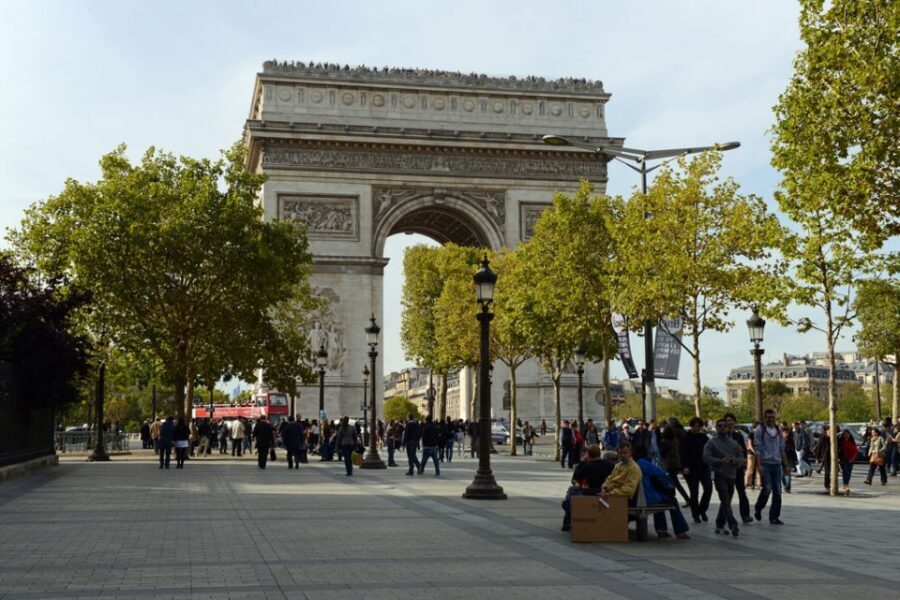
The tour’s final big anchor is the Arc de Triomphe, described here as a monolithic monument to Napoleon. That word choice fits what you feel when you’re near it: weight, scale, and a sense that the monument was built to be more than a decoration.
This ending works because it ties back to the explanations you heard earlier. If you’ve been listening for the Napoleon thread, the Arc becomes a payoff. You’re standing at a literal statement of power at the end of a boulevard that the guide has already explained as part of Paris’s political storytelling.
It also helps your sense of direction. Many first-time visitors wander in circles around central Paris. Ending here gives you an easy “from here I can go anywhere” feeling, because the area around the Arc acts like a hub.
Picasso’s drinking dens: how small stories make big monuments human
One highlight calls out the favorite drinking dens of Picasso and more. That’s the kind of detail that makes a walking tour worth it, even if you’re not a hardcore art historian.
Here’s why it works: the Champs-Élysées can be too easy to treat as pure surface—fashion, architecture, and photos. A story tied to an artist’s real hangouts gives the avenue a pulse. You start seeing it not just as a monument line, but as a place where people gathered, talked, and lived their days.
In the best moments of this kind of tour, you leave feeling like you understand why the city talks the way it does.
Languages, private group pacing, and what the 2 hours really means
This tour is private, so it’s designed for your group rather than for a crowd. That matters when you want flexible pacing: if your group moves slower, your guide can adjust. If you have questions, private format gives you more room to ask.
Languages offered are English, French, and Serbo-Croatian. If you’re traveling with mixed language comfort, ask what language your guide will be using when you reserve—so you don’t end up playing “guess the story” halfway through.
Duration is 2 hours. That’s the sweet spot for an intro. It’s also a ceiling. You’ll see the principal sites, but this isn’t a day-long Paris seminar. If you plan ahead for what you want next—museums, shopping, or a longer architecture walk—you’ll get more out of the time you spend here.
Price and value: is $176 per person worth it?
At $176 per person for a 2-hour private walk, you’re paying for three things: time with a guide, a compact route that hits major sights, and the flexibility that comes with a private group.
If you’re doing the Champs-Élysées anyway, the practical value is that a good guide turns a busy boulevard into an organized story. Without one, you’ll still see the Arc and the Palais buildings—but you may miss the why: the Roman mythology connection, the Napoleon link, and the way the avenue changed from park-like entertainment space to today’s shopping icon.
This price is most likely to feel fair if:
- you’re a first-time visitor who wants orientation fast,
- you like history and meaning more than only photos,
- you’re traveling in a small group and want your own guide pace.
It may feel steep if you already know the main history and you’re mostly shopping. In that case, you might prefer a self-guided walk and spend your money elsewhere. But if you want the boulevard explained clearly while you’re actually standing in the middle of it, the private format is the value lever.
Should you book this Champs-Élysées private walking tour?
I’d book it if you want a smooth start to a Paris trip. One guest highlight from a past booking summed up the feeling well: it was a great introduction to Paris history and a strong way to kick off the vacation. That’s the “job to be done” this tour focuses on—orientation plus meaning, in a short time window.
I’d think twice if you want lots of downtime, heavy shopping time, or long museum stops. This is a guided walking experience built for seeing the principal sights and getting the story behind them, not a slow day of browsing.
If you’re the kind of traveler who likes to understand what you’re looking at, you’ll probably enjoy this one.
FAQ
How long is the Paris Champs-Élysées private walking tour?
The tour lasts 2 hours.
Where does the tour meet?
You meet in front of the obelisk at Place de la Concorde. Your guide carries a red canvas tote bag.
Is this tour private?
Yes, it’s a private group tour.
What languages are available?
The live guide is available in English, French, and Serbo-Croatian.
What are the main sights on the route?
The principal sites include Place de la Concorde, the Luxor Obelisk, Hôtel de Crillon, Petit Palais, Grand Palais, Avenue des Champs-Élysées, Avenue Montaigne, Ladurée macaron shop, and the Arc de Triomphe.
Is food or drink included?
No. Food and drink are not included.
Does the tour run in bad weather?
Yes, tours operate rain or shine.
Is the tour wheelchair accessible?
Yes, the tour is wheelchair accessible.
Can I cancel for a refund?
You can cancel up to 24 hours in advance for a full refund.
Is reserve now and pay later available?
Yes, you can reserve now and pay later to keep plans flexible.