REVIEW · PARIS
Paris Guided City Sightseeing Tour by Bike or E-Bike
Book on Viator →Operated by Orange Fox · Bookable on Viator
Paris feels bigger when you walk.
This guided bike-or-e-bike ride is a practical way to get your bearings fast, while a local guide fills in the politics and stories behind major sights. I like that the route covers classic Paris highlights in one loop, and I especially like how the guide approach gives context without making it a long museum day.
You’ll likely stop for quick looks and photos—more “see and understand” than “stand in line.” My favorite part is the blend of famous spots and calmer streets along the way. One thing to consider: the tour lists up to 9 people, but I saw reports of larger groups, which can make the pacing feel rushed at meeting points.
In This Review
- Key Highlights You’ll Feel Immediately
- Why a Paris Bike Tour Beats Cramming Transit
- Bikes, E-Bikes, and the Comfort Factor on a 2.5-Hour Loop
- The Route From Palais-Royal to the Louvre: Where Paris Starts to Make Sense
- Rue de Rivoli and the Old Paris Churches: Fast Street-Life With Real Context
- Hôtel de Ville, Sainte-Chapelle, and Île de la Cité: The Gothic Wall of Sound
- Pont Neuf and the Seine Ride: Photo Stops That Don’t Feel Like Rush Hour
- Musée d’Orsay and Pont Alexandre III: Two Different Styles of Paris Grandeur
- Les Invalides and Napoleon’s Tomb: Military History Without the Museum Marathon
- Eiffel Tower and Trocadéro: The Classic Paris Moment With a Better Angle
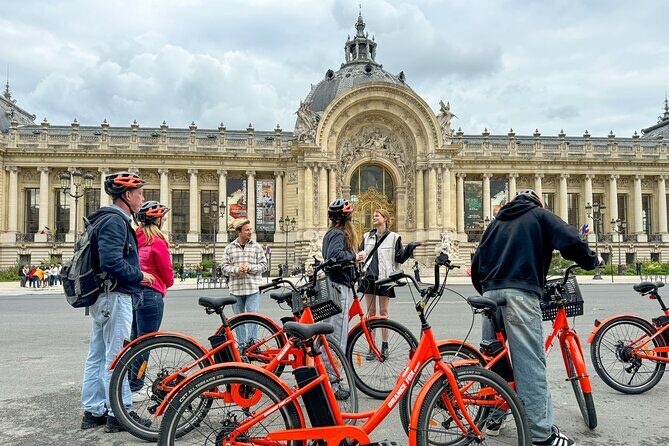
- Grand Palais to Petit Palais, Then Champs-Élysées and Arc de Triomphe Views
- Price and Value: Why $54 Can Work When You Use It Right
- Guide Quality Matters: Names I Saw and What They Added
- Group Size, Pacing, and Why It Affects Your Enjoyment
- Practical Tips So You Enjoy Every Mile
- Who Should Book This Paris Bike Tour
- FAQ
- How long is the Paris guided city sightseeing tour?
- How much does the tour cost?
- Is the Louvre Museum admission included?
- Are Eiffel Tower and other major attractions included for entry?
- What’s included with the bike?
- Where is the meeting point?
- Is the tour good for first-time visitors to Paris?
- Are children allowed on the tour?
- Are service animals allowed?
- What is the cancellation policy?
- Should You Book This Paris Bike Tour
Key Highlights You’ll Feel Immediately
- E-bike option helps you move faster with less effort on longer stretches
- Major landmarks in one loop means you’ll connect places instead of bouncing around Paris
- Guide storytelling turns stops like Notre-Dame and Sainte-Chapelle into understandable chapters
- Safety-first cycling with bike etiquette tips you can use the rest of your stay
- Quick photo stops reduce wasted time, especially if you’re short on days
- Seine views are timed for easy panoramas without hunting for viewpoints
Why a Paris Bike Tour Beats Cramming Transit
If you’re arriving in Paris with limited time, you face a brutal choice: either slow down to appreciate neighborhoods, or race around to catch the big names. A guided bike route solves both problems by letting you cover distance while still getting human-scale explanations.
This ride is designed around movement. You’ll cycle over six miles at an easy pace, hitting the core sights that many first-timers try to fit into one chaotic day.
You can also read our reviews of more cycling tours in Paris



Bikes, E-Bikes, and the Comfort Factor on a 2.5-Hour Loop
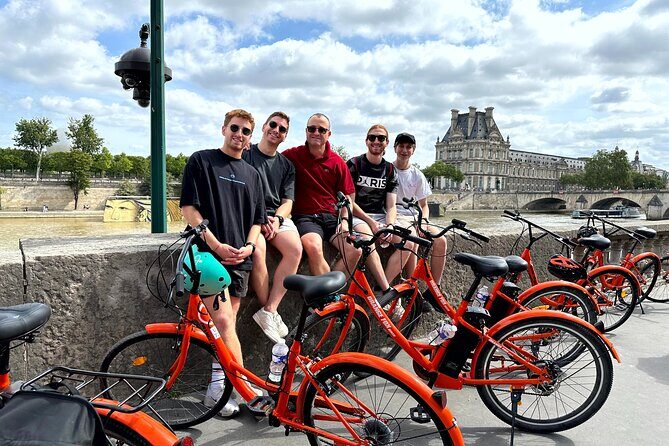
You get a bicycle with a phone holder, helmet, and luggage storage, plus bottled water. If you’re on a city bike with a basket, that’s a handy convenience for small essentials. If you’re not, the luggage storage still helps, but one review flagged a lack of baskets—so if carrying a bag is important to you, plan on using the provided storage or keep items light.
Choosing an e-bike can be a smart move if you’re not sure about traffic comfort. Even when cycling feels smooth on purpose-built lanes, Paris traffic and intersections demand focus. The e-bike helps you keep that focus without feeling like you’re fighting hills or speed.
The Route From Palais-Royal to the Louvre: Where Paris Starts to Make Sense
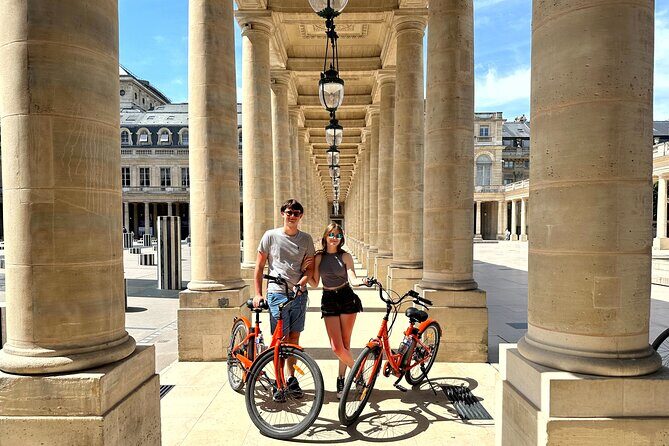
The tour begins near the center at 32 Rue Feydeau, then loops out and back. The first big “we’re really doing Paris” moment is Palais-Royal, where royal power used to sit—and now you get a garden-and-arcades feeling that’s calmer than the busy streets around it.
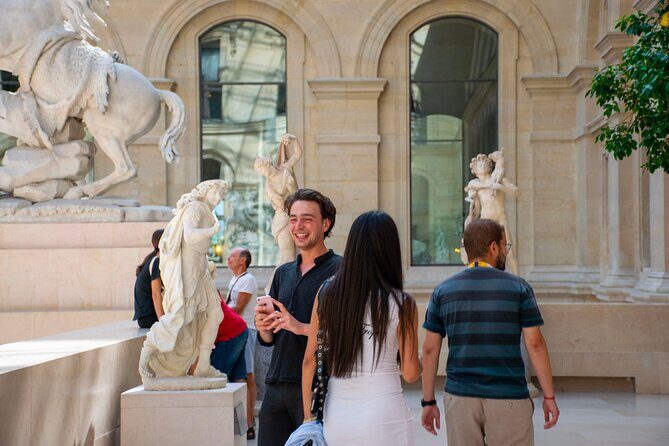
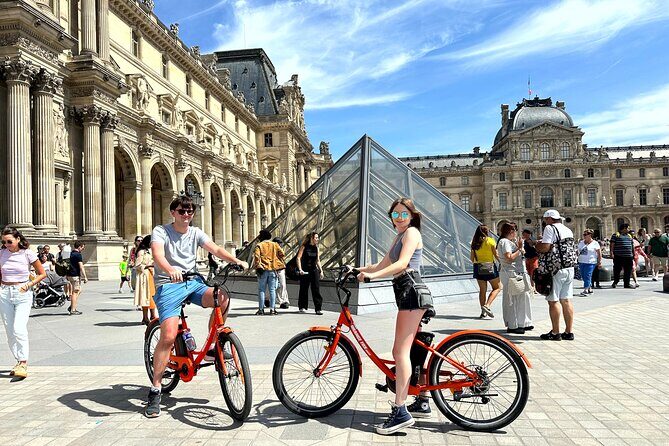
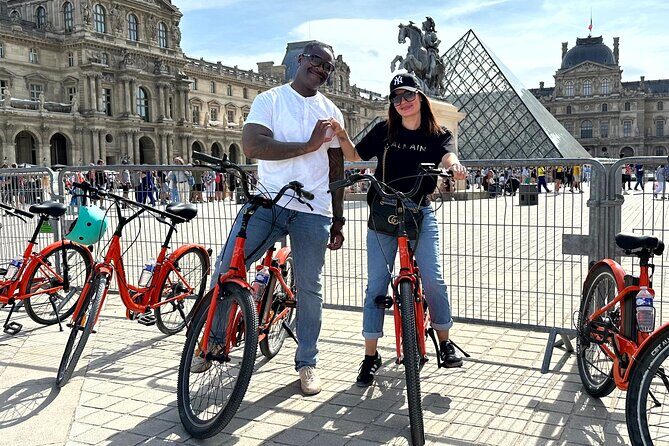
Next comes the Louvre Museum area, including the iconic glass pyramid entrance. This is one of those stops where you mostly get the visual hit, not a full museum experience—admission isn’t included here, so the time is best used to orient yourself and decide later if you want to return for a real visit.
You then ride into the Tuileries Garden, an easy transition from museum grandeur into a long, scenic walkway vibe. From there, the Arc de Triomphe du Carrousel adds a “less famous, still impressive” pause between the Louvre and the garden axis.
Rue de Rivoli and the Old Paris Churches: Fast Street-Life With Real Context
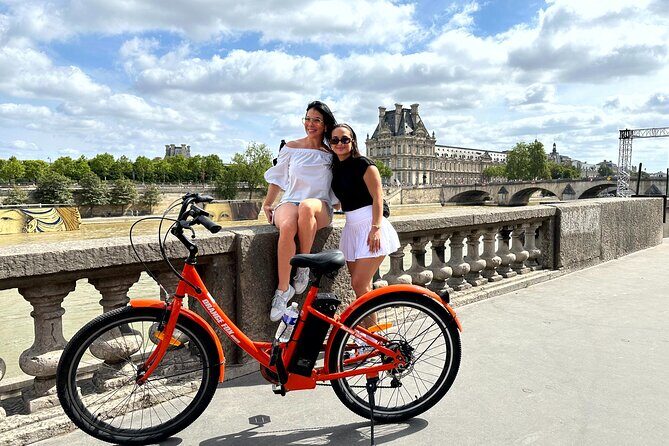
Cycling Rue de Rivoli is practical because it’s straight, central, and packed with the kind of storefront energy that makes Paris feel like Paris. If you’re the type who loves architecture detail, you’ll enjoy passing the façades and noticing how this area connects the big landmarks.
Then the tour pivots to churches that many first-time visitors overlook. Saint-Germain-l’Auxerrois is a great example: it’s tied to royal chapel history and its Gothic character fits the Louvre-world. After that, you’ll see the Square of Saint-Jacques Tower, where a lone tower is all that remains from a bigger church—an efficient way to understand how old Paris changes over time.
If you want to feel that “why does this street exist here?” moment, this is where the guide storytelling helps most.
Hôtel de Ville, Sainte-Chapelle, and Île de la Cité: The Gothic Wall of Sound
The Hotel de Ville stop is about the French Renaissance look of power and civic life. From there, you move into one of the most visually memorable stops on the route: Sainte-Chapelle and its stained-glass storytelling. Admission is not included, so expect the time to be about seeing what you can from outside and deciding whether you want to book a separate visit later.
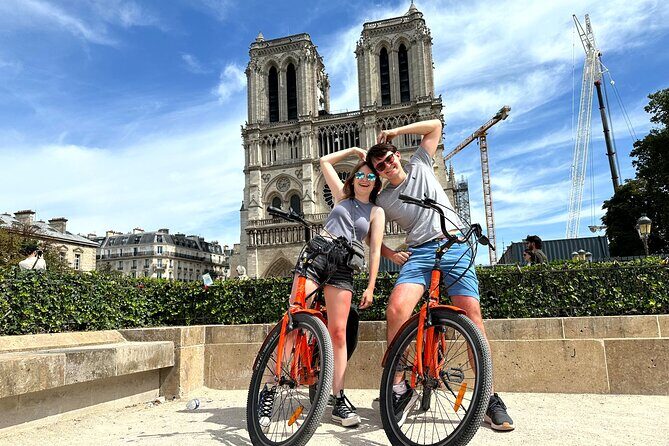
Then you ride into Île de la Cité, the historical heart of Paris. This is the part of the route that makes the Seine feel like a main character, not just a river you cross. You’ll pass the area around Notre-Dame de Paris—and a key detail: it’s currently under restoration, so you’re seeing the structure in its current state, not the classic “all windows perfect” postcard version.
You can also read our reviews of more guided tours in Paris





Pont Neuf and the Seine Ride: Photo Stops That Don’t Feel Like Rush Hour
Pont Neuf is a strong choice for a bike loop because it’s the oldest standing bridge across the Seine and gives you a steady angle on the riverbanks. It’s the kind of stop that works even if you’re tired, because the views do the heavy lifting.
Then comes the Seine river section, timed for calm, panoramic moments. You’ll get to look at historic buildings along the water without the chaos of trying to park a guided bus route in the middle of everything. This is also a nice “reset” stretch after the denser Île de la Cité area.
Musée d’Orsay and Pont Alexandre III: Two Different Styles of Paris Grandeur
On the Left Bank, the tour passes by Musée d’Orsay, which started life as a railway station. Admission isn’t included, so the value is orientation and visual contrast: you see how Paris reuses dramatic spaces instead of demolishing everything and starting over.
Then you reach Pont Alexandre III, one of the most photogenic bridges for a reason. The design is dramatic, and the views across the Seine make it easy to picture where you are in the city’s larger layout.
Les Invalides and Napoleon’s Tomb: Military History Without the Museum Marathon
A stop at Invalides makes sense on a bike route because it sits at an important crossroads of French identity. You’ll see the complex connected with the military museum and Napoleon’s tomb area. Admission isn’t included, so you’ll get the exterior impact and the historical framing that helps you understand why this place matters even if you don’t go inside.
If you like history, this is where the guide’s stories can turn “another big building” into something personal and specific—especially if your guide leans into politics and how monuments reflect the country.
Eiffel Tower and Trocadéro: The Classic Paris Moment With a Better Angle
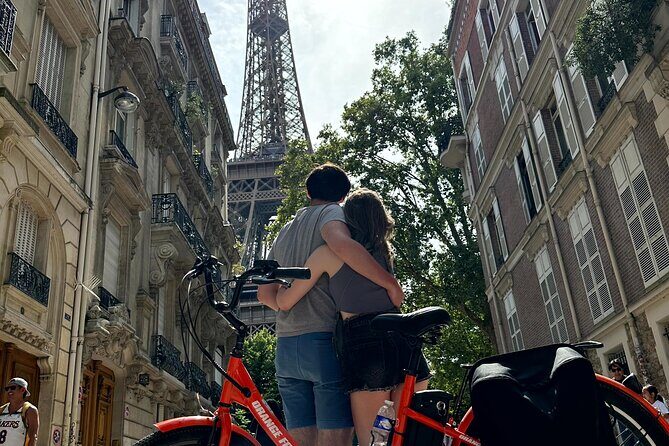
Yes, you’ll see the Eiffel Tower. Admission isn’t included, so this is about the visual payoff rather than climbing or going up. You’ll ride on to the Place du Trocadéro et du 11 Novembre, one of the best viewpoints for photos because it gives you a strong, open framing.
This is also a good part of the tour to slow your thoughts down. You’ve cycled through a lot of “city info,” and now you get that clean moment where Paris looks like Paris.
Grand Palais to Petit Palais, Then Champs-Élysées and Arc de Triomphe Views
From there, the route glides into the Grand Palais and Petit Palais areas—huge architectural statements for art and culture. Admission isn’t included for both, so treat these as architecture-and-exterior moments, not a full gallery day.
Then the tour cycles down the Champs-Élysées, which is one of those streets you either love or learn to enjoy with the right mindset. Either way, it’s an efficient lead-in to the Arc de Triomphe area. You’ll also pass Place de la Concorde, with the Luxor Obelisk in the middle, a reminder that this city’s story includes more than just beauty—it includes power, events, and political change.
Finally, you end by reaching Palais Garnier, the famous Paris Opera House. Again, admission isn’t included, so your goal is to absorb the façade and the grandeur, then decide if you want to come back for a performance later.
Price and Value: Why $54 Can Work When You Use It Right
At about $54, the headline value is simple: you’re paying for a guide plus the transport (bike or e-bike), with a duration around 2 hours 30 minutes and a route covering major points across central Paris.
Here’s the honest math: many of the big-name interiors have admission not included (Louvre, Sainte-Chapelle, Notre-Dame due to restoration access situation, Musée d’Orsay, Eiffel Tower, and the Palais/monument stops). That means the tour is best treated as an orientation and context experience. If you come expecting to enter everything, you’ll be disappointed.
If you treat it as a way to pick what to do next—then the price makes a lot more sense. In a short stay, saving time on getting from place to place is often worth more than any single museum ticket.
Guide Quality Matters: Names I Saw and What They Added
The reviews make it clear that guides can make or break the experience. I saw multiple mentions of excellent guiding moments, including bikes being handled calmly in rain and even support after a fall.
Guides named in reviews include Stan, Slava, Alexey, and Alexi. One guide was praised for comedy and clarity, another for flawless English, and others for keeping groups together. The best part for you: several reviews mention the guide sharing bike etiquette and Parisian tips—this is the kind of practical knowledge that helps you feel safer the rest of the trip.
Group Size, Pacing, and Why It Affects Your Enjoyment
The tour lists a max group size of 9. A few reviews reported larger groups (around 15–16), and that can affect how relaxed each stop feels. If the group is bigger, the guide may need to speak faster and you might get less time to absorb details.
If you hate feeling rushed, I’d plan for a flexible mindset. You’re signing up for a motion-based tour. The “win” is coverage and context, not slow wandering.
Practical Tips So You Enjoy Every Mile
Paris bike comfort is mostly about small choices.
- Wear layers. One review specifically called out how cold it was, even though the tour was still fun.
- Bring a phone and use the phone holder, especially since you’ll be stopping often for photos.
- Expect short stops. Many locations are not included for admission, so your time is usually for quick views and understanding what you’re seeing.
- If you’re new to cycling, the e-bike option plus a guide who emphasizes safety can help a lot.
And keep an eye on your surroundings at all intersections. A good guide handles traffic focus, but you still need to stay present.
Who Should Book This Paris Bike Tour
Book this if you:
- Want a short, high-impact way to see central Paris in one go
- Are new to the city and want help figuring out where things sit
- Like guided storytelling, especially when it connects monuments to politics and culture
- Would rather ride past famous sights than spend your whole day in queues
You might skip it if you:
- Want to spend lots of time inside major museums during the same trip
- Feel strongly about slow, unstructured wandering
- Are very sensitive to pacing changes if your group is larger than advertised
FAQ
How long is the Paris guided city sightseeing tour?
It lasts about 2 hours 30 minutes.
How much does the tour cost?
The price is $54.
Is the Louvre Museum admission included?
No. Admission to the Louvre is not included.
Are Eiffel Tower and other major attractions included for entry?
No. Admission for several major sites listed on the route is not included, including the Eiffel Tower, Musée d’Orsay, Sainte-Chapelle, and more.
What’s included with the bike?
You get use of a bicycle or e-bike, plus a helmet, phone holder, luggage storage, and bottled water.
Where is the meeting point?
The tour starts at 32 Rue Feydeau, 75002 Paris, France, and it ends back there.
Is the tour good for first-time visitors to Paris?
Yes. It’s described as perfect for getting your bearings for new arrivals.
Are children allowed on the tour?
Children under 6 can travel free if they meet the size/weight guidance (up to 20 kg and 140 cm) and ride on a child seat. Children under 12 must be accompanied by an adult.
Are service animals allowed?
Yes.
What is the cancellation policy?
You can cancel for a full refund up to 24 hours in advance. If you cancel less than 24 hours before the start time, the amount paid is not refunded.
Should You Book This Paris Bike Tour
I think you should book it if you want fast, guided orientation and you’re okay with short photo-and-context stops instead of full museum visits. The value is strongest when you use the tour to decide what to see next—like returning for a deeper look at places such as the Louvre, Sainte-Chapelle, or the Musée d’Orsay on a separate day.
If you hate pacing, or if you must get inside every landmark you see, then you’ll want a different plan. For most people, though, this is a solid way to connect the city’s big sights with real context while keeping the day moving.