REVIEW · PARIS
Paris Historic Private 3-hour Walking Tour with WWII Landmarks
Book on Viator →Bookable on Viator
Paris changes when you trace WWII.
This private 3-hour walk looks at the city through the years of occupation, moving from the Jewish quarter in Le Marais to landmarks around Place Vendôme and ending near the Charles de Gaulle statue. You’ll hear how Parisians lived, suffered, resisted, and survived—especially the stories tied to the Jewish population and civilian courage. I like that the tour keeps a private, flexible pace, so your guide can slow down when a detail matters to you.
I love two things here. First, the guide quality: Jo is known for adapting to what you want while keeping the history clear, and Christopher is praised for being personable, engaging, and happy to take questions. Second, the route mixes major sights with smaller wartime locations—so it’s not just a postcard tour with facts pasted on top.
One possible drawback: parts of this route deal with persecution and deportation, so it’s emotionally heavy. Also, expect steady walking for about three hours plus a short metro hop, so bring comfortable shoes and a moderate fitness level.
In This Review
- Key Highlights Worth Marking on Your Mental Map
- Walking Paris Through Occupation-Era Reality
- Le Marais Start: Jewish Quarter Life, Persecution, and Memory
- Shakespeare and Company: Silvia Beech vs. the Gestapo
- Tuileries Gardens and the Monuments Men Link
- Place Vendôme: The Ritz and Le Meurice Through a Wartime Lens
- Place de la Concorde to de Gaulle: March Routes, Hospitals, and Peace
- The Private Guide Factor: Jo’s Adaptability and Christopher’s Q&A Style
- Getting Your Body Ready for a 3-Hour History Walk
- Price and Value: Is $220 for a 3-Hour Private Walk Worth It?
- What You’ll Enjoy Most (and What Might Not Fit Everyone)
- Should You Book This Paris WWII Walking Tour?
- FAQ
- How long is the Paris Historic Private walking tour?
- Where does the tour start and where does it end?
- Is this tour private?
- What transportation is included?
- What sites do we visit related to WWII?
- Is the tour physically demanding?
Key Highlights Worth Marking on Your Mental Map
- Le Marais Jewish quarter loop with Holocaust remembrance (including the Holocaust Memorial and a walk tied to Rue des Rosiers)
- Shakespeare and Company + Silvia Beech’s stand against the Gestapo
- Tuileries stop that connects Paris landmarks to the Monuments Men
- Place Vendôme viewpoints near the Ritz and Le Meurice, two hotels that carried wartime significance
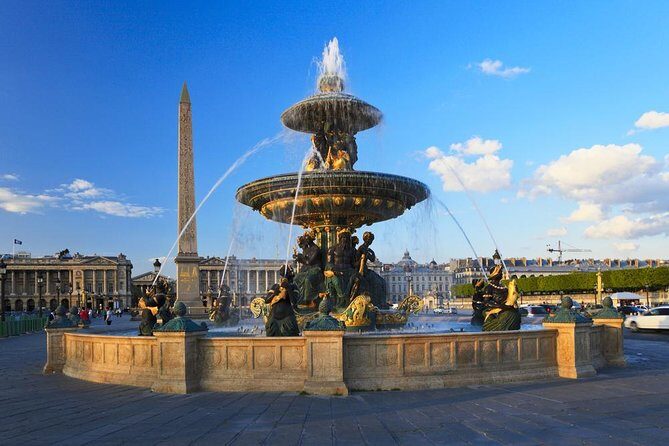
- Place de la Concorde to the Champs-Élysées march route, ending at the de Gaulle statue area near former wartime hospital sites
Walking Paris Through Occupation-Era Reality

Paris is famous for beauty. This tour adds another layer: pressure. When you walk from Le Marais toward the grand boulevards, you’re basically tracing how power and fear moved through the city. The experience works best if you’re the type of traveler who likes cause-and-effect stories—how one neighborhood, one decision, or one act of defiance could ripple outward.
The private format is a big deal for this specific theme. WWII history can turn into a lecture if the pacing isn’t right. Here, your guide can shift the focus based on what you want most: daily life under Nazi occupation, the Jewish community’s story, the choices made by civilians, and how the city’s famous addresses fit into wartime events.
And yes, you’ll still see the recognizable Paris—just with captions written in human stakes instead of tourist gloss. There’s also ample time for photos, which matters because several stops are best captured visually (street context, architecture, and key monuments).
You can also read our reviews of more walking tours in Paris


Le Marais Start: Jewish Quarter Life, Persecution, and Memory
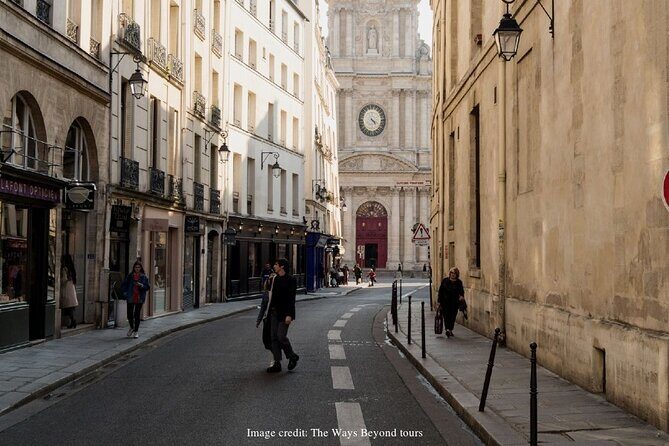
The tour kicks off near Metro Saint-Paul, at Paroisse Saint-Paul Saint-Louis (99 Rue Saint-Antoine). From there, you head into Le Marais and the Jewish quarter, where the city stops being an aesthetic backdrop and turns into a map of lives.
This first stop is about daily reality under Nazi occupation. You’ll see the Holocaust Memorial, visit the Museum of Jewish Art and History, and walk down Rue des Rosiers. That street is one of those Paris locations that people know for its character and shops—here, you’ll connect it to the chilling reality of round-ups and the deportation of Jews to Auschwitz.
What I appreciate as a traveler: this isn’t only about a single monument. It’s a guided route that mixes remembrance sites with the feel of an actual neighborhood. That combo helps the story stick.
A practical note: this part can be emotionally intense. Plan to slow your own pace too. If you need a moment, you’re in a private group, so you can take it without the whole tour line dragging you forward.
Also, the stop is longer than the later ones. At about one hour, it gives you time to look closely rather than just speed past.
Shakespeare and Company: Silvia Beech vs. the Gestapo
Next you’ll head to Shakespeare and Company, one of Paris’s best-known bookshops. On a normal sightseeing day, it’s a literary stop with charming doors and stacks. On this tour, it becomes a story about refusal.
You’ll hear about the founder Silvia Beech, who refused to sell her books to the Gestapo. It’s a simple fact, but it carries weight. It’s one of those WWII moments where history doesn’t live only in governments and armies—it lives in what everyday people choose to do.
This is also one of the stops that tends to click with travelers who want WWII history but don’t want it to feel only tragic. The theme here is defiance through daily life, and the setting makes it easier to picture.
Timing is about 30 minutes. That’s enough to take in the shop, get the story, and still keep the tour moving.
Tuileries Gardens and the Monuments Men Link
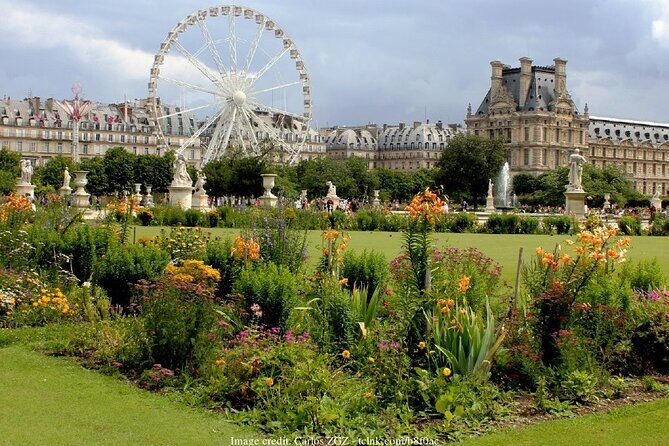
Then comes the Jardin des Tuileries area. You’ll take the metro to reach it, and the guide connects what you see in the gardens to the Monuments Men—the group tasked with protecting cultural heritage during the war.
This is a smart placement in the route because it changes the emotional rhythm. After heavy occupation stories, the tour shifts to protection: the idea that art, documents, and cultural works mattered enough to be defended while everything else was breaking.
The stop runs about 30 minutes. That limited time is actually a benefit here. You’re not asked to sit in one spot and “learn about everything.” Instead, you get the key connection, then you move back into the city’s flow.
If you’re traveling with photos on your mind, this is a good segment for them. The Tuileries area gives you classic Paris sightlines, which helps you remember where the story sits physically in the city.
Place Vendôme: The Ritz and Le Meurice Through a Wartime Lens
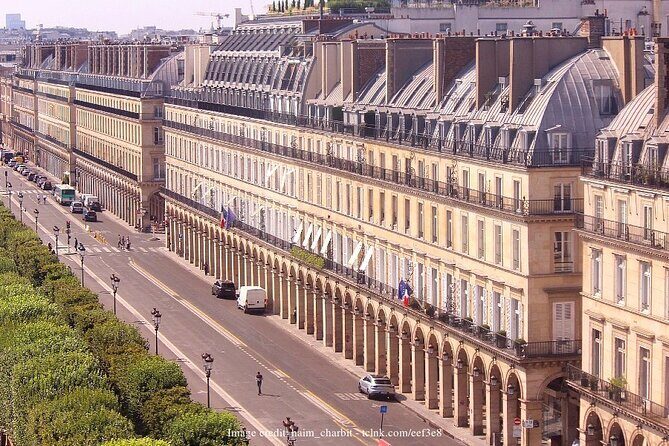
At Place Vendôme, the tour turns toward two famous names: The Ritz and Le Meurice. This is where Parisian grandeur meets wartime reality in a very direct way. The guide shows you two landmark hotels nearby along Place Vendôme and Rue Rivoli, linking the architecture and addresses to how the city functioned during occupation.
This stop is about 30 minutes, and it’s not trying to make you believe a hotel is the whole story. Instead, it’s using big, recognizable Paris names as anchors. That helps because you can later picture the rest of the city with these historical references in mind.
One small consideration: because these are famous places, you may notice more foot traffic than in earlier parts of the route. Use that as an advantage. Watch how people move around these buildings today, then compare it to what it must have meant back then.
You can also read our reviews of more private tours in Paris





Place de la Concorde to de Gaulle: March Routes, Hospitals, and Peace
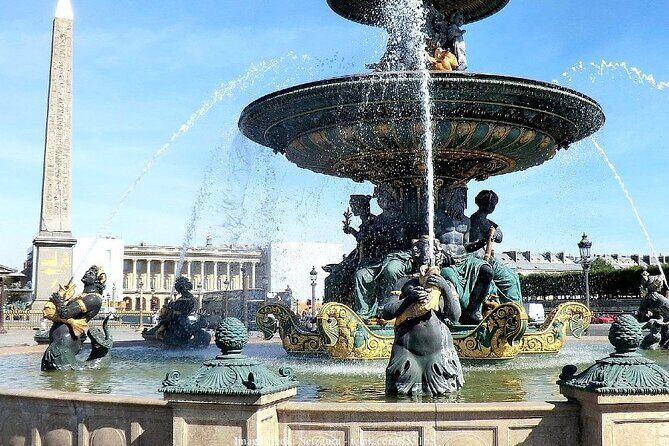
The tour closes at Place de la Concorde, a massive open square where peace was declared. From there, you walk part way up the Champs-Élysées, a street with a sharp WWII association: both Nazis and Allied forces marched along it.
This is a powerful stretch because it isn’t hidden. It’s wide, public, and very present-day. That visibility matters. WWII history can feel distant when it’s trapped inside museums. Here, the story is outdoors on the street you already associate with Paris glamour.
You’ll also end near the statue of General Charles de Gaulle, who the tour frames as a hero of France. The finish area is near Le Grand Palais and Le Petit Palais, and you’ll learn that these sites were used as hospitals during the war.
The walk portion here is about 30 minutes. It ends near public transport and taxi links, and your guide will help you figure out how to get yourself moving afterward.
If you want one practical tip: keep an eye on where you’re finishing relative to metro stops. Ending near Grand Palais / Petit Palais area is useful, but the scale of the streets can be confusing if you’re hungry or tired.
The Private Guide Factor: Jo’s Adaptability and Christopher’s Q&A Style
The best part of this tour isn’t just the route—it’s the people delivering it.
One guide, Jo, is highlighted for being adaptable to what you want to see. That matters when you’re deciding between big-picture context and specific details. Jo is also noted for strong grasp of French history, plus the ability to connect the past to the present—talking about current events and what it’s like to live in Paris now.
Another guide, Christopher, is described as knowledgeable, personable, engaging, and accommodating, especially when you ask questions. That’s a very practical skill. If something in the WWII story feels unclear—dates, places, motives—you don’t need to guess. You can ask.
So if you book this, come with at least one question ready. Even something simple like what a specific location would have looked like during occupation can change the whole experience. A private walking tour gives you that chance.
Getting Your Body Ready for a 3-Hour History Walk
This is listed for moderate physical fitness. You’re walking for roughly 3 hours total, with stops ranging from about 30 minutes to 1 hour. That’s plenty of time to cover a meaningful distance, but it also means you’ll be on your feet.
What helps most:
- Wear comfortable shoes you can walk in for a while.
- Think about energy management: use the longer first stop to reset yourself mentally, then keep pace for the shorter stops later.
There’s also a metro ticket included—one Paris metro ticket. The tour uses metro transport at least once (for the move to the Tuileries area). Costs for any extra transportation on the day are not included, so if you plan to add on more stops after the tour, budget for that.
If you’re the type who hates transit delays, plan to be on time. This tour is designed as a sequence, and the timing matters.
Price and Value: Is $220 for a 3-Hour Private Walk Worth It?
At $220 per person for about 3 hours, this is not a budget group tour. But for a private WWII-themed walking experience, it can be a fair value depending on how you travel.
Here’s how I think about it:
- You’re paying for private attention, not a seat in a big crowd.
- You’re paying for a guide who can handle sensitive history well and keep it understandable.
- You’re paying for a route that strings together multiple major WWII-linked locations instead of just visiting one.
The included 1 Paris metro ticket adds a small practical value, and the route includes free entry items at the stops listed as admission ticket free. Most importantly, you’re buying time with a guide who can tailor the pace and take questions, which is exactly what you want for a topic as complex as occupation-era Paris.
If you’re traveling solo, it may feel steep. If you’re traveling as a pair and splitting the cost (and you like the private format), it tends to feel more reasonable because the experience becomes less about cost and more about control—control over pacing, question time, and focus.
What You’ll Enjoy Most (and What Might Not Fit Everyone)
This tour is a great match if you:
- want WWII Paris history connected to real streets and famous addresses
- like thoughtful storytelling rather than a rapid highlight reel
- want a guide who answers questions and adapts to your interests (Jo and Christopher are both described this way)
It might not be ideal if you:
- want only light, upbeat sightseeing
- are strongly sensitive to stories about persecution and deportation
- have very limited mobility or fatigue tolerance for sustained walking
Also, it’s not a food tour. There are no meals included, though your guide can recommend local places along the way. If you want lunch or coffee, build that into your plan before or after.
Should You Book This Paris WWII Walking Tour?
Yes—if WWII history in Paris is your kind of travel, and if you prefer a private, question-friendly guide over a crowded group.
The route is smart: it starts with the Jewish quarter and remembrance, adds a resistance-flavored story at Shakespeare and Company, brings in culture protection at the Tuileries, connects wartime reality to major hotel names at Place Vendôme, then finishes with March routes and peace at Place de la Concorde near de Gaulle and former wartime hospital sites.
If you go in with comfortable shoes, a willingness to sit with heavy moments, and at least one question you want answered, you’ll likely leave with a Paris that feels more human—and harder to forget.
FAQ
How long is the Paris Historic Private walking tour?
It runs for about 3 hours.
Where does the tour start and where does it end?
It starts at Paroisse Saint-Paul Saint-Louis, 99 Rue Saint-Antoine, 75004 Paris, near Metro Saint-Paul. It ends near the Charles de Gaulle statue, with help from your guide on getting to public transport or a taxi.
Is this tour private?
Yes. This is a private tour/activity, and only your group participates.
What transportation is included?
The tour includes 1 Paris metro ticket. You’ll also take the metro during the itinerary, such as to reach the Tuileries area. Any extra transportation costs are not included.
What sites do we visit related to WWII?
You’ll visit WWII-linked stops including the Jewish quarter in Le Marais (Holocaust Memorial, Museum of Jewish Art and History, and Rue des Rosiers), Shakespeare and Company (Silvia Beech and resistance to the Gestapo), the Tuileries Gardens (the Monuments Men), areas near The Ritz and Le Meurice around Place Vendôme, and Place de la Concorde with the Champs-Élysées march route, ending near General Charles de Gaulle and nearby former wartime hospital sites.
Is the tour physically demanding?
It’s designed for moderate physical fitness. You’ll be walking for the length of the tour and standing during stops, so comfortable shoes are a good idea.