REVIEW · PARIS
Paris: Latin Quarter Guided Walking Tour in German
Book on GetYourGuide →Operated by HelpTourists · Bookable on GetYourGuide
Old Paris comes alive on foot.
This German-speaking private walking tour takes you through the Latin Quarter, the Left Bank’s student heart, and does it in a way that’s easy to follow and actually useful. I love that you get big landmarks like the Pantheon and the Sorbonne, but also stops that feel more like everyday Paris, not a checklist. A plus for me is that you’re guided toward the quieter corners, with room for questions and context about how the district works. One consideration: at 2 hours, you get great highlights but you won’t have long sit-down time at each place.
What I like most is the tone. The walk is designed to explain the neighborhood’s layers, including the sense of Paris before it was called Paris, plus the Roman remains at Arènes de Lutèce. In the past, guides such as Soléne have been singled out for being friendly, competent, and packed with informative anecdotes, and that style matches what you want on a short guided walk. If you’re hoping for a museum-depth experience inside every site, this isn’t that. It’s a guided walk—so bring comfortable shoes and expect to keep moving.
In This Review
- Key points worth planning around
- Latin Quarter in German: what makes this walk feel different
- Meeting at Cardinal Lemoine: starting point and first advantage
- Arènes de Lutèce: Roman Paris remains, close enough to feel real
- Pantheon and La Sorbonne: big names, street-level meaning
- Musée National du Moyen Âge–Thermes et Hôtel de Cluny: medieval textures without the overwhelm
- Shakespeare & Company: a Left Bank culture stop you can feel
- The green pause: your legs and your brain need it
- Ending at Notre-Dame: a strategic finish for your next move
- Price and value: what $94 buys you in 2 hours
- Who this Latin Quarter German tour is best for
- Booking decision: should you book?
- FAQ
- What language is the tour conducted in?
- How long is the guided walking tour?
- Where do I meet the guide?
- Is pickup included?
- Are food and drinks included?
- Is this a private group tour?
- Is the tour wheelchair accessible?
- How does cancellation work?
Key points worth planning around
- German-language guidance that helps you actually understand what you’re seeing
- Arènes de Lutèce for Roman Paris remains, not just modern postcard views
- Pantheon and Sorbonne with a clear story you can follow in one route
- Cluny and medieval themes at Musée National du Moyen Âge–Thermes et Hôtel de Cluny
- Shakespeare & Company as a Left Bank culture stop on the way
- A real green break in one of the prettiest parks in Paris
Latin Quarter in German: what makes this walk feel different
The Latin Quarter (mainly the 5th arrondissement) has a reputation for being both famous and slightly chaotic. The famous parts are obvious: students, historic institutions, and world-known landmarks. The useful parts are what you learn when someone with local context points your eyes the right way.
On this walk, you’re not just staring at buildings. You’re getting the district’s timeline, from Paris’s older identity to the student-era vibe, and you’ll see how those eras coexist in the same streets. The Roman angle matters too. Many tours give you a photo moment and move on. Here, the route is built to make Arènes de Lutèce feel like part of the neighborhood’s DNA.
I also like that the tour is relaxed by design. You’re not racing through photo stops. You’re learning the why behind the where, and that makes the Latin Quarter much easier to navigate afterward on your own.
You can also read our reviews of more walking tours in Paris



Meeting at Cardinal Lemoine: starting point and first advantage
You’ll meet at Cardinal Lemoine metro station, by the entrance where you can spot your guide carrying a HelpTourists bag. This matters more than it sounds. A clear meeting point saves time, especially in a part of Paris where street corners can look similar and detours are common.
Once you start, the benefit of a German-speaking guide kicks in fast. You won’t waste time translating on your phone. You can focus on the street-level details the guide brings up—small transitions in architecture, the way institutions shape the area, and why certain places feel “student” even when they’re formally grand.
If you’re the type who likes to understand where you are before you start wandering, this start sets you up well.
Arènes de Lutèce: Roman Paris remains, close enough to feel real
Stop one of the sightseeing highlights is Arènes de Lutèce. This is your Roman foothold in the Latin Quarter—one of those moments where Paris reminds you it has older layers than you usually expect.
Here’s the practical value: Roman remains can feel abstract if you don’t have a framework for what you’re looking at. A good guide gives you the mental map, so you can connect the Roman presence to the modern street scene instead of treating it like a separate attraction.
In a short 2-hour tour, this stop is doing heavy lifting. It gives you a “before Paris” feeling early on, so the rest of the walk makes more sense. After this, when you see the Pantheon, the Sorbonne area, and the medieval sites, you’ll be seeing continuity rather than unrelated stops.
Pantheon and La Sorbonne: big names, street-level meaning
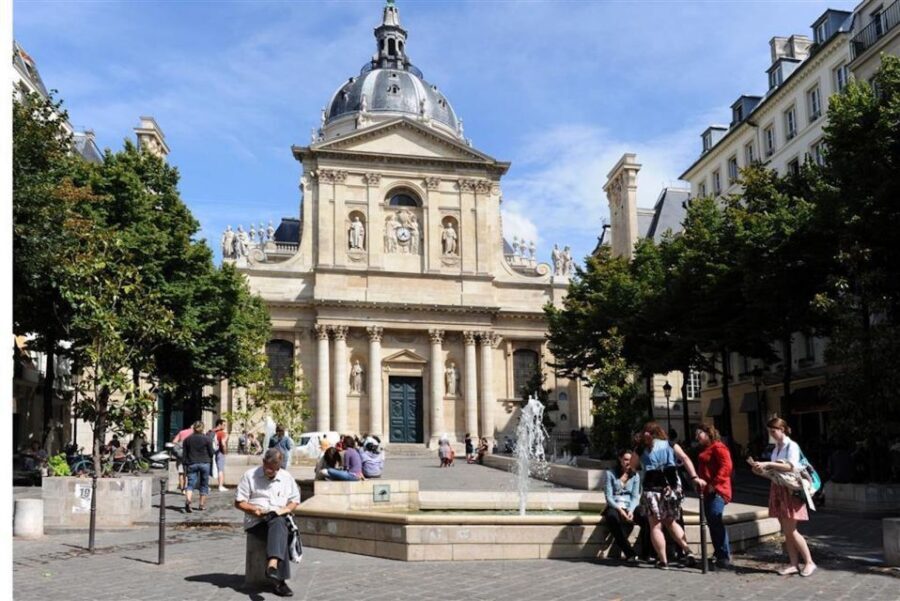
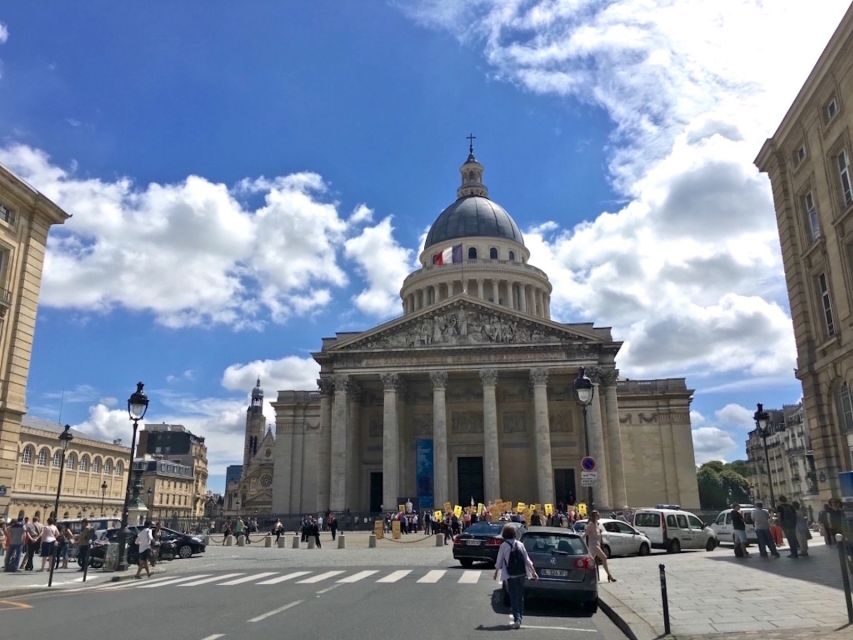
Next up are two of the Latin Quarter’s headline sights: the Pantheon and the La Sorbonne (Paris University of Sorbonne).
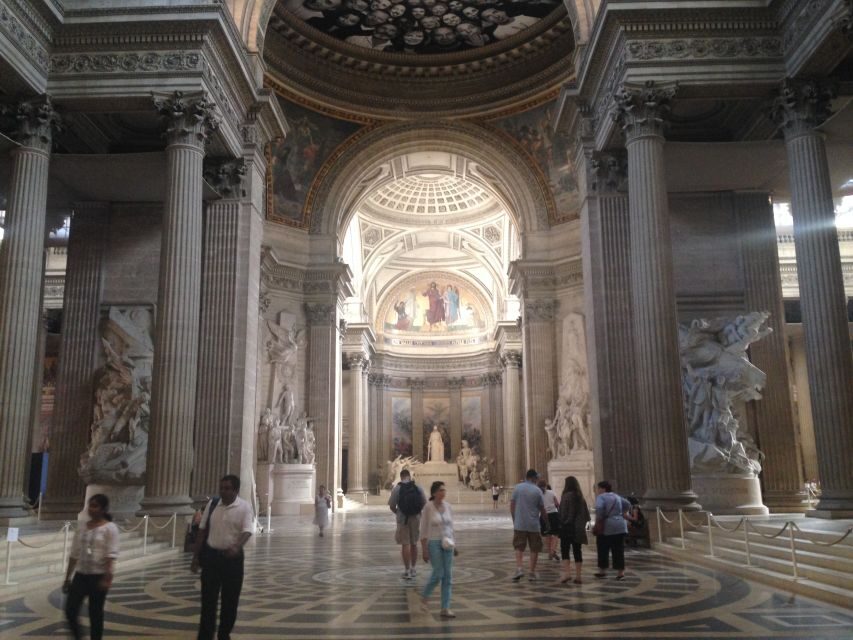
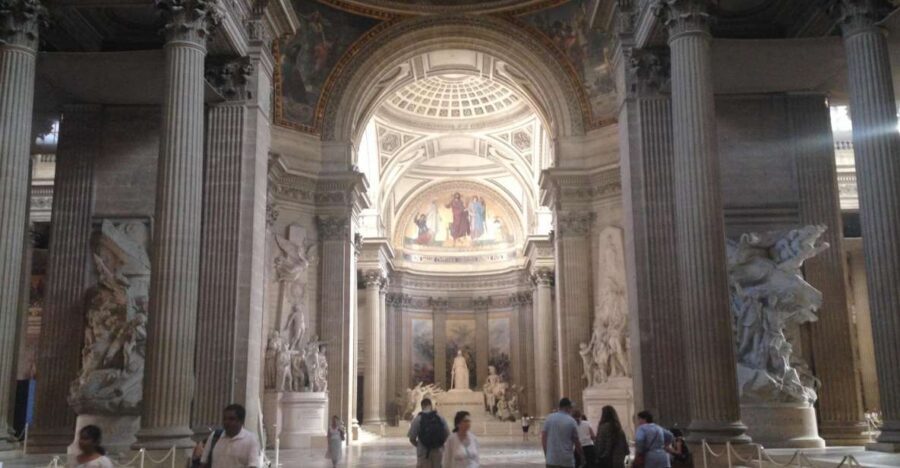
The Pantheon is described as a domed neo-classic mausoleum, and that’s the kind of detail you want when you’re trying to understand why the building feels so important from far away. The domed shape is visually powerful, but it can also feel like a postcard if you don’t learn how it fits into the neighborhood’s identity. With a guided walk, you get the context quickly, without turning the experience into a lecture.
La Sorbonne brings a different kind of value. The Latin Quarter’s “student quarter” character isn’t just a mood—it’s built into what the area is. When your guide connects the university to the district’s day-to-day rhythm, the streets feel less random. Even if you’re not a student, you’ll recognize the way institutions pull life toward certain squares and corridors.
Possible drawback to consider: both of these are well-known stops, so the crowd and noise level in the area can be higher than the quieter side streets. The tour helps by timing your approach and keeping you focused on what matters, but you still shouldn’t expect empty streets.
Musée National du Moyen Âge–Thermes et Hôtel de Cluny: medieval textures without the overwhelm
Then you’ll head to Musée National du Moyen Âge–Thermes et Hôtel de Cluny. Even if you don’t spend a long time inside (this tour is a walking route), the stop is valuable because it anchors the tour in the medieval layer of the Left Bank.
The name itself is a clue to why this part works: it connects the Middle Ages with the Thermes and Hôtel de Cluny setting. For me, this is one of the most effective ways to keep a short tour from becoming repetitive. After Roman remnants and major institutions, you get a different historical “texture.”
What you’ll get from the guide here is practical orientation. The Latin Quarter has overlapping eras and big reputations. A guided approach helps you keep track of what each site represents, so your brain doesn’t turn everything into one long history blur.
If you’re the kind of traveler who likes to leave a tour with a clearer mental map—this stop is a strong contributor.
You can also read our reviews of more guided tours in Paris





Shakespeare & Company: a Left Bank culture stop you can feel
One of the route highlights includes Shakespeare & Company. This is a classic kind of Paris moment: a place where literature and the street scene overlap.
In a walking tour like this, the point isn’t just to “see a famous sign.” It’s to understand why this neighborhood attracts artists, readers, and long-time devotees. Your guide’s commentary—especially when it connects the book-world feeling to the district’s student identity—turns the stop into something you can carry with you after you leave.
Also, this sort of stop gives you a needed change of pace. After the big institutions and historical sites, a culture landmark helps you switch from monuments to atmosphere. In two hours, that matters.
The green pause: your legs and your brain need it
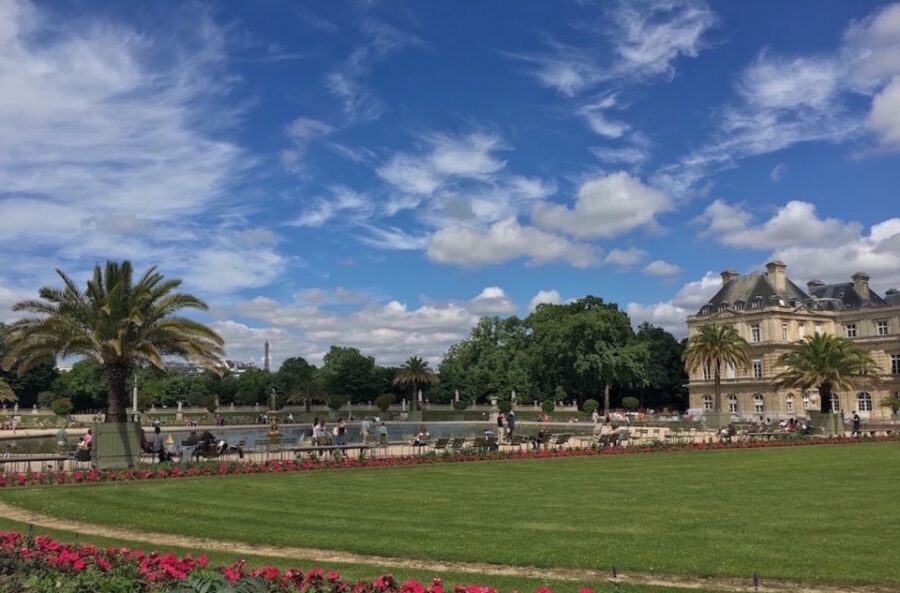
The highlights call out a particularly impressive park—one of the beautiful green spaces in Paris—where you can relax. The exact park isn’t named in your tour description, but the promise is clear: you get a calmer stretch, away from the relentless boulevard energy.
I’m a fan of this design because it balances sightseeing fatigue. A walking tour can become all stimulus, all the time. A green pause gives your senses a reset and helps you absorb what you’ve just learned. It also makes photos less frantic and more natural.
If your day includes other heavy activities later, this park time can help you avoid the late-afternoon slump. It’s also a good place to regroup if your feet need a breather.
Ending at Notre-Dame: a strategic finish for your next move
The tour finishes at Kathedrale Notre-Dame de Paris. Ending at a major landmark is smart for one reason: it gives you options immediately. You can continue wandering on your own, connect to public transit, or shape the rest of your day around a central point.
Also, finishing with Notre-Dame changes the emotional tone of the walk. You start in the university-student zone with Roman remains, then move through the Pantheon and medieval connections, and you end with one of the city’s most iconic cathedral settings. Even in a short 2-hour window, that arc feels like a complete story.
One more practical note: because the finish is at a landmark, it can be a bit busier than some earlier stops. If you want quiet time, plan for a slightly slower pace as you approach the end.
Price and value: what $94 buys you in 2 hours
At $94 per person for a 2-hour private walking tour, the value depends on how you travel.
If you enjoy learning in real time—asking questions, hearing local context, and getting your bearings without hunting for answers—this price can be fair. You’re paying for the German-speaking guide plus the structure of a tight route through multiple eras: Roman remains, the Pantheon, the Sorbonne area, medieval museum grounds, a culture stop, and a park break.
If, on the other hand, you’re a do-it-yourself mapper with strong French, or you mostly like to stroll without interpretation, then $94 might feel steep for just two hours. In that case, you could recreate the route on your own. But you’d lose the guided sense-making that ties everything together—especially the older Paris angle and the neighborhood’s everyday-life perspective.
My take: for a short timeframe and a language-specific guide, $94 is the kind of spend that can save you time and make the city click.
Who this Latin Quarter German tour is best for
This tour is a strong fit if you want:
- German-language explanations without translation effort
- A short, organized route through the Latin Quarter’s key eras
- A mix of headline sights and smaller-feeling stops (cafés and squares are part of the concept)
- A walking plan that makes the district feel navigable for later
It’s also a good choice for you if you like student neighborhoods, book culture, and the way Paris layers time on top of time.
It may be less ideal if you’re looking for long museum entries or a slow paced, stop-and-stay day. This is built for 2 hours of guided movement, not an all-day deep dive.
Booking decision: should you book?
I’d book this tour if you want to understand the Latin Quarter in a language you’re comfortable with, and you like the idea of seeing Roman remnants, the Pantheon, the Sorbonne area, medieval themes, and a park pause in one guided loop.
If your schedule is tight, a guided 2-hour route is a clean way to get meaning without wasting your day circling streets. If your plan is slow wandering with no guidance, you can skip it. But if you want the neighborhood story stitched together for you in German, this one looks like an efficient, satisfying choice.
FAQ
What language is the tour conducted in?
The tour is conducted in German.
How long is the guided walking tour?
It lasts 2 hours.
Where do I meet the guide?
Meet by the entrance to Cardinal Lemoine metro station. Look for your guide with a HelpTourists bag.
Is pickup included?
No pickup is included.
Are food and drinks included?
No. Food and drinks are not included.
Is this a private group tour?
Yes, it’s a private group.
Is the tour wheelchair accessible?
Yes, it is wheelchair accessible.
How does cancellation work?
You can cancel up to 24 hours in advance for a full refund. You can also reserve now and pay later.