REVIEW · PARIS
Paris Louvre Exclusive Semi Private Guided Tour Max 6 People
Book on GetYourGuide →Operated by LivTours - We craft tours, you live them · Bookable on GetYourGuide
A small group makes the Louvre feel possible. This semi-private, max-6 tour is built to cut through the crush and guide you straight to the works people came to see, without turning it into a sprint.
I particularly like two things: the chance to stand close for the Mona Lisa moment, and the way the guide links big masterpieces to the stories around them. The pace is tight, though, so you’ll need to go in ready to absorb a lot in a short time.
One possible drawback: for a high-priced tour, you’ll want the visit to run smoothly. On days when the group energy gets weird or the plan hits a snag, the guide’s focus can change, and that can shorten the experience.
In This Review
- What Makes This Louvre Tour a Smart Pick for 2026
- Entering Near the Louis XIV Horse Statue (Meeting Point Clarity)
- Starting at Louis XIV sous les traits de Marcus Curtius (copie)
- Passing the Louvre Pyramid Without Getting Stuck in the Crowd
- The Guided Highlight Circuit Inside the Louvre (How They Choose What You See)
- What you’ll likely notice: names tied to meaning
- A note on pace
- The Mona Lisa Moment: Standing Close to a Painting With Gravity
- Venus de Milo and Greek Sculpture: More Than a Photo-Op
- Delacroix and Dramatic Painting: When Emotion Is the Medium
- Why a Fortress-Royal Palace Louvre Story Changes How You See the Rooms
- Your Ticket After the Tour: Use It Like a Strategy, Not a Surprise
- Price and Value: Is $199 Worth It?
- Who This Tour Is Best For (And Who Might Want a Different Format)
- Should You Book This Louvre Exclusive Semi-Private Tour?
- FAQ
- How long is the Paris Louvre Exclusive Semi Private Guided Tour?
- What is the maximum group size?
- Where do we meet for the tour?
- What does the tour include?
- Which languages are offered?
- What should I bring?
- Can I keep visiting the Louvre after the guided tour?
- Is there free cancellation?
- Are wheelchairs allowed?
What Makes This Louvre Tour a Smart Pick for 2026
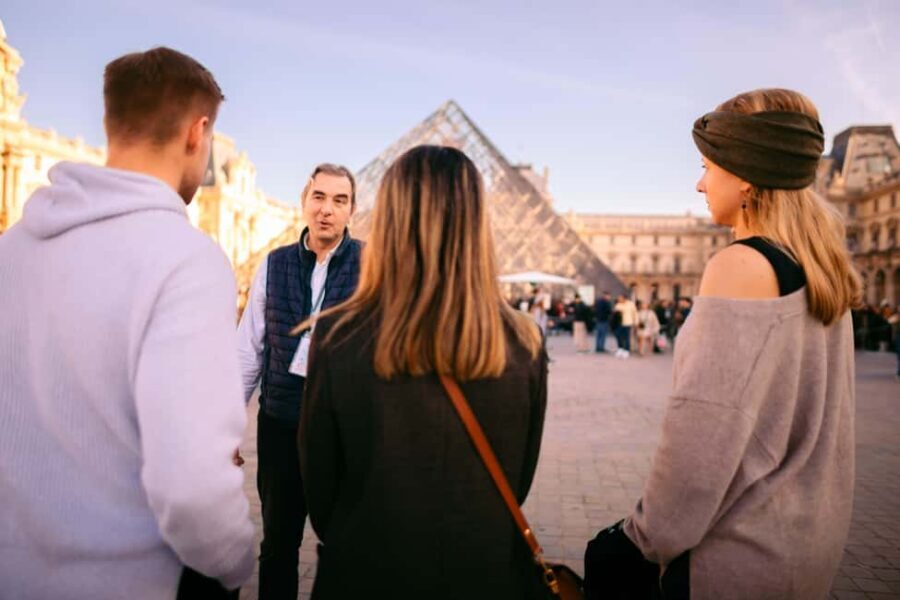
This is the Louvre, so yes, it is famous. It’s also enormous—35,000+ works are in the building, and you can’t possibly see everything unless you live here for a month.
With this tour, you get a guided highlight circuit that aims at the highest-impact stops: major sculpture, major painting, and the one portrait that has its own orbit—the Mona Lisa.
The small group matters. With just up to six people, you spend less time waiting, and more time standing where it’s worth standing: close enough to actually look, not just pose for a photo and shuffle away.
Entering Near the Louis XIV Horse Statue (Meeting Point Clarity)
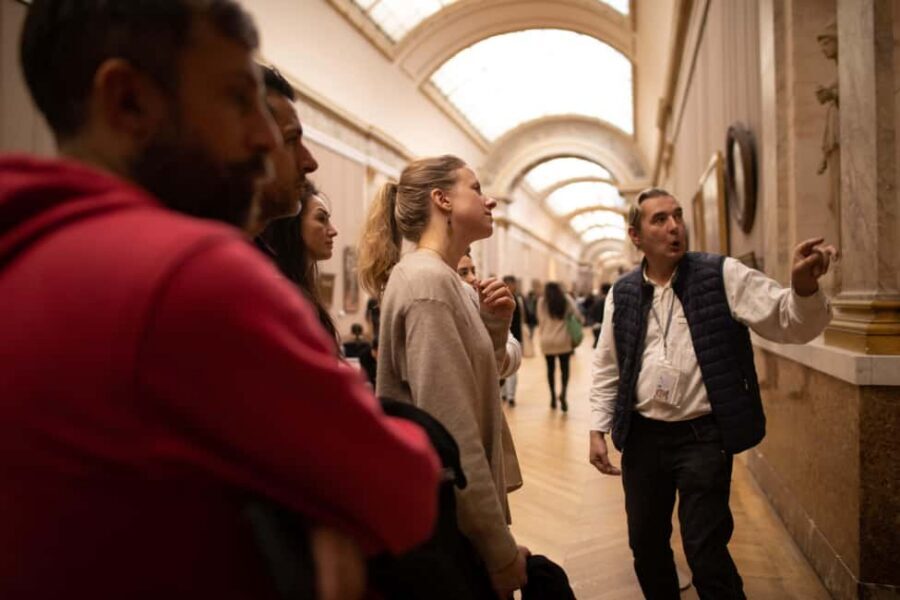
You meet at the Louvre Museum under the Louis XIV statue with a horse in front of the glass pyramid. Your guide is holding a LivTours sign, so don’t guess—look for the sign and the person holding it.
Plan to arrive 10–15 minutes early. Even if everything goes perfectly, the Louvre can make you feel like you’re late the moment you step inside, because there are a lot of people and a lot of directions.
Practical tip: bring your ID or passport. You’ll need it for check-in, and it’s faster to pull it out right away than to fumble while everyone else is gathering.
You can also read our reviews of more guided tours in Paris



Starting at Louis XIV sous les traits de Marcus Curtius (copie)
Before you get pulled toward masterpieces, you start with a grounding point outside. The tour begins at Louis XIV sous les traits de Marcus Curtius (copie).
It’s not just a random statue stop. The Louvre has layers—fortress, royal palace, museum—and this opening helps you understand that you’re touring a building with a job history, not just walking through rooms of art.
If you like when a guide sets the stage, this start works well. It gives you context early, so the rest of the tour feels connected instead of like random room-hopping.
Passing the Louvre Pyramid Without Getting Stuck in the Crowd
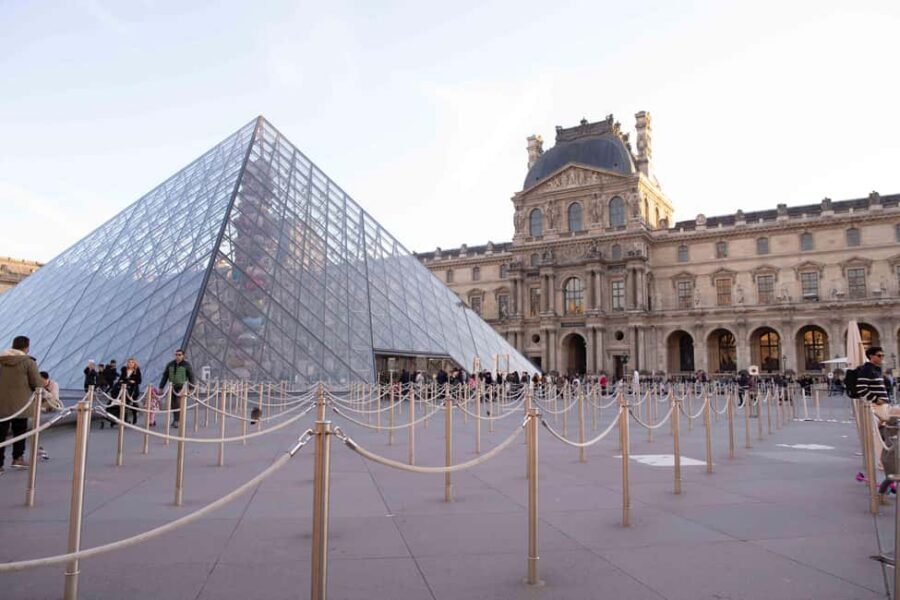
You’ll pass by the Louvre Pyramid. It’s iconic, but that’s exactly why crowds gather there.
The value of a guided plan is that you don’t have to spend your energy trying to figure out where to go next. You’ll get through the busy initial area and move on while your attention is fresh, not drained.
If you’re coming during a peak season day, this matters a lot. The Louvre can be packed, and a plan that keeps momentum saves you from wandering with that frustrated, lost-in-a-museum feeling.
The Guided Highlight Circuit Inside the Louvre (How They Choose What You See)
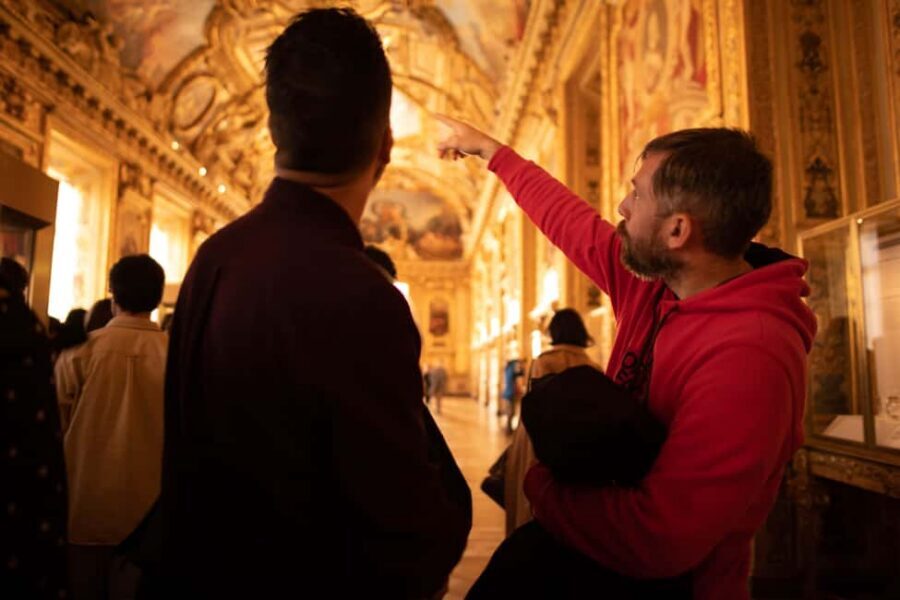
This is a 2-hour to 150-minute experience, so the goal is depth in a small number of targets. Your guide leads you to dozens of the museum’s greatest masterpieces, but it’s done with prioritizing, not brute-force speed.
You’ll move through major eras and styles, including Greek sculpture and dramatic paintings. The guide also weaves in the Louvre’s transformation over time—how it functioned as a fortress and a royal palace before becoming the art museum you recognize today.
A helpful detail: the guide can connect art to technique and storytelling. In past groups, guides like Nazli, Sara, and Zach have been noted for bringing both history and how to look at art into the conversation. That’s exactly what you want in a short tour: context plus practical viewing.
What you’ll likely notice: names tied to meaning
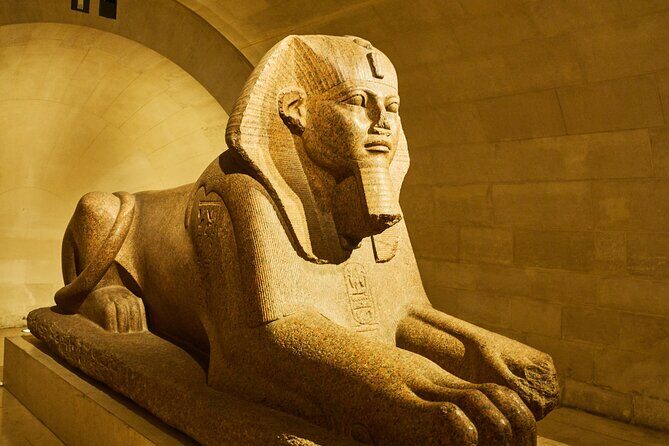
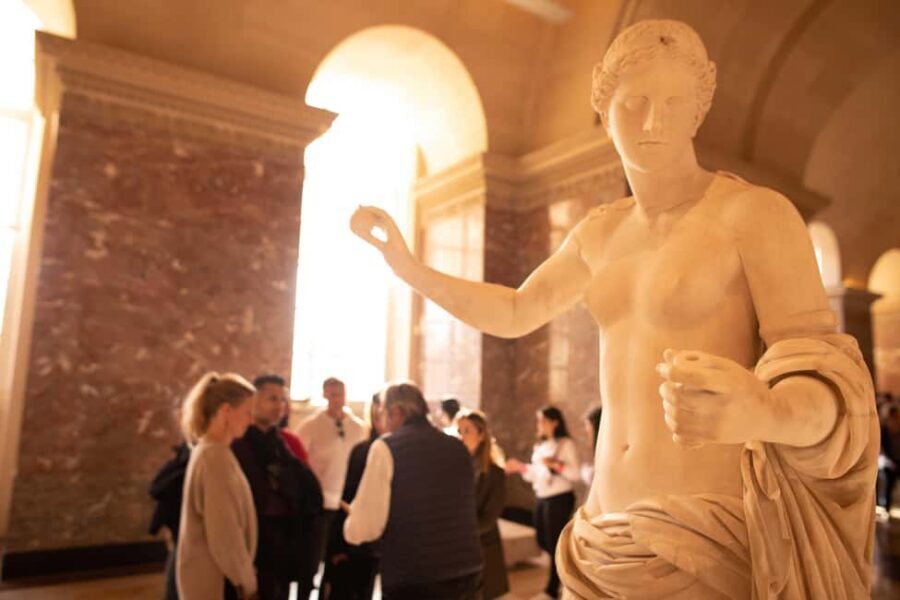
Along the way, you’re set up to understand why certain works matter. You’ll hear about precious works such as Venus de Milo, the Great Sphinx of Tanis, and paintings by artists like Da Vinci and Delacroix (plus sculptor Canova).
Even if you only remember a handful of details later, the guide’s job is to help you remember how to look—what to notice first, and why it was made.
You can also read our reviews of more private tours in Paris





A note on pace
The tour is built to fit a lot. That’s great for first-timers, but if you’re the type who likes slow museum browsing, you may feel a little time-pressured during the guided portion.
The Mona Lisa Moment: Standing Close to a Painting With Gravity
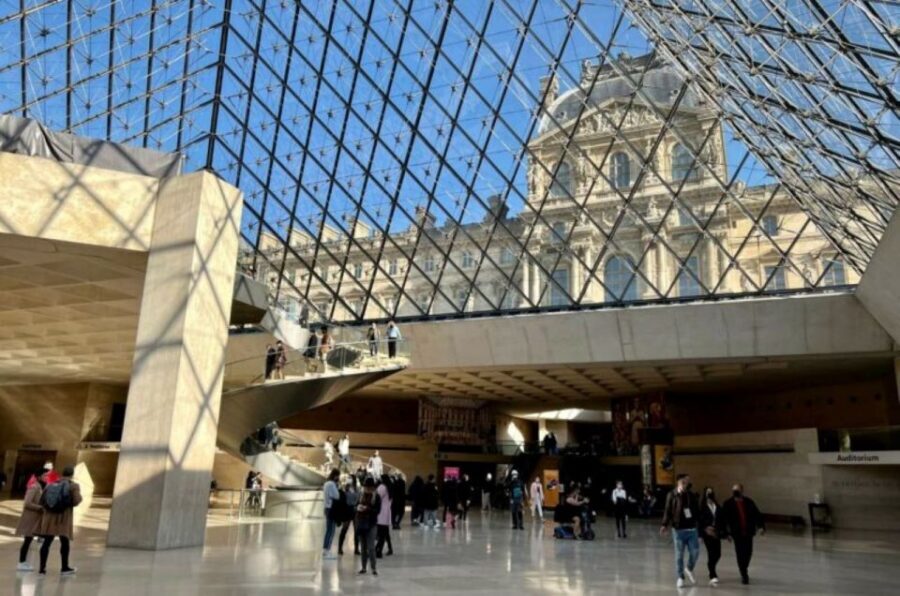
Yes, everyone talks about it. But when you’re actually there, you see why the portrait has such pull.
The guide brings you to stand in front of the world’s most popular portrait: Leonardo da Vinci’s Mona Lisa. This is the main event, and the tour is structured to make sure it’s not just a distant stop.
Here’s the practical value: being in a small group helps you get into the viewing area faster and stay long enough to notice details. With the usual museum chaos, you often get seconds. With a focused plan, you get time.
Also, the guide adds context. You’ll hear history about the work and about Leonardo’s place in the museum’s larger story of power, patronage, and changing tastes. It turns the portrait from a famous image into something you can actually interpret.
Venus de Milo and Greek Sculpture: More Than a Photo-Op
One of the biggest surprises for many people is how modern Greek sculpture feels when you’re close. This tour doesn’t treat sculpture like background decoration.
You’ll learn about key pieces such as Venus de Milo, and you’ll likely connect what you see—pose, surface, proportion—to why these works were so influential.
The guide’s storytelling helps here. When someone explains what mattered to the artists and what the museum preserved, the sculpture stops feeling like an object you just recognize from postcards. You start looking at it like a crafted work, not a landmark.
Delacroix and Dramatic Painting: When Emotion Is the Medium
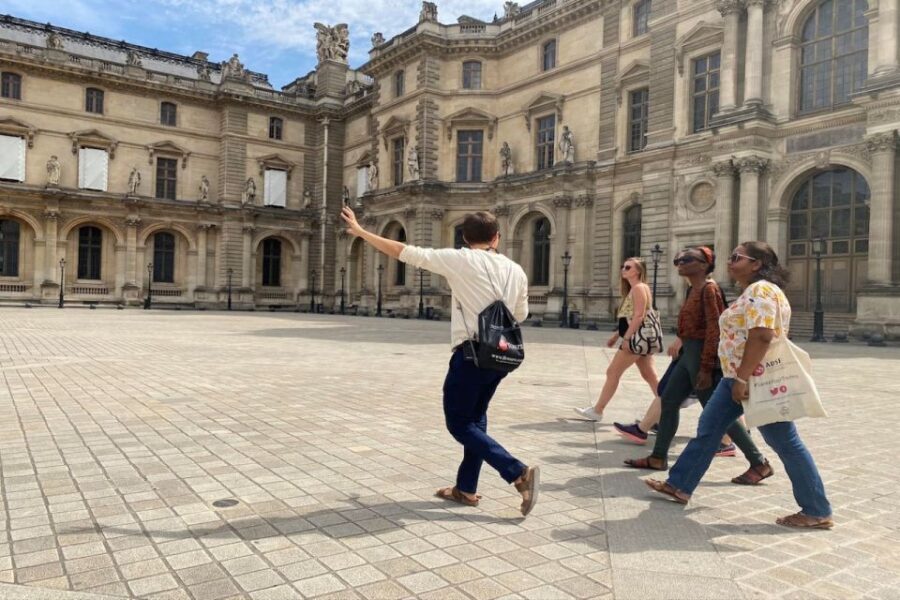
If you like art that feels like it has a pulse, you’ll appreciate the focus on dramatic painting. The tour mentions works by Delacroix, and that’s a smart choice because he’s not subtle—he’s about movement, tension, and impact.
In a short tour, you need a few high-voltage stops like this. It keeps the experience from becoming only about sculpture or only about one art style.
The benefit of having a guide is that you don’t have to guess what you’re looking at. You get the stories behind the images, and you learn how to read composition at a glance.
Why a Fortress-Royal Palace Louvre Story Changes How You See the Rooms
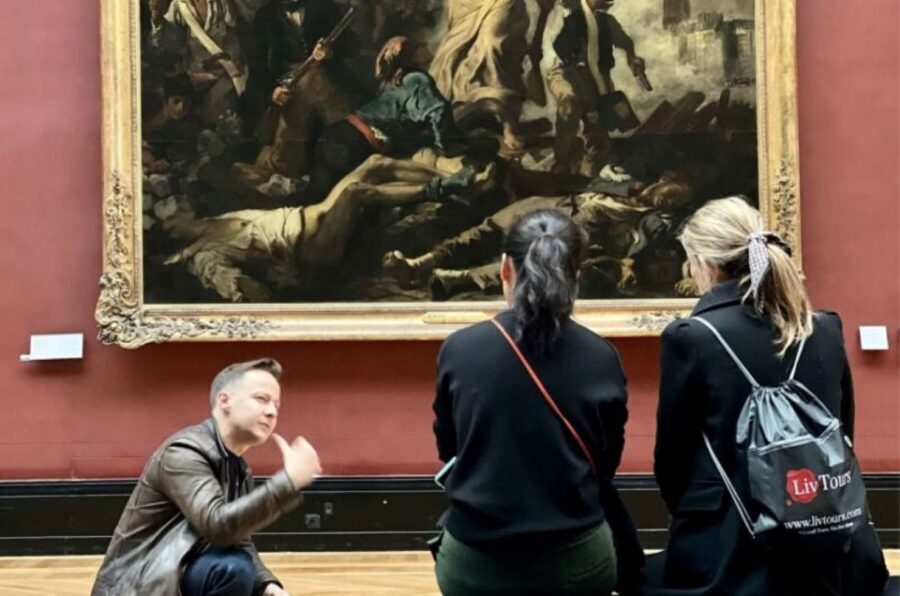
The tour includes background on the Louvre’s early life as a fortress and royal palace. That matters more than you might think.
When you understand the building’s past roles, you start noticing the museum spaces differently. You see the museum as part of a long political and cultural machine, not just a neutral container for art.
This is also where a professional local guide earns their fee. They can connect the architecture and the art into one coherent narrative—especially helpful if it’s your first time in the Louvre.
Your Ticket After the Tour: Use It Like a Strategy, Not a Surprise
The best part about this experience is that you keep your ticket to visit after the guided portion. That means the tour isn’t your whole day.
You get your guided highlights—then you’re free to loop back for whatever still grabs you.
How I’d use that time:
- If you loved sculpture during the tour, return for more Greek and Roman pieces before your energy fades.
- If painting felt more alive, use the extra time to linger near the works the guide mentioned and see how your eye shifts after context.
Also, plan your pace. The Louvre can be exhausting. Think of the tour as your map and your first pass, then use your remaining time to slow down where it matters to you.
Price and Value: Is $199 Worth It?
At $199 per person for about 150 minutes, this is not a budget tour. You’re paying for two things: reduced friction and smarter selection of what to see.
With a big museum like the Louvre, time is your real currency. A guided circuit that gets you to the right masterpieces with a small group can be better value than trying to solve the museum on your own while lines and crowds eat your plan.
You’re also paying for the guide’s ability to explain, not just point. The tour emphasizes expert local guidance and small-group access, and the results show up in the praise for guides like Sara, Nazli, and Zach.
In a place where most people feel overwhelmed, a good guide turns chaos into a sequence you can remember.
Who This Tour Is Best For (And Who Might Want a Different Format)
This tour fits best if you:
- Want a high-impact Louvre first visit without spending hours planning
- Prefer a small group over large group headsets and herding
- Care about key masterpieces like Venus de Milo and the Mona Lisa
- Like having stories that help you understand what you’re looking at
It may not fit as well if you:
- Want maximum freedom and zero structure
- Plan to spend long stretches studying one artwork in extreme detail
- Get stressed by a set start time and a timed route
Should You Book This Louvre Exclusive Semi-Private Tour?
If you’re aiming for the Mona Lisa and a solid spread of famous works in a short window, I’d book it. The max-6 size is the heart of the value, and the guided format helps you see dozens of major masterpieces without losing an entire day to wandering.
One more decision tip: treat the tour like your Louvre launchpad. If you’re willing to use the remaining time afterward with intention, this becomes more than a highlight reel—it becomes a plan you control.
If you want a Louvre day that feels organized, efficient, and focused on the art that actually moves people, this is a strong choice.
FAQ
How long is the Paris Louvre Exclusive Semi Private Guided Tour?
The tour runs about 2 hours to 150 minutes.
What is the maximum group size?
The group is semi-private with a maximum of 6 people.
Where do we meet for the tour?
You meet under the Louis XIV statue with a horse in front of the glass pyramid, and the guide will be holding a LivTours sign.
What does the tour include?
It includes a local professional guide, entry tickets, and access to see dozens of the Louvre’s greatest masterpieces, including the Mona Lisa.
Which languages are offered?
English, French, Portuguese, Spanish, Russian, and Swedish are available.
What should I bring?
Bring a passport or an ID card.
Can I keep visiting the Louvre after the guided tour?
Yes. You’ll have your ticket after the tour so you can keep visiting at your leisure.
Is there free cancellation?
Yes, you can cancel up to 24 hours in advance for a full refund.
Are wheelchairs allowed?
Non-folding wheelchairs and electric wheelchairs are not allowed.