REVIEW · PARIS
Paris: Montmartre Private Walking Tour
Book on GetYourGuide →Operated by Paris in person private tours · Bookable on GetYourGuide
Montmartre is a story you can walk. This private 2-hour tour strings together the neighborhood’s wild-to-wholesome transformation, from sketchy legends and the Can-Can era to the way Impressionists found inspiration on these same streets. I especially like having a private guide who connects what you see (like Moulin Rouge and Rue Lepic) with what it meant back then, and I like the way the route ends at real places where artists worked and drank, including Lapin Agile.
The only real catch is the pace. Two hours goes fast, and you’ll do a climb up Rue Lepic and get to views around Sacré-Cœur, so wear shoes that handle steps and uneven pavement.
In This Review
- Key highlights worth clocking
- Starting at Metro Blanche: where your Montmartre walk makes sense
- Maison Blanche roots and the walk toward Moulin Rouge
- Moulin de la Galette to Rue Lepic: the Impressionist staircase route
- Sacré-Cœur and the white façade moment you’ll remember
- Place du Tertre: village charm inside a city that never stops
- Vigne de Montmartre: the vineyards that surprise people
- Lapin Agile cabaret: where Picasso and Modigliani enter the scene
- Guides that make it click: Boris, Isabella, and why English matters
- Price and value: what you’re really paying for at $171
- Practical things you’ll want to plan before you go
- Who should book this private Montmartre walk
- Should you book the Paris Montmartre Private Walking Tour?
- FAQ
- How long is the Montmartre private walking tour?
- Where do we meet the guide?
- Where does the tour end?
- What languages are available for the live guide?
- Is the tour private?
- Does the tour include food or drinks?
- Does the tour run in bad weather?
- Can I cancel for a full refund?
Key highlights worth clocking
- A true private walk with a live guide for your group, not a crowded group shuffle
- Rue Lepic + Sacré-Cœur as the emotional center of the route, including the white façade moment
- Cabaret and artist hangouts at Lapin Agile, tied to names like Picasso and Modigliani
- Place du Tertre street scene where you can actually watch the Montmartre art vibe in motion
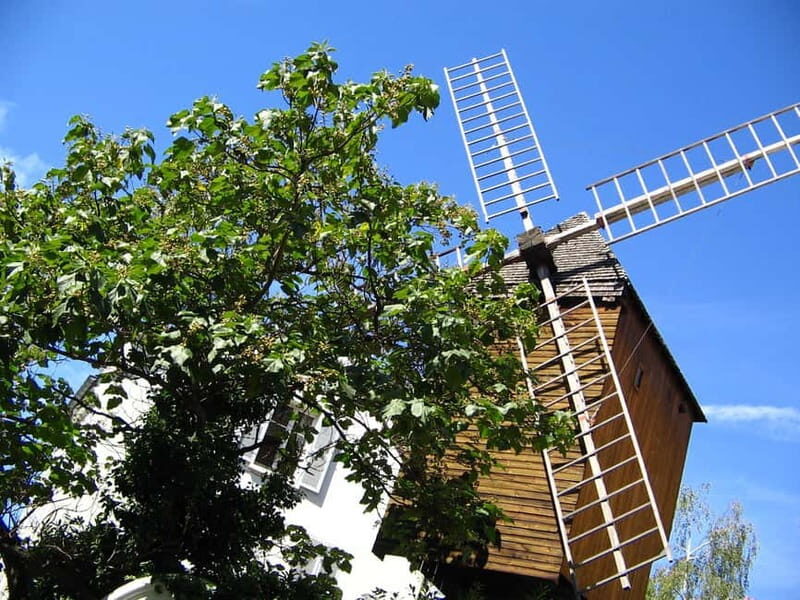
- Landmark trio stops including Metro Blanche, Moulin Rouge, and Moulin de la Galette
- Monmartre’s odd mix: lavish houses beside run-down areas, plus Can-Can and illegal-alcohol legends
Starting at Metro Blanche: where your Montmartre walk makes sense
Your tour starts at the exit of Metro Blanche, and your guide will be holding a red canvas tote bag. From the first minute, it helps to meet there, because you’re dropping right into the Montmartre world instead of trying to figure out the maze on your own.
This matters because Montmartre can feel like it’s all stairs and angles. A good guide keeps the route logical, so the uphill parts feel earned, not random.
You can also read our reviews of more walking tours in Paris



Maison Blanche roots and the walk toward Moulin Rouge
Early on, you’ll see Metro Blanche, which used to be Maison Blanche. That kind of detail is more than trivia. It helps you read the neighborhood as a place that changed over time, not a museum that froze in place.
From there, your guide steers you toward Moulin Rouge, one of the most famous theatrical icons in the area. Even if you’ve seen it in photos a thousand times, you’ll understand it differently when the guide frames it in the stories of Can-Can dancers and the neighborhood’s more lawless past.
Montmartre’s big theme is contrast. Your guide points out the mix of lavish homes next to run-down streets, and it lands with a lot more weight when you’re walking it instead of reading it.
Moulin de la Galette to Rue Lepic: the Impressionist staircase route
One of my favorite parts of this tour is the shift from spectacle to art history. You’ll stop at Moulin de la Galette, and then you move into the older, more textured streets where the atmosphere feels closer to the 19th-century canvas.
Then comes Rue Lepic, described as an ancient street where the art movements of Paris took root. You’ll actually climb it—so you get the geography, not just the legend. That climb also acts like a filter: the street level chaos fades, and you start feeling why artists liked being here.
Practical note: Rue Lepic is not a smooth stroll. It’s part pavement, part uphill, and it rewards slow steps and solid shoes.
Sacré-Cœur and the white façade moment you’ll remember
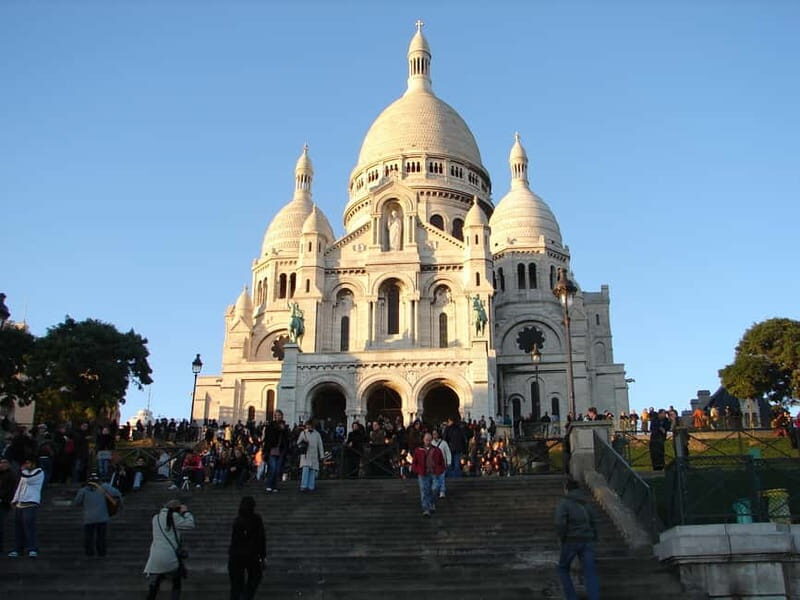
After the climb, you’ll reach Sacre Coeur and marvel at its white façade. This is one of those landmarks that can feel overexposed from postcards, but on foot it’s different. You see scale, texture, and the way the building sits up above the city.
Your guide also builds the story around how Montmartre went from being the outside-the-rules kind of place to becoming stylish, bohemian, and artist-focused. That arc is what makes the façade moment more than a photo stop.
If you’re the type who likes views, you’ll enjoy the way the neighborhood opens up as you get higher. If you’re not, you’ll still appreciate the perspective your guide provides on why this hill mattered.
Place du Tertre: village charm inside a city that never stops
Next is Place du Tertre, where you get the Montmartre “village inside the metropolis” feeling. This is the area where street artists work, and you can watch the creative scene rather than just hearing about it.
This stop is valuable because it keeps the tour grounded in what Montmartre is today. The guide isn’t just sending you back to history; they’re showing you how the art tradition continues in real time.
You also get a chance to slow down. In two hours, it’s easy to feel like you’re sprinting from point to point, and Place du Tertre is the kind of pause that makes the rest of the walk click.
You can also read our reviews of more private tours in Paris






Vigne de Montmartre: the vineyards that surprise people
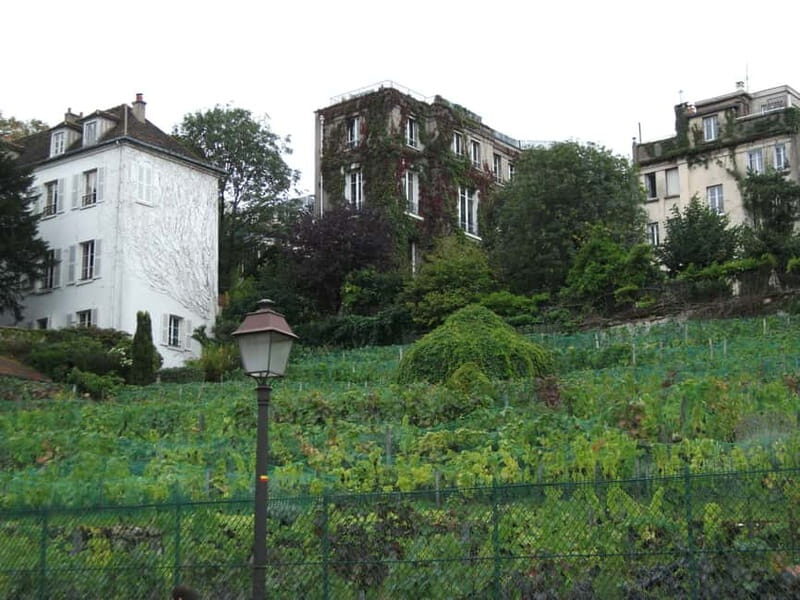
You’ll also discover the vineyards of the Vigne de Montmartre. Even if you don’t drink wine, you’ll probably enjoy this stop because it’s so unexpected in central Paris.
It reframes the neighborhood. Montmartre isn’t only cabarets, crowds, and iconic buildings. There’s this quieter layer—agriculture tucked into the city—that helps explain why the hill has always been more than just a stage.
If you like food culture and local quirks, this is a nice balance. If you’re mostly there for the big monuments, treat it as a short detour that gives you something you won’t get from a typical photo-only walk.
Lapin Agile cabaret: where Picasso and Modigliani enter the scene
One of the most distinctive stops is Lapin Agile cabaret. Your guide explains how it became a favorite place for struggling artists and writers.
The tour ties the cabaret to names like Picasso and Modigliani, including the idea of “drinking dens” where creative people spent time. Again, this isn’t about forcing genius into a single venue. It’s about showing how a working creative culture can form in a very specific kind of place.
I like this stop because it adds personality. You’re not only seeing landmarks; you’re learning why artists felt at home here. That makes the rest of the tour’s legends—illegal alcohol, Can-Can behavior, the underbelly of the neighborhood—feel less like random gossip and more like context.
Guides that make it click: Boris, Isabella, and why English matters
This is a private tour, so the guide shapes the whole experience. In feedback, Boris gets called out for excellent English and for having broad depth of knowledge about Paris and its history. Another standout, Isabella, is described as informative and fun.
One detail I consider especially useful: Boris is praised for keeping kids entertained on the walk—so if you’re traveling with children, a guide who can pitch the story at their level is a real advantage. Some families also mention being delayed arriving in France, and the guide being accommodating helped keep the trip from feeling ruined.
You can choose among guide languages including English, French, and Serbo-Croatian. If your group has different comfort levels, English availability makes planning easier.
Price and value: what you’re really paying for at $171
At $171 per person for a 2-hour private walk, this isn’t a budget activity. But you’re also paying for what typically makes small-group tours worthwhile: attention and pacing.
Here’s the value breakdown as I see it:
- You get a live guide who can tailor the stories as you move between different eras and neighborhoods within Montmartre.
- You’re not hunting down routes and landmark connections on your own. The guide stitches together Metro Blanche, Moulin Rouge, Moulin de la Galette, Rue Lepic, Sacré-Cœur, Place du Tertre, the Vigne, and Lapin Agile into one coherent loop.
- Private format helps with photo stops and the uphill pace, especially if your group wants to linger briefly at Place du Tertre or take the climb more slowly.
If you enjoy self-guided wandering, you could probably piece Montmartre together on your own. If you want meaning—why these places mattered—private is where you feel the difference.
Practical things you’ll want to plan before you go
The tour runs rain or shine, so bring a small umbrella or a hood. Even in dry weather, you’ll see uneven sidewalks and steps around the hill.
Also, no food or drinks are included. That’s normal for a walking tour, but it changes your timing. If you’re hungry afterward, plan a meal stop soon after, since the tour ends back at the meeting point.
Finally, this tour lasts 2 hours, and that time is used. It’s not designed for long museum-style breaks. It’s designed to get you oriented fast and teach you how to see Montmartre like a local.
Who should book this private Montmartre walk
This tour is a great match if you want:
- A guided route through major Montmartre landmarks plus the less obvious artist connections
- The stories behind the Can-Can and the neighborhood’s less-than-angelic legends
- A compact format that covers both today’s art streets and the roots of Impressionism
It may not be ideal if your group needs lots of sitting time, or if climbs feel challenging. The Rue Lepic climb is part of the point, and it’s easier to enjoy when you’re physically comfortable with a steady uphill walk.
Should you book the Paris Montmartre Private Walking Tour?
If you’re choosing between a self-guided Montmartre stroll and a guided private experience, this one leans toward the guide side. You’ll get more than sights: you’ll get the neighborhood’s transformation story, the artist-era details around Lapin Agile, and the landmark-to-legend connections stitched together in about two hours.
I’d book it if you care about context and you like walking as a way to learn. I’d skip it if your priority is only quick photos and you’d rather spend your money on food, museums, or a bigger day-trip.
FAQ
How long is the Montmartre private walking tour?
It lasts 2 hours.
Where do we meet the guide?
Meet your guide by the exit of Metro Blanche. The guide will be carrying a red canvas tote bag.
Where does the tour end?
The tour ends back at the meeting point.
What languages are available for the live guide?
The guide is available in English, French, and Serbo-Croatian.
Is the tour private?
Yes, it’s a private group experience.
Does the tour include food or drinks?
No. Food and drinks are not included.
Does the tour run in bad weather?
Yes, it takes place rain or shine.
Can I cancel for a full refund?
You can cancel up to 24 hours in advance for a full refund.