REVIEW · PARIS
Paris: Montmartre Small Group Guided Walking Tour
Book on GetYourGuide →Operated by Exploring Tours and Services · Bookable on GetYourGuide
Montmartre tells its story at walking speed. This small-group guided walk keeps things calmer than big tours, with a guide who actually talks to you as you move through the streets and viewpoints. What also makes it interesting: you’re not just doing the postcard stuff—you’ll get the art legend layer and the daily-life layer side by side, in a neighborhood that still works on a human scale.
What I love most is the group size capped at 8. That matters on a hill like this, because it’s easier to ask questions, keep a comfortable pace, and hear the details without shouting over crowds. One possible drawback: this tour climbs uphill and is not suitable for wheelchair users or mobility impairments, and the walk still goes on rain or shine.
What I love next is the route’s mix of classic landmarks and quieter corners. You start at Anvers and work your way up to Sacré-Cœur, then hit the artists’ hub at Place du Tertre, pass the working wine area (Vigne du Clos Montmartre), and continue through places tied to artists like Picasso and Van Gogh, ending near the Moulin Rouge area.
In This Review
- Key highlights worth planning for
- Why this Montmartre walk feels calmer than the usual big-group loop
- The one thing to weigh before you book
- Meeting at Anvers and climbing toward Sacré-Cœur
- Sacré-Cœur: the view is the payoff, not just the stop
- Place du Tertre: artists’ square with real context
- Vineyards and cabarets: the Montmartre that still produces wine
- Vigne du Clos Montmartre
- Cabarets: Lapin Agile and Moulin de la Gallette
- The Dalida statue, plus Picasso and Van Gogh in the streets
- Le Bateau-Lavoir: where artistic energy keeps showing up
- Abbesses and the Wall of Love: modern art on old streets
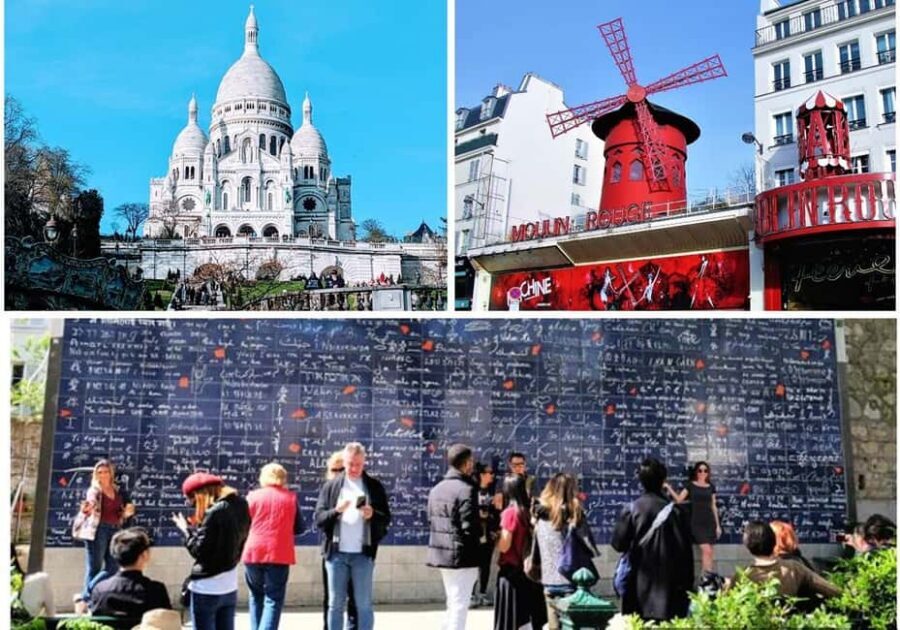
- Finishing near Moulin Rouge: your last photos and next steps
- Price and value: what $74 buys you in 150 minutes
- Who should book this Montmartre guided walk
- Should you book this tour?
- FAQ
- Where does the tour start?
- How long is the Montmartre walking tour?
- How big is the group?
- What language options are available?
- What key places are included on the route?
- Is the funicular included?
- Are food and drinks included?
- Does the tour run in bad weather?
- Is the tour wheelchair accessible?
Key highlights worth planning for
- Small group (up to 8): more conversation, less rushing, better context as you walk
- Sacré-Cœur stop plus city views: you earn the scenery by climbing the hill
- Place du Tertre artists’ square: learn how the painter scene grew and why it mattered
- Cabaret and wine stops: Lapin Agile, Moulin de la Gallette, and the vineyards that still produce wine
- Artist-linked streets: see stops connected to Picasso and Van Gogh
- Wall of Love at Abbesses: modern Paris flavor before you finish near Moulin Rouge
Why this Montmartre walk feels calmer than the usual big-group loop
Montmartre can be intense. You’ve got hills, tight streets, and crowds that swell around the most famous views. This tour’s smartest move is the semi-private format limited to 8 people, which changes the whole feel.
With a small group, your guide can slow down when you have questions, and you’re less likely to get left behind during the busier stretches. Several guides are described as patient and tuned in—like how Monica, Jimmy, and Melanie are praised for keeping people comfortable, setting a good pace, and making the stories land in a way that feels human, not like a lecture.
You also get an angle that many quick Montmartre tours skip: the neighborhood behind the famous neighborhood. That means you’ll spend real time around the streets, viewpoints, and everyday corners that help explain why this hill became such a magnet for artists in the first place.
You can also read our reviews of more walking tours in Paris



The one thing to weigh before you book
This is a walking tour with an uphill climb, and it’s not accessible for wheelchairs. If stairs and uneven pavement are an issue for you, this is likely the wrong format. Also, bring gear for weather because it runs rain or shine, and you should plan for limited bathroom options.
Meeting at Anvers and climbing toward Sacré-Cœur
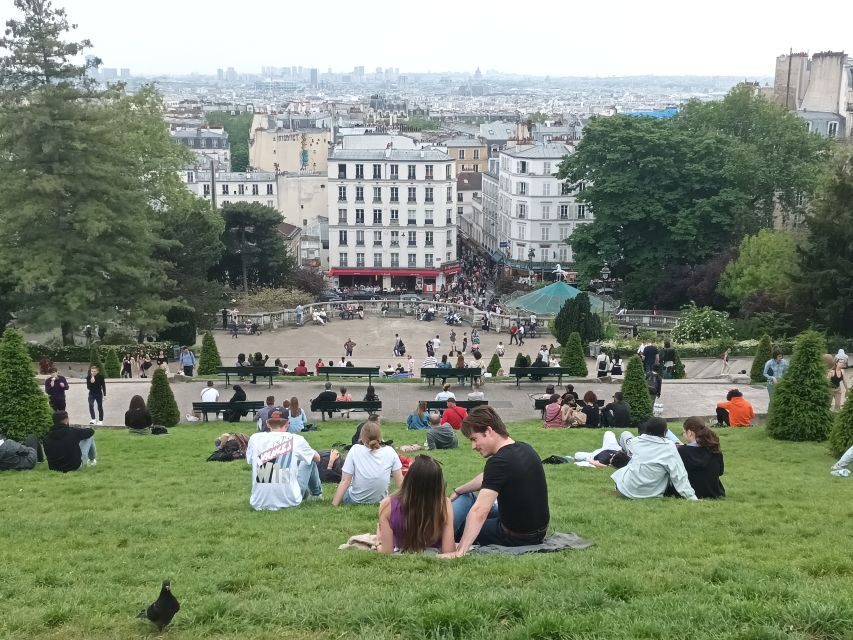
The tour starts at the exit of Anvers metro station (Line 2). Your guide is waiting there holding a GetYourGuide sign, and you’ll want to show up about 10 minutes early so you don’t risk missing the start.
From Anvers, you head up. That hill is the whole point of Montmartre, and it’s also why timing and pacing matter. A smaller group helps because you’re less likely to feel like you’re constantly trying to catch up. You’ll get scenic city views along the way, so the climb doesn’t feel like dead time.
I like that the tour builds momentum. Instead of jumping straight into the most crowded spots, you warm up with street-level context—what makes these blocks different, why the layout and views mattered, and how the hill shaped the way artists worked and wandered.
Sacré-Cœur: the view is the payoff, not just the stop
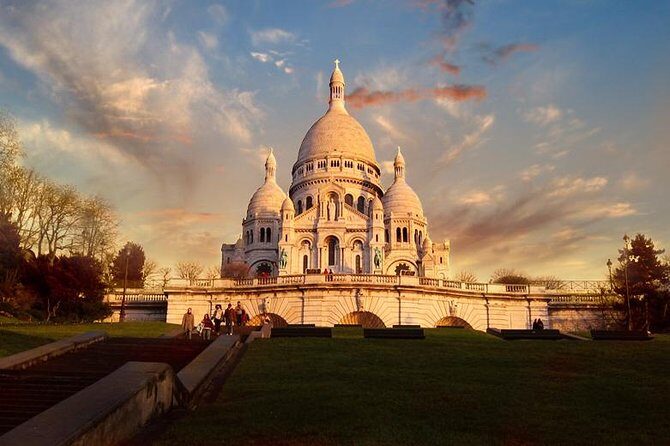
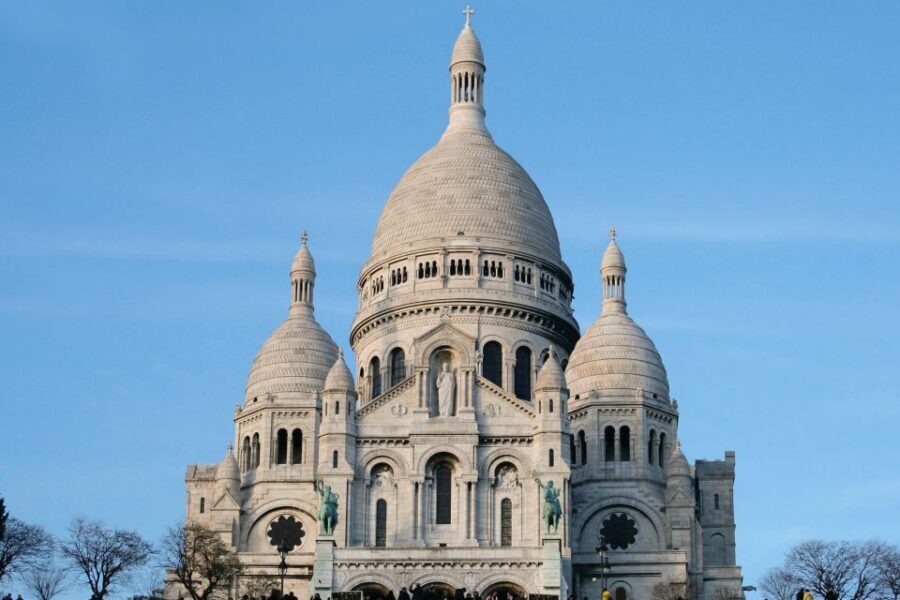
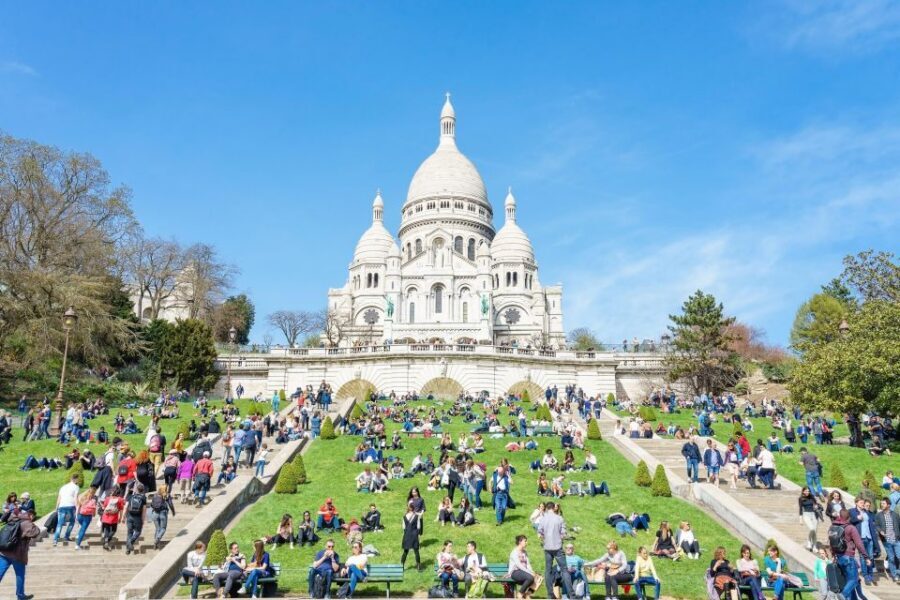
Once you reach Basilica of the Sacred Heart (Sacré-Cœur), you’ll get a guided visit plus a bit of time to breathe. This is the moment most people picture when they think of Montmartre, but on a guided walk, it turns into more than a photo.
The value here is how the guide ties Sacré-Cœur into the broader story of the neighborhood. You’re not only standing at a famous landmark—you’re standing there with context for why Montmartre became a stage for artists, performers, and dreamers. And because you’ve already climbed, the views feel earned.
Practical note: this is a place where people linger. If it’s packed, your time inside and around the basilica can be more comfortable with a guide to keep you moving at a sensible pace.
Place du Tertre: artists’ square with real context
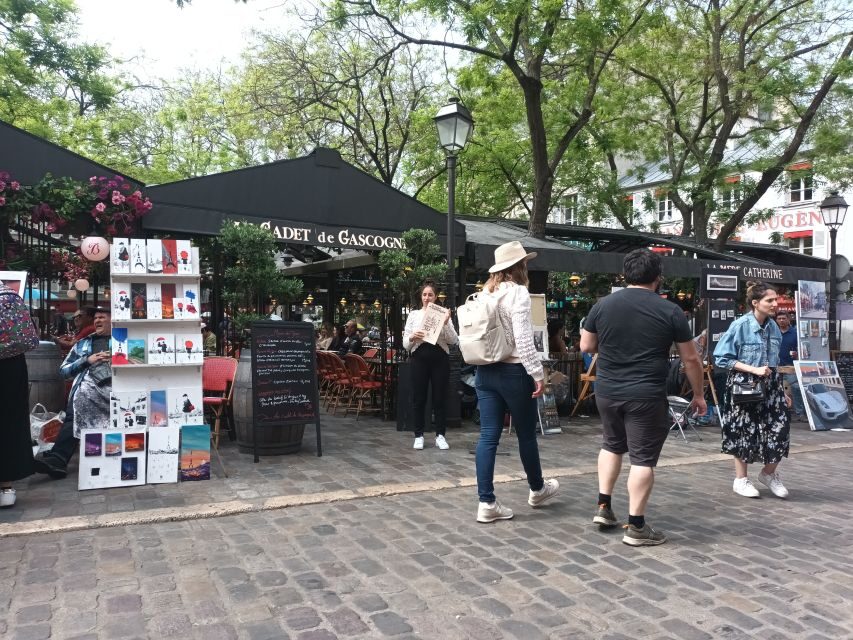
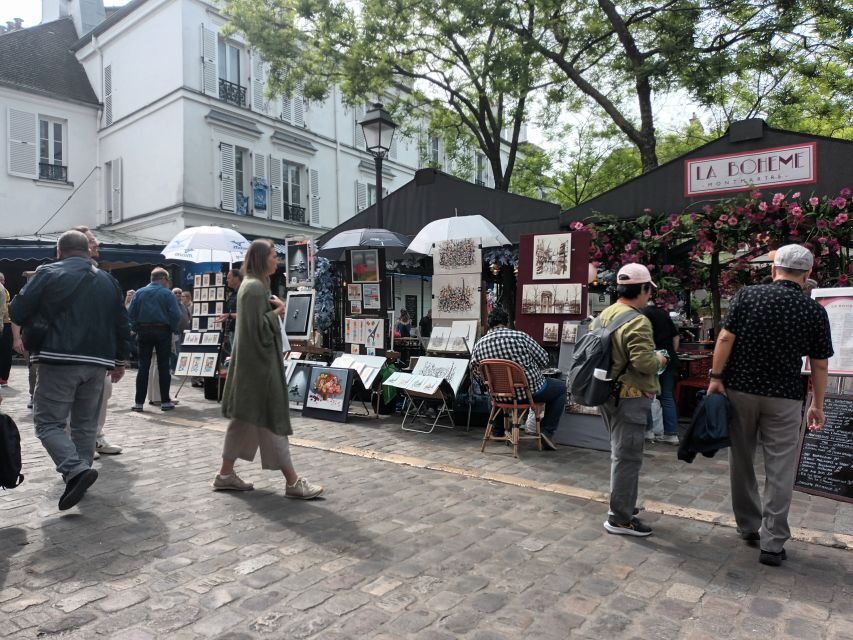
After Sacré-Cœur, you move to Place du Tertre, the square known for painters displaying their works. It’s touristy, yes, but it’s also one of the best places to understand why Montmartre’s art identity stuck for so long.
Your guide explains the stories behind the famous artists associated with this area. That changes how you experience the square. Instead of just seeing easels, you’ll understand what sort of community formed here—and why the square became part of the Montmartre legend.
You’ll also have a short window to wander and shop, which is handy because Place du Tertre is exactly the kind of location where you may want to browse on your own rather than follow every step in a line.
The drawback to watch: it can feel crowded and a bit hectic. In a small group, you can still enjoy the atmosphere without getting swept away.
You can also read our reviews of more guided tours in Paris





Vineyards and cabarets: the Montmartre that still produces wine
Then the tour shifts tone. You head through the hill’s less-famed pockets and toward two of the most fascinating “proof-of-life” stops: the vineyards and the cabarets.
Vigne du Clos Montmartre
You’ll pass Vigne du Clos Montmartre, where the tour notes that they still produce wine. That detail matters. Montmartre isn’t just a stage set. It’s an area with traditions that continued alongside the art scene.
For me, this stop is a reality check in the best way. You see the physical evidence that Montmartre has depth beyond its reputation.
Cabarets: Lapin Agile and Moulin de la Gallette
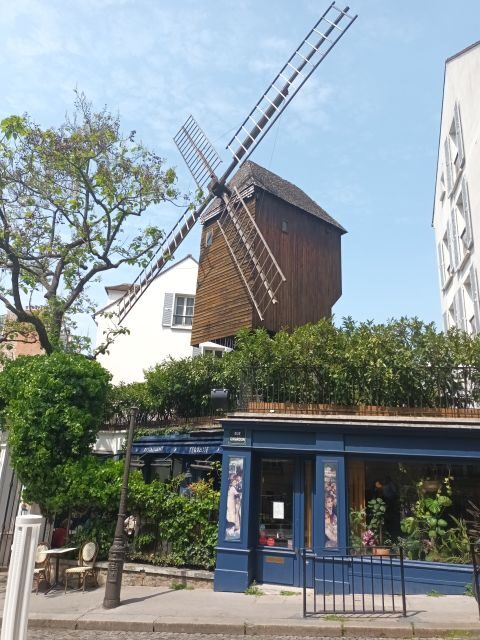
You’ll also make photo stops connected to classic Montmartre nightlife such as Lapin Agile and Moulin de la Gallette.
Even if you never go inside, these stops help you picture the full cultural ecosystem—where artists didn’t just paint; they socialized, performed, and networked. Cabarets were part of the neighborhood’s rhythm, and the guide’s job is to connect those dots as you walk.
If you love neighborhoods with layered identities—religious landmark, artist square, working vineyard, and performer venues—this section delivers.
The Dalida statue, plus Picasso and Van Gogh in the streets
As you continue, you’ll hit a few recognizable waypoints that anchor the stories.
You’ll make a photo stop at the Dalida statue, which helps break up the walk with a pop-cultural reference point. It’s not just a snapshot stop; it’s another reminder that Montmartre isn’t frozen in the 1800s and early 1900s.
Then you’ll visit areas connected to artists Picasso and Van Gogh. The tour is positioned to help you connect their time and influence to real streets you can stand on. That’s a stronger experience than flipping through museum labels, because you’re seeing the geography that shaped how they moved and how they found inspiration.
Some guides may also build in extra time for church stops beyond Sacré-Cœur. For example, one guide experience notes a route that included multiple churches. If that happens on your day, it can add more architectural and cultural texture to the story.
Le Bateau-Lavoir: where artistic energy keeps showing up

One of the most interesting stops is Le Bateau-Lavoir. You’ll make a photo stop and learn about why this spot matters in the Montmartre art narrative.
The value of this kind of stop is that it gives you a place-based feeling. Montmartre’s reputation can sound like a myth if you only hear big-name stories. But when you stand near the kind of location that attracted creativity, you start to understand the pull.
If you like walking tours that explain not just what’s famous, but why people gathered here, you’ll appreciate this part.
Abbesses and the Wall of Love: modern art on old streets
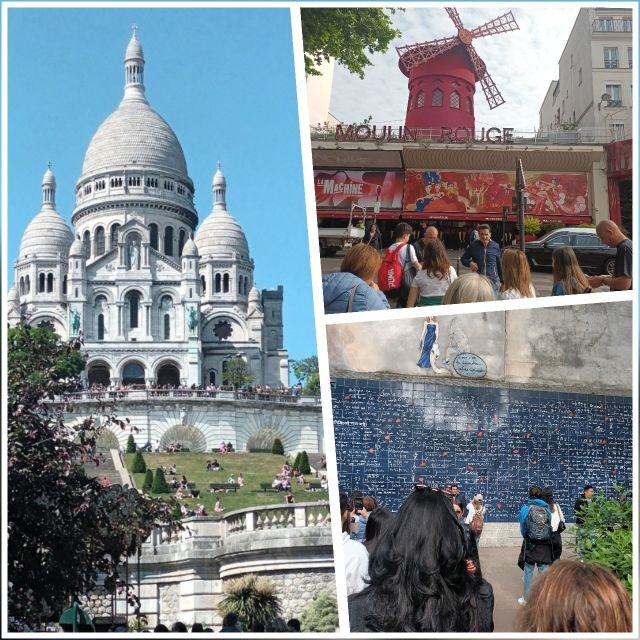
Next comes Abbesses. You’ll see the Wall of Love (je t’aime), a modern art work that draws plenty of visitors. This is where the tour turns from “historic Montmartre” to “how the area keeps reinventing itself.”
The guide helps you look at the wall as part of the neighborhood’s ongoing identity: Montmartre is famous for art, but it’s also famous for letting new art show up in unexpected places.
You’ll also visit Place des Abbesses, with time to stroll and browse. That’s a nice change of pace before the final leg.
Practical note: Abbesses is where you may feel the difference between a viewpoint-focused experience and a lived-in local neighborhood. That’s good. It stops the tour from becoming only sightseeing.
Finishing near Moulin Rouge: your last photos and next steps
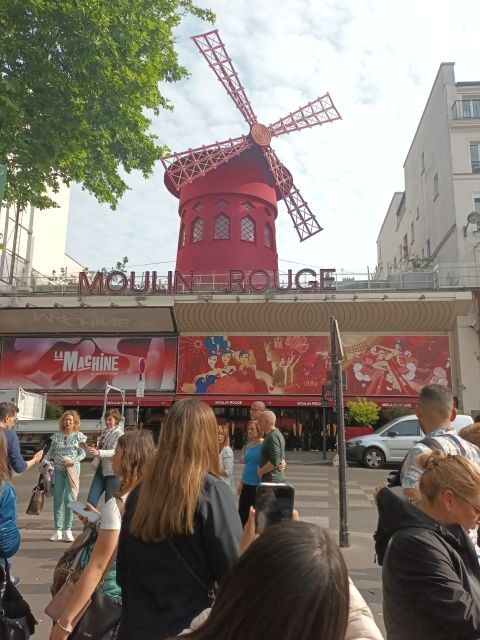
Your tour ends at the base of the hill opposite Moulin Rouge. This is a smart finish because it leaves you close to one of the most iconic theaters in Paris without trapping you in it.
You’ll likely feel a little mix of emotions here: Montmartre’s romance on one side, the reality of big-city energy on the other. If you want to keep going after the tour, you’re set up for easy wandering—dinner, a drink, or a quick stroll to digest everything you just learned.
Price and value: what $74 buys you in 150 minutes
At $74 per person for about 150 minutes, the value comes from three things:
- Time-saving + story-building. You’re getting the structure of a guided path with built-in context, so you don’t have to piece together connections about artists and neighborhoods on your own.
- The small-group advantage. A limit of up to 8 is a big quality upgrade in a place like Montmartre where crowds and hills can make self-guided walking stressful.
- You see more than the obvious loop. The combination of Sacré-Cœur, Place du Tertre, Vigne du Clos Montmartre, cabarets like Lapin Agile and Moulin de la Gallette, Le Bateau-Lavoir, and the Wall of Love gives you a fuller sense of Montmartre than the two-stop version.
What isn’t included matters too. Food and drink aren’t provided, and funicular tickets aren’t included. Since the tour includes uphill walking, that’s not a dealbreaker, but it is a reason to plan: bring water if it’s warm, and wear shoes you can trust on slippery pavement in rain.
Who should book this Montmartre guided walk
This tour is a good fit if you want:
- A calmer Montmartre experience with a guide who can interact with you (small group)
- The story of how the art world formed here, not just a list of sights
- A route that covers both famous landmarks and quieter everyday corners
- A couple of hours that helps you understand what to explore on your own afterward
You should probably choose another option if:
- You need wheelchair access (this one isn’t built for it)
- You hate uphill walking and uneven streets
- You want long sit-down breaks or a meal included (this tour is mostly movement and stops)
Should you book this tour?
If you’re going to Montmartre anyway, this is one of the better ways to get your bearings fast while still learning something real. The small-group size, the mix of art landmarks plus vineyards and cabarets, and the guided explanations make it feel like a guided story, not a marching line.
Book it if you’re the type who likes asking questions, enjoys walking viewpoints, and wants to understand why artists and performers were drawn to this hill. Skip it if mobility is a concern for you or if you’re looking for a low-effort, mostly-flat experience.
FAQ
Where does the tour start?
The guide meets you at the exit of Anvers metro station (Line 2) and will be holding a GetYourGuide sign.
How long is the Montmartre walking tour?
It runs about 2 hours to 150 minutes.
How big is the group?
This is a small-group format with a limit of up to 8 people.
What language options are available?
The tour guide is available in English, Spanish, Italian, and French.
What key places are included on the route?
You’ll visit Sacré-Cœur, Place du Tertre, and make stops for Lapin Agile, Vigne du Clos Montmartre, Dalida Statue, Moulin de la Gallette, Le Bateau-Lavoir, Wall of Love (je t’aime), Place des Abbesses, and a final photo stop near Moulin Rouge.
Is the funicular included?
No. Funicular tickets are not included.
Are food and drinks included?
No. Food and drink are not included.
Does the tour run in bad weather?
Yes. The tour takes place rain or shine.
Is the tour wheelchair accessible?
No. It’s not accessible for wheelchairs and people with mobility impairments, since it includes a walk up the hill.