REVIEW · PARIS
Paris: Montmartre Walking Tour with Sacré-Cœur Basilica
Book on GetYourGuide →Operated by THE PERFECT VACATION · Bookable on GetYourGuide
Montmartre feels like a movie set. This 2-hour walk strings together the neighborhood’s most famous scenes and a few quieter corners, so you don’t just see landmarks—you understand why they matter. I especially liked the stop at Van Gogh’s house area and the payoff of Sacré-Cœur panoramic views. One consideration: you’ll do some uphill walking and spend some time moving past busy streets where photos are easy but lingering is harder.
Starting at the Blanche Metro station (Line 2), the tour hits right near Moulin Rouge, then gradually shifts from cabaret-glam to the artistic “why is this place so inspiring?” feeling. You also get bonus flavor that many Montmartre tours skip, like the secret vineyard of Clos Montmartre and a visit to the Lapin Agile Cabaret.
The tour ends at Sacré-Cœur, but the guide doesn’t go inside with you. That’s not a deal-breaker—more like a good chance to explore at your own pace—but plan on managing your own timing for the church interior.
In This Review
- Key highlights to watch for
- From Blanche Metro to Moulin Rouge: the tour starts where the legend begins
- Le Mur des Je t’aime and the romantic side of Montmartre
- Van Gogh’s house and walking the art trail through ordinary streets
- Picasso links, Dalida, and the back-to-back charm stops
- Clos Montmartre vineyard: the stop that surprises people
- Lapin Agile Cabaret and Place du Tertre: the living neighborhood ending
- Sacré-Cœur: guided context first, then your own timing inside
- Price and time: does $46 for 2 hours make sense?
- Who this tour fits best (and who should rethink it)
- Guide quality: Perkin and Pierre set the tone
- Should you book this Montmartre walk?
- FAQ
- Where do I meet for the tour?
- How long is the walking tour?
- Where does the tour end?
- Is entry to Sacré-Cœur included with the guide?
- Does the tour include meals or drinks?
- What’s the tour language?
Key highlights to watch for
- Blanche Metro to Moulin Rouge start: you’re in the story fast, without wasting time getting oriented.
- Van Gogh and artists’ meeting places: you see the physical locations tied to famous names and creative crowds.
- Le Mur des Je t’aime (Wall of Love): quick, romantic, and a great photo moment in multiple languages.
- Clos Montmartre vineyard: the most “wait, this is in Paris?” stop on the route.
- Lapin Agile Cabaret: a traditional Montmartre nightlife stop that adds texture beyond the postcard sites.
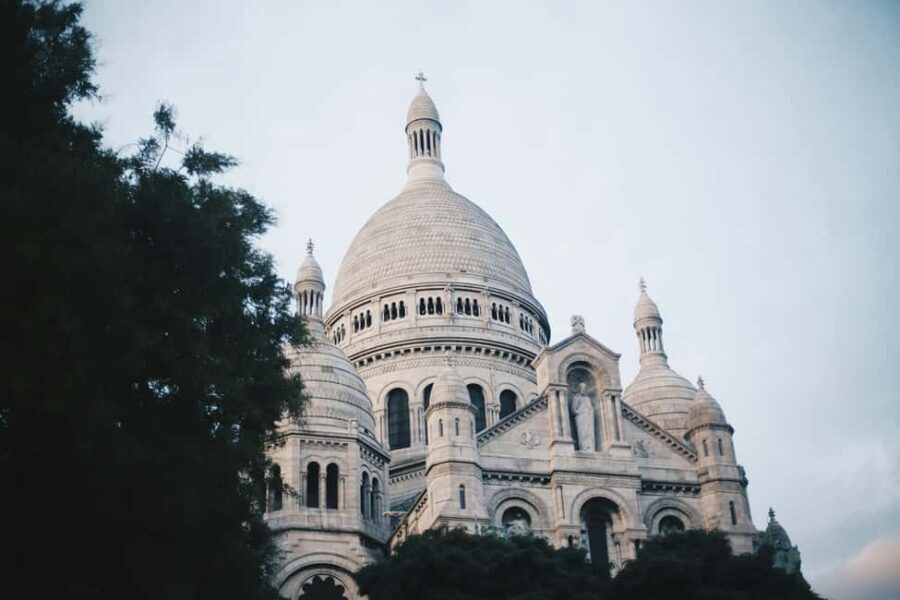
- Sacré-Cœur drop-off with big views: guided context first, then you control your time inside the church.
From Blanche Metro to Moulin Rouge: the tour starts where the legend begins
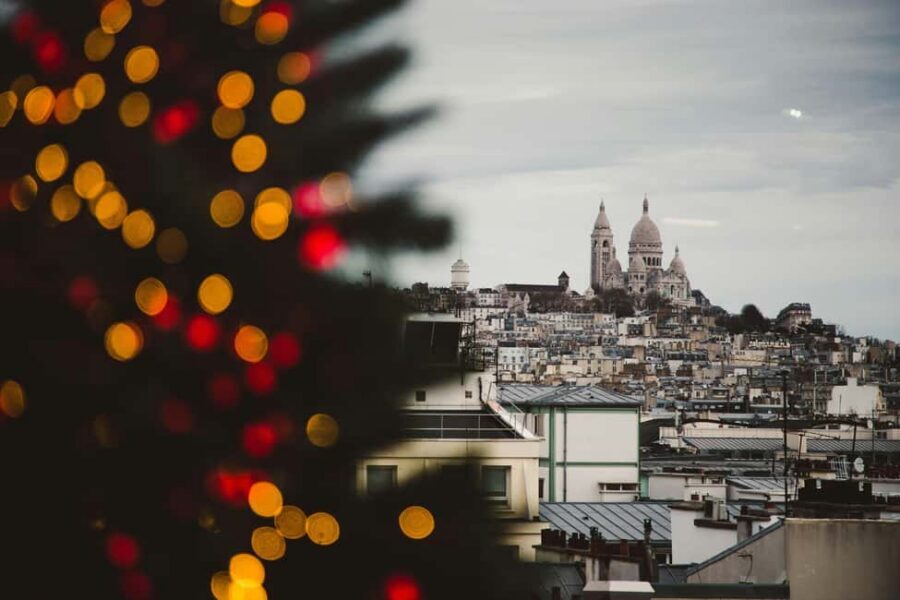
You begin in front of the Blanche Metro station on Line 2, right by the Moulin Rouge area. That’s a smart setup. You can arrive early, confirm you’re in the right spot, and then your guide leads you into Montmartre while the neighborhood is still “coming to life” around you.
Moulin Rouge is the obvious headline, but on this walk it’s more than a sightseeing checkbox. You get the cabaret and entertainment vibe that made Montmartre famous, and you’re also nudged to pay attention to the streets and side lanes. The tour keeps moving, so you see how the big spectacle connects to the smaller, human-scale streets just a short walk away.
If you’re the kind of traveler who hates standing around waiting for the group to catch up, you’ll probably like the pace. You do pass by certain highlights, so the goal is to orient you and give you the key stories, not slow-trip through every street corner.
You can also read our reviews of more walking tours in Paris



Le Mur des Je t’aime and the romantic side of Montmartre
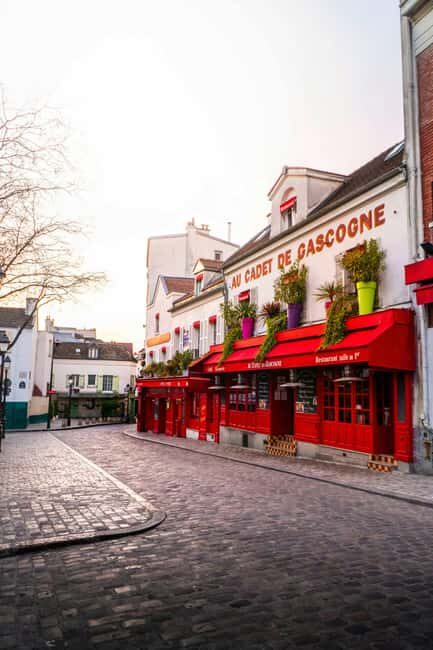
Next up is the Wall of Love, also known as Le Mur des Je t’aime. It’s one of those stops that works at two levels. First, it’s visually striking—clean, colorful, and easy to photograph. Second, it’s a reset moment in the middle of the day when the walk turns from cabaret energy to human, emotional Montmartre.
The good part is timing and duration. You’re not spending forever there, but you do get the chance to stop, read, and snap your photos before the tour keeps going. If you plan your pictures well, you can leave with a strong set of shots without losing too much time in the middle of the route.
Van Gogh’s house and walking the art trail through ordinary streets
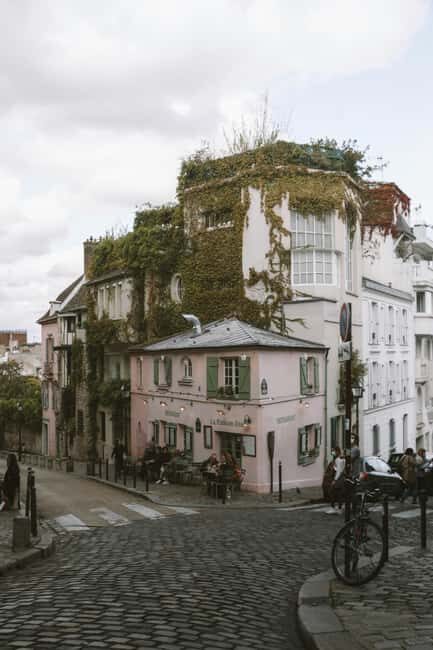
One of the best values here is that you don’t just hear that Montmartre was an artists’ neighborhood—you see locations tied to real creative careers.
The tour includes a visit connected with Van Gogh’s house. It’s a chance to connect the famous name to the actual streets. Even if you know Van Gogh mostly through paintings, looking at the streetscape is where the story clicks. You start noticing the slope, the angles, and the way people move through the neighborhood—small details that shaped what artists could paint and why they might have felt drawn here.
Then you continue toward La Bateau-Lavoir, the historic artists’ studio area where Picasso and other creatives once gathered. This is the kind of stop that makes Montmartre feel less like a brand and more like a working creative scene. You can think of it as the “community” layer—where artists weren’t only inspired by scenery, but also by each other.
A practical note: Montmartre streets can be uneven. Wear shoes you trust. A walking tour like this is only fun if your feet are happy.
Picasso links, Dalida, and the back-to-back charm stops
After the art-focused section, the route shifts into Montmartre’s pop-culture memory.
You visit the house of French icon Dalida and take a photo stop at Place Dalida. If you’re familiar with her music, this part adds an emotional thread to the walk. If you’re not, it still works because Montmartre isn’t only painters. It also holds the legacy of performers, public figures, and the kind of artistic fame that shaped the neighborhood’s reputation for decades.
This stretch also includes stops that are visually easy to love:
- La Maison Rose: a pastel-pink café that looks like it belongs in a painting. Even if you don’t stop for a meal, it’s a perfect “pause and look” moment.
- Moulin de la Galette: a windmill tied to the area’s past as a dance hall. The important thing isn’t just the landmark shape—it’s the reminder that the entertainment tradition isn’t new.
You’ll find that these stops keep your eyes busy. The stories give meaning, and the colors and textures make the walk feel like a living neighborhood rather than a sequence of monuments.
Clos Montmartre vineyard: the stop that surprises people
Clos Montmartre is the one that often makes visitors stop and say, Wait, there’s a vineyard here.
This tour includes discovery of the secret vineyard of Clos Montmartre, where wine is still produced in the heart of Paris. That fact alone changes how you think about the neighborhood. Montmartre is known for art and nightlife, but it also has agriculture—and that contrast is part of what makes the area so memorable.
It’s also a morale boost during a walking tour. After a few streets of facades and photos, you get a calmer, more grounded moment with a different kind of scenery. You’re not just chasing famous names; you’re seeing how the place itself keeps working.






Lapin Agile Cabaret and Place du Tertre: the living neighborhood ending
As you continue, you visit Lapin Agile Cabaret, described as one of the last bastions of traditional Montmartre nightlife. Even without turning it into a long sit-down experience, this kind of stop adds atmosphere. It’s the difference between seeing a neighborhood and understanding what locals might have felt walking in at night.
Then you end up at Place du Tertre, where artists still gather to sell their work. This is one of those places where the scene is part of the point. It’s busy, it’s photogenic, and it gives you the feeling that Montmartre’s artist culture didn’t vanish—it just transformed and survived.
If you want the most from this ending, give yourself a small window to browse. The tour gets you there, but your own wandering is what makes it feel real.
Sacré-Cœur: guided context first, then your own timing inside
The tour concludes at Sacré-Cœur, and the guide drops you there. They do not accompany you inside the church, which means you get time to explore on your own and fully appreciate it as an iconic landmark.
For me, this is the right call. Once you arrive at Sacré-Cœur, the experience shifts from “learn the story” to “take it all in.” You want to look out over the city at your own pace, and you may want to pop inside, pause near key areas, and just soak up the space.
You also get panoramic views of Paris from Sacré-Cœur, and this is where the whole walk pays off. The tour has been building Montmartre’s identity—cabaret, art, performers, studios, daily streets. Then the viewpoint pulls it together into one big sense of place.
Plan for some stairs and crowd flow. Even with a short tour like this, Sacré-Cœur is a popular destination.
Price and time: does $46 for 2 hours make sense?
At $46 per person for a 2-hour guided walk, this tour is priced in the mid-range for what you get—especially because it includes more than “just photos of famous stuff.”
You’re getting:
- a structured route from Blanche Metro near Moulin Rouge to Sacré-Cœur
- stops connected to Van Gogh, Bateau-Lavoir, Dalida, and Moulin de la Galette
- a Wall of Love stop that’s quick but high impact
- unique Montmartre texture via Clos Montmartre and Lapin Agile
- access to Place du Tertre and then views at Sacré-Cœur
The main tradeoff is that it’s a moving walk. Some items are pass-by moments, so you won’t be lingering all day. But that’s also why the tour is only 2 hours. It’s a strong “Montmartre orientation plus story hits” option, ideal if you’re trying to fit a lot into a limited time window in Paris.
Who this tour fits best (and who should rethink it)
This is a great fit if you:
- want a guided route that makes Montmartre’s art and entertainment reputation feel logical
- like seeing a mix of famous stops and a few lesser-known layers like the vineyard
- enjoy panoramic viewpoints and want your Sacré-Cœur time to be flexible
It may be less ideal if you:
- hate uphill walking or uneven surfaces
- need a fully guided experience inside Sacré-Cœur (the guide drops you before the interior)
The activity also isn’t suitable for people over 95, so plan around that if you’re traveling with older family members.
Guide quality: Perkin and Pierre set the tone
One of the quiet upsides is that the guides have strong performance in this route. Reviews specifically call out Perkin and Pierre as being great guides. The feedback highlights that they do their best, bring good parallel knowledge, and make the tour feel interesting and well covered.
In practical terms, that’s what you want on a 2-hour walking tour: clear storytelling, smooth pacing, and enough context that the stops feel connected instead of random.
Should you book this Montmartre walk?
I’d book it if you want a fast, well-paced way to understand why Montmartre became a magnet for artists and entertainers, and you’re happy to do your own exploration inside Sacré-Cœur. The route hits the big postcards—Moulin Rouge, the Wall of Love, Moulin de la Galette, Sacré-Cœur—then adds the extras that make the neighborhood feel lived-in, like Clos Montmartre and Lapin Agile.
Skip it only if you want a slow, deep, hours-long wander with lots of indoor time, or if you strongly prefer a guide to stay with you inside Sacré-Cœur. Otherwise, this is a solid value for an efficient Montmartre experience.
FAQ
Where do I meet for the tour?
You meet in front of the Blanche Metro Station (Line 2). The guide will have a flag with The Perfect Vacation logo.
How long is the walking tour?
The tour lasts 2 hours.
Where does the tour end?
The tour ends at the Basilica of the Sacred Heart of Paris (Sacré-Cœur). The guide will drop you there.
Is entry to Sacré-Cœur included with the guide?
The tour includes visiting Sacré-Cœur, but the guide does not accompany you inside. Entry is self-guided so you can explore on your own.
Does the tour include meals or drinks?
No. Meals and drinks are not included.
What’s the tour language?
The live tour guide is English.