REVIEW · PARIS
Paris: Secret City Bike Tour Off the Tourist Path
Book on GetYourGuide →Operated by Holland Bikes · Bookable on GetYourGuide
Paris has secret streets. You’ll ride them.
This Paris secret city bike tour is a smart way to see more than the usual photo stops, with guided storytelling across neighborhoods locals actually use. What I like most is the focus on the 2,000-year history of Paris through real places, not just a list of monuments, and the variety of districts you pedal through instead of repeating the same central blocks. One thing to keep in mind: you’re cycling in city traffic and tight streets, so comfort depends on how okay you feel riding through Paris streets even if you pick an electric bike.
You start near Opéra and finish back where you began, rolling from the bohemian world of Saint-Germain-des-Prés toward the Quartier Latin and on into the Marais. The guide drives the timing with short, focused stops (often 10–20 minutes), so you get context without losing half the day waiting around. If you hate cold wind or you show up with zero cycling comfort, this might feel like a stretch—also note that food and drinks aren’t included, even though the tour does include a refreshment stop at a landmark.
In This Review
- Key Highlights Worth Planning For
- A Bike Tour That Threads Paris Between Big Sights
- Starting Near Opéra: Finding the Meyerbeer Meeting Point
- Saint-Germain-des-Prés and the Latin Quarter: Where Ideas Walk to Work
- Galerie Vivienne
- Palais-Royal
- Saint-Germain-des-Prés (area stop)
- Church of Saint-Sulpice
- Luxembourg Gardens
- Pantheon
- Latin Quarter
- Marais and the Left-Bank-to-Right-Bank Switch: From Arènes to Notre-Dame Views
- Arènes de Lutèce
- Notre-Dame Cathedral area
- Le Marais
- Place des Vosges
- Bourse de Commerce
- Electric Bikes, Street Lanes, and That Confidence Boost
- Price and Value: What $51 Buys You in Paris
- Guides Who Make the City Click (English, Dutch, German)
- Who This Tour Is Best For
- Quick Tips Before You Roll
- Should You Book This Off-the-Path Paris Bike Tour?
- FAQ
- How long is the Paris Secret City Bike Tour?
- What does the tour cost?
- Where do I meet the guide?
- How many languages are the guides available in?
- Are food and drinks included?
- Do I need my own bike?
- What stops are included?
Key Highlights Worth Planning For
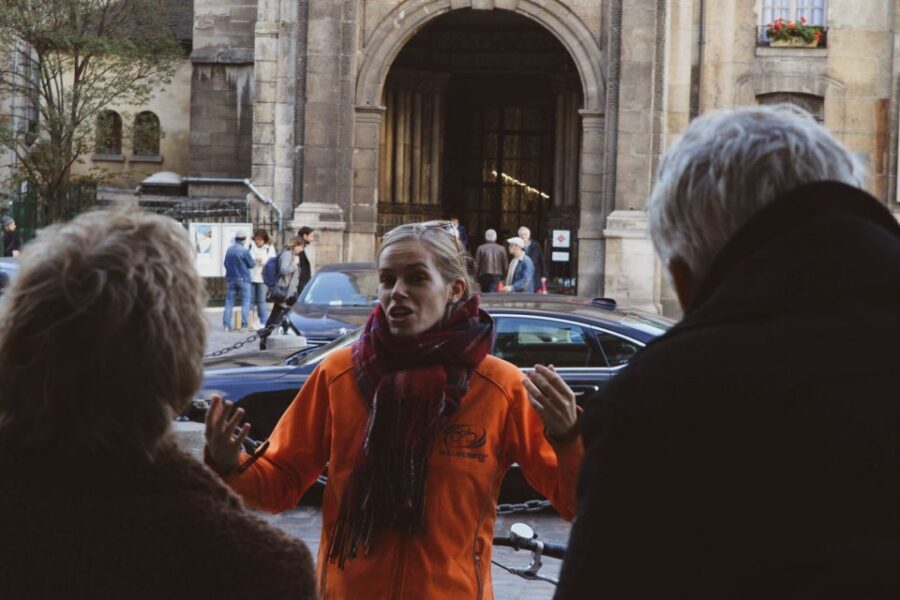
- Off-the-tourist-path routing across Saint-Germain-des-Prés, the Latin Quarter, and the Marais
- Electric bike option for an easier ride on a 3-hour city circuit
- Quick guided tours at major AND lesser-known sites (think Galerie Vivienne, Palais-Royal, Pantheon, Arènes de Lutèce, Place des Vosges)
- Street-smart wayfinding: you learn how to handle bike lanes and busy intersections with a guide nearby
- Storytelling that links people to places, from philosophers to royal families and famous artists
- A refreshment stop at an iconic landmark during the ride
A Bike Tour That Threads Paris Between Big Sights
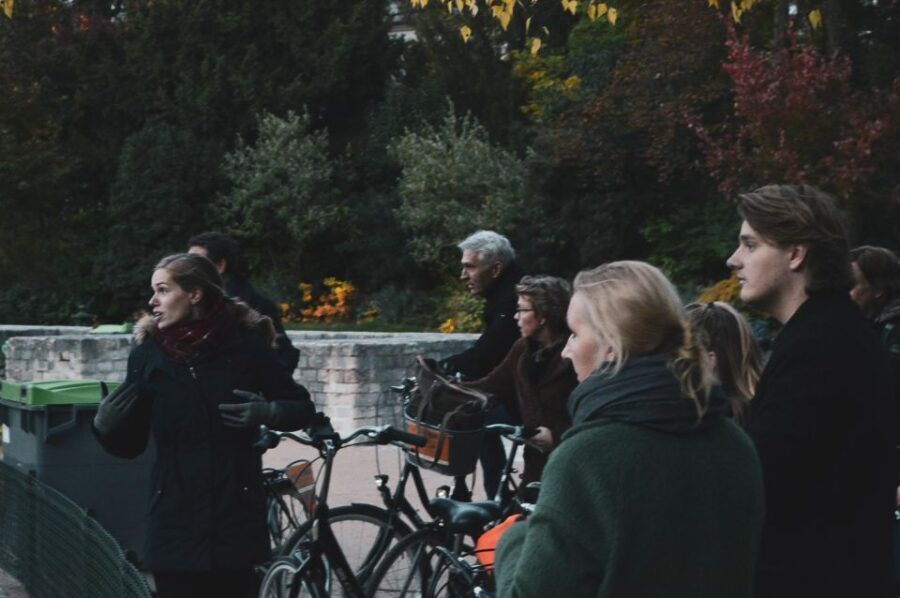
This tour works because it treats Paris like a lived-in city, not a museum you sprint through. Yes, you’ll pass by landmark territory, but the real payoff is how you move between neighborhoods with different personalities—intellectual cafés in the left bank areas, legal-and-bookshop vibes around the Latin Quarter, and the grand, stylish architecture of the Marais.
You get short guided pauses rather than long lectures. That matters in a place where everyone wants to stand in front of the same famous facade. Here, the timing is built for movement: pedal, stop, learn, pedal again.
And the stories are the point. The guide connects what you see with what was going on—things like how major political change was first planned, where shopping trends took off in earlier centuries, and why specific districts became the places they are today.
The bikes are Dutch-style, which helps explain the ride feel. You’re not on some flimsy rental that fights you on every turn.
You can also read our reviews of more cycling tours in Paris

Starting Near Opéra: Finding the Meyerbeer Meeting Point
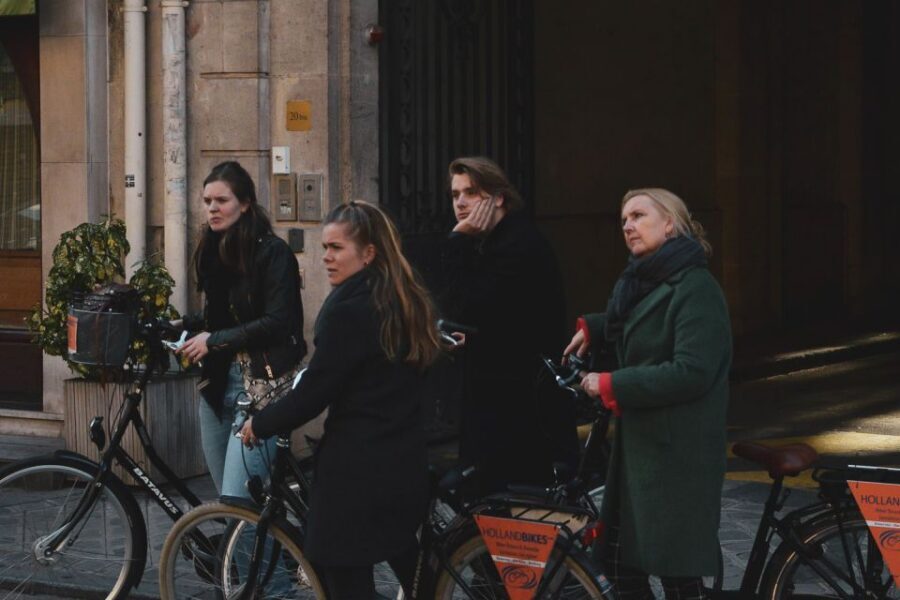
Your meeting point is inside the Parking Garage Meyerbeer at -1 level. You’ll walk down the car ramp to find your guide. Arrive about 15 minutes early so you’re not stressed when you’re trying to park, pick up your bike, and get oriented.
There are two nearby starting/ending options inside the area: Saemes Parking Meyerbeer Opéra or SAGS Parking Meyerbeer Opéra. The good news is the tour ends back at your start point, so you don’t have to decode a second location before you even start your day.
When the meeting point is a parking garage, it changes the vibe in a helpful way. You’re starting from a practical hub close to transit, not from a random street corner where you can easily miss the group.
One caution: if you’re even slightly late, you can lose time fast. With a 3-hour ride, the schedule tightens the moment the group rolls.
Saint-Germain-des-Prés and the Latin Quarter: Where Ideas Walk to Work
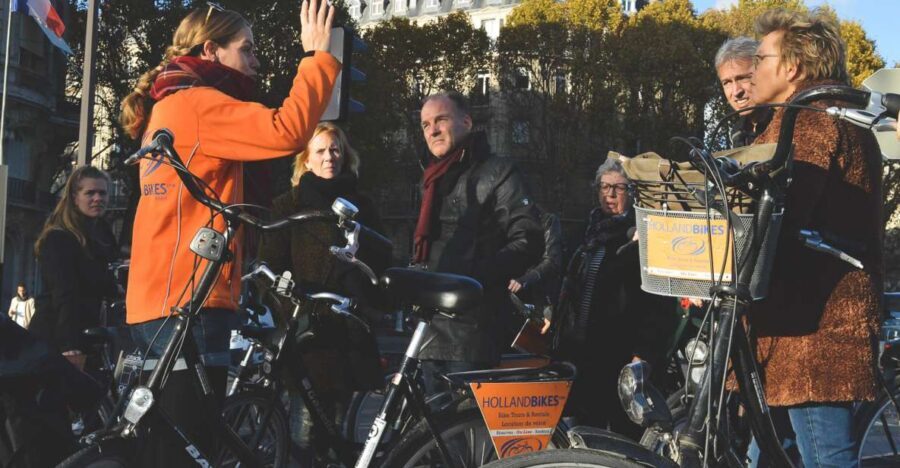
The route begins by tracking the intellectual and bohemian past of Saint-Germain-des-Prés, then keeps pushing into the Quartier Latin. This is the side of Paris where politics, philosophy, literature, and daily life historically mixed in the same sidewalks.
Galerie Vivienne
You’ll get a guided introduction here (about 10 minutes). Galerie Vivienne is the kind of place you’d miss if you only chased bigger landmarks. The ride slows just enough for you to notice the arcade atmosphere and the architectural details that made these shopping passages special.
Palais-Royal
Next comes Palais-Royal with a longer stop (about 15 minutes). This is one of those sites where context changes your experience. Instead of treating it like another palace facade, you start seeing how the space shaped social life and the movement of power and taste.
You can also read our reviews of more city tours in Paris





Saint-Germain-des-Prés (area stop)
Then you move into Saint-Germain-des-Pres for around 10 minutes of guided time. This is where the tour’s people-to-places storytelling really clicks, because the district is closely tied to famous intellectuals—names like Jean-Paul Sartre and Simone de Beauvoir are part of what your guide threads into the walking-and-riding narrative.
Church of Saint-Sulpice
You’ll have about 10 minutes here. Even if you’re not a church-history obsessive, Saint-Sulpice helps you understand how old Paris still controls today’s city geometry. The guided stop gives you a reason to look beyond the first glance.
Luxembourg Gardens
Then it’s Luxembourg Gardens for about 20 minutes—longer than most stops. This pause is useful on a cycling tour because it shifts you from motion to observation. You see where locals spend time, which makes the whole trip feel less like tourism and more like a day in Paris.
Pantheon
Around 15 minutes at the Pantheon. This is a key “ideas and power” stop, and it pairs well with the earlier left-bank themes. After Saint-Germain and the Quartier Latin, the Pantheon feels like the natural “big statement” moment.
Latin Quarter
Finally in this section, you spend about 15 minutes in the Latin Quarter. This stop is where the guide’s storytelling about earlier political planning and long-term cultural shifts makes the neighborhood feel less random. It turns the streets into a timeline.
Why this section is worth it: it teaches you to read Paris while you’re riding it. You’re not just looking at sights—you’re learning what to notice as you move.
Marais and the Left-Bank-to-Right-Bank Switch: From Arènes to Notre-Dame Views
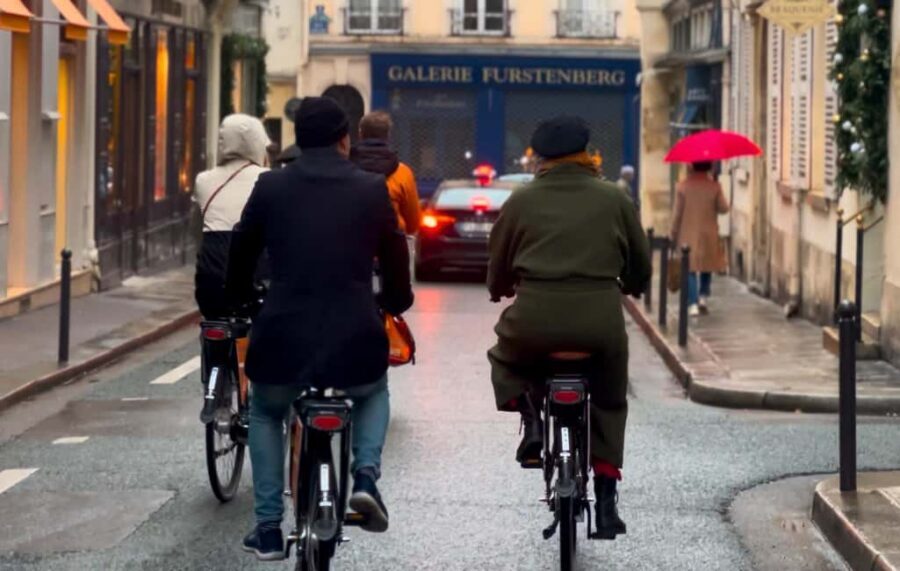
After the left bank, the tour keeps the pace while shifting into the Marais world—compact streets, distinctive architecture, and layers of old Paris that still show up in how neighborhoods function.
Arènes de Lutèce
You’ll get about 10 minutes at Arènes de Lutèce. This stop is a standout because it anchors the 2,000-year story in something you can actually see. It’s the kind of site that makes the phrase “oldest parts of Paris” feel real, not like a marketing line.
Notre-Dame Cathedral area
Then comes Notre-Dame Cathedral for around 10 minutes. Even without turning this into a long museum visit, the guide gives you enough context to understand why this location keeps mattering. It’s a famous stop, yes, but you’re seeing it in a bigger route that surrounds it with meaning.
Le Marais
You spend about 15 minutes in Le Marais. This is where the tour rewards your attention. The district has style, history, and everyday life in the same view. You also get to ride those calmer lanes where you’d struggle to choose your route alone.
Place des Vosges
Then Place des Vosges (about 10 minutes). It’s one of Paris’s most balanced squares, and a short guided visit is ideal on a bike tour. You don’t need to camp there—you just need to understand what it represents.
Bourse de Commerce
The last stop in the itinerary is about 10 minutes at Bourse de Commerce. This helps you connect old Paris to new uses of historic urban spaces, which keeps the tour from turning into a time machine that ends without a future.
This Marais stretch is also where cycling confidence matters most. Tight turns and short streets are normal here, but you’re not doing it blind—the guide helps keep the group moving smoothly.
Electric Bikes, Street Lanes, and That Confidence Boost
This tour gives you an option to choose an electric bike. That’s a big deal in a city like Paris where the best routes aren’t always the easiest physically. Even if the terrain isn’t extreme, city starts and stops add up.
What I like about this setup is the practical lesson you pick up along the way: you learn how to navigate lanes and intersections with a guide close by. People who care about bike-safety tend to appreciate this part, because it makes the ride feel controlled rather than chaotic.
If you’re choosing an electric bike, go in with the right mindset: it helps with effort, but it doesn’t replace attention. Keep your speed sensible and follow the guide’s pace.
For comfort, dress for cycling and check the forecast. Paris weather can swing fast, and wind + rain can turn a nice ride into a cold one in about ten minutes.
Also, since food and drinks aren’t included, think about how you’ll handle energy and hydration. The tour includes a refreshment stop at a landmark, but don’t count on it replacing a full meal.
Price and Value: What $51 Buys You in Paris
At $51 per person for about 3 hours, this is a value-packed way to see more of the city than a typical walking tour can cover. Here’s why: the price includes a guide and a bike tour, and you’re getting guided stops across multiple neighborhoods with short introductions at each major site.
You’re paying not just for “seeing,” but for route expertise. In Paris, that matters. The difference between a good and a mediocre day often comes down to how well someone chooses where you ride and where you pause.
Also, the fact that you can choose an electric bike is part of the value equation. It widens the range of people who can enjoy the ride without feeling like they must grind through every stoplight.
If you’re the type who wants both context and motion, this fits well. If you want a slow, relaxed stroll with lots of free time, you might find the schedule feel a bit tight.
Guides Who Make the City Click (English, Dutch, German)
The tour is led by a live guide in English, Dutch, or German. The best moments happen when the guide links what you’re looking at to the people and politics behind it.
Some past groups have had guides such as Reuben, Jasmine, Daniel, and Renee, and they’ve been praised for being friendly, energetic, and clear in English. That human factor matters on a bike tour: if the guide’s style is fun and confident, the whole ride feels easier.
Since stop times are short, a good guide keeps you from feeling rushed. You get the important story beats without turning every stop into a scramble.
Who This Tour Is Best For
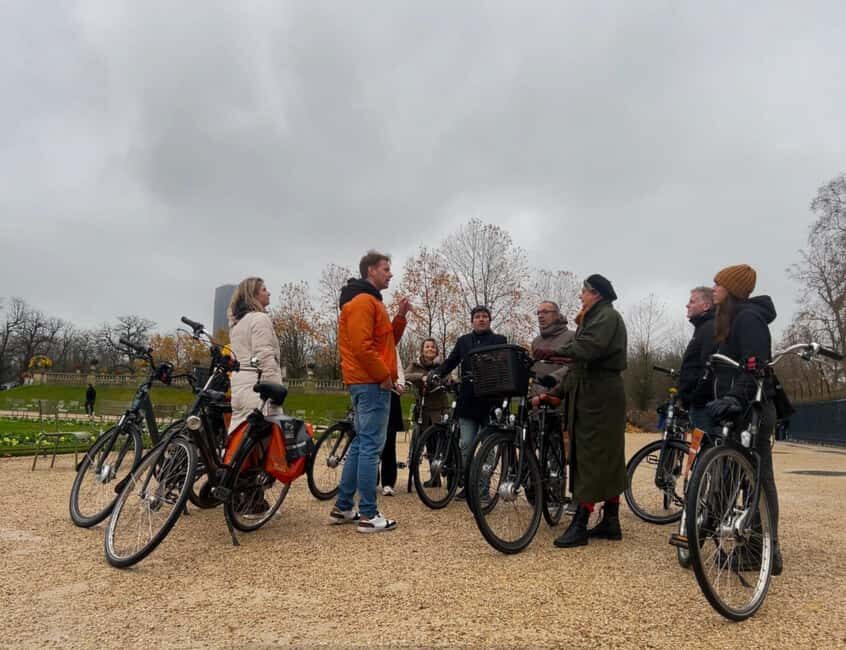
I’d put this tour at the top of the list if you:
- Want a first serious bike day in Paris but don’t want a cookie-cutter route
- Love history, architecture, and the way neighborhoods formed around real people
- Prefer guided movement over trying to map your own route under time pressure
I’d think twice if you:
- Are very new to cycling and hate busy streets
- Need long downtime at each site
- Are planning a day where you can’t dress for weather or arrive on time
This is also a strong choice when you’ve already seen the biggest sights and want the trip to feel more like Paris—not a greatest-hits checklist.
Quick Tips Before You Roll
- Arrive about 15 minutes early so you can walk down to the bike meeting area without stress.
- Dress for cycling and changing weather.
- Wear shoes that work on pedals and don’t slip.
- Bring a small plan for energy since food and drinks aren’t included, even though you’ll get a refreshment stop.
- Use the guide as your navigation safety net—follow instructions at junctions, and you’ll feel calmer fast.
Should You Book This Off-the-Path Paris Bike Tour?
Book it if you want a 3-hour, guided Paris bike tour that trades crowd density for neighborhood variety, and you like stories tied to real places—from Galerie Vivienne to the Luxembourg Gardens, then into the Marais.
Skip it (or consider something gentler) if cycling in busy streets makes you anxious or if you want lots of free time to wander without structure.
My take: this is the kind of tour that gives you a better mental map of Paris. When you leave, you’re not just tired—you understand how the city connects.
FAQ
How long is the Paris Secret City Bike Tour?
The tour lasts about 3 hours.
What does the tour cost?
The price is $51 per person.
Where do I meet the guide?
You meet inside the Parking Garage Meyerbeer at -1 level, and you’ll walk down the car ramp to find your guide.
How many languages are the guides available in?
Guides run in English, Dutch, and German.
Are food and drinks included?
No. Food and drinks are not included, though there is a refreshments stop at an iconic landmark during the tour.
Do I need my own bike?
No. The bike tour includes a bike, and you’ll ride with the guide.
What stops are included?
The tour includes stops such as Galerie Vivienne, Palais-Royal, Saint-Germain-des-Prés, Church of Saint-Sulpice, Luxembourg Gardens, the Pantheon, the Latin Quarter, Arènes de Lutèce, Notre Dame Cathedral, Le Marais, Place des Vosges, and Bourse de Commerce.