REVIEW · PARIS
Private Street Art 2-Hour Guided Tour in Paris
Book on Viator →Operated by Napoleone Tour · Bookable on Viator
If you like art with attitude, this walk works. Belleville and Ménilmontant turn Paris into an open-air gallery, and the guide connects what you’re seeing to a bigger idea: how art evolved from famous masterpieces to graffiti on brick walls. The tour is also private, so the conversation and pace stay focused on what you want to notice.
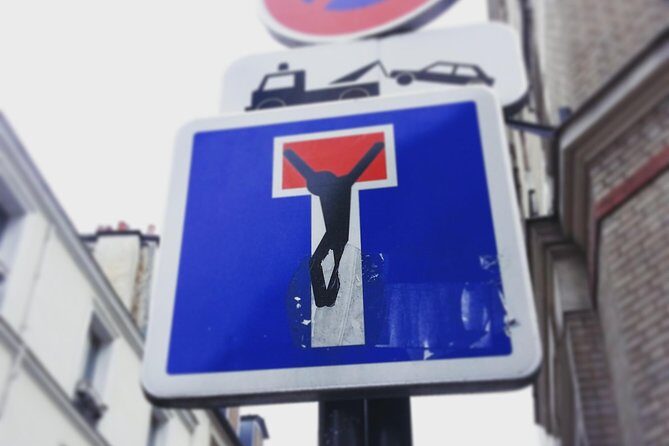
Two things I especially like: you get to zero in on well-known Paris street artists such as Seth, Clet, and Jérôme Mesnager, not just random walls. And because it’s a private guided tour, you can ask questions, request specific works, and move as fast or slow as you want without fighting a crowd.
One possible drawback: street art changes fast. Some murals get covered by tags or lose detail over time, so you may find that not every wall is as dramatic as the photos you’ve seen.
In This Review
- Key Things You’ll Get From This Private Street Art Tour
- Belleville and Ménilmontant: Paris Street Art’s Best Side Streets
- How the Private Format Changes the Experience (In a Good Way)
- Where You Start in Ménilmontant, and Why That Matters
- Stop One: Belleville’s Temporary Masterpieces on Street Level
- Stop Two: Ménilmontant’s Layers of Tags, Graffiti, and Murals
- The Leonardo-to-Street Idea: What the Guide Is Really Trying to Do
- Price and Value: Is $70.57 for Two Hours Worth It?
- The Tour Pace, What to Bring, and How to Get Better Photos
- Guide Style and Passion: What Makes It Feel Personal
- Who This Tour Suits Best (And Who Might Skip It)
- Should You Book This Private Street Art Tour of Belleville?
- FAQ
- How long is the private street art tour in Paris?
- Where does the tour start?
- Where does the tour end?
- How much does the tour cost?
- Is this tour private?
- Is a mobile ticket used?
- What’s included in the price?
- Do I need transportation to take part?
- Is there a cancellation/refund option?
Key Things You’ll Get From This Private Street Art Tour
- A guided street-art story that frames what you see as part of a longer evolution in art culture
- Artist spotlight on names like Seth, Clet, and Jérôme Mesnager (and other local figures)
- Two focused neighborhoods: Belleville and Ménilmontant, both known for street-art concentration
- Undivided guide attention, which makes it easier to ask about meaning, materials, and techniques
- Built-in flexibility, since you can ask to see certain works or spend longer on what grabs you
Belleville and Ménilmontant: Paris Street Art’s Best Side Streets
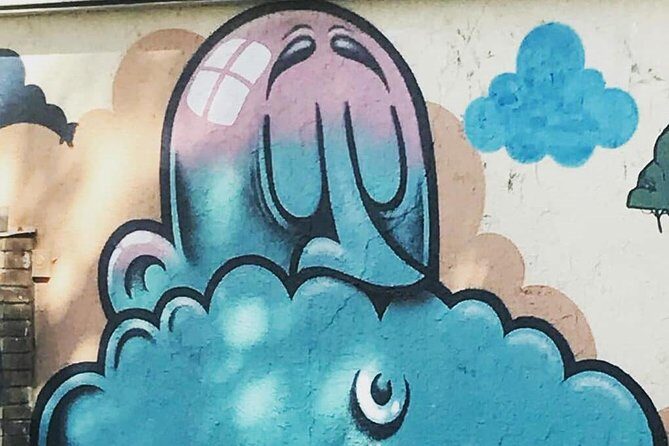
Belleville and Ménilmontant are where Paris feels less like a postcard and more like a living conversation. Even if you’ve seen street art in other cities, Paris has its own tone: more wordplay, more layering, and a strong sense that the city is always rewriting itself.
That’s why I like this tour’s basic structure. It’s not a “look at wall, take photo, move on” format. Instead, the guide helps you read what’s in front of you: the messages, the choices of style, and the why behind it. The aim is spelled out in the experience itself, and it’s a smart one to use while you’re walking. The guide tries to answer one question—how did art evolve from the kind of famous, museum-level work you might associate with Leonardo to the kind of public, rebellious art you see on brick walls in Paris?
In practice, that means you’ll be looking at street art with the mindset of a viewer, not a tourist. You start asking what the artist is trying to communicate, what materials and methods support that goal, and how the city’s culture shapes what shows up on its walls.
You can also read our reviews of more guided tours in Paris



How the Private Format Changes the Experience (In a Good Way)
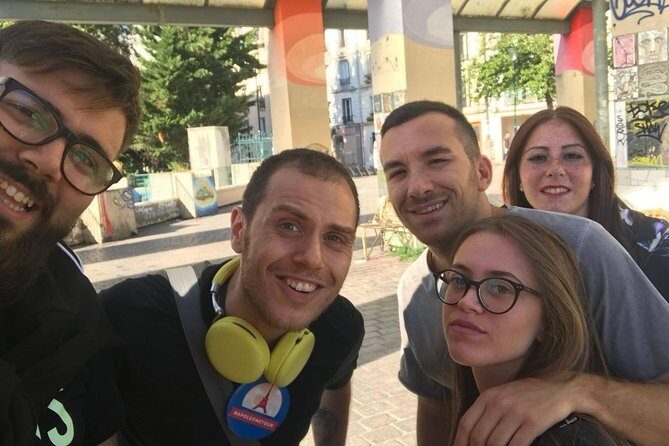
This is billed as a private tour for just you and your party, which changes everything. A street art walk can be tricky in groups, because people move at different speeds. Some want deep explanations; some just want to find the coolest pieces. Here, your guide can slow down for you, stop longer where you’re interested, and answer questions without time pressure.
I also like that you’re encouraged to name what you want to see. If there’s a specific artist you care about—Seth, Clet, or Jérôme Mesnager are specifically mentioned—you can steer the walk. If you’re more interested in the way tags interact with murals, or how different styles use space, you can focus the conversation that way too.
A quick heads-up: there’s a “minimum of 2 people” requirement for booking. So if you’re traveling solo, you’ll want to check whether the tour is available for your date and how it’s handled.
Where You Start in Ménilmontant, and Why That Matters
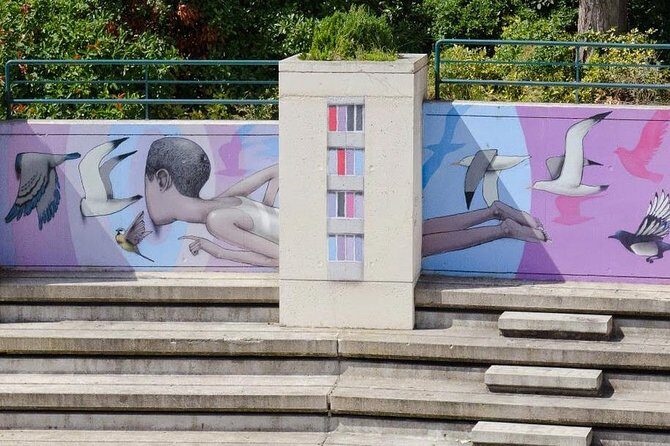
The tour starts in Ménilmontant, with the meeting point listed at Rue de Paris, 75020 Paris. In other words, you’re not beginning from the most famous tourist zones. You’re starting in the neighborhood where street art is part of daily life, not a staged attraction.
You’ll meet your guide at a pre-arranged meeting spot, get a quick introduction, and then head on foot. The route is set around two main areas: Ménilmontant and nearby Belleville. The end point is Parc de Belleville, which is a great choice because it’s a logical place to finish while still feeling like you’re in the right neighborhood, not dropped back into a different part of the city.
Also note the tour duration is about 2 hours. That’s long enough to feel like a real walk with context, but short enough that you can still pair it with a museum visit or a dinner plan without rushing.
Stop One: Belleville’s Temporary Masterpieces on Street Level
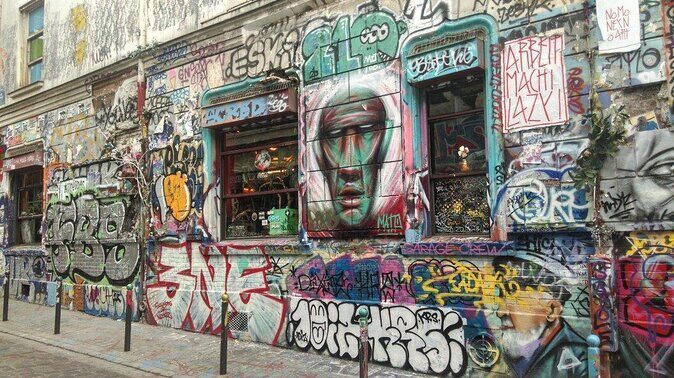
One of the two main focus stops is Belleville, described around street art temporary masterpieces over the Belleville quartier. That “temporary” word matters more than it sounds.
Street art is often treated like it’s permanent, but it really isn’t. Walls get repainted. Pieces fade. Tags pop up over other work. Even if the guide knows the area well, you still need a flexible mindset. You’re not only hunting for famous names—you’re also watching how the neighborhood updates its visual voice over time.
In Belleville, the guide’s role becomes especially useful. Without help, it’s easy to see street art as random clutter. With a guide, you can learn to notice how different works sit in relation to each other—how artists respond to prior pieces, how lettering and imagery compete for attention, and how public messages shape a wall’s story.
This is also a strong zone for photography because there’s a sense of density: more pieces per block, more visual texture in one direction, and more chances of catching a work in good light. If you have a phone camera, bring it fully charged and ready. You’ll likely want more than one round of photos.
Stop Two: Ménilmontant’s Layers of Tags, Graffiti, and Murals
The other main focus stop is Ménilmontant, described as street art temporary masterpieces over the Ménilmontant quartier. Think of this as the “closer look” section. If Belleville can feel like a wide view of the district’s visual conversation, Ménilmontant often feels more like reading the footnotes—smaller interactions, more layers, and more variety in how styles show up.
This part of the walk is also where the guide’s explanation can really click. The experience is designed around interpreting the art, not just viewing it. You’ll hear about history, and you’ll also get pointers on techniques, materials, and messages behind what you see.
You’ll spend time looking at graffiti, tags, and murals. That’s important because each category can mean something different. Tags might be about identity and presence. Murals might focus more on storytelling or visual symbolism. And the way they coexist tells you a lot about the street art ecosystem in Paris.
If you’re the type who likes to understand the “why,” this is a good moment to ask follow-up questions. Ask what the guide thinks the artist is aiming for, or why certain details are used. Since this tour is private, those answers won’t get cut off by a fast-moving group agenda.
You can also read our reviews of more private tours in Paris




The Leonardo-to-Street Idea: What the Guide Is Really Trying to Do
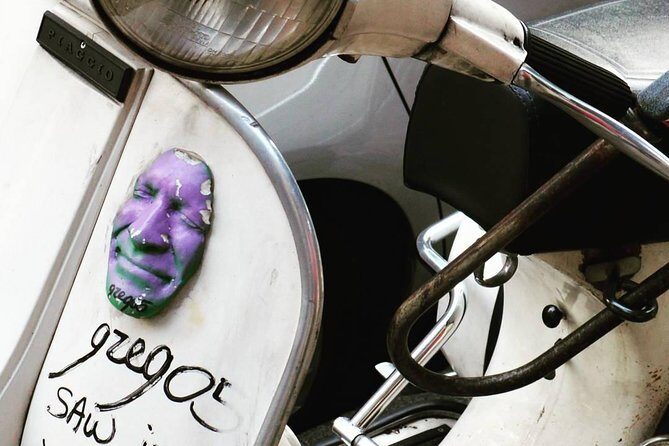
The tour’s central concept is playful and smart: how did art evolve from something as famous as Leonardo’s Mona Lisa to street graffiti on a brick-walled Paris building?
You don’t need an art history degree to get value here. You’ll get a guided way to connect dots: public art isn’t separate from “high art,” it’s just using a different canvas and speaking to a different audience. Street artists often respond to culture in real time—through humor, protest, commentary, or pure style—and that makes the viewing experience feel current, not dusty.
In plain terms, the guide helps you treat the walls like galleries. You learn that street art isn’t only about rebellion for rebellion’s sake. It’s also about technique, messages, and the artist’s backstory—exactly the things you’d expect to hear in a museum tour, just applied to a very different setting.
One more thing: the tour highlights artists by name. That helps a lot. When you know Seth, Clet, and Jérôme Mesnager are part of the story, you start spotting how styles differ. You’ll also learn how the guide connects those individual artists to the larger street-art evolution in Paris.
Price and Value: Is $70.57 for Two Hours Worth It?
At $70.57 per person for about 2 hours, this tour isn’t “cheap,” but it can still be good value, especially compared with the cost of a rushed, self-guided street art evening.
Here’s why the math can work:
- Private format means you’re paying for attention and interpretation, not just walking around.
- The guide helps you identify and understand artists like Seth, Clet, and Jérôme Mesnager, which is where casual wandering usually falls short.
- You’re not paying extra for transportation because the experience is just the guided walk. (You bring yourself and get going.)
For street art, context is everything. If you’re the kind of person who likes to know what you’re looking at, a guided private walk saves time and frustration. If you’d rather just wander freely and don’t care about explanations, then you might decide that self-guided exploring is enough.
The Tour Pace, What to Bring, and How to Get Better Photos
Because you’re walking two neighborhoods for about two hours, you’ll want basic comfort. The experience states a moderate physical fitness level is best, and it’s near public transportation, which can help if you want to start from somewhere else earlier.
Bring what helps you stay comfortable:
- Comfortable shoes for uneven sidewalk surfaces
- A fully charged phone or camera
- A light layer if the weather shifts
On the “photo” side, remember street art is sometimes covered, faded, or partially blocked by architecture. The guide can help you find angles you might miss, and since you can move at your own pace, you can wait for the right light instead of rushing through shots.
Also, since the meeting is in Ménilmontant and the tour ends at Parc de Belleville, it’s easy to flow into a casual post-walk break afterward.
Guide Style and Passion: What Makes It Feel Personal
The reviews attached to this experience point to something consistent: the guide’s passion for the artists and the neighborhood culture. One named guide you may hear about is Maurizio. The overall takeaway is that you’re not getting a script; you’re getting answers and enthusiasm tied to specific works and specific people.
That matters, because street art is easy to misunderstand if you only look at it as decoration. A good guide does two things: they help you read the visuals and they help you understand the human side behind them. You’ll get both here—artists’ backstories, messages, and the idea that street art has a real place in Parisian culture.
Who This Tour Suits Best (And Who Might Skip It)
This is a strong fit if:
- You want street art explained in a way that feels respectful, not snobbish
- You like known artists and want help spotting their work
- You enjoy walking interviews—art, meaning, and history in one moving loop
- You want a plan that you can adjust mid-walk if something catches your eye
You might not love it as much if:
- You prefer to move at your own pace with zero talking
- You’re only interested in the biggest, most famous murals and nothing else
- You’re expecting every piece to look pristine and exactly like photos from the internet
The “temporary masterpiece” reality is the main trade-off. You’re visiting a living neighborhood. That’s part of the charm, but it does mean you should set expectations accordingly.
Should You Book This Private Street Art Tour of Belleville?
I’d book it if your idea of a great Paris experience includes street art with context. The private format, the focus on Belleville and Ménilmontant, and the chance to connect artists like Seth, Clet, and Jérôme Mesnager to a wider story about art evolution make this feel like more than a casual walk.
Just go in with the right mindset: you’re seeing street art as it exists now, not as it existed forever. If you enjoy the search, asking questions, and learning how to read a wall, this tour gives you exactly that in about two hours.
FAQ
How long is the private street art tour in Paris?
It’s about 2 hours.
Where does the tour start?
The meeting point is listed in the Ménilmontant area at Rue de Paris, 75020 Paris, France.
Where does the tour end?
The tour ends at Parc de Belleville in Paris.
How much does the tour cost?
The price is listed as $70.57 per person.
Is this tour private?
Yes. It’s a private guided tour for just your group.
Is a mobile ticket used?
Yes, the experience includes a mobile ticket.
What’s included in the price?
The price includes a professional guide and the private guided tour.
Do I need transportation to take part?
Transportation to and from the attractions is not included.
Is there a cancellation/refund option?
The experience is non-refundable and cannot be changed for any reason.