REVIEW · PARIS
Skip-the-line Centre Pompidou Guided Museum Tour – Exclusive Guided Tour
Book on Viator →Operated by Babylon Tours Paris · Bookable on Viator
Modern Paris starts with a color-coded building. The Centre Pompidou is a magnet for people who want more than another gallery stroll, and this skip-the-line guided tour turns the museum’s weird architecture into a reading tool for the art. I especially like how the guide connects the building’s inside-out idea to the way you interpret modern works, and I like the way the tour moves through major styles and artists so you get context fast.
One consideration: even with skip-the-line access, security checks and some lines can still happen, and the museum can have occasional closures. If the start is delayed by more than an hour, you won’t be offered a refund or discount, so build in some flexibility.
With a 5:00 pm start and about 2.5 hours on the clock, this is a smart way to spend your evening in Paris—especially if you’ve already done classic art stops earlier in the trip.
In This Review
- Key highlights you’ll feel in the galleries
- Centre Pompidou after Impressionism: a modern-art reset
- Renzo Piano’s inside-out building lesson (and why it changes how you look)
- What skip-the-line really means at Centre Pompidou (and how to plan for it)
- Your 2.5-hour route through Cubism to Pop Art
- Getting anchored with Picasso and Matisse
- From World Wars to Dada’s anti-art mood
- Swinging into the 1950s and 1960s with Pop Art
- International modern art threads (and what you might see)
- The quiet-room rules and other practicalities that affect your experience
- Price and value: is $75 a good deal for this guided format?
- Who this tour is best for (and who might want something else)
- Should you book this Centre Pompidou skip-the-line guided tour?
- FAQ
- How long is the Centre Pompidou guided tour?
- Where does the tour start?
- What time does the tour begin?
- Is admission included?
- Does the tour include skip-the-line access?
- Is the guide private for your group?
- Are temporary exhibitions included?
- Are there any restrictions on bags?
- Is the museum visit wheelchair friendly?
- Is the tour ever affected by closures?
Key highlights you’ll feel in the galleries
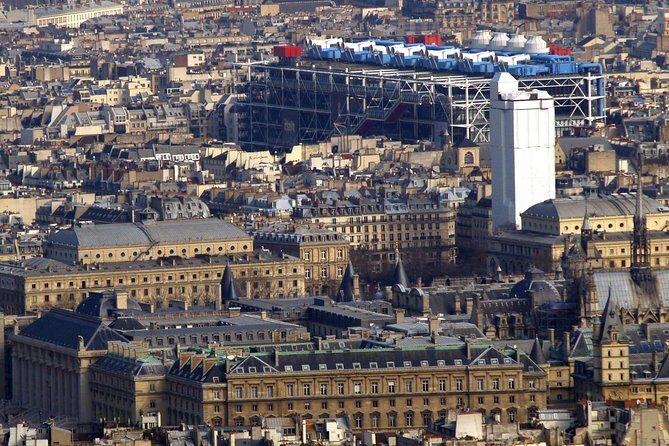
- Renzo Piano’s inside-out design explained first, so the building clicks before you look at the paintings
- A tight 2.5-hour path through major movements, from Cubism and Fauvism to Dada and Pop Art
- Art stops that connect wars and style changes, so modern art doesn’t feel like random style swings
- Skip-the-line entry plus a mobile ticket, making your arrival smoother at security
- A private guide for your group, which helps you ask questions and slow down where you care most
- Rules and quiet-room notes handled by the guide, so you know what to expect in restricted spaces
Centre Pompidou after Impressionism: a modern-art reset
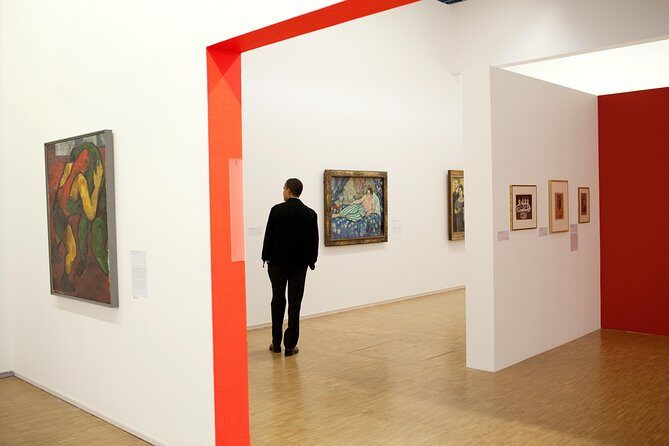
If you’re spending time in Paris, you’ll probably hit the big classics: impressionists, old masters, and museum rooms that feel like they’ve been the default plan for decades. Centre Pompidou is the opposite mood in the best way. It’s contemporary-focused, and it’s housed in a building that was designed to be read almost like a piece of public sculpture.
This tour is built for people who want modern art to make sense, not just to be photographed. You’ll get a guided explanation of how different art movements think—how they break rules, remix ideas, and react to world events. That matters because modern art can look like it’s doing something random if you only see the final result. The guide helps you connect the dots between what artists were trying to do and what you’re seeing.
I also like that the tour is timed as a single, focused outing rather than a loose museum meander. About 2.5 hours is enough time to build a framework, but not so long that you burn out. If you’re the type who wants to enjoy the art instead of sprinting room to room, this format fits.
You can also read our reviews of more guided tours in Paris



Renzo Piano’s inside-out building lesson (and why it changes how you look)
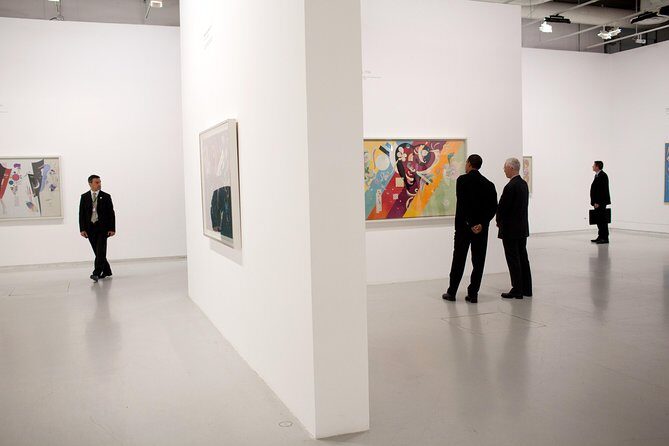
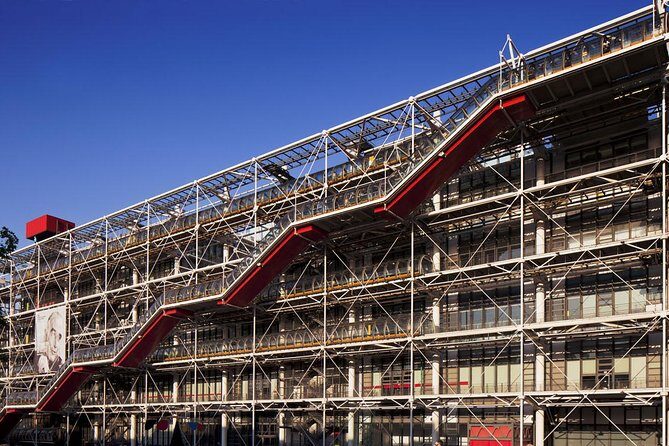
Centre Pompidou is famous for its controversial look, and this is the key advantage of booking a guided visit. Before you spend your energy in the galleries, you get the story of Renzo Piano’s design: the idea that the museum’s functions are shown on the outside, instead of hidden inside.
That sounds like architecture trivia—until you realize it shapes your expectations the moment you walk in. When you understand the inside-out concept and the color-coded approach, the building becomes part of the experience. You start noticing structure, movement, and the museum’s overall logic. Then your eyes shift naturally to the art, because modern works often demand that same kind of new way of reading.
Another perk I appreciate: the tour doesn’t treat the museum as an isolated box. You get context about the museum’s setting, which helps you place Centre Pompidou in Paris as something more than a single address on a map.
What skip-the-line really means at Centre Pompidou (and how to plan for it)
This tour includes skip-the-line guided museum entry plus all entry fees, and it uses a mobile ticket. In real life, skip-the-line usually means you avoid the longest admission crush and get routed faster. It doesn’t mean zero waiting forever, though. The museum can still use security screening, and some lines can form even when you have expedited access.
That’s why the evening start time is useful. A 5:00 pm departure gives you a chance to arrive when you’re not competing with the strongest daytime rush. If you take public transportation, you’ll still want to pad your schedule enough to handle security. This is also the moment to think about bags.
No large bags or suitcases are allowed inside. Only handbags or small thin bag packs go through security. If you’re used to packing like it’s a day at the office, travel lighter for this stop.
Your 2.5-hour route through Cubism to Pop Art
The tour stays centered on Centre Pompidou, and the main stop is your guided walk through the museum galleries. The pacing is designed to move through major modern themes in a way that feels chronological—but not like a boring timeline.
Here’s how the tour experience typically lands for you:
Getting anchored with Picasso and Matisse
Early on, you’ll encounter big names connected to Cubism and Fauvism, including references to Picasso and Matisse. The guide uses these artists to teach you what modern art movements were reacting to. Instead of only talking about style on the surface, you’ll learn what artists were doing with form, perspective, and color.
This is where the guided format pays off. If you’re seeing only a painting or sculpture without context, you might admire it and still feel uncertain what to think next. With a guide, you get a handle on the creative problem the artist was tackling.
You can also read our reviews of more museum experiences in Paris





From World Wars to Dada’s anti-art mood
As the tour moves into the World War period, you shift into work connected with surreal or conceptual responses, and you’ll discuss Dada. Dada isn’t just a style; it’s an attitude—a pushback that uses shock, contradiction, and disruption.
That matters because modern art after major upheaval can look like it’s rejecting meaning. A guide helps you understand that Dada’s choices were often deliberate critiques of how people were thinking, not just random experiments.
Swinging into the 1950s and 1960s with Pop Art
Then comes the part many people find most fun: the leap into the 50s and 60s, when Andy Warhol is a key reference point. You’ll connect Warhol’s approach to Pop Art, which turns everyday media, consumer imagery, and mass culture into the subject.
This is a good segment for two reasons. First, Pop Art often feels familiar even if you haven’t studied it. Second, it shows how modern art keeps evolving rather than staying stuck in the early-1900s “shock years.”
International modern art threads (and what you might see)
Depending on the year and the museum’s current layout, you may also encounter international names such as Mondrian, Pollock, and Georgia O’Keeffe. The key here isn’t whether every single name appears in your exact route; it’s that your guide uses major figures to explain major ideas.
Also note: the museum’s collection focus can shift across the year. Your tour is built to teach you the movements, even when the exact featured works vary.
The quiet-room rules and other practicalities that affect your experience
Museums love rules. Centre Pompidou has some specifics that can change how a gallery feels, and knowing them in advance helps you stay relaxed.
Some parts of the museum have quiet or restricted areas where speaking is limited. The guide will tell you before you enter those rooms. That means you won’t feel awkward or get corrected mid-thought. It’s also helpful if you’re the type who likes to ask questions, because you can time your questions for the spaces where talking is allowed.
As mentioned, bag restrictions apply. If you’re carrying a big backpack, you might find yourself managing it more than you expected. Plan for a small bag plan and keep essentials easy to access for security.
Temporary exhibitions are not included, so don’t expect this tour to cover special rotating shows. That said, your guide focuses on the museum’s core modern collection themes, which is usually the best match for a 2.5-hour tour.
Finally, the museum may face occasional closures without advance warning from the museum itself. If opening time is delayed by more than an hour, the provider says they’ll offer an alternative, but refunds or discounts aren’t provided in those cases. Build in flexibility and don’t schedule a super tight next stop.
Price and value: is $75 a good deal for this guided format?
At $75 for about 2.5 hours, you’re paying for three things that add up fast in Paris: timed entry (with skip-the-line), a guide to connect the dots, and admission/entry fees handled for you.
If you were doing Centre Pompidou on your own, you’d still face security time, and you’d still need to do the hard part: figuring out what to look for and how to place modern movements in your head. This tour does that “thinking work” for you. It’s not just about standing in front of art; it’s about building a quick map of how modern art changed and why.
You’re also getting a private guide experience for your group, with a note that this does not apply if you choose a semi-private option. If you can choose the private version, it’s usually the best value because you can go at your pace and ask questions as you go.
Where the price can feel less appealing is if you’re already very comfortable with modern art history and want total freedom. In that case, you might prefer a self-guided visit. But if modern art sometimes feels like a language you haven’t learned yet, the guided approach is exactly what makes the museum worth your time.
Who this tour is best for (and who might want something else)
This experience is a strong fit if you:
- want modern art context without turning your museum visit into homework
- like architecture and enjoy understanding why a place is designed the way it is
- want a structured route through big movements, including Cubism, Dada, and Pop Art
- appreciate being able to ask questions and slow down where something clicks
It may be less ideal if you:
- need a fully flexible plan with no guidance and no fixed pacing
- are only interested in temporary exhibitions (those aren’t included)
- prefer to spend most of your time in a single gallery without moving through eras
If you’re building a classic-to-modern arc in Paris, Centre Pompidou can be the perfect counterbalance. One of the nicest outcomes of this tour format is that it pairs well with visits to other major museums focused on earlier art periods, because you end up comparing how different eras break the rules.
Should you book this Centre Pompidou skip-the-line guided tour?
I’d book it if you want your money and time to turn into understanding. This is not a tour that just points at famous names. It’s structured around the museum’s defining concept—the inside-out building—and then uses major modern movements to give you a framework you can carry with you even after you leave.
You should book with extra thought if your schedule is tight. The museum can sometimes close without warning, and while alternatives are offered when delays exceed an hour, the tour doesn’t guarantee refunds or discounts in those delayed-closure scenarios. If you have a buffer and you travel light, you’ll likely feel the benefits fast.
If your goal is to leave Centre Pompidou thinking in modern-art terms, this tour is a solid value at $75. When you understand what Cubism, Dada, and Pop Art were trying to do, the whole museum starts making more sense.
FAQ
How long is the Centre Pompidou guided tour?
It’s about 2 hours 30 minutes.
Where does the tour start?
It starts at Centre Georges Pompidou, 75004 Paris, France.
What time does the tour begin?
The start time is listed as 5:00 pm.
Is admission included?
Yes. Admission tickets and all entry fees are included.
Does the tour include skip-the-line access?
Yes. It includes skip-the-line guided museum tour access.
Is the guide private for your group?
It’s a private tour/activity, and the guide is exclusively for you in the standard option. If you choose a semi-private option, that exclusivity may not apply.
Are temporary exhibitions included?
No. Temporary exhibitions are not included.
Are there any restrictions on bags?
Yes. No large bags or suitcases are allowed inside; only handbags or small thin bag packs are allowed through security.
Is the museum visit wheelchair friendly?
Wheelchair friendly is listed, but it does not apply if you choose the semi-private option.
Is the tour ever affected by closures?
The Centre Pompidou may be subject to occasional closures without prior warning. If opening is delayed more than 1 hour from the tour start time, an alternative is provided, but refunds or discounts aren’t offered in those cases.