REVIEW · PARIS
Skip-the-line Rodin Museum Guided Tour Semi-Private 8ppl Max
Book on Viator →Operated by Babylon Tours Paris · Bookable on Viator
Rodin hits harder when you get a plan. This skip-the-line semi-private tour is built for a smaller pace inside the Musée Rodin, then it turns the museum into a story about the man behind the statues. I like that it stays max 8, so the guide can actually steer your attention instead of herding you like luggage.
My favorite part is the way the tour connects Rodin’s big-name works to the stuff people miss. You’ll look at studies of the human form, lots of hands, and even the life-sized The Walking Man, then you’ll get context for The Gates of Hell and The Thinker—not just a quick stop-and-snap. The guides you’ll see mentioned a lot (like Dunya and Anatole) are praised for bringing Rodin’s ideas and personality into focus.
One thing to consider: this isn’t set up for everyone. The tour notes it’s not recommended for those with walking disabilities or using a wheelchair, and the museum can have occasional closures that may limit refunds/discounts if it delays start time by more than an hour.
In This Review
- Key things to know before you go
- Rodin gets easier when your group stays small
- Entering the Musée Rodin fast: where the time actually goes
- Inside the galleries: the human form is the whole point
- The Thinker and The Gates of Hell—with context, not just recognition
- Rodin gardens: the sculptures keep talking outdoors
- Babylon Tours Paris adds the story behind the scenery
- Price and value: what you’re really paying for at $143
- Who this tour is best for (and who should skip it)
- Practical tips so you enjoy it more
- Should you book the skip-the-line Rodin Museum semi-private tour?
- FAQ
- How long is the Rodin Museum guided tour?
- How many people are in the group?
- Is the tour in English?
- Where do I meet the guide?
- What is included in the price?
- What is not included?
- Is the tour suitable for wheelchair users?
- Can I cancel and get a full refund?
Key things to know before you go

- Small-group access (8 max) means better pacing and fewer interruptions than big group tours
- Skip-the-line entry helps you get inside faster, though some security lines can still form
- Hands-on context for works like The Walking Man and the clay connections to contemporaries (like Balzac)
- Quiet-room rules: your guide will brief you before areas with restricted speaking
- Rodin gardens included so your tour ends with sculpture outdoors, not just indoors
- Guides matter: named guides such as Dunya and Anatole are highlighted for making Rodin feel human
Rodin gets easier when your group stays small

Paris can feel like a sprint: museums, crowds, lines, and then you rush out just to catch your next ticket. This tour is designed to fight that. With a group capped at 8 guests, you spend less time waiting, and more time looking closely at what Rodin was obsessed with—movement, anatomy, and emotion in stone and bronze.
The semi-private size also changes how the guide works. Instead of speaking over everyone, you’ll usually get explanations that help you “see” the sculpture rather than just recognize it. That’s a big deal at the Musée Rodin, because the place is packed with material—sculptures, studies, and even a wide collection of paintings accumulated over Rodin’s life.
The other big win is the skip-the-line promise. Real talk: no one can eliminate every line in Paris. Even with skip-the-line access, security checks can still slow you down. Still, starting your visit faster gives you more time to settle into the galleries instead of rushing through them like you’re late for a movie.
You can also read our reviews of more guided tours in Paris



Entering the Musée Rodin fast: where the time actually goes
Your meeting point is 77 Rue de Varenne (right by the museum area), and the tour ends back there. From a planning standpoint, that’s helpful: you’re not weaving across the city for a complicated pickup/drop-off setup. Expect that you’ll be near public transportation, so you can keep your day flexible.
Once inside, you need to follow the museum’s security rules. The tour notes no large bags or suitcases—only handbags or small, thin bag packs. That matters because it affects how smoothly you get through checks. If you’re the type who travels with a tote that’s basically a carry-on disguised as a handbag, trim it down before you arrive.
Dress also matters. The tour mentions that appropriate dress is required for entry into some sites on the route. I’d rather you treat this like a smart museum day than a street-style day. If you’re unsure, go modest and comfortable—comfortable is crucial because you’ll be on your feet for close to the full 2 hours.
And yes, there’s a small wrinkle: the museum may have occasional closures without warning. If opening is delayed by more than 1 hour from the tour start time, the operator says they’ll offer an alternative, but refunds/discounts may not apply in those cases. That’s not something you can fully control, so I treat it as a reason to build in a little buffer around your museum time.
Inside the galleries: the human form is the whole point
Stop 1 is the heart of the experience: the Musée Rodin itself. You’re not just walking past statues. You’re guided through rooms where Rodin’s obsession with the human form shows up in multiple ways.
What you’ll see and why it’s worth it:
You’ll move through interiors with sculptures all around, plus selections of more than 200 paintings that Rodin accumulated across his life. That’s a big deal because it changes how you think about him. You usually meet Rodin as the sculptor. Here, you get a reminder that he was also looking—constantly—at shape, volume, and expression through other media.
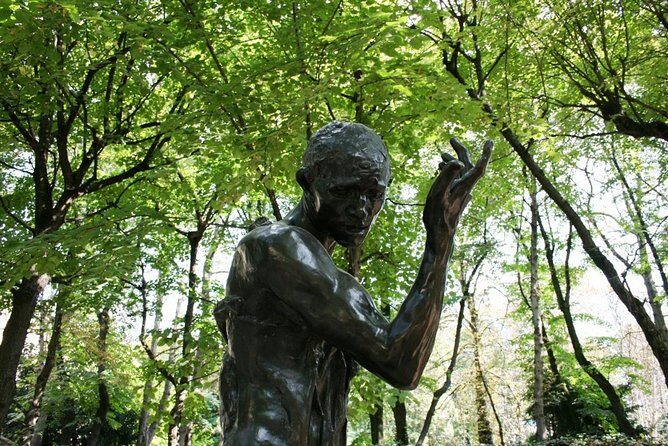
You’ll also focus on studies of the body: especially the variations of hands. That may sound odd until you remember that hands carry intention. In Rodin, they’re not just body parts; they’re mood.
Another highlight is the life-sized The Walking Man. Seeing a work like that in scale, in context, helps you understand what “modern sculpture” meant in practice—how the figure can feel in motion even when it’s still.
Then the tour connects Rodin to contemporaries, including the French writer Balzac. You’ll learn how he depicted figures in clay. That adds a layer to your visit: Rodin wasn’t just inventing forms from imagination; he was also building a visual language around real people he knew or observed in his era.
The Thinker and The Gates of Hell—with context, not just recognition
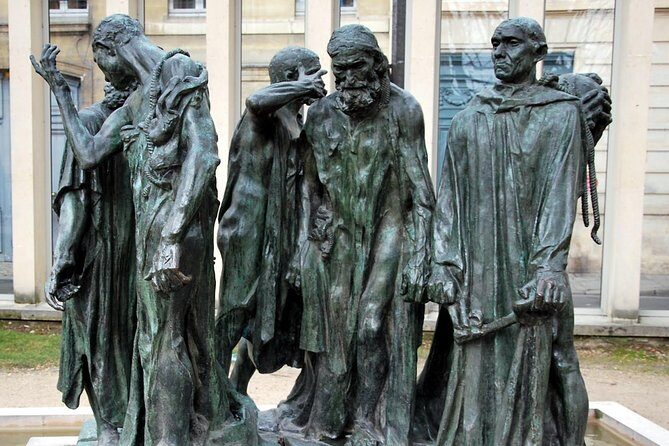
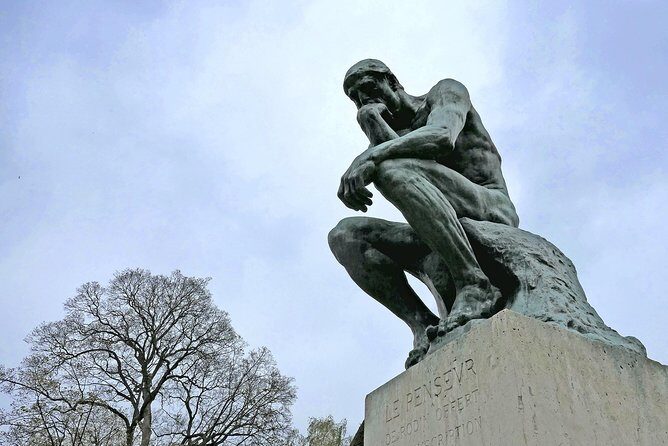
Rodin’s most famous works can turn into museum wallpaper if you’re not taught what to look for. This tour helps you avoid that trap by putting The Thinker inside the larger story of The Gates of Hell.
The Gates are described as a key part of the visit, and The Thinker is singled out as the recognizable work. Here’s why that matters for your experience: once you understand that these are connected, you’ll start noticing how Rodin built intensity—how the composition directs your eyes, and how the mood isn’t random. You’ll likely walk out feeling like you can “read” the sculpture, not just stare at it.
One other practical note: some rooms inside the museum have quiet or restricted rules about speaking. The tour says your guide will explain the specifics before entering those areas. That means you can actually follow the rules instead of awkwardly whispering and trying to keep your voice to a murmur. It also makes the experience feel smoother and more respectful.
Rodin gardens: the sculptures keep talking outdoors
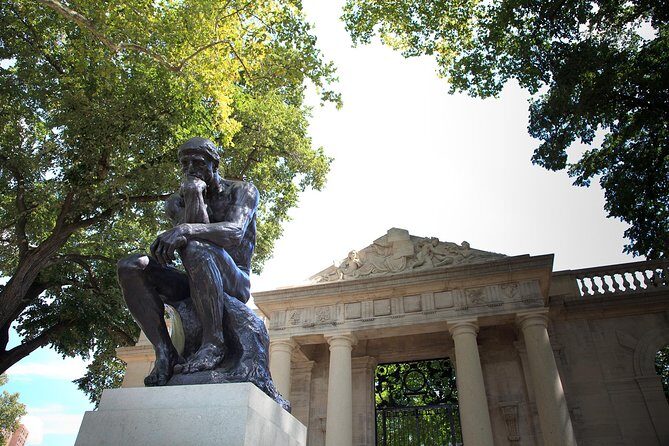
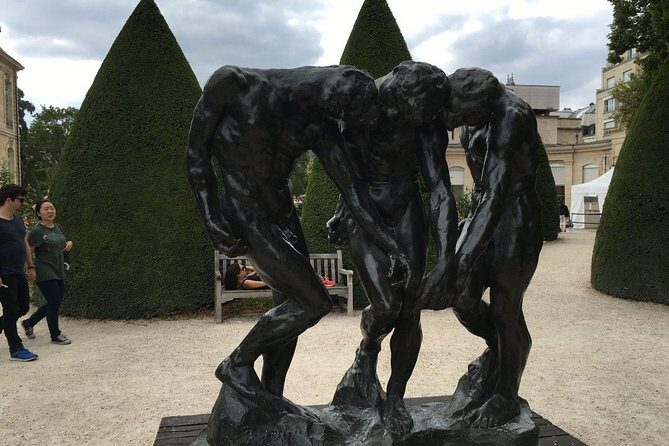
After the indoor galleries, you get time to stroll the beautifully manicured gardens, where more sculptures are displayed. This is more than a break from crowds. It changes the way you experience Rodin because you see his works in a setting that affects light, shadow, and distance.
In a garden, details can stand out differently. A hand that looked dense inside a room may feel more expressive when you can see it from multiple angles. A figure that felt heavy indoors may look more alive in natural light. It’s a simple shift, but it’s one reason Rodin can feel more emotional in the gardens than in a crowded gallery.
Timing matters here. If you’ve come in planning to do gardens later on your own, you might miss some of the emotional pacing your guide sets. Since the tour wraps up after the garden component, you’ll want to stay alert and actually look. This is where the visit often becomes personal.
You can also read our reviews of more private tours in Paris





Babylon Tours Paris adds the story behind the scenery
The second scheduled segment is handled by Babylon Tours Paris. The promise here is that you’ll learn Paris stories, secrets, and scandals while exploring places you might not find on your own. It’s pitched as a small-group or private-style approach, with English-speaking guides.
One line in their description also emphasizes priority entrance and line-skipping at places like the Louvre and Musée d’Orsay (in their general approach). That’s not a guarantee that you’ll be going there in this specific Rodin outing, but it does signal the kind of guiding style they use: practical, efficient, and focused on reducing wasted time.
For you, the value is simple. Rodin is one stop, but it’s a stop inside a city that’s always telling stories. Even if your legs are tired, you’ll likely enjoy having the guide frame what you’re seeing around you so it doesn’t feel like a random collection of famous addresses.
Price and value: what you’re really paying for at $143
At $143.13 per person for about 2 hours, you’re not just buying museum entry. You’re paying for three things that add up fast in Paris:
First, skip-the-line access. That saves time, and time is the cost you feel most. Second, it’s semi-private with a group max of 8, which helps you get better guidance. Third, entrance fees are included, so you’re not juggling extra charges mid-day.
If you’ve ever tried to do the Musée Rodin on your own on a tight schedule, you know how easily you end up spending 30% of your time waiting and 10% of your time truly looking. A guided plan helps you spend that energy where it counts: noticing Rodin’s hand studies, his figure work like The Walking Man, and the connection between The Thinker and The Gates of Hell.
The only “value risk” is the one thing no tour operator can fully control: guide style. The good news is that guides like Dunya and Anatole are highlighted for strong presentation and depth. The caution is that if you’re picky about pacing, you may want to pay attention to how the guide approaches timing, questions, and group cohesion. In a timed museum, small differences in style can feel bigger than you expect.
Who this tour is best for (and who should skip it)

This is a strong fit if you want a structured visit that still feels personal. You’ll like it if you:
- enjoy sculpture but want help seeing the details that matter
- prefer smaller groups over large coach-style tours
- want to spend time inside the museum and still have a garden stroll
It’s also a decent choice if you’re trying to balance “famous works” with context. Rodin can be famous without being understood. This tour tries to connect the dots for you—especially through the human-form focus and the big-gate big-figure theme.
Skip or reconsider if:
- you use a wheelchair or have walking limitations. The tour explicitly says it’s not recommended for those scenarios.
- you hate any chance of time pressure. Even with skip-the-line access, security and museum rules can affect flow.
- you’re traveling with a lot of bulky luggage. The no large-bags rule can force a rethink before entry.
Practical tips so you enjoy it more
These are small moves that pay off:
- Travel light on purpose. Use a handbag or small thin bag pack so security is quick.
- Wear comfortable shoes. Rodin’s layouts plus garden paths add up.
- Keep your voice down in quiet rooms. Your guide will brief you, but being ready helps.
- If you’re a first-timer, let the guide lead. Rodin’s works get more rewarding when you’re guided toward what to notice.
If you’re picky about timing, plan your arrival so you’re not rushing at the start. Starting calm helps the whole visit feel smoother, even if the museum takes a moment at security.
Should you book the skip-the-line Rodin Museum semi-private tour?
If you want the Musée Rodin to feel like more than a famous photo stop, I think this is a solid buy. The main reasons to book are the small-group max of 8, the skip-the-line approach, and the fact that the guide is built to explain Rodin beyond the headline works like The Thinker. The garden time also helps the tour end on a human note rather than finishing amid museum bustle.
Book it if:
- you like guided context for sculpture
- you want efficient access with entrance fees included
- you enjoy learning the “why” behind famous pieces
Hold off if:
- mobility is an issue (the tour says it’s not recommended for wheelchair use)
- you’re planning on bringing large luggage (the museum restricts bags)
- you’re unlucky with a museum closure on your day (the operator notes alternative handling without a blanket discount/refund in delayed-opening cases)
If your schedule is flexible, you’ll also like the low-stress cancellation option: you can cancel for a full refund up to 24 hours before the start time.
FAQ
How long is the Rodin Museum guided tour?
The tour is about 1.5 to 2 hours.
How many people are in the group?
This is a semi-private tour with a maximum of 8 guests.
Is the tour in English?
Yes, it’s offered in English.
Where do I meet the guide?
The meeting point is Musée Rodin, 77 Rue de Varenne, 75007 Paris, France, and the tour ends back at the meeting point.
What is included in the price?
The tour includes the skip-the-line semi-private museum tour, a professional tour guide, duration of 1.5 to 2 hours, and all entrance fees.
What is not included?
Hotel pickup and drop-off are not included, and gratuities are optional.
Is the tour suitable for wheelchair users?
No. The tour is not recommended for those with walking disabilities or using a wheelchair.
Can I cancel and get a full refund?
Yes. You can cancel up to 24 hours in advance for a full refund.