REVIEW · PARIS
Small-Group Louvre Museum Masterpieces Tour with Access
Book on Viator →Operated by City Wonders Ltd · Bookable on Viator
That museum can swallow your whole day.
This small-group Louvre tour is built to give you clarity fast: a guided walk through the museum’s big-name masterpieces plus a few less obvious stops, with stories that connect art to power, myth, and politics. I especially like the max 12-person group size (so you can actually hear and keep up) and the included audio headsets, which help in a crowded building. One consideration: the route is brisk and you should expect security lines and plenty of walking and stairs.
You also get a practical payoff. The tour lasts about 3 hours, then you’re released to keep wandering at your own pace, which is the best way to handle the Louvre’s sheer size without losing your mind.
In This Review
- Key Reasons This Louvre Tour Works
- Meeting Point Near the Carousel: Plan for Finding Each Other
- A 3-Hour Louvre Route That Makes the Museum Feel Manageable
- Stop 1: Medieval Foundations to Venus de Milo
- Apollo Gallery and the Power of Royal Crowns
- Canova’s Psyche and Cupid: Love Set in Stone
- Delacroix’s Liberty Leading the People: Art as a Political Weapon
- Michelangelo in the Italian Sculpture Halls: Big Skill, Strong Impact
- Mona Lisa: Why This Stop Always Feels Like a Crowd Magnet
- Why the Reserved Entry and Ticket Bundle Feels Like Real Value
- Headsets, Pace, and Crowd Flow: The Real Benefit of Small Groups
- Security Checks and Delays: The Louvre’s One Unfair Variable
- What You’ll Likely Do After the Tour Ends
- When Things Go Off the Script: Group Size Changes
- Who This Tour Suits Best (and Who Should Rethink)
- Quick Practical Tips Before You Go
- Should You Book This Louvre Highlights Tour?
- FAQ
- How long is the Louvre Museum tour?
- Is the museum entrance ticket included?
- How many people are in the group?
- What language is the tour offered in?
- Where do I meet the guide?
- Is hotel pickup or drop-off included?
- What should I expect when entering the Louvre?
- Can I cancel for a full refund?
- Are audio headsets provided?
Key Reasons This Louvre Tour Works
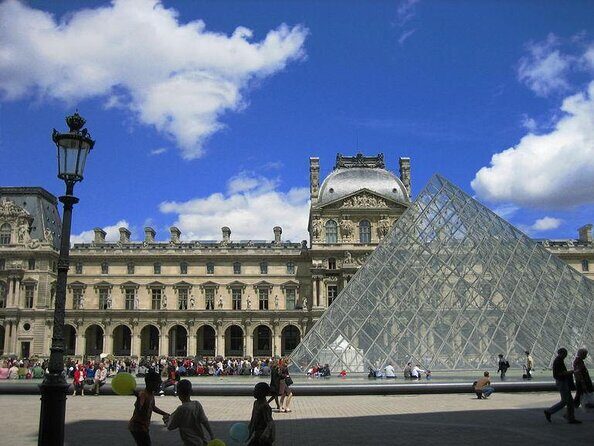
- Small group (12 or fewer) means more guide attention and easier crowd navigation.
- Audio headsets included so you keep hearing the story, even when you get surrounded.
- Reserved admission and a set route help you spend time looking instead of guessing where to go.
- A highlights lineup that hits art, myth, and French history rather than only repeating the same two posters.
- Choose a morning or afternoon start so you can fit the Louvre into your Paris rhythm.
- After the tour, you roam freely with a mental map of what to prioritize.
Meeting Point Near the Carousel: Plan for Finding Each Other
You start at Arc de Triomphe du Carrousel, at Pl. du Carrousel, 75001 Paris. This is handy because it’s a clear landmark and close to public transit, which matters in Paris when you’re juggling lines, trains, and museum timing.
Start time shown is 10:30 am, but the tour is offered in morning or afternoon options. Either way, I strongly suggest arriving early—like 15 minutes early—because the “where are you?” moment can be harder than it sounds. One theme from on-the-ground experiences is that guides often use a flag or recognizable cue, and it’s easy to miss when there are many groups milling around.
You can also read our reviews of more museum experiences in Paris



A 3-Hour Louvre Route That Makes the Museum Feel Manageable
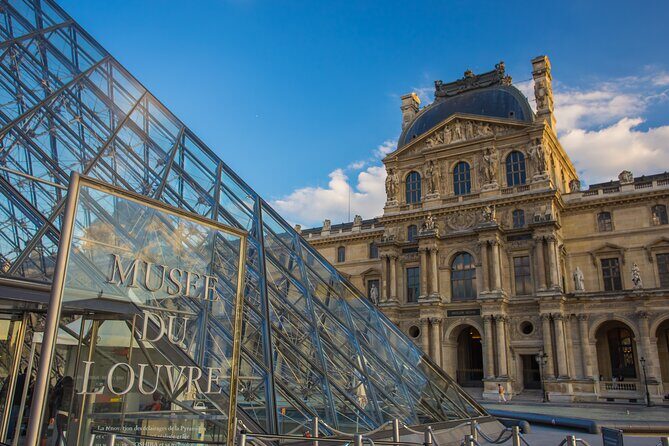
This is not a slow museum stroll. It’s a 3-hour highlights tour with an expert guide and a small group, aimed at first-timers and time-limited travelers who want the Louvre’s major names without drifting for hours.
The structure matters. You move through distinct areas in a logical order, and your guide gives enough context to make each artwork feel like part of a bigger story. You’re not meant to see everything in 3 hours—just the right things, in the right sequence, so the rest of the museum makes more sense later.
You’ll also hear your guide clearly thanks to audio headsets, which is a big deal inside the Louvre. Without them, conversations get swallowed up by footsteps and other groups. With them, you can actually track what’s being explained while you look.
Stop 1: Medieval Foundations to Venus de Milo
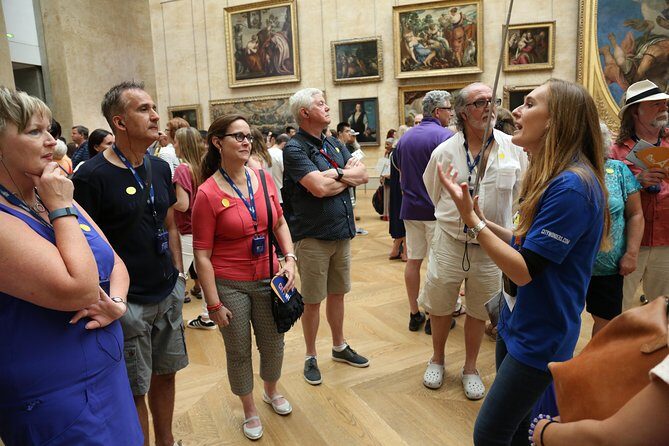
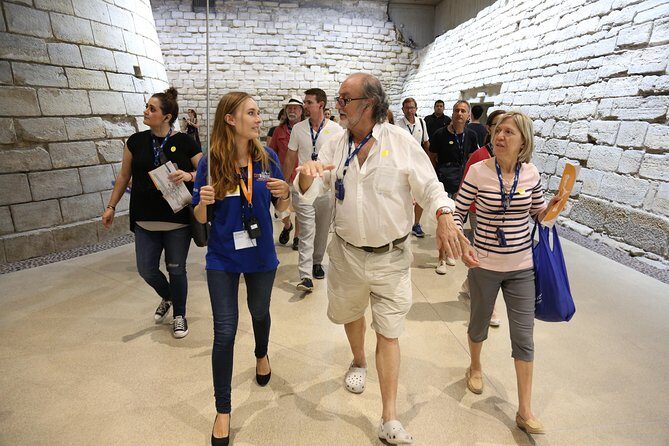
The tour begins by stepping into the Louvre’s earlier identity. You start with the medieval foundations of this royal residence, which sets the right mental frame: this isn’t just an art warehouse, it’s a palace with layers of French history baked into the building.
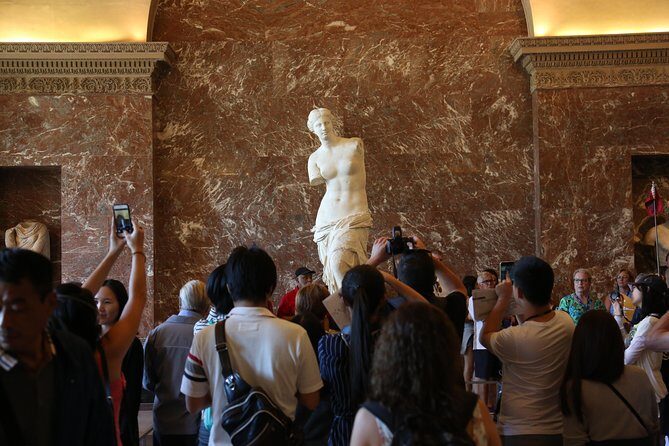
Then you move to Venus de Milo, one of those works that looks instantly familiar and still surprises you in person. The guide’s job here is to pull you past the postcard version, connecting the sculpture’s appeal to the tastes and collecting habits of the museum’s curators and patrons over time.
A practical note: the Louvre can be crowded at every turn, and this is one of the moments where you’ll likely be standing shoulder-to-shoulder. The good news is that having a plan reduces the time you spend circling and trying to get a view.
Apollo Gallery and the Power of Royal Crowns
Next comes the Apollo Gallery, where the atmosphere shifts from mythology to authority. This is where you’ll encounter ornate royal crowns associated with Napoleon and King Louis XV.
Seeing crowns in a gallery designed for spectacle helps you understand why the Louvre is so theatrical. Your guide connects the objects to leadership and legitimacy—how rulers used art, display, and symbolism to communicate power. Even if you’re not the kind of person who reads wall labels for fun, this kind of framing makes the museum easier to follow.
Drawback to keep in mind: as you get closer to the most famous spaces, you can lose a bit of personal space. The headset and group size help you keep moving, but this is still a busy museum.
Canova’s Psyche and Cupid: Love Set in Stone
Then you shift to a different emotional tempo. Canova’s Psyche and Cupid is where the tour’s storytelling turns intimate: myth becomes bodies, expression, and gesture.
What makes this stop worthwhile for you is the way it broadens your Louvre experience. If all you see are the headline names, you end up with a list. If you get a myth sculpture placed next to royal power and revolutionary imagery, the Louvre becomes more like a curated argument about what people wanted art to do.
Plan to slow down for this one if you can. Even in a fast-paced tour, sculptures usually reward a few extra seconds of looking. You’ll get a guide’s explanation first, then you’ll be better prepared to notice details on your own.





Delacroix’s Liberty Leading the People: Art as a Political Weapon
Next up is Delacroix’s Liberty Leading the People, tied to the French struggle for freedom. This is where the Louvre stops feeling purely classical and starts acting like a stage for modern history.
I like this placement because it flips the usual museum mood. You’re not just looking at beauty; you’re looking at urgency. The guide’s story helps you see how the painting’s figures, composition, and symbolism connect to the idea of revolution and national identity.
This is also a good stop to mentally bookmark. If you later want to return for a deeper look, this is exactly the kind of work that makes the time worth it.
Michelangelo in the Italian Sculpture Halls: Big Skill, Strong Impact
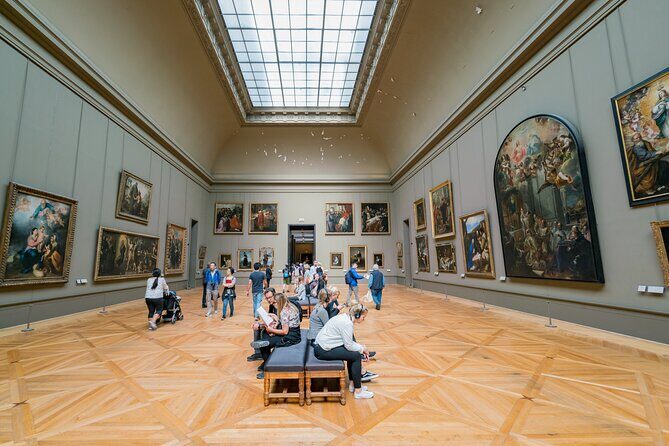
The tour then moves into the Italian sculpture areas, where you’ll meet Michelangelo’s work. Sculpture halls can feel like “just another room” if you arrive with zero context. With a guide, the same pieces land differently because you learn what to look for—physical tension, anatomy, and how the sculptor’s choices communicate movement.
Michelangelo is one of those artists where people either react instantly or get confused by the scale and style. Having your guide connect technique to meaning can turn confusion into curiosity in minutes.
Just remember the Louvre is designed for crowds. If you’re shorter, you may need to adjust your position quickly when the group moves. The headset helps, but your body still needs a little flexibility.
Mona Lisa: Why This Stop Always Feels Like a Crowd Magnet
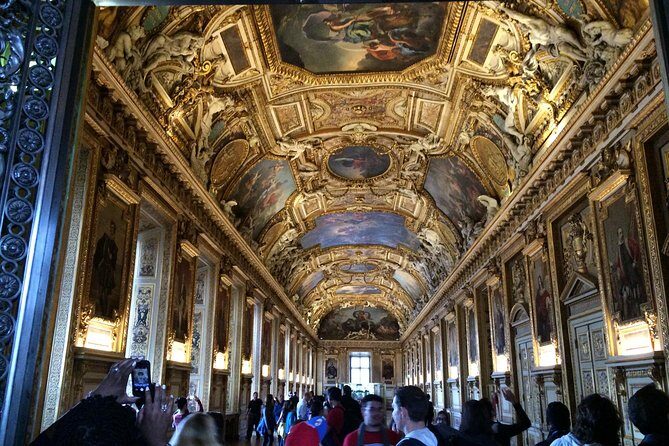
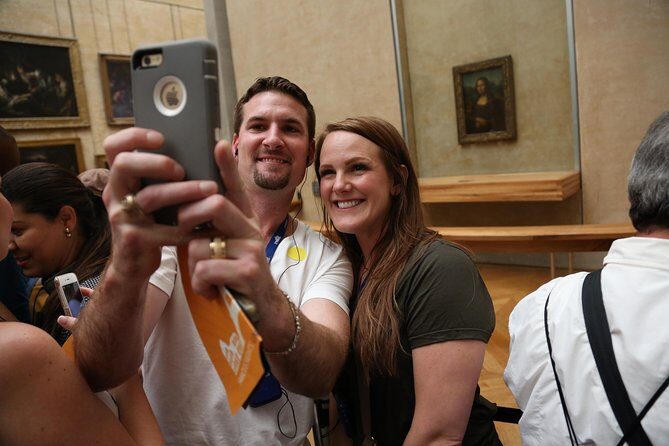
Of course, you’ll reach Leonardo da Vinci’s Mona Lisa. The guide will set you up for what you’re about to experience: the odd combination of a small painting surrounded by a sea of people.
This is where the tour’s value often shows up. Without a plan, you might spend 30 minutes getting shuffled into position. With a guided route, you’re more likely to arrive when you can see, listen, and understand what you’re looking at—then move on rather than getting stuck in the longest line in the room.
After the tour, you can decide what to do next. If you want a second look later when the crowd shifts, you’ll already know where to find it.
Why the Reserved Entry and Ticket Bundle Feels Like Real Value
The price shown is $118.27 per person, and this tour includes key costs. You’re paying for an English-speaking guide, audio headsets, reserved museum admission (the adult ticket is listed as €22), plus a reservation fee included for the group (€70 per group).
Here’s the value logic I use when deciding if a Louvre tour is worth it. If you’re paying for the guide anyway, you’re not just buying information—you’re buying time saved in a place where time disappears. The included ticket bundle helps you avoid the most annoying part of a museum visit: uncertainty.
The small-group cap also matters financially. A larger group means more waiting, less personal pacing, and more time spent stopping because everyone is trying to read at once. In a museum this big, that wasted time is expensive.
Headsets, Pace, and Crowd Flow: The Real Benefit of Small Groups
A maximum of 12 travelers is the headline, and it shows up in day-to-day comfort. You move as a unit, you can hear the guide, and you don’t constantly lose the story because you got separated by a tide of visitors.
Your group also benefits from practical guidance, not just art talk. Some guides have helped with timing so you can see key works without spending all your energy fighting for position. If mobility is a concern, take seriously that this tour is paced for movement through multiple areas in a set time frame, and you’ll be on your feet for much of the experience.
If you need to sit often, or if stairs are a major problem for you, you’ll want to think carefully before booking. This is a highlights tour, not a slow, accessible museum companion.
Security Checks and Delays: The Louvre’s One Unfair Variable
One detail you should respect: there may be delays when entering due to mandatory security checks. That’s not something a tour operator controls, but it changes your mindset.
Go in ready for the Louvre to be the Louvre. If your plan depends on being absolutely on the minute for later reservations, keep a buffer. The best way to keep stress low is to treat this tour as a guided path through a busy system, not a guarantee of instant entry.
The upside is that the tour includes entry and a structured flow. When you’re on a route with reserved access, you’re usually not stuck wandering at the mercy of random lines.
What You’ll Likely Do After the Tour Ends
After about 3 hours, you’re free to explore on your own. That “release” matters. The Louvre is too huge to try to fix it with one tour.
If you want to make your extra time count, I suggest this simple approach: pick 2 or 3 works you absolutely care about and give yourself permission to ignore the rest. Now that you’ve seen the tour’s anchor masterpieces, you’ll have a mental map, and you’ll stop zigzagging randomly.
You also have a better sense of how the museum groups styles. Once you know which areas feel right to you—sculpture, painting, French historic works—you can build your own follow-up plan.
When Things Go Off the Script: Group Size Changes
This tour is marketed as small-group and capped at 12 travelers. Still, there’s a real-world risk in Paris: operations change when staffing changes.
In the rare event of a guide illness, groups can be merged and your experience may feel less private. When that happens, it affects pacing and staying together, because now you’re navigating the museum with more people than expected.
The practical move for you is to keep expectations grounded. This is usually a tight group with excellent audio and pace. But if you’re the type who needs near-private attention, plan for the possibility of a larger mix on a bad day.
Who This Tour Suits Best (and Who Should Rethink)
This tour fits you best if you want an efficient first Louvre visit, or if you’ve been overwhelmed by the idea of planning a museum that takes days. I also think it’s a strong match if you care about connections—how art ties to power (crowns), myth (Venus and Canova), and political upheaval (Delacroix).
It may feel less ideal if you want a slow, wander-at-will museum day. Also, if mobility limits make stairs and fast pacing a major issue, you should think twice and consider other options that match your pace and physical needs more closely.
Quick Practical Tips Before You Go
- Wear shoes you can walk in for hours, because you will be on your feet.
- Bring a little patience for security lines; the Louvre is strict and sometimes slow.
- Take a photo of your meeting area so you can orient fast if you feel lost.
- When you hear about the Mona Lisa and the crowds, don’t treat it as a must-perfect photo moment. Treat it as a must-know-work moment.
Should You Book This Louvre Highlights Tour?
I’d book it if you want the Louvre’s main stories in one focused session and you’d rather spend your energy looking than figuring out where to go. The combination of small group (up to 12), audio headsets, and the famous-to-less-famous route is exactly what makes a Louvre visit feel doable.
I’d hesitate only if you need a super-slow pace, have serious mobility limits, or you’re easily thrown by crowd dynamics and operational changes. For most people—especially first-timers—this is a smart way to get the biggest payoff from limited time in Paris.
FAQ
How long is the Louvre Museum tour?
It runs for about 3 hours.
Is the museum entrance ticket included?
Yes. The adult entrance ticket price listed is €22, and it’s included in the tour.
How many people are in the group?
The tour is capped at a maximum of 12 travelers, with an intention of a semi-private experience.
What language is the tour offered in?
The tour includes an English-speaking expert guide.
Where do I meet the guide?
You meet at Arc de Triomphe du Carrousel, Pl. du Carrousel, 75001 Paris, France.
Is hotel pickup or drop-off included?
No. Hotel pickup/drop-off is not included.
What should I expect when entering the Louvre?
You may experience delays going through mandatory security checks when entering.
Can I cancel for a full refund?
Yes. Free cancellation is available up to 24 hours in advance for a full refund.
Are audio headsets provided?
Yes. Audio headsets are included so you can always hear your guide.