REVIEW · PARIS
Verdun 1916 and AEF Meuse Argonne offensive 1918 – Private tour (2,7 pax)
Book on Viator →Operated by ADRIAN ROADS · Bookable on Viator
Verdun and Meuse-Argonne hit fast. This full-day private tour takes you from Paris to the heart of the Great War, with stops that explain what happened and, just as importantly, who it happened to. I like that the day mixes major memorials (with real artifacts and space to think) with smaller, haunting markers like the Bayonet Trench. You’ll also get the practical win of round-trip transit from Paris, so you’re not solving trains and timing while carrying heavy history.
Two things I really like: the visit at Memorial de Verdun is designed to make the battle understandable, not just scenic viewing. And the day pays tribute across national lines, pairing French sites with key American Expeditionary Forces memorials like the Montfaucon American Monument and the Meuse-Argonne American Cemetery. One consideration: the start is early (6:30am), and the tour requires good weather, so plan for a long day in the countryside.
In This Review
- Key Highlights You’ll Actually Feel
- What This Day Is Really About: Verdun and the US Meuse-Argonne Offensive
- The Big Practical Win: Private Transport and a 6:30am Start From Paris
- Stop 1: Memorial de Verdun and That Recreated Battlefield Experience
- Stop 2: L’Ossuaire de Douaumont and the Names You Can’t Unsee
- Stop 3: Tranchée des Baïonnettes, a Short Stop With a Long Shadow
- Stop 4: Montfaucon and the Meuse-Argonne American Monument’s 60-Meter View
- Stop 5: Fort Douaumont and the Brutal Logic of Big Guns
- Stop 6: Meuse-Argonne American Cemetery, Where the Day Becomes Names
- Food, Comfort, and Staying Human During a Heavy Route
- Price and Value: What You Pay For at $595.71 Per Person
- Who Should Book This Tour (and Who Might Reconsider)
- Tips Before You Go: Make the Day Go Smoothly
- Should You Book This Private Verdun and Meuse-Argonne Day Trip?
- FAQ
- How long is the Verdun 1916 and Meuse-Argonne private tour?
- What time does the tour start and where do we meet?
- Is this tour round-trip from Paris?
- Is the tour private?
- What language is the tour offered in?
- What’s included for lunch?
- Are tickets included for all the stops?
- How many people can be in the group?
- Is the tour weather-dependent?
- What is the cancellation policy?
Key Highlights You’ll Actually Feel
- Memorial de Verdun uses a recreated battlefield, video walls, and terraces with countryside views at the top
- Douaumont Ossuary holds the remains of at least 130,000 unidentified soldiers, with plaques listing French names
- Tranchée des Baïonnettes marks the story of soldiers buried alive, with the clue being bayonets visible above ground
- Montfaucon American Monument includes a 60-meter monument and an observation platform view over ground captured by the First Army
- Fort Douaumont shows why heavy artillery changed the rules, and why it was retaken later at enormous cost
- Meuse-Argonne American Cemetery is meticulously maintained, with 14,246 graves and a chapel on the ridge
What This Day Is Really About: Verdun and the US Meuse-Argonne Offensive
This tour is built for people who want WWI history with context and care. You’re not just ticking off sites. You’re following a timeline shaped by artillery, trenches, and decision-making on both sides, then ending with the American story of the Meuse-Argonne Offensive in late 1918.
The strength here is how the stops connect. At Verdun, you’ll see how industrial-scale bombardment and trench warfare drove unimaginable suffering. Then the route shifts toward 1918, when the American First Army played a major role in pushing toward the Armistice in November. By the time you reach the US cemetery, the day clicks into a single message: war is not abstraction. It’s names, places, and families.
You can also read our reviews of more private tours in Paris



The Big Practical Win: Private Transport and a 6:30am Start From Paris

Starting at 6:30am from Théâtre du Lido on the Champs-Élysées can feel early, but it helps you make the most of the day. This is a private tour for your group, which means the schedule is set for you rather than squeezed around other groups. The included air-conditioned vehicle is also a real comfort factor when you’re doing long-distance travel.
The tour ends back at the meeting point, so you don’t have to arrange a second plan for the ride home. And because this is offered in English, you can focus on the meaning of what you’re seeing rather than playing catch-up with translations.
One thing to watch: it’s a long day, roughly 13 to 14 hours, so dress for extended sitting and walking. Bring layers, because the weather can shift in open countryside.
Stop 1: Memorial de Verdun and That Recreated Battlefield Experience
Your first major stop is Mémorial de Verdun, fully renovated and reopened for the centenary in 2016. This museum is set up to hit two targets: learning and emotion. It’s not trying to be neutral in the way a textbook is neutral. It wants you to understand how the battle felt, while still giving you information you can hold onto.
The centerpiece is a replica of the 1916 battlefield, protected under glass, with a large audiovisual area. The presentation uses sound and visual tools to recreate the battle’s violence and the constant shaking of ground from shellfire. That matters because Verdun isn’t just famous for taking place in one location. It’s famous for how it reshaped the land and the lives around it.
Then you get a calmer contrast. The top floor floods with light and opens to the countryside view from terraces. It’s one of those rare museum moments where you can step from “battlefront recreation” into “this is what’s outside now,” which helps the history land in your body, not just your head.
Tip: if you like museums, arrive ready to sit with what you see. If you don’t, still go in. The combination of replica + audiovisual makes this stop work even when you’re tired.
Stop 2: L’Ossuaire de Douaumont and the Names You Can’t Unsee
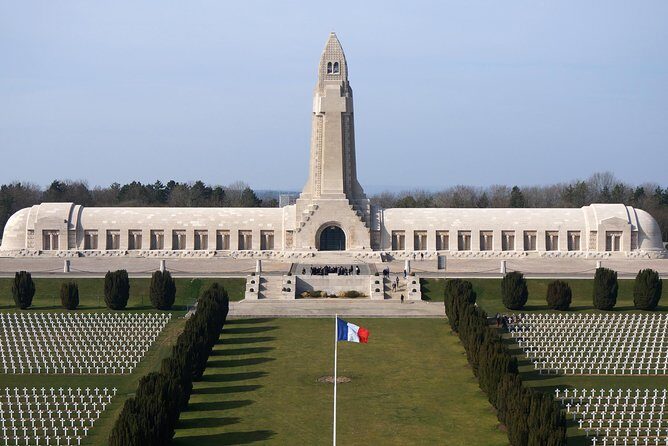
Next comes L’Ossuaire de Douaumont, a memorial built to hold remains from the Verdun battlefield. The most striking detail is the scale: skeletal remains of at least 130,000 unidentified combatants from both French and German forces are displayed in alcoves visible through small outside windows.
Inside, the ceiling and walls include plaques bearing names of French soldiers who died during the Battle of Verdun. The ossuary was built on the initiative of Charles Ginisty, Bishop of Verdun, and it’s designated a national cemetery. You’ll likely feel the difference between a museum and a memorial space like this. Here, the focus is on remembrance in a physical, deliberate layout.
How to approach it: don’t rush. Let your eye slow down to the rows and the plaque details. It’s easy to feel overwhelmed, so give yourself permission to stand still and take it in.
Stop 3: Tranchée des Baïonnettes, a Short Stop With a Long Shadow
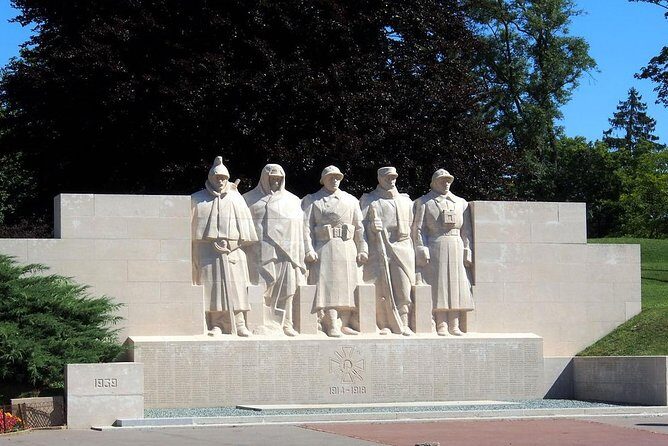
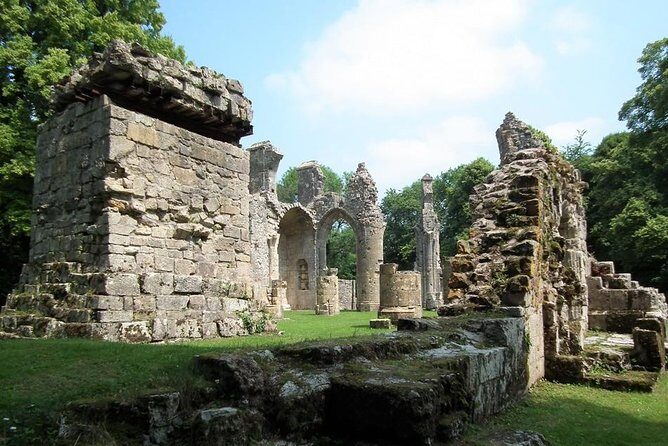
You’ll then visit Tranchée des Baïonnettes, a war memorial with a haunting “how did they even find this?” story. The monument is a massive concrete slab supported by massive pillars, honoring French soldiers who were reportedly buried alive in their trench after a shell explosion on June 12, 1916.
The clue leading to the discovery was the tip of their bayonets sticking out of the ground. It’s a small site in time, but it lingers because it turns the abstract horror of trench warfare into one specific image.
Practical note: this stop is short (about 10 minutes), so use it. If you’re moving fast, you can miss the effect. If you slow down for even a minute, it tends to hit harder.





Stop 4: Montfaucon and the Meuse-Argonne American Monument’s 60-Meter View
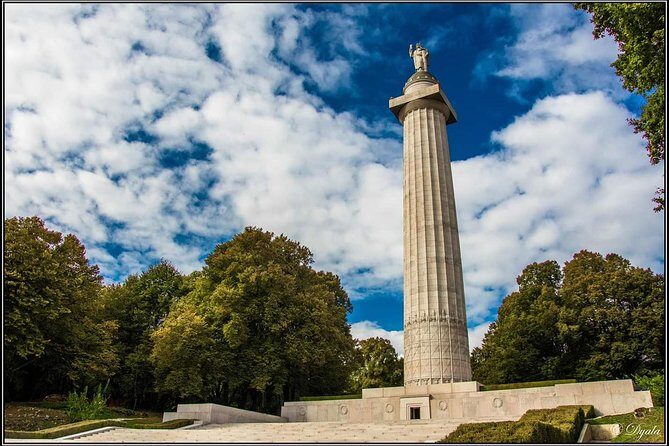
The American side of the day takes a dramatic turn at Montfaucon, centered on the Meuse-Argonne American Memorial. It commemorates the victory of the American First Army in the Meuse-Argonne offensive, and it was built by the American Battle Monuments Commission, which also maintains the site.
The monument reaches 60 meters high, topped by a statue symbolizing liberty. You can climb to an observation platform when it’s open (hours are posted outside), and the view is described as covering almost all the ground captured during the offensive. That viewpoint matters. Even if you know the names from a book, seeing the terrain from above helps you understand why attacks were launched where they were.
If you’re someone who likes geography, this is one of your best moments to connect the map to the real place. If you don’t care about scenery, still climb the steps if you can. The ability to “read” the ground turns the rest of the day from a list into a connected story.
Stop 5: Fort Douaumont and the Brutal Logic of Big Guns
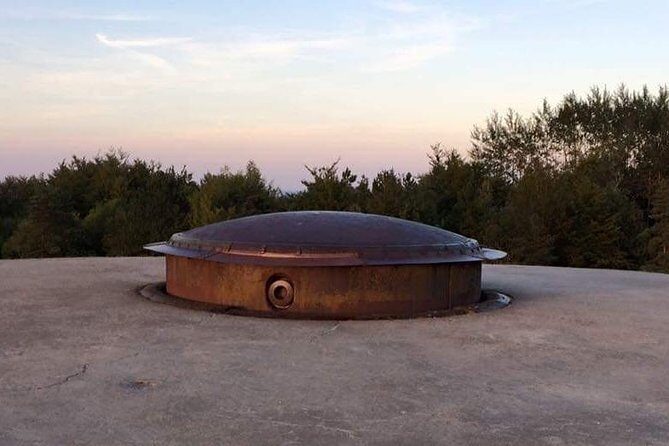
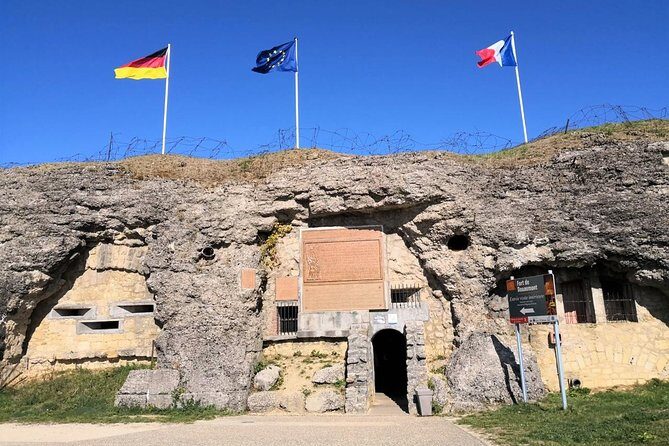
Now you’ll shift back to Verdun with Fort Douaumont, one of the largest and highest forts in the ring of defensive works built since the 1890s. By 1915, French planning concluded that even the best-protected forts could not withstand the German 420 mm gamma guns. That’s the kind of strategic context your guide can turn into clear meaning: technology and firepower changed the old assumptions.
Fort Douaumont was taken without combat by the Germans on February 25, 1916, just four days after the Battle of Verdun began. It was occupied for eight months by German forces, acting as shelter and a support point on the right bank of the Meuse. Attempts to retake it came with enormous cost, and it was only taken over on October 24, 1916 by French colonial troops, including the Morocco Colonial Infantry Regiment and the 43rd Senegalese Tirailleurs Battalion.
One stark line you should keep in mind is Pétain’s statement that retaking Fort Douaumont cost the lives of 100,000 French soldiers. That number is heavy, and it makes the fort feel less like “ruins” and more like a machine for suffering.
This stop is about 40 minutes and includes admission. If the group pace feels fast, ask your guide to pause at key points. You’re there to understand, not just pass through.
Stop 6: Meuse-Argonne American Cemetery, Where the Day Becomes Names
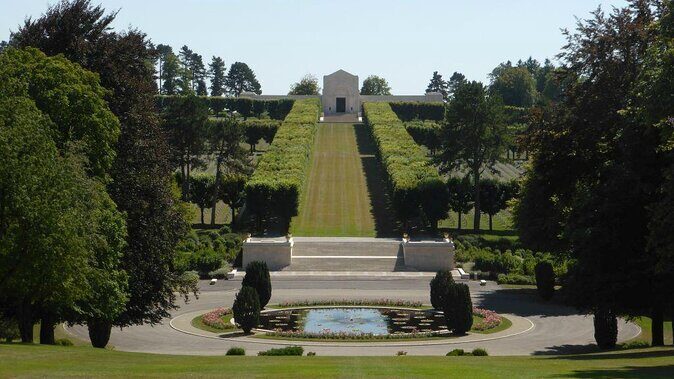
The day ends with one of the most moving places on the route: the Meuse-Argonne American Cemetery. It’s described as the largest US Military Cemetery in Europe, with more than 14,000 graves. The cemetery covers 130.5 acres, and the total buried here is 14,246.
The design is almost impossible to forget: long regular rows of white headstones rising beyond a wide central pool toward a chapel on the ridge. The layout helps you slow down because it’s structured for remembrance, not sightseeing.
As you walk, your historian guide shares stories of soldiers who fought in the area and received top gallantry decorations. That’s a key element: the site isn’t only about loss. It also explains individual action and sacrifice, in words that make the names feel less like numbers.
If you want a moment of personal reflection, this is where it makes sense to take it. Even a few quiet minutes here can rebalance the entire day.
Food, Comfort, and Staying Human During a Heavy Route
You’ll have a light lunch included: sandwiches with salad, plus a soft drink, coffee. It’s a good choice for a day like this because it keeps you fed without dragging out your schedule. Still, keep expectations realistic. You’re in WWI country, not a sightseeing city with quick extras. Eat when offered, hydrate, and don’t wait until you feel “ready.”
The included air-conditioned vehicle helps, especially early and later in the day when you’ll be tired. Wear comfortable walking shoes, and expect some uneven ground near memorials and outside spaces.
Price and Value: What You Pay For at $595.71 Per Person
At $595.71 per person, this isn’t a budget outing. The value is in three areas that matter on a long day like this.
First, you’re paying for private logistics: round-trip transit from Paris, a full-day schedule, and group-only time. Second, you’re paying for access to the kind of sites that take context to make sense. A good guide can connect details like fort artillery, trench engineering, and US operational geography so the day becomes coherent. Third, you’re getting meaningful extras included in the day itself: lunch, plus admission tickets for Memorial de Verdun and Fort Douaumont, while other stops are free.
Also, your group size is listed as 2 to 7 people, which usually makes private tours feel more personal. If you care about asking questions and setting the pace for a difficult topic, that smaller-group dynamic tends to matter.
Who Should Book This Tour (and Who Might Reconsider)
This tour fits best if you’re drawn to WWI history and want a guided path through both French and American sites. It’s also a good match if you have family ties to the era and want your day to feel personal. In one example, a guide named Regis used a family connection to tailor route details so the experience matched where a grandfather may have marched and stayed. That kind of attention can turn a memorial day into something deeply specific.
You might reconsider if you:
- Prefer short days with lots of free time for wandering
- Are uncomfortable with heavy, war-focused settings that are intentionally designed to be emotional
- Get very tired with early starts and long car time
Tips Before You Go: Make the Day Go Smoothly
A few practical moves will improve your experience.
- Wear layers and closed-toe shoes. You’ll do long hours and outdoor memorials.
- Bring water. The day is long, and comfort matters when you’re in motion.
- If you care about family history, think of names, locations, or unit details you want to ask about. When a guide can match your personal story to the ground you’re standing on, it changes the meaning.
Most importantly: give yourself permission to feel what you feel. These sites are built to make you stop.
Should You Book This Private Verdun and Meuse-Argonne Day Trip?
I’d book this if you want a structured, English-speaking WWI experience that respects the subject and connects the French Verdun story to the American Meuse-Argonne push in 1918. The early start is real, but the payoff is a full arc: battlefield understanding, memorial remembrance, and a cemetery that turns history into names.
Skip it only if you’re looking for a light, casual day. This route is not trying to be. It’s trying to make war intelligible and human.
FAQ
How long is the Verdun 1916 and Meuse-Argonne private tour?
It runs about 13 to 14 hours.
What time does the tour start and where do we meet?
The start time is 6:30am at Théâtre du Lido, 116 Av. des Champs-Élysées, 75008 Paris, France.
Is this tour round-trip from Paris?
Yes. It includes round-trip transit from Paris, and it ends back at the meeting point.
Is the tour private?
Yes. It’s a private tour/activity, meaning only your group participates.
What language is the tour offered in?
The tour is offered in English.
What’s included for lunch?
A light lunch is included, with sandwiches and salad, plus a soft drink, coffee.
Are tickets included for all the stops?
Not all stops. Admission is included for Memorial de Verdun and Fort Douaumont. The ossuary, Bayonet Trench, Montfaucon monument site, and the American cemetery visits are listed as free admission.
How many people can be in the group?
The tour is listed for 2 to 7 people.
Is the tour weather-dependent?
Yes. The experience requires good weather. If it’s canceled due to poor weather, you’ll be offered a different date or a full refund.
What is the cancellation policy?
Free cancellation is available. You can cancel up to 24 hours in advance for a full refund, and cancellations less than 24 hours before the start time are not refunded.