REVIEW · PARIS
Best of the Louvre Museum Private Tour with Monalisa
Book on Viator →Operated by The Expat Tours · Bookable on Viator
The Louvre can feel like a maze. This private-style tour gives you a logical route with prepaid tickets and a guide who talks you through the museum’s story, from early foundations to famous masterpieces like the Mona Lisa.
What I really like is the pace. You get time to ask questions and stop when something catches your eye, instead of being swept along like a human tour bus. I also like the clear “hit the highlights” focus: you’ll see major works such as the Venus de Milo, Michelangelo’s Slaves, and key set pieces like The Raft of the Medusa.
One thing to think about: if you choose the shared or semi-private option, you may use headsets, and the audio experience has been reported as uneven in crowd-heavy rooms. Also, come 15 minutes early because the timed tickets are strict and late arrivals aren’t accommodated.
In This Review
- Key things to know before you go
- Entering the Louvre Pyramid without the usual chaos
- Prepaid tickets and a clear 2-hour structure
- The highlight route: from Louvre foundations to palace halls
- Mona Lisa and the crowd-control strategy
- Venus de Milo, Michelangelo’s Slaves, and the feel of sculpture
- Royal jewels and Napoleon: seeing power through objects
- Wedding at Cana and The Raft of the Medusa: stories you can follow
- Canova’s Cupid & Psyche and how the guide ties eras together
- The Egyptian Antiquities option: when the mummy is worth the extra hour
- Private vs shared/semi-private: what changes for your experience
- Practical do’s and don’ts that prevent stress
- Price and value: why $299.57 can make sense
- The top reasons this tour wins for many groups
- Should you book this Louvre tour?
- FAQ
- Where does the tour start?
- How long is the tour?
- Is museum admission included?
- Is the Egyptian mummy included?
- Is this tour private?
- What language is the guide?
- What time should I arrive?
- Are large bags allowed inside the museum?
- What if the Louvre has an unexpected delay or closure?
- Can I get a full refund if I cancel?
Key things to know before you go
- Louvre Pyramid start point makes it easier to find the group and get moving fast
- Prepaid tickets help you avoid the slow ticket line and reduce waiting around
- Chronological route gives context, not just a list of famous paintings and sculptures
- Private pacing means you can pause, sit, and interact with your guide when you want
- Optional 3-hour Egyptian add-on can include the mummy, if you choose that combo
- Private vs semi-private changes the feel (more people means more noise and sometimes headset use)
Entering the Louvre Pyramid without the usual chaos
First order of business: the tour starts at the Louvre Pyramid (75001 Paris). That matters more than it sounds. When you start at a known landmark, you spend less energy figuring out meeting points, and more energy on the museum itself. The tour ends back at the same meeting point, so you’re not left trying to “exit-hunt” after two hours of art overload.
This is designed to be straightforward. You meet your guide at the departure point, then you go in with your prepaid admission covered. That small detail is huge at the Louvre, where crowds can turn a simple visit into a timed obstacle course.
A guide also gives you something wandering usually won’t: a plan. The Louvre is massive, and even if you pick “must-sees,” you still lose time cutting across galleries. Here, you’re guided through a chronological path—so your feet and your attention move in the same direction.
You can also read our reviews of more private tours in Paris



Prepaid tickets and a clear 2-hour structure
The tour runs about 2 hours. Admission is included, and the entrance ticket for adults (not the guide’s time) is part of what you pay. Because tickets are prepaid, you’re not spending the first chunk of your visit stuck at a ticket counter.
This is a practical way to see “the best of” without turning your day into a line queue. You still get inside the museum with time for meaningful stops, not just quick glances.
The structure matters. The tour description is set up around foundations and museum “chapters,” then it moves into art collections, royal jewels, and palace halls. That way, you’re not just looking at famous objects; you’re also getting a sense of how the Louvre organizes its story.
And because it’s guided, you’re also less likely to get trapped by the museum’s confusing floor flow. A good guide helps you keep momentum when the crowds swell.
The highlight route: from Louvre foundations to palace halls

Here’s what you can expect from the experience arc. You’ll be led through a chronological path that touches multiple eras of the Louvre’s collections and settings—starting with the museum’s foundations and then moving into major highlights across collections.
Your guide is there to help connect:
- where each artwork fits in time,
- what makes it important in art history,
- and how the pieces link together across the museum.
This matters if you care about understanding, not just collecting photos. One of the biggest wins of a guided route is that you stop guessing what you’re looking at. You get a framing that makes each work easier to place.
The tour highlights include famous names and objects that most people come for, plus a few that help fill in the “why” behind the fame. Expect to spend time around works such as:
- the Mona Lisa (listed as Monalisa),
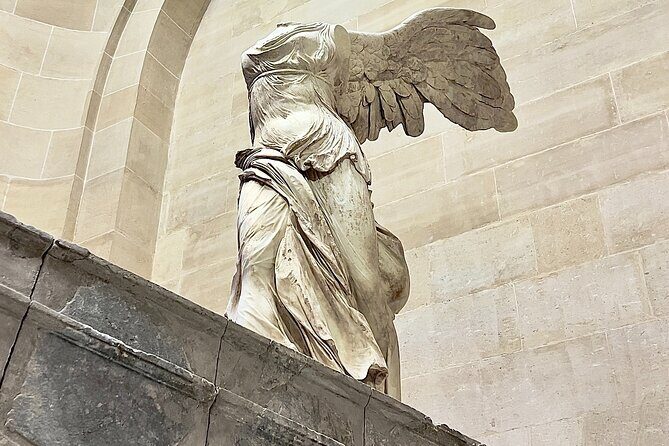
- the Venus de Milo,
- Michelangelo’s Slaves,
- Wedding at Cana,
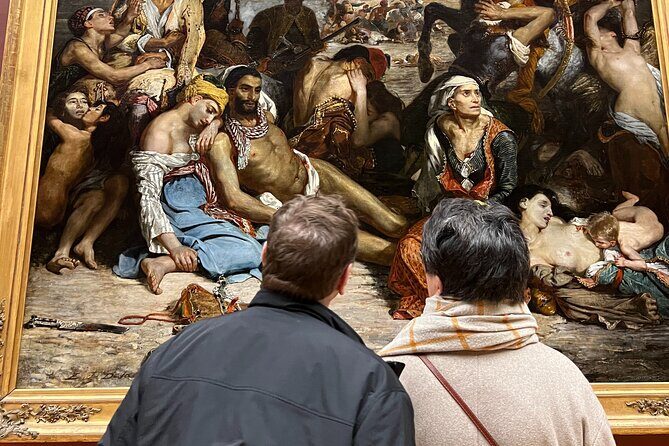
- The Raft of the Medusa,
- the Coronation of Napoleon,
- and Canova’s Cupid & Psyche.
Even if you’ve seen pictures of some of these, the difference is how the guide teaches you what to notice.
Mona Lisa and the crowd-control strategy

Let’s be honest: the Mona Lisa is where most visits turn into “stand in the crowd and hope for a view.” A guided format helps you avoid the usual start-stop panic.
With this tour, you’re not just racing to get a snapshot. You’re being guided to the piece within a planned route, and your guide also sets up what you should look for—so your time at the front of the cluster has a purpose.
If you’re thinking about kids or teens, this matters even more. Multiple guides on this program have been praised for keeping younger people engaged and encouraging questions. That’s a real advantage when the museum can feel like a long, quiet march.
You also benefit from the “own pace” promise of a private or guided group experience. You’re not constantly being pulled along, so if someone wants to linger at the Mona Lisa or compare details, you can do that without derailing the whole tour.
Venus de Milo, Michelangelo’s Slaves, and the feel of sculpture
Sculpture in the Louvre hits differently when you’re not just drifting toward it. The tour route includes major sculptural works like the Venus de Milo and Michelangelo’s Slaves.
In a guided setting, you’re more likely to notice the things that make these statues famous in the first place: posture, proportion, and the emotional tone in the subject. A good guide also helps you connect sculpture to the broader artistic goals of its time—so the pieces don’t feel like random museum stops.
This is also where a guide’s pacing helps. The Louvre has sections where you might end up standing in a long line of sight. With a route plan, you’re less likely to get stuck in the wrong spot at the wrong time.
If your group includes older adults or anyone who needs to pause, the tour concept supports taking your time. In feedback tied to this kind of pacing, guides were described as patient and willing to let people sit and rest when needed.
You can also read our reviews of more museum experiences in Paris






Royal jewels and Napoleon: seeing power through objects

The tour doesn’t stop at painting and sculpture. It also includes royal jewels and palace halls, which gives you a different lens on the Louvre.
Royal jewels are useful because they show you how objects function as status symbols. When your guide frames the setting and the time period, those displays feel more like history you can understand than glass cases you walk past.
The same idea applies to pieces tied to Napoleon, including the Coronation of Napoleon. A guide can help you read these works as statements—about authority, ceremony, and political storytelling—rather than treating them as isolated “famous paintings.”
If you’re the type who likes to understand the “why,” this part of the tour often lands well. It gives the museum a narrative through-line that’s harder to build on your own.
Wedding at Cana and The Raft of the Medusa: stories you can follow
Two paintings that make the highlights list are Wedding at Cana and The Raft of the Medusa. These are not just famous names; they’re good choices for a guided tour because they’re built from storytelling.
A guide’s job here is to point out what’s happening in the scene and why the composition matters. When you’re moving through a huge museum, this kind of explanation gives you something solid to focus on. Instead of just saying, “That’s a big famous painting,” you start thinking about how the artist organizes emotion, action, and meaning.
This is also a good place for a family or mixed-age group to shine. Feedback tied to this tour format praises guides for explaining complex context in ways teens can still handle, and for building in questions so the group stays active.
Canova’s Cupid & Psyche and how the guide ties eras together

Canova’s Cupid & Psyche is a nice example of why a chronological route helps. When you’re shown the shift from one era’s artistic approach to the next, the museum feels less like a storage unit of masterpieces and more like an evolving conversation.
In practical terms, this means you’ll likely spend less time thinking, What am I looking at again? Instead you start connecting works by theme and style.
This kind of linking is hard to do if you only rely on your own “see it, photo it, move on” method. A guide’s explanations make the museum easier to follow at human speed.
The Egyptian Antiquities option: when the mummy is worth the extra hour
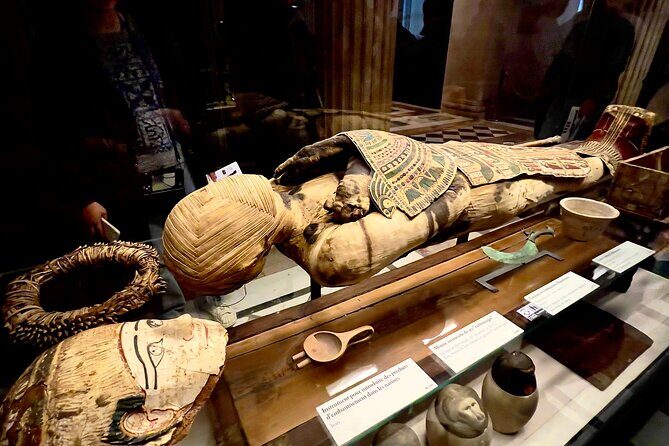
If you want the Egyptian part, you can add an extra hour via the Egyptian Antiquities option. The key detail: the mummy is only included with the 3-hour Egyptian option.
This matters for planning. If you’re set on seeing the mummy, don’t assume it’s part of the standard 2-hour tour. Choose the 3-hour combo that includes that added stop.
Why consider it? Because it changes the feel of your Louvre visit. After spending time in European paintings and sculptures, the Egyptian wing gives you a different world—one that often feels more direct and symbolic.
One more practical point: the additional time can be especially helpful if your group wants to avoid feeling rushed. Even with “private pace,” a 2-hour highlights tour can still feel like a sprint in a museum this big. Adding Egyptian Antiquities can turn your visit into something more complete, as long as your energy level matches the extra hour.
Private vs shared/semi-private: what changes for your experience
This tour offers choices. You can choose a private option or a shared/semi-private option, and the fees change depending on which format you pick.
Here’s what changes in real life:
Private-style
- Your group gets the guide’s attention without needing to share time.
- You can go at your own pace more easily.
- You’re less likely to feel like you’re just one voice among many.
Shared/semi-private
- You may need audio support. Some reviews mention headset use, and the experience depends on the headset quality and the acoustics of crowded rooms.
- Your group size can increase, which can make it harder to stop and discuss details at the exact moment someone finds something fascinating.
So how do you decide? If you care about close interaction and flexible timing, private is the better fit. If you’re trying to cut cost and you’re fine sharing your guide’s time, semi-private can still be efficient.
Either way, the tour keeps the highlights focus, which is the main reason this format works.
Practical do’s and don’ts that prevent stress
Before you go, lock in these basics:
Arrive early. The tour starts on time, and late arrivals aren’t accommodated because tickets are time stamped. That means if you’re running late, your best-case outcome isn’t great.
Bring the right kind of bag. Large bags and suitcases aren’t allowed inside the museum. The rule is handbags or small thin bag packs for security.
Bring a valid phone number. It’s imperative you provide it so you can be contacted on the day of your tour. That’s a small requirement that can save you from a meet-up mess.
Bring identification if requested. An ID document may be required, so keep it handy.
Know about quieter rules inside some rooms. There are sections where speaking may be quiet or restricted. Your guide should explain the rules before entering, so you aren’t surprised by silence protocols.
Also, accept that the Louvre can have occasional closures. If opening is delayed more than 1 hour, the provider says they will offer an appropriate alternative. Refunds or discounts aren’t available in those cases because entry tickets are prepaid ahead of time.
Finally, keep your expectations realistic. The tour is about highlights within a defined time window. You’re not touring every gallery. You’re seeing the best known masterpieces with context and a smooth route.
Price and value: why $299.57 can make sense
At $299.57 per person for about 2 hours, this isn’t a budget stroll. But it can be good value if you count what you’re buying:
- Guide time from an English-speaking art-history expert.
- Admission included (the adult ticket is part of the package).
- Prepaid tickets that cut down waiting and help you start efficiently.
- A route that prioritizes high-impact works like the Mona Lisa, Venus de Milo, Napoleon-era pieces, and major paintings.
If you tried to do this on your own, you’d spend time solving for logistics: where to start, which order to visit, how to avoid dead ends, and how to understand what you’re looking at in the middle of the crowd.
This tour’s value improves if:
- it’s your first time in Paris and you want the Louvre done well,
- your group wants context without researching for hours,
- you have limited time and you don’t want to guess your way through galleries.
If you already know the Louvre well and you love wandering, you might question paying for a guide. But for most people, the payoff is speed plus meaning.
The top reasons this tour wins for many groups
I see a pattern in what tends to work with this experience:
1) Guide energy and clarity
Names like Blerta, Mindy, Vivian, Wei, Malina, and Avi show up in strong feedback, and the common thread is an upbeat style paired with serious art context.
2) Patient pacing
Some of the most helpful feedback notes guides creating an easy rhythm, including giving people space to rest. That’s not a luxury in a place like the Louvre—it’s part of making the visit enjoyable.
3) Engagement for mixed ages
If you’re traveling with teens, this matters. Guides were praised for keeping younger people involved by asking questions and explaining in a way that doesn’t talk down.
4) Crowd navigation
Even when the museum is packed, the tour format is built to move you through major highlights without getting permanently stuck.
5) Efficiency that still feels personal
The private or small-group nature keeps the visit from turning into a rushed lecture.
Should you book this Louvre tour?
Book it if you want the Louvre highlights in a structured way, with prepaid entry and a guide who helps you understand what you’re seeing. It’s especially smart if it’s your first Louvre trip, if you have limited time, or if your group includes teens or anyone who would benefit from a patient, plan-driven approach.
Skip it or think twice if you’re comfortable handling logistics on your own and you don’t care about art-history context. Also consider whether you’ll choose private or semi-private. Shared formats can be great value, but you may run into headset/audio issues in busy rooms.
If you do book, your best move is simple: arrive early, pack light, and be ready to spend your time looking closely, not just walking.
FAQ
Where does the tour start?
It starts at the Louvre Pyramid, 75001 Paris, France.
How long is the tour?
The tour is about 2 hours.
Is museum admission included?
Yes. An adult entrance ticket is included with the tour.
Is the Egyptian mummy included?
Not in the standard 2-hour option. The Egyptian Mummy is included only if you choose the 3-hour Egyptian Antiquities option.
Is this tour private?
It depends on what you book. It can be private, or you can choose a shared/semi-private option for different fees. The private option is described as only your group participating.
What language is the guide?
The guide is English-speaking.
What time should I arrive?
Arrive 15 minutes early. Late arrivals will not be accommodated because tickets and reservations are time stamped.
Are large bags allowed inside the museum?
No large bags or suitcases are allowed. Only handbags or small thin bag packs are allowed through security.
What if the Louvre has an unexpected delay or closure?
If museum opening time is delayed by more than 1 hour, the provider says they will offer an appropriate alternative. Refunds or discounts aren’t provided because entry tickets are prepaid in advance.
Can I get a full refund if I cancel?
Free cancellation is available up to 24 hours in advance for a full refund. Less than 24 hours before start time isn’t refundable.