REVIEW · PARIS
Da Vinci Code Movie Locations Private Tour in Paris
Book on Viator →Operated by Friendly Local Guides · Bookable on Viator
Paris turns into a puzzle map. This private, 2-hour walk ties major Da Vinci Code filming locations to real Paris stops like the Ritz, Palais-Royal, and Saint-Sulpice, with rose line symbols made practical as you move through the city.
I particularly like the flexible pacing with your guide, and I love that you’re not just staring at plaques. You get time that supports photo-friendly sightseeing and clue-focused viewing, plus a mobile ticket that helps you keep things smooth.
One consideration: the route is mostly on foot using the metro between areas, so you’ll want comfortable shoes and a moderate walking pace for the full session.
In This Review
- Key highlights you’ll feel right away
- Why this Da Vinci Code locations tour works in real life
- Getting around: private walking + metro pacing for about two hours
- Stop 1: Ritz Paris and the story’s opening mood
- Stop 2: Palais-Royal and the rose line riddle near the Louvre
- Stop 3: La Comédie-Française and the Paris meridian angle
- Stop 4: The Louvre clue time, Mona Lisa connections, and story context
- Stop 5: Saint-Sulpice-la-Pointe and the Holy Grail rose line trail
- Price and value: is $129 per person fair for this format?
- Best fit: who should book this tour
- Who leads the tour and why that matters
- Should you book this Da Vinci Code locations tour?
- FAQ
- How long is the Da Vinci Code Movie Locations Private Tour in Paris?
- Is pickup offered on this tour?
- Is this a private tour or shared group experience?
- What is included in the price?
- Are the admissions for stops included?
- What’s not included?
- What if plans change? Can I cancel?
Key highlights you’ll feel right away
- Private group experience with only your party, so questions stay on track
- Aliya-style friendly guidance that mixes movie details with real-world context
- Rose line and Paris meridian talk in the right places, not in a lecture room
- Major-name Paris landmarks (Ritz Paris, Palais-Royal, Louvre, Saint-Sulpice) with selfie-ready moments
- Metro-assisted routing so you spend more time outside and less time figuring transit
- Admission is free at the scheduled stops, helping the $129 price go further
Why this Da Vinci Code locations tour works in real life
If you’ve ever watched The Da Vinci Code and thought, Wait—where were they standing, exactly?—this tour gives you a straight answer. It’s not a stuffy history class, and it’s not just a movie walk-through either. You’re traveling through Paris with a guide who connects the story’s big questions to the actual settings where those ideas would plausibly be noticed: corridors, courtyards, churches, and museum spaces.
The best part is how the tour treats symbols as something you can see. The film uses puzzles like the rose line idea, and on this walk you’re pointed toward architectural and geographic alignments that people actually discuss in Paris. Even if you’re skeptical (healthy), the experience still feels like a city scavenger hunt with real landmarks as the clues.
Value-wise, the tour is priced at $129 per person for a 2-hour private session, and it includes your guide, metro use, and fees for the scheduled stops. That matters because private tours in Paris can add up fast once you include entrance tickets and transit time. Here, you’re buying a compact, guided route designed to get you through the right places without wasting hours.
You can also read our reviews of more private tours in Paris



Getting around: private walking + metro pacing for about two hours
This is a private experience, meaning it’s just you and your group. That changes everything. You can ask questions as they come up, and you can slow down when a façade catches your eye or speed up when you’re eager to reach the next location.
The tour also uses the metro between stops as needed. Paris walking tours can sometimes feel like endurance tests with frequent detours. With metro help, you spend more time on the ground at the landmarks that matter, rather than crossing the city like you’re trying to win a race.
Your guide is English-speaking, and the itinerary is described as customizable with an adjustable number of stops. So if you’d rather spend a little more time at a single location than rush everything, you can usually shape the pace with your guide’s help.
A practical note: plan for moderate physical fitness. The duration is about 2 hours, and you’ll be outside and walking between major points. In practice, that means comfortable shoes, a light layer for weather, and keeping your camera ready—because you will want photos at the Ritz, Palais-Royal, and Saint-Sulpice.
Stop 1: Ritz Paris and the story’s opening mood
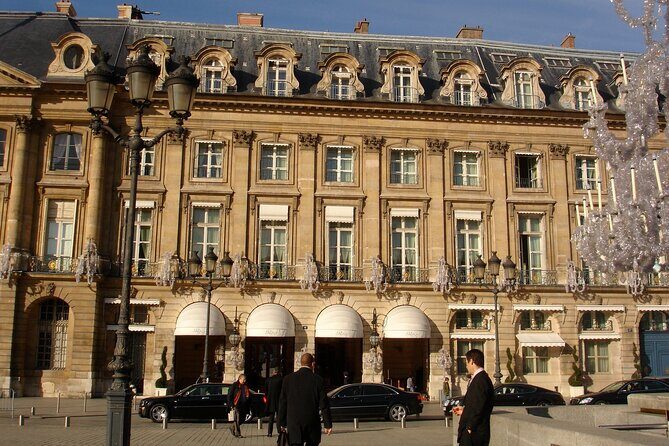
The tour begins at the Ritz Paris, where the Da Vinci Code setup feels instantly appropriate. In the story-world, Professor Robert Langdon lives in this luxurious hotel, and the tour frames the area like an opening scene: quiet elegance outside, then the sense that something secret is about to happen.
What you’ll like here is less the interior experience and more the visual and cultural weight of the place. The Ritz Paris was established in 1898 by César Ritz, and the façade carries that long legacy of high-end Paris. Your guide can point out details you might miss if you were just passing by—where the architecture signals wealth, how the hotel sits in the city, and why this kind of landmark makes sense for a thriller.
Time is around 20 minutes for this first stop. That’s enough to get oriented, take photos, and set the tone without turning it into a long stop where you lose momentum.
Stop 2: Palais-Royal and the rose line riddle near the Louvre
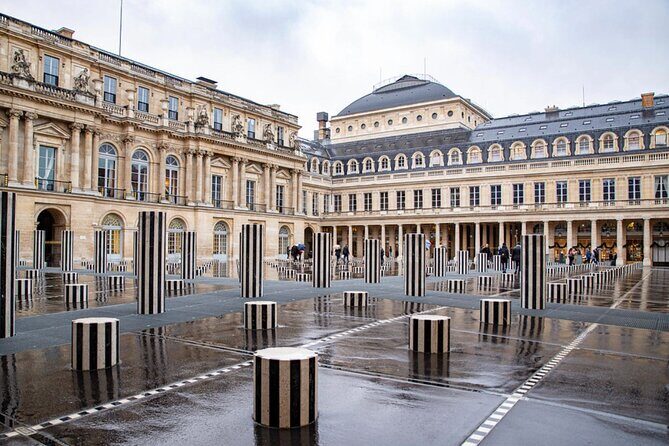
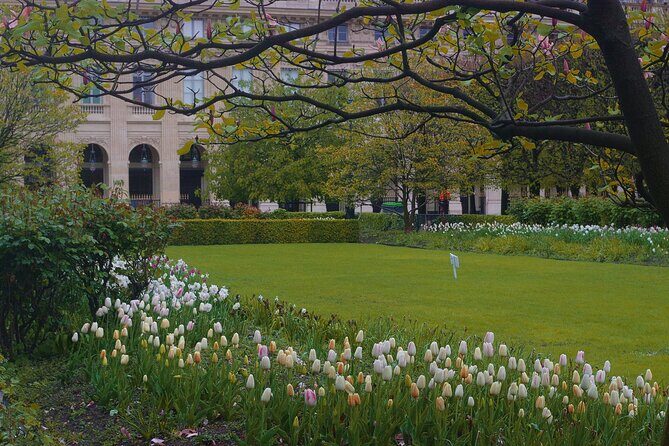
Next comes Palais-Royal, and this is where the tour turns from recognizable sights into the puzzle itself. You’ll walk through an area linked to the movie’s rose line idea, and your guide uses that as a gateway to the site’s own history.
Palais-Royal is famous for its architecture and for being a calmer pocket near major tourist pull points. It’s a strong mid-tour energy shift: you’re not moving from one crowded landmark to another. There’s also a tranquil park feel in the area, which helps you slow down enough to actually look and listen.
The stop is about 30 minutes, and it’s scheduled to balance explanations with time for you to take in the surroundings. If you like tours where the guide points out small structural details, this is one of the better moments in the route.
One small consideration: because it’s near big attractions, you may still feel some foot traffic depending on the day. If you’re trying to get the cleanest photos, plan to move with your group a few steps at a time instead of stopping dead in the busiest spots.
Stop 3: La Comédie-Française and the Paris meridian angle
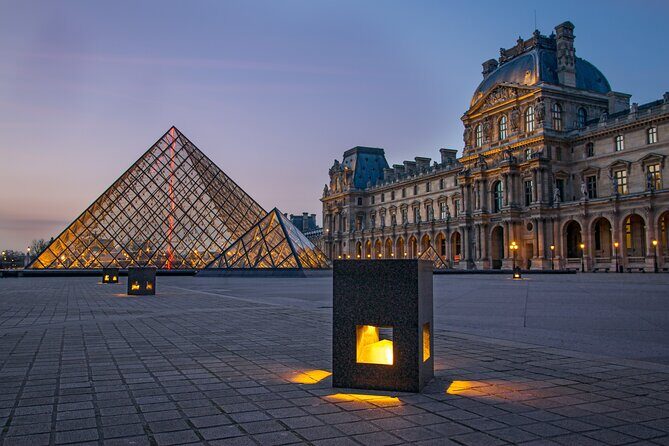
At La Comédie-Française (housed in the Palais-Royal complex), the tour adds another layer: theater history and Paris symbolism. The Comédie-Française is described as the oldest French theater in Europe, founded in 1680. It’s also associated with the House of Molière.
This stop matters because it connects two kinds of “Paris knowledge” that don’t often sit together. You get both cultural context (why this theater is so notable) and the tour’s thematic thread about a Paris meridian and the rose line talk. Your guide can weave the story tone into real institutions, which makes the whole “coded Paris” concept feel less like a gimmick.
Time is around 20 minutes. That’s usually ideal for a theater district stop: you get the essentials, plus a sense of the place without feeling trapped in a long explanation.
If you’re the type of traveler who enjoys architecture and “why this place matters” facts, this leg is a good match. If you only care about the filming locations with minimal history, you might want to steer your guide back to the Da Vinci Code symbolism as you go.


Stop 4: The Louvre clue time, Mona Lisa connections, and story context
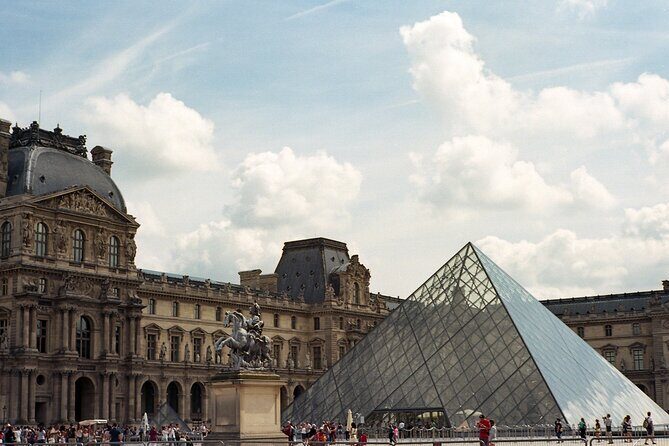
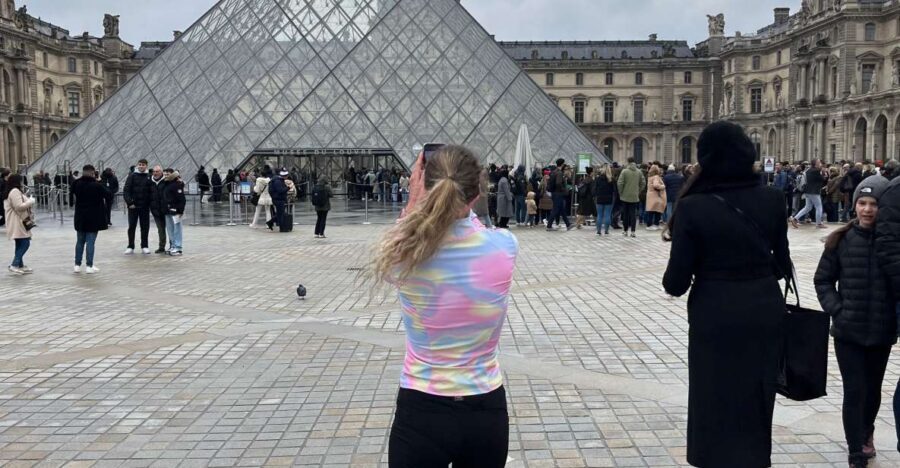
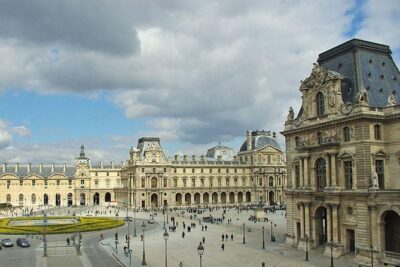
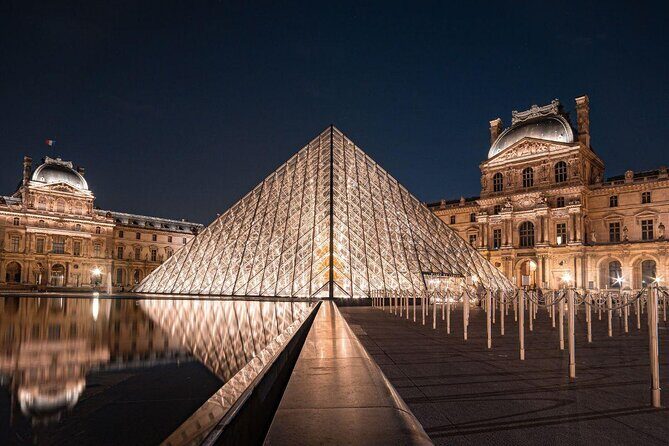
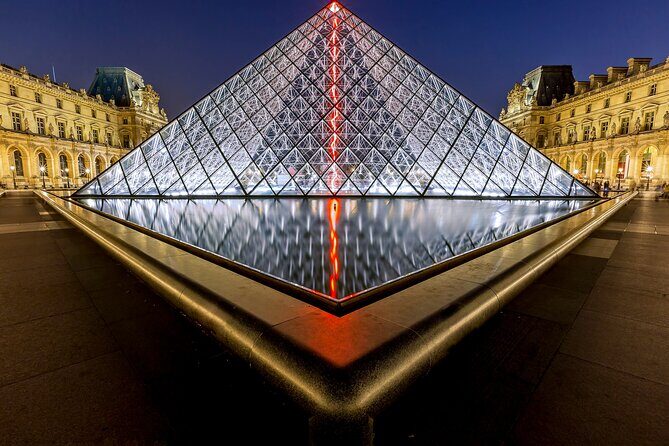
The Louvre Museum is the big-name stop. It’s also the stop where the tour’s concept—movie clues tied to actual landmarks—feels most obvious.
The itinerary frames the Louvre as a key setting in the story and points you toward famous works referenced in the thriller. You’ll hear about the Mona Lisa and Virgin of the Rocks, and the tour also mentions the idea that signs and clues are part of how the characters move through the Louvre. The guide’s job here is to help you connect what you’re seeing to the story’s logic, while still keeping the information grounded in the museum’s real significance.
This is listed with free admission, and the stop is around 20 minutes. In a museum this size, “20 minutes” sounds short until you remember the tour isn’t trying to “do the Louvre.” It’s trying to show you the right puzzle sights and help you understand the cultural background quickly.
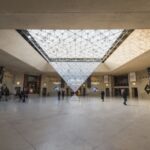
You also get a sense of the bigger map view: on a clear day, the tour notes that the Arc de Triomphe can be seen from the Arc du Carrousel near the Louvre. That’s a neat touch because it connects the Louvre stop to the wider Paris geometry that thrillers often play with.
Practical tip: since museum details can be busy and lighting changes fast, let your guide steer you to the best angles for what you’re looking for. Trying to self-navigate in the Louvre during a timed tour can be a fast way to stress yourself out.
Stop 5: Saint-Sulpice-la-Pointe and the Holy Grail rose line trail
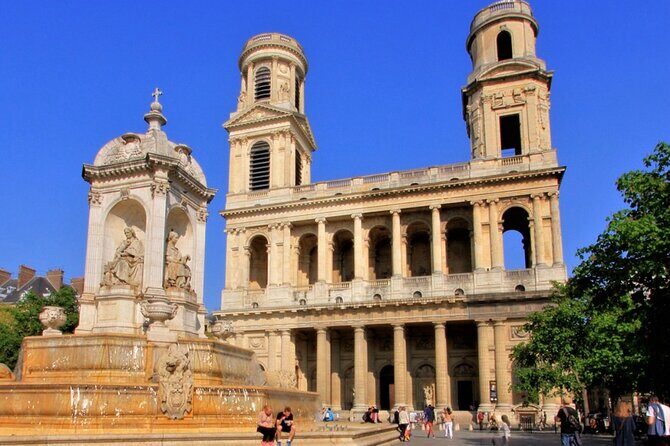
Crossing the Seine brings you to the Latin Quarter area, close to the Jardin du Luxembourg, for Saint-Sulpice-la-Pointe. This church stop is one of the most “Paris-coded” parts of the tour because it’s tied to the rose line idea and the Holy Grail-style questions people associate with the story.
The church was finished in 1777, and your guide tells stories about how the filming process handled restrictions. A key point: the tour notes that interior scenes were shot in a studio due to church restrictions. That’s useful context, because it reminds you that the movie uses place, but it also uses production workarounds.
In the experience itself, you trace the rose line idea across/through the setting as your guide explains how people connect it to the tour’s themes. You’re not just walking past a landmark; you’re looking at it with a specific question in mind.
This stop is about 30 minutes, and it’s also a good moment to plan a local food break. After the church, the tour suggests grabbing something nearby at a café and then taking a moment to reflect on the Saint-Sulpice setting before you move on with your day.
If you love the blend of architecture, symbolism, and story framing, you’ll probably find this to be the most satisfying stop. It gives you enough time to think, look, and (if the mood hits) rewatch the film scenes later with fresh eyes.
Price and value: is $129 per person fair for this format?
For $129 per person you’re getting a private walking tour with metro use, a friendly English-speaking local guide, and the scheduled stops’ fees and taxes. You’re also getting a tour built around well-known landmarks plus a couple of spots that help you avoid the feeling of only doing the usual tourist circuit.
The value calculation gets better when you look at what’s included versus what’s not:
Included:
- Local guide and private format
- Use of metro as part of the routing
- Fees and taxes
- Mobile ticket
- Iconic French heritage locations for selfies
- Admission listed as free at each stop on the itinerary
Not included:
- Gratuities (optional)
Is this a budget tour? No. But private tours in central Paris rarely are. Where this one stays reasonable is in its tight structure: about 2 hours, a focused set of stops, and practical timing so you aren’t burning your day wandering.
Also, the tour lists group discounts and has a pattern of bookings about 27 days in advance. That hints the format is popular enough that you shouldn’t wait too long if you want a particular time slot.
Best fit: who should book this tour
This tour is ideal if you fit one of these profiles:
- You liked The Da Vinci Code and want to see Paris through that lens, without turning it into a total theme park experience.
- You enjoy asking questions. The feedback you get from a guide—especially someone friendly and adaptable—can make the experience more fun and less scripted.
- You want classic Paris landmarks (Ritz, Palais-Royal, Louvre, Saint-Sulpice) but you want a reason to look beyond postcard framing.
In the real world, I see this as a strong half-day “anchor” tour. You can do it early and then use the rest of your day for independent wandering, dining, or follow-up museum time.
Who leads the tour and why that matters
This is a private walking format, so the guide really matters. In the experience, the guide is praised for being friendly and for mixing movie-specific details with historical context. One name that comes up clearly is Aliya—and the consistent theme is that she keeps things engaging, helpful with pacing, and good at giving recommendations afterward.
That’s practical value. A tour guide who helps you connect what you saw to what you’ll want next (food, places to explore, what to pay attention to) can turn a single outing into a better travel day overall.
Should you book this Da Vinci Code locations tour?
I’d book it if you want a focused, story-driven way to see major Paris landmarks in a short time, and if you like symbolism explained in the actual locations where it’s discussed. The rose line and Paris meridian angle is the kind of theme that feels fun when it’s tied to real architecture.
Skip it if you’re looking for a full, in-depth Paris history course or a museum marathon. This route is built for momentum and a specific theme. You get the essentials, not every street detail and not every corner of the Louvre.
If your group includes both movie fans and regular Paris sightseers, it’s a good middle ground. The landmarks are major, and the guide keeps the story thread going without pretending it’s the only way to understand the city.
FAQ
How long is the Da Vinci Code Movie Locations Private Tour in Paris?
The tour lasts about 2 hours.
Is pickup offered on this tour?
Yes, pickup is offered.
Is this a private tour or shared group experience?
It’s a private tour. Only your group participates.
What is included in the price?
The price includes all fees and taxes, a friendly English-speaking local guide, private walking with metro use, and the listed admission tickets at the scheduled stops. A mobile ticket is also provided.
Are the admissions for stops included?
The itinerary lists admission tickets as free for the scheduled stops.
What’s not included?
Gratuities are optional and not included.
What if plans change? Can I cancel?
Yes. Free cancellation is available up to 24 hours in advance for a full refund.