REVIEW · PARIS
Le Grand Tour Half Day Private Walking Tour All the Main Sites
Book on Viator →Operated by Black Cat Tours · Bookable on Viator
Paris makes sense when you walk it. I really like how this private half-day route uses a real guide to connect neighborhoods, and I especially like the way English-speaking guide Ewan keeps things relaxed while adapting to what you want to see. You’ll also get plenty of landmark moments without the pressure of museum lines. The main catch: this is a lot of ground on foot, and you’ll mostly view big sights from the outside, with no indoor access to Notre-Dame or the Louvre.
You can pick a morning or afternoon start, which helps if you’re trying to line this up with your other plans. The group stays small, up to 8 people, so it feels like your own itinerary instead of a cattle-car tour.
Plan for a moderate fitness level. Montmartre has hills and steps, and even though many stops are free, this day is built for walking and quick stops at each photo stop. Also, snacks aren’t included, and you’ll want comfortable shoes.
In This Review
- Key Points I’d Use to Decide Fast
- Entering The Montmartre-to-Notre-Dame Route That Makes Paris Click
- Your Guide, Ewan’s Pace, and What Private Really Changes
- Price That Works If You Share It (And Feels Steep If You Don’t)
- Meeting at Anvers (75018) and Using the Metro the Right Way
- Montmartre First: History, Views, and the Artist Side of the Hill
- Sacré-Cœur Visit (Short, but Worth It)
- Place du Tertre: Where the Street Becomes the Show
- Vigne du Clos Montmartre: The Last Vineyard Detail
- Cabarets, Dalida, and the Little Things That Add Personality
- Au Lapin Agile: Old Cabaret, No Inside Time
- Place Dalida and Two Dalida-Linked Stops
- Maison Rose (Emily in Paris Mention) and Le Passe-Muraille
- Le Moulin de la Galette to the Bateau-Lavoir: Art Stops That Feel Like Walk-Through Stories
- Le Moulin de la Galette: Montmartre’s Last Windmill
- Le Bateau-Lavoir: Picasso, Modigliani, and Apollinaire Tied Together
- Café des Deux Moulins and Amélie: Film Locations Done the Walk-Friendly Way
- Moulin Rouge From the Outside Only, Then Toward the River
- Tuileries Gardens, Arc de Triomphe, Champs-Élysées, and the Eiffel Moment
- Eiffel Tower Viewing: From Trocadéro and Then Walking Across
- Quartier Latin and Notre-Dame: Big Names, Short Time, Outside Access
- What This Tour Includes Versus What You Should Plan Separately
- Who This Walk Is Best For (and Who Might Want Something Else)
- Should You Book Black Cat Tours for This Half-Day Private Walk?
- FAQ
- Is this tour private?
- How long is the tour?
- What’s included in the price?
- Do we go inside Notre-Dame Cathedral or the Louvre?
- Do we see the Eiffel Tower up close, and do we go up it?
- Is public transportation included?
- Where do we meet and where does the tour end?
Key Points I’d Use to Decide Fast

- Private guide with real flexibility: Ewan has shown he can adjust to your interests rather than stick to a rigid script.
- Montmartre focus, then classic Paris: you start high in the hills and work your way toward the Seine and the big-center landmarks.
- Mostly exterior views of the big icons: Louvre and Eiffel Tower are building/moment views, not “go inside” experiences.
- Free stops add up: many listed sights are free, so your money goes to the guide and the route rather than admission fees.
- Easy group size (max 8): you get small-tour feel while still covering a lot of ground.
- Metro use is part of the plan: it’s walking, but you may need a Mobelis metro ticket (not included).
Entering The Montmartre-to-Notre-Dame Route That Makes Paris Click
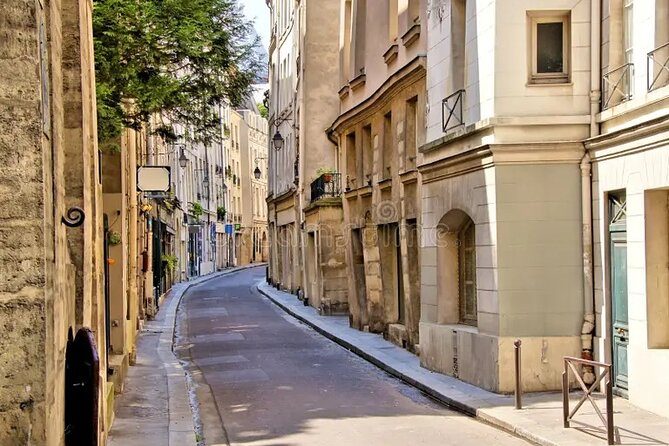
This is the kind of tour that helps you understand how Paris is laid out. You start in Montmartre, then walk and connect through several of the city’s most famous areas until you end near Notre-Dame on Île de la Cité. Instead of being stuck in one museum or one square, you get the city’s “map in motion.”
I like that the tour is designed to show you what’s where. By the time you reach the central landmarks, you’ll have already walked through the hill-and-city contrast that makes Paris feel like Paris.
You can also read our reviews of more walking tours in Paris



Your Guide, Ewan’s Pace, and What Private Really Changes
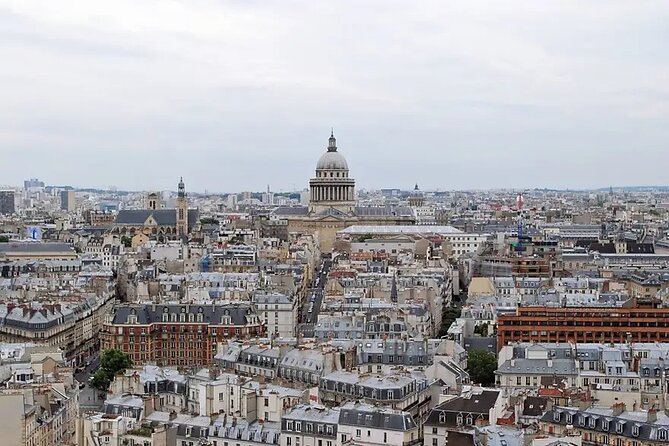
This is a private walking tour for groups up to 8, with a guide who’s there for your timing. That difference matters when you have questions or when you want to spend a little longer at one spot and skim another.
In particular, Ewan is an English-speaking guide who’s also fluent in French. From the way these tours are described, his style is easy going, and he can adapt when you ask for a more “other side of Paris” approach instead of only the standard list. If your group likes to ask why things are where they are, this format gives you room to do that.
A private setup also makes it easier to manage the day. If someone needs a quick pause, it’s simpler than with a larger group.
Price That Works If You Share It (And Feels Steep If You Don’t)
The price is $397.86 per group, for up to 8 people, for about 5 hours 30 minutes. That sounds high at first glance, but the pricing model matters.
If you fill the group (8 people), you’re roughly around $50 per person. If it’s only 2 or 3 people, the per-person cost jumps fast. So this is best when you’re traveling with a family, a small group of friends, or another couple who wants to split the cost.
What you’re really paying for here is time and navigation. You’re buying someone to connect the dots across multiple neighborhoods, while you walk instead of trying to stitch together a do-it-yourself route with constant map-checking.
Meeting at Anvers (75018) and Using the Metro the Right Way

The tour starts at Anvers 75018, Paris, and ends in front of Notre-Dame Cathedral on Île de la Cité. Even though it’s a walking tour, the day includes metro time, which is smart for covering Paris without turning the tour into a full-day endurance test.
Here’s the practical point: you’ll need a Mobelis metro ticket, which costs 8.40. Public transport isn’t included, so don’t assume you’ll be handed anything at the start.
Also, bring small “street-smart” basics. Since snacks aren’t included, plan a simple stop for water. And since Montmartre is involved early, shoes with solid grip are a must.
Montmartre First: History, Views, and the Artist Side of the Hill
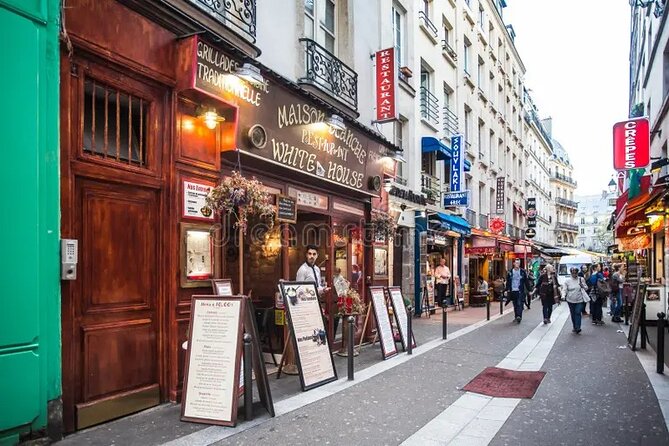
Montmartre is where the tour earns its keep. It’s not just a scenic area; it’s a whole layered story—art, famous nightlife, and that hill-top neighborhood identity that still shows up in the streets.
You begin with Montmartre itself and the surrounding history. Then you move into the area’s signature sights, starting with Sacré-Cœur.
You can also read our reviews of more private tours in Paris






Sacré-Cœur Visit (Short, but Worth It)
You’ll spend about 15 minutes at Basilique du Sacre-Coeur de Montmartre. The time is short, but it’s a strong early anchor because the cathedral is a visual reset point after the street-level Montmartre wander.
If you’re visiting for the first time, this stop gives you a good orientation to the hill and the view corridors.
Place du Tertre: Where the Street Becomes the Show
Next is Place du Tertre, a market square now filled with artists. Even if you don’t buy anything, it’s a great place to watch how the neighborhood still performs for visitors and keeps its creative identity.
This is also one of those stops that’s easy to enjoy even if your group energy is mixed. It’s outdoors, you can stand, look, and soak it in without needing to commit to a long time inside.
Vigne du Clos Montmartre: The Last Vineyard Detail
You’ll also visit Vigne du Clos Montmartre, described as the last vineyard in Montmartre. It’s the kind of detail that makes your brain go, wait, Paris had vineyards here. It adds a different layer to the neighborhood beyond art and nightlife.
Even in a short stop, it’s memorable because it’s unexpected and very specific to the area.
Cabarets, Dalida, and the Little Things That Add Personality
Montmartre is full of “name” spots, but the tour keeps the focus on places tied to artists and stories rather than only sweeping views.
Au Lapin Agile: Old Cabaret, No Inside Time
You’ll stop at Au Lapin Agile, the oldest cabaret in Montmartre. The tour includes a view from the exterior only, and it doesn’t include going inside or seeing a show.
That’s actually a good heads-up for your expectations. If you want performance time, you’d need a separate plan. But even outside, it’s a fun stop because it’s tied to a long streak of artists who came through this neighborhood.
Place Dalida and Two Dalida-Linked Stops
You’ll see Place Dalida with the bust of Dalida. Then later you’ll also visit La Maison de Dalida. Two stops tied to one pop icon might sound repetitive, but it works because they’re separate moments in the streetscape, and it helps you understand how a modern celebrity can become part of a neighborhood’s identity.
Maison Rose (Emily in Paris Mention) and Le Passe-Muraille
You’ll also see La Petite Maison Rose de Montmartre, which has been featured in Emily in Paris. The tour places it in context by connecting it to the artist Maurice Utrillo.
Then there’s Le Passe-Muraille, a statue tied to a celebrated Marcel Aymé story. Stops like this are great because they don’t just say look at the building. They tell you why people talk about it.
Le Moulin de la Galette to the Bateau-Lavoir: Art Stops That Feel Like Walk-Through Stories
After the Dalida and sculpture stops, the tour moves toward places that connect Montmartre with iconic art history.
Le Moulin de la Galette: Montmartre’s Last Windmill
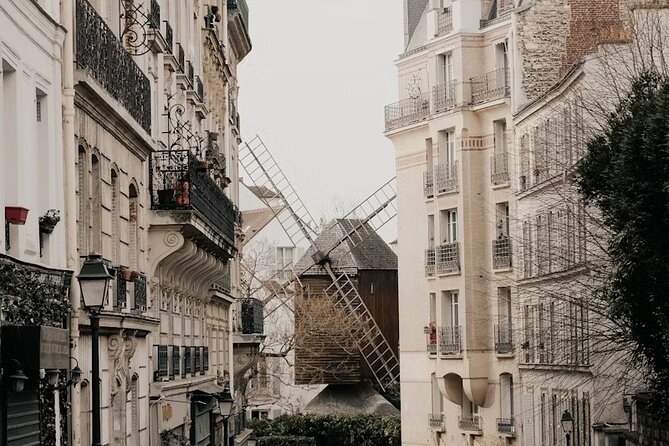
You’ll visit Le Moulin de la Galette, described as Montmartre’s last remaining windmill. It once was the setting for the Bal au Moulin de la Galette, and it’s now a restaurant.
This is one of those spots where you’ll get the “yes, I’ve seen this in art” feeling even if you don’t know the details. It’s also a good pause point because it’s a visually strong focal point.
Le Bateau-Lavoir: Picasso, Modigliani, and Apollinaire Tied Together
Next is Le Bateau-Lavoir, known as a studio area for Picasso, Modigliani, and Apollinaire. Again, it’s listed as a stop where you’ll spend a short time, but it’s packed with name recognition that adds meaning to what you’re seeing.
If you like art history but don’t want to sit through museum tickets, this kind of street-level context can be the best compromise.
Café des Deux Moulins and Amélie: Film Locations Done the Walk-Friendly Way
The tour includes Café des Deux Moulins, described as a filming location of Amélie. This is smart for two reasons.
First, it’s recognizable if you’ve seen the film. Second, it’s a reminder that Paris isn’t just a museum city; it’s a living set that shows up in pop culture.
It’s also a nice break from the statue-and-building sequence, because cafés and squares are natural places to pause, breathe, and look up and around.
Moulin Rouge From the Outside Only, Then Toward the River
You’ll stop at Moulin Rouge and view it from the outside only, with no included entry.
This is a common decision for half-day walks like this. Going inside would eat time, and with the number of stops planned, the tour stays focused on quick, high-impact moments rather than deep-ticket experiences.
After that, the route continues toward the center with a Tuileries Garden pause, setting you up for bigger landmarks.
Tuileries Gardens, Arc de Triomphe, Champs-Élysées, and the Eiffel Moment
One of the nicest transitions in the day is getting to Tuileries Garden. The tour includes a 20-minute stroll there, which gives you a calmer break before the traffic-heavy landmark sequence.
Then you hit Arc de Triomphe and Champs-Élysées. Even without extra ticket time, these stops are valuable because they help you place Paris in your mind: big monuments, straight avenues, and the city’s grand scale.
Eiffel Tower Viewing: From Trocadéro and Then Walking Across
You’ll view the Eiffel Tower from the Trocadero area, then walk across the river. You will not go up the tower on this occasion.
This is the right kind of Eiffel plan for a half-day, especially if you’re trying to see more than just one icon. You get the visual hit and the geographic connection without turning your time into a line-and-elevator day.
Quartier Latin and Notre-Dame: Big Names, Short Time, Outside Access
Next you head to Quartier Latin, with about 40 minutes to stroll through the neighborhood’s streets. This is a good section for slower walking and for soaking up atmosphere, because it’s less about one single photo spot and more about streets and corners.
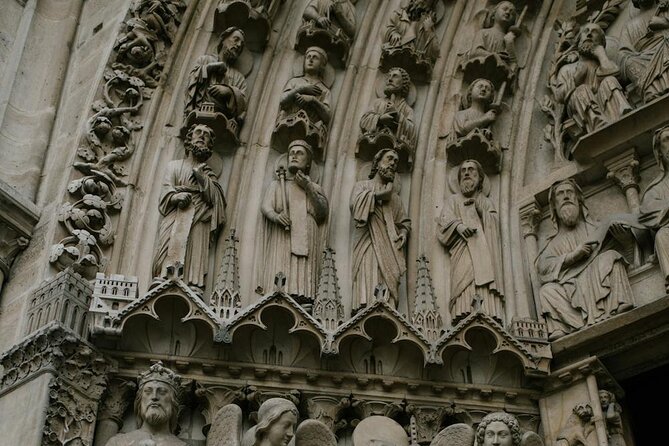
After that comes Cathedrale Notre-Dame de Paris. The tour says it covers the cathedral’s history and that access inside Notre-Dame Cathedral isn’t included. So you’re there for the outside experience and the story behind it, not an interior visit.
You’ll finish with another outside look near the Louvre area. The Louvre is listed twice as an exterior view moment: once earlier as a 15-minute building-history stop, and later again at the end as a final exterior finish.
Ending in front of Notre-Dame Cathedral on Île de la Cité gives your day a strong “Paris center” closure.
What This Tour Includes Versus What You Should Plan Separately
This tour is built around walking and orientation. It includes a private guide and a mobile ticket.
It does not include:
- Snacks
- Public transport (metro ticket needed: Mobelis 8.40)
- Entrance tickets to attractions
- Access inside of Notre-Dame Cathedral
- Entry to major attractions like the Louvre and the Eiffel Tower (you view from outside / do not go up)
So think of this as a “see it, place it, understand it” day. If you want museum rooms, stained-glass time, or elevator-and-chimes moments, you’ll need separate plans for those.
Who This Walk Is Best For (and Who Might Want Something Else)
This fits best if you want:
- A first-time visitor way to connect Montmartre to central Paris
- A private guide who can answer questions in English and adjust pacing
- A route that hits famous names quickly without requiring a big-ticket museum schedule
It may not be ideal if:
- Your group strongly wants interior visits to Notre-Dame or the Louvre
- You hate walking hills and steps (Montmartre is early)
- You want a slow, linger-all-day style with long sit-down breaks
If you’re traveling with mixed ages or anyone with limited mobility, stick to the moderate fitness note and be honest about the hill portion.
Should You Book Black Cat Tours for This Half-Day Private Walk?
I’d book this if you want to get your bearings fast and still have the comfort of a private English guide. The route is full of recognizable Paris moments, but it doesn’t waste your time by forcing interior tickets you might not want.
It’s also good value when you can share the group cost. If you’re just one or two people, it can still be worth it if you strongly value guided navigation and the ability to ask questions, but the math is less forgiving.
If your dream day is Louvre inside hours or Notre-Dame inside time, you’ll probably want a different kind of tour. This one is about the walk, the layout, and the story points you can experience on the street.
FAQ
Is this tour private?
Yes. It’s a private walking tour for groups up to 8 travelers.
How long is the tour?
The tour runs about 5 hours 30 minutes.
What’s included in the price?
The price includes a walking tour with a mobile ticket. Public transport, snacks, attraction entrances, and some interior access are not included.
Do we go inside Notre-Dame Cathedral or the Louvre?
No. The tour provides history and views, but access inside Notre-Dame Cathedral is not included, and the Louvre stops are described as exterior viewing only.
Do we see the Eiffel Tower up close, and do we go up it?
You’ll view the Eiffel Tower from the Trocadero and then walk across the river, but you will not go up the tower.
Is public transportation included?
Public transport isn’t included. The tour notes you’ll take the metro and that you need a Mobelis ticket costing 8.40.
Where do we meet and where does the tour end?
You meet at Anvers 75018 Paris, France and end in front of Notre Dame Cathedral on Île de la Cité, Paris.