REVIEW · PARIS
Le Marais/Paris – The Historic, Trendy, Jewish, LGBT district
Book on Viator →Bookable on Viator
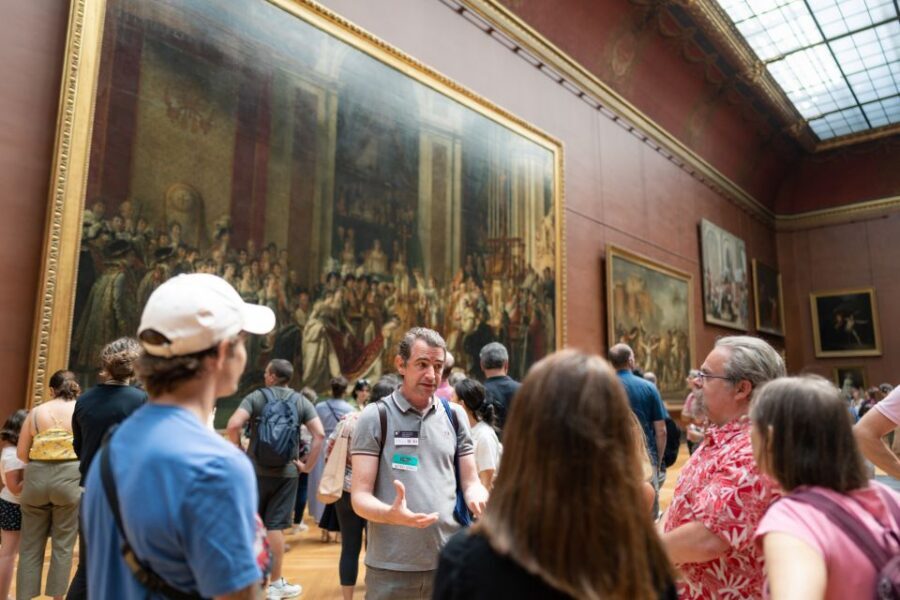
Time travel is easier than you think. This small-group, English-language walk turns Le Marais Jewish and LGBT district into a story you can see, from stately squares to quiet side streets. I love how the route starts at Place des Vosges, where writers and French history overlap, and I also love the way the guide connects architecture to everyday life, not just facts.
One thing to plan for: the tour is mostly on foot, and it’s easy to feel the cold if you dress lightly. Also, snacks and coffee are not included, so build in time to buy something on your own if you want a longer pause at the food shops.
In This Review
- Key Points That Make This Walk Worth Your Time
- Getting Oriented in Le Marais, One Street at a Time
- Place des Vosges: The Square Where Stories Start
- French Hotel Particuliers and the Art of the Narrow Streets
- The Jewish Quarter: Courtyards, Gardens, and Food You Can Smell
- Where the LGBT Story Shows Up in the Marais
- What the Tour Includes (and What You’ll Pay For Yourself)
- Meeting Place to Final Stop: A Route That Ends in a Useful Spot
- Weather and Pace: How to Make the Most of the Time
- Who Should Book This Le Marais Walk?
- Should You Book This Le Marais Tour?
- FAQ
- How long is the Le Marais tour?
- How much does it cost?
- Is the tour in English?
- Is there a mobile ticket?
- Where do I meet and where does the tour end?
- How large is the group?
- Are snacks or coffee included?
- What places will we see during the walk?
- Can I cancel for a full refund?
Key Points That Make This Walk Worth Your Time
- Small group size (max 10) helps the guide tailor the pace and what you focus on.
- Two-hour route with major neighborhoods covered: Place des Vosges, core Marais streets, and the Jewish quarter.
- Hotel particuliers and courtyards are where the charm lives, not just the big monuments.
- Architecture + culture connections (kings, revolutions, Jewish immigration, and LGBT context) make the area click.
- Strong guide track record, with a 4.9 rating and 99% recommendation mentioned in the tour stats.
- Free to view stops in open areas means your money goes to the guide, not entrance fees.
Getting Oriented in Le Marais, One Street at a Time
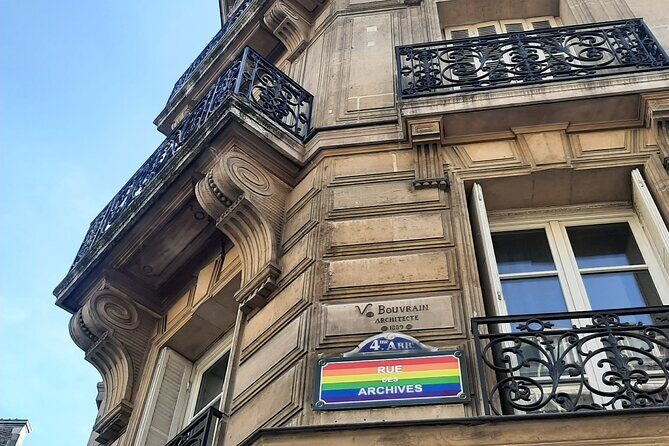
Le Marais can feel like Paris in fast-forward: old stones, stylish shops, and sudden pockets of quiet. The big win here is having a guide who helps you read the neighborhood as you walk. You’re not just passing buildings—you’re learning what you’re looking at and why it mattered.
The group stays small (up to 10), so you’re more likely to get a tour that matches your interests. In the feedback, guides like Jill and Eric are praised for adjusting the plan on the spot—whether that means slowing down for questions or shifting attention toward the Jewish quarter.
And yes, it’s a walking experience. Plan for comfortable shoes and layers. This is the kind of tour where you’ll want to look up often, and you can’t do that smoothly if your feet are screaming.
You can also read our reviews of more historical tours in Paris



Place des Vosges: The Square Where Stories Start
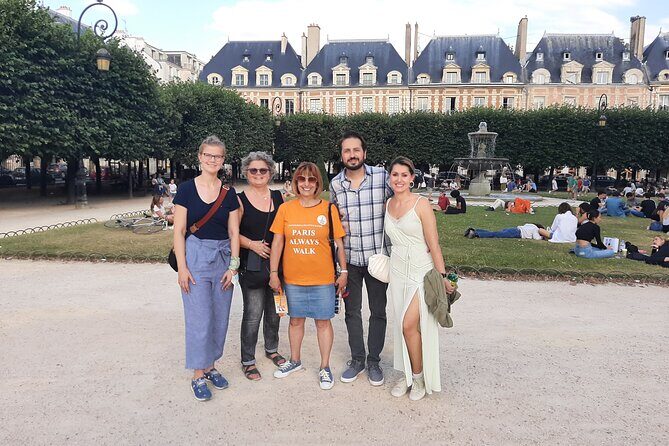
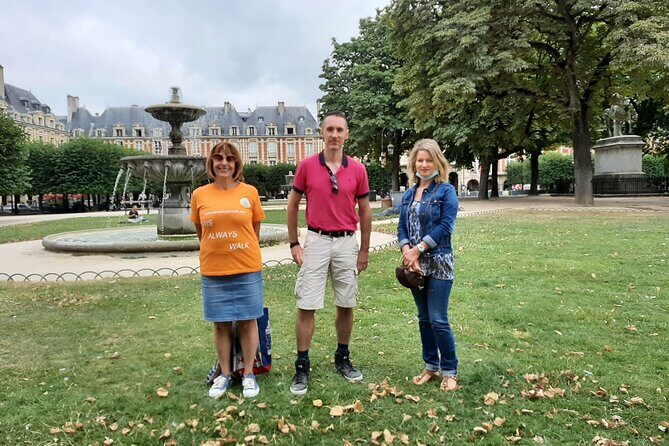
You begin at Place des Vosges, a square so classic it can fool you into thinking it’s just scenery. But it’s a living time capsule. The square was once called Place Royale, and the connection to Victor Hugo gives you a direct line into 19th-century literary France.
Here’s what you should focus on during your walk around the square:
- Notice the uniform façades and the way the space is planned.
- Listen for the guide’s explanation of how this area became part of France’s cultural identity.
- Keep your eyes open for modern contrasts too, since art galleries ring the area.
It’s about 20 minutes, and there’s no ticket cost for admiring the square. That makes it a smart early stop: you get a foothold in the neighborhood before you start winding into the narrower Marais streets.
French Hotel Particuliers and the Art of the Narrow Streets
After Place des Vosges, you move into the core Marais. This is where the district starts to feel more like a maze—in the best way. The guide focuses on French aristocratic and royal architecture, including hotel particuliers, which are urban mansions built for wealthy families.
Why this matters to you: in Paris, grand buildings can turn into background noise if you only glance at façades. With a guide, you start seeing patterns—how these grand homes relate to the street, and how the neighborhood’s layout reflects older social life.
Expect a walk through narrow streets with pauses for important details. This segment is around 15 minutes and is mostly about getting you to recognize architectural cues fast. If you like history, you’ll connect the dots. If you like design, you’ll start noticing proportion, materials, and how the buildings hold their presence.
The Jewish Quarter: Courtyards, Gardens, and Food You Can Smell
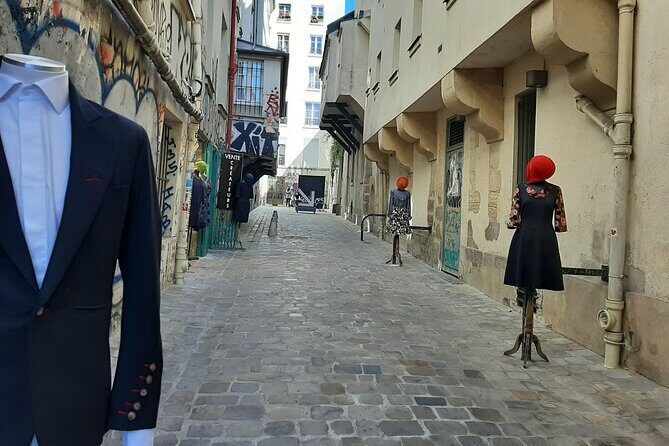
Next comes the Jewish quarter of the Marais. This portion is designed to take you off the busiest tourist routes and into more personal spaces—courtyards and gardens tucked between streets.
This stop is about atmosphere, not just sightseeing. The guide helps you spot where people live their routines, and you’ll pass typical food stores and refined casher pastry options along the way. That means your senses do part of the learning for you.
Time here is about 20 minutes. It’s long enough to feel the district’s rhythm, but short enough to keep the tour moving. If you’re a food lover, this is where you’ll likely want to linger after the walk ends—because the smells and shopfronts don’t stop once the guide moves on.
If you want a practical plan: decide ahead of time whether you want to sample something during the tour or save it for later. Since snacks and drinks are not included, you’ll do better if you’re intentional.
Where the LGBT Story Shows Up in the Marais

This experience is marketed around the historic, trendy Marais with Jewish and LGBT cultural context. Even if you’re not seeking a specific landmark, you’ll get the broader picture through the guide’s storytelling.
In the feedback, Jill and Eric are both praised for explaining LGBT context alongside the neighborhood’s other historical layers. You’ll leave with a better sense of how the Marais became a place where different communities could be visible, form networks, and leave traces in the city fabric.
One practical note: LGBT history is often presented through the way neighborhoods evolved—shops, social spaces, and the shifting use of street life—rather than one single “must-see” sign. So keep an open mind and let the guide connect the dots for you.






What the Tour Includes (and What You’ll Pay For Yourself)
You pay $48.39 per person for a guided walk lasting roughly 1 hour 30 minutes to 2 hours. The guide is the main cost driver here, and that’s the right place to spend your money if you care about meaning, not just photos.
Included:
- Tour guide
- Mobile ticket
- English language experience
Not included:
- Snacks
- Coffee and/or tea
So, what’s the value? The stops are largely open-air and free to view, so you’re not losing time or cash to admission lines. Instead, you’re getting interpretation: why Victor Hugo matters here, why hotel particuliers show elite urban life, and how the Jewish quarter’s courtyards and food culture fit into the broader story of the Marais.
Also, the group limit is small. In a neighborhood like Le Marais, a larger group can mean you spend more time navigating crowds than learning. This one is capped at 10, which usually makes the walk feel smoother.
Meeting Place to Final Stop: A Route That Ends in a Useful Spot
You start at Paroisse Saint-Paul Saint-Louis, 99 Rue Saint-Antoine, 75004 Paris. That area puts you right into the Marais rhythm quickly, so you’re not traveling far to begin.
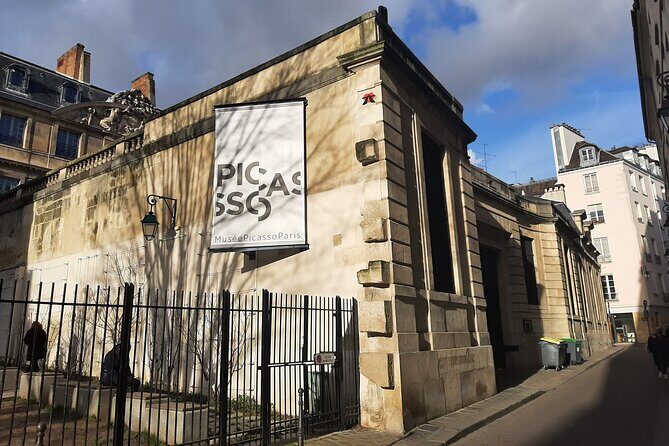
You finish at Musée des Archives Nationales – Hôtel de Soubise, 60 Rue des Francs Bourgeois, 75003 Paris. Ending here is convenient if you want to keep exploring right away. You’ll likely be close enough to continue on your own through more of the Marais without needing a big transport jump.
Since the tour is near public transportation, you can also build an easy plan around it—especially if you’re pairing this with museums or shopping after.
Weather and Pace: How to Make the Most of the Time
Le Marais streets can be slippery when it rains, and cold weather can make standing still less fun. In the feedback, Jill is repeatedly praised for staying engaging even when conditions aren’t perfect. That helps, because part of the job of a good guide is keeping your attention when you’d rather rush to shelter.
Still, keep your expectations realistic. This is not a sit-and-talk lecture. It’s a walking tour with short stops, designed for movement and momentum. If you hate walking, or if you need long seated breaks, this may feel tight.
A simple strategy:
- Wear layers and shoes you can walk in for a couple hours.
- Bring water if it’s warm.
- If you want pastry, decide whether you’ll buy it during the Jewish quarter portion or after you end.
Who Should Book This Le Marais Walk?
This tour is a great fit if you want:
- A focused introduction to Le Marais with Jewish and LGBT context
- Architecture and history explained in a way that matches what you see on the street
- A small-group experience with a guide who can tailor the route
It’s also strong for families and mixed-age groups. In the feedback, guides were described as able to engage kids and still cover history meaningfully. If you’re traveling with a teen who wants stories, or a younger kid who needs interaction, a tailored guide can make a big difference.
If you’re the kind of traveler who wants a list of museums and major monuments only, you might prefer a different tour. This one is about the streets, the courtyards, and the connections between people and buildings.
Should You Book This Le Marais Tour?
If you want a smart, efficient way to understand Le Marais beyond postcard sights, I’d book it. The price is fair for a 1.5–2 hour guided experience, and the tour’s design keeps you focused on the spots that make the neighborhood legible: Place des Vosges, aristocratic architecture on narrow streets, and the Jewish quarter’s courtyards and food shops.
Book it especially if:
- You care about Jewish and LGBT cultural context in Paris
- You like architecture and want it explained in plain terms
- You prefer small groups so the guide can answer questions
Skip it if:
- You need lots of breaks and sitting time
- You want a tour that includes snacks or drinks as part of the price
- You dislike walking for roughly two hours
If you can handle cold weather and you’re willing to spend a little on pastry or coffee afterward, this is a high-value way to spend part of your Paris trip in a section of the city that still feels like itself.
FAQ
How long is the Le Marais tour?
The duration is approximately 1 hour 30 minutes to 2 hours.
How much does it cost?
The price is $48.39 per person.
Is the tour in English?
Yes, the tour is offered in English.
Is there a mobile ticket?
Yes, the tour includes a mobile ticket.
Where do I meet and where does the tour end?
You start at Paroisse Saint-Paul Saint-Louis, 99 Rue Saint-Antoine, 75004 Paris. The tour ends at Musée des Archives Nationales – Hôtel de Soubise, 60 Rue des Francs Bourgeois, 75003 Paris.
How large is the group?
The tour has a maximum of 10 travelers.
Are snacks or coffee included?
No. Snacks and coffee and/or tea are not included.
What places will we see during the walk?
You’ll visit Place des Vosges, explore Le Marais streets and architecture, and see the Jewish Quarter area.
Can I cancel for a full refund?
Yes. You can cancel up to 24 hours in advance for a full refund.