REVIEW · PARIS
Paris – Historic City Center Walking Tour
Book on Viator →Operated by StellarTours · Bookable on Viator
Paris starts on a tiny island. This walking tour focuses on the Île de la Cité and the surrounding streets and bridges, so Paris history lands at human scale instead of feeling like a museum checklist. You’ll hear how the area changed from ancient Parisii worship to major Roman-era shifts, then onward through medieval power and modern rebuilding.
Two things I love: the Notre-Dame story, paced as a clear timeline from 1163 through Napoleon and the French Revolution to the 2019 fire, and the fact that the guide keeps everything easy to follow in English. Guides like Michael, Daniel, and Alberto come up in the experiences people describe, and the common thread is simple: energetic, clear explanations and solid practical suggestions for what to do next.
One consideration is the finish point. The walk ends near the Tuileries, so you’ll want a plan for getting to dinner, a show, or your next sightseeing stop from there rather than expecting to return to the start.
In This Review
- Key highlights worth planning around
- Île de la Cité: why this island sets the whole mood
- Notre-Dame: the cathedral as a story from 1163 to today
- St. Michel fountain and Pont Saint-Michel: Paris shows its wartime scars
- Place Dauphine and Henri IV: a calmer pocket with big river views
- Pont Neuf and the Louvre stories you can use outside the museum
- Arc de Triomphe du Carrousel, the Tuileries, and Eiffel Tower views
- What the tour is like in real life: pacing, photos, and guide-led tips
- Price and value: what $156 buys you (and what it doesn’t)
- Should you book this Paris historic center walking tour?
- FAQ
- How long is the Paris Historic City Center Walking Tour?
- What does the tour cost?
- Is the tour private?
- Where does the tour start and end?
- Do I get picked up or dropped off?
- Does the tour include entry into the Louvre Museum?
- Is the tour offered in English?
- Is a mobile ticket provided?
- Can I cancel for free?
Key highlights worth planning around

- Île de la Cité first: the island core of Paris, tied to Parisii temples and the later Roman Empire
- Notre-Dame as a timeline: 1163 construction, the French Revolution, Napoleon’s coronation, and the 2019 fire
- Pont Saint-Michel WW2 detail: bullet holes are pointed out, with context on Paris during the war
- Henri IV walking loop: Place Dauphine, Henri IV’s equestrian statue, and the view-and-story combo across the Seine
- Louvre without entering: you get key stories about Leonardo and the Louvre’s origins, plus views of the glass pyramid
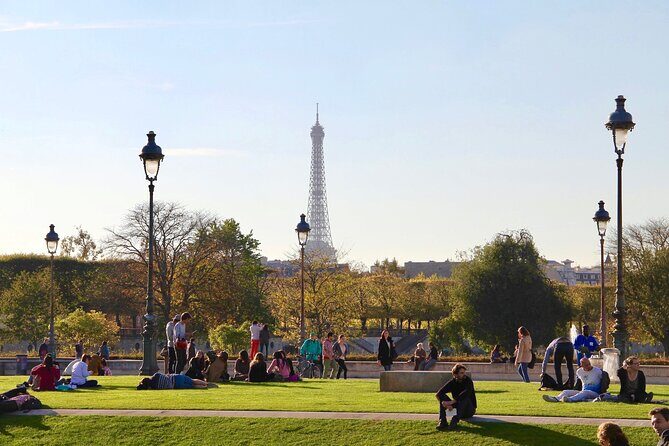
- Tuileries to Eiffel Tower views: the walk continues to royal gardens for big sightlines, not just street-level landmarks
Île de la Cité: why this island sets the whole mood
You start on Île de la Cité, the island that’s often described as Paris’s true center. The tour frames it as more than “a place to take photos.” You get the big change over time: first the Parisii built temples there more than 2000 years ago, then the area shifted under the Roman Empire. It’s a smart way to begin, because you’re not just standing at a point on a map—you’re watching how the city’s core logic formed.
This first stretch also helps you get your bearings fast. A lot of Paris sightseeing starts with icons. This one starts with the “why here” part. Once you understand why Île de la Cité matters, the rest of the walk makes more sense: why these bridges are where they are, why the cathedral dominates this skyline, and why the streets nearby feel like they were laid out for centuries of movement.
Another small but real win: the tour is intimate and guide-led. You’re not wandering alone trying to guess what to notice next. You’re getting a thread—one landmark connecting to the next—so you’re never stuck thinking, now what?
You can also read our reviews of more walking tours in Paris



Notre-Dame: the cathedral as a story from 1163 to today
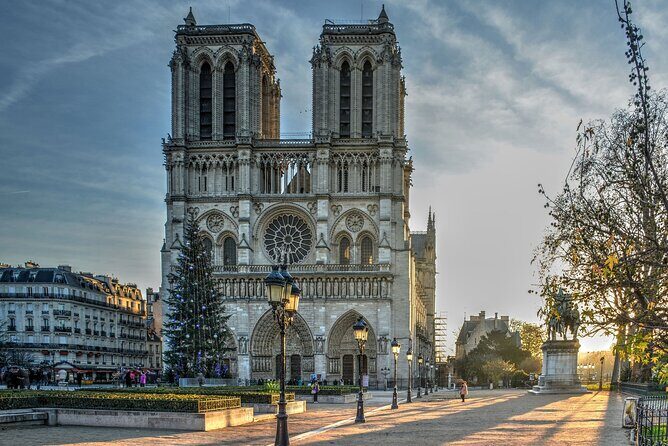
Next comes Cathedrale Notre-Dame de Paris, and the key is the way the guide tells it. Instead of treating Notre-Dame like a single moment in time, you get a full arc: construction starting in 1163, major historical turns (including the French Revolution), Napoleon’s coronation, and then the modern chapter that includes the 2019 fire.
If you’ve ever felt intimidated by famous buildings—like you need a background lecture first—this part helps. You’ll learn what the cathedral meant during each era, not just what year things happened. The guide also points out the kinds of details people tend to miss when they’re only thinking about getting the right angle for a picture.
Important practical note: the tour doesn’t require you to “do” the cathedral like an all-day project. It’s a walking tour built around seeing, learning, and moving. So if you want the big Notre-Dame context without committing to a long interior visit, this format fits.
St. Michel fountain and Pont Saint-Michel: Paris shows its wartime scars
From Notre-Dame you shift into the more human-scale streets and river crossings. The Fontaine Saint-Michel is a quick stop, but it has a purpose: it’s tied to the grand reconstruction of Paris. The guide uses stops like this to explain how the city repaired and rebuilt itself after major disruptions—something Paris does over and over.
Then you reach Pont Saint-Michel, where the tour gets very specific. You’ll observe bullet holes from World War II, and your guide explains why Paris was not destroyed during the war. It’s the kind of detail that changes how you look at a bridge. Suddenly it’s not just a nice view; it’s a record of survival.
This segment is also a good reminder that “historic center” doesn’t mean everything is old-only. You’re seeing how modern history has left marks in very practical urban places: bridges you cross every day without thinking about what happened beneath the surface.
If you’re into photography, this is also one of the most useful parts of the walk. The river angles here are classic, and the guide’s context helps you shoot with intention instead of random snaps.
Place Dauphine and Henri IV: a calmer pocket with big river views
After the bridge-and-history stops, the tour slows down in a good way at Place Dauphine. You walk inside the square, which is one of the first projects built by Henri IV. It’s a small shift, but it matters: you go from cathedral scale to a more intimate square where you can actually feel like you’ve found a pocket of Paris life.
This is also where restaurant timing starts to click. The tour frames Place Dauphine as a great spot for a tranquil lunch after the walk, and that matches what people tend to value from this experience: guide recommendations. One guide in particular is described as pointing people toward a bookstore for browsing and giving lunch suggestions that fit real walking-day logistics.
Then you move to Statue équestre d’Henri IV, with views toward the Seine. Henri IV may not be everyone’s first-day Paris obsession, but the guide connects his reign to what you’re seeing around you. It’s a nice way to feel how kings and city planning intersect—because the point isn’t to memorize a ruler’s biography. It’s to understand why the city looks the way it does in this area.
Pont Neuf and the Louvre stories you can use outside the museum
Pont Neuf is next, and it’s treated like a legend you can physically walk across. The guide calls it the oldest bridge in Paris and links it to Henri IV, including the detail that he finished the bridge in 1607. You’ll also hear the story about the tooth pullers of Paris. Yes, it’s strange. That’s why it works. People remember a bridge better when you learn the odd human detail attached to it.
After that, you get Louvre Museum context without going inside. The tour doesn’t include entry, so you won’t be stuck in museum lines or losing time to crowd flow. Instead, you get the true story of Leonardo Da Vinci and why the Mona Lisa became so famous, plus the role of Francis I in building the Louvre’s foundations as a fortress and palace.
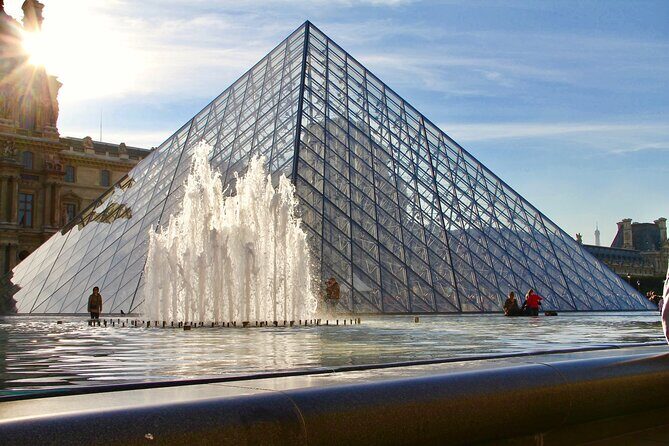
The stop is also tied to sightlines. You’ll see views of the glass pyramid while your guide points out what to look for and explains the surrounding meanings. This is ideal if you want Louvre knowledge but you’re trying to keep your day realistic.
A drawback to note upfront: if you were hoping for actual interior galleries, this tour won’t satisfy that. But if you want a strong framework for when you later choose a Louvre visit, this outside-the-walls format is a smart warm-up.
You can also read our reviews of more city tours in Paris





Arc de Triomphe du Carrousel, the Tuileries, and Eiffel Tower views
The walk continues with a sequence that feels like moving from political power to everyday Paris pleasure.
At Arc de Triomphe du Carrousel, you’ll learn how Napoleon’s monument reflects his rise as a master of Europe. It’s a short stop, but it helps connect the “Napoleon era” dots that already started during the Notre-Dame timeline.
Then you head toward the Tuileries. You’ll get the story that these gardens came from a tile factory to royal gardens, and you’ll also hear that the gardens were designed by the same garden designer behind Versailles. That connection matters because it explains why the Tuileries feels like a formal counterpart to grander royal grounds.
From there, you’re positioned for a key payoff: Eiffel Tower views. The tour brings you from the Tuileries area into angles where you can actually see the tower while your guide explains how Gustave Eiffel pulled off its construction in 1889. It’s one of those “big reveal” moments that never feels cheap, because you’re not just looking—you’re getting the why behind the engineering claim.
You also get to finish with momentum. By the time you reach the end near the Tuileries Garden, you’re close to public transport, which helps if you’ve got a museum, dinner reservation, or evening plan.
What the tour is like in real life: pacing, photos, and guide-led tips
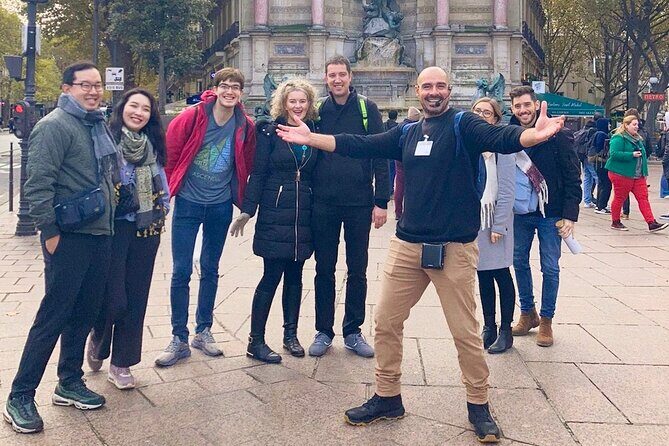
This experience is built as an on-your-feet history lesson. It’s around 2 hours 30 minutes, and the stops are spaced so you’re always moving without feeling rushed. Because it’s designed as a private walking tour for your group, you don’t have to squeeze your questions into a crowded schedule. You can ask clarifying stuff—like why a particular bridge matters or what a detail on Notre-Dame signals—without feeling like you’re hijacking the session.
The guide’s role is more than storytelling. People specifically mention restaurant and lunch recommendations, and even small “what to check out nearby” suggestions like a bookstore stop. That’s valuable because Paris has more options than time. A good guide helps you choose what matches your day and your walking comfort.
Photo reality check: you will have plenty of chances for pictures, but the tour doesn’t turn into a stop-and-start photo marathon. The best results will come from being present during the explanation. When the guide says to look for a thing—war damage, a timeline clue, a view angle—you’ll get better shots because you’ll know what you’re aiming for.
One more practical point: the tour ends near public transit. That’s convenient if you want to keep going after the walk. It also means you should think ahead about the next step, since you won’t finish at the original meeting point.
Price and value: what $156 buys you (and what it doesn’t)
At about $156.01 per person, this isn’t a “cheap walk” option. The value comes from three places: a certified expert guide, a private format for your group, and the specific focus on the historic center’s connected stories.
Here’s how to judge it fairly:
- If you’ll actually use the guide’s knowledge, ask questions, and want help with next-day plans, $156 can feel reasonable. You’re paying for interpretation, not just walking.
- The tour also saves you time on decisions. You get a curated sequence across Île de la Cité, Notre-Dame, multiple bridges, the Louvre area from the outside, and the Tuileries-to-Eiffel viewpoints.
- The tour does not include Louvre museum entry, so you’re not paying for ticketed access you won’t use.
Consider it less of a fit if you’re the kind of person who wants to “wander and read plaques.” In that case, a self-guided route could be cheaper. But if you want history translated into plain language while you move through the city’s most iconic radius, you’ll likely feel the money at work.
One timing note: this tour is commonly booked about 55 days in advance. If your dates are fixed, locking it in earlier gives you more control.
Should you book this Paris historic center walking tour?
Book it if you want a guided, connected history walk that starts at Île de la Cité and keeps moving through bridges, monuments, and royal garden views without dragging you into museum commitments. It’s a strong fit for first-time Paris visits, and it works well if you like your landmarks explained in plain English with practical suggestions for what to do next.
Skip (or choose a different style) if you mainly want museum entry time, especially inside the Louvre. This experience is about seeing and understanding from the streets and viewpoints, not about spending hours in galleries.
If you’re ready for a smart 2.5-hour route that helps Paris click, this is a very solid choice.
FAQ
How long is the Paris Historic City Center Walking Tour?
The tour runs about 2 hours 30 minutes.
What does the tour cost?
The price is $156.01 per person.
Is the tour private?
Yes. Only your group participates.
Where does the tour start and end?
It starts at Cité 75004 Paris, France and ends near the Tuileries Garden 75001 Paris, France.
Do I get picked up or dropped off?
No. Pickup and drop-off are not included.
Does the tour include entry into the Louvre Museum?
No. The tour does not include entering the Louvre Museum.
Is the tour offered in English?
Yes, it is offered in English.
Is a mobile ticket provided?
Yes, the tour uses a mobile ticket.
Can I cancel for free?
Yes. Free cancellation is available, and you can cancel up to 24 hours in advance for a full refund.