REVIEW · PARIS
Le Marais Private Walking Tour
Book on Viator →Operated by Paris in person · Bookable on Viator
Le Marais has a hidden timeline. This private, 2-hour walk turns Paris’s trendiest blocks into a clear story you can actually follow, linking noble mansions, the Jewish quarter, and today’s art-and-fashion scene. I love the private guide attention, and I love the art historian perspective that makes architecture and street-level details feel meaningful.
One thing to plan around: you’ll mainly see major museum sites from the outside, and food and drinks aren’t included.
In This Review
- Key takeaways before you book
- Why Le Marais feels different when you have a guide
- Private walking tour logistics that actually matter
- Stop-by-stop: what you’ll see and why it’s worth it
- Les Halles: old Paris energy at the start
- 4th Arrondissement / Hôtel-de-Ville: the city’s command center
- Centre Pompidou: the Marais gentrification story, seen from outside
- La Rue des Rosiers: the Jewish quarter and Pletzel memories
- Cour et jardin de l’Hôtel de Sully: a lesson in aristocratic architecture
- Place des Vosges: the former Place Royale, still the star
- Place de la Bastille: big history energy to end the walk
- The Marais transformation theme: what you’ll actually learn
- Why the guide’s focus on architecture matters
- Value check: is $403.34 per group a smart use of time?
- What could be a downside for you?
- Who this Le Marais tour suits best (and who should rethink)
- Should you book this private Le Marais walking tour?
- FAQ
- How long is the Le Marais private walking tour?
- How many people are in a group?
- What is the cost of the tour?
- Where do you meet and where does the tour end?
- What’s included in the price?
- Is food or drinks included?
- Do you visit Centre Pompidou inside?
- Do you get a mobile ticket?
- Is there a cancellation option?
Key takeaways before you book
- Private pacing for up to six people so you can ask questions and steer the walk a bit
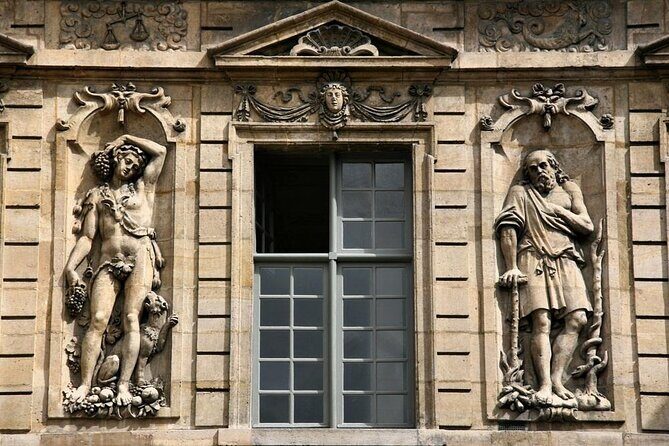
- An art historian guide who connects buildings to the people who lived in them
- Jewish quarter context around La Rue des Rosiers and the old Pletzel area
- Marais gentrification explained via Centre Pompidou (exterior only) linkages you’ll understand as you walk
- Major squares without the chaos including Place des Vosges and Place de la Bastille
- Mobile ticket + public-transport-friendly start at 14 Rue de Turbigo
Why Le Marais feels different when you have a guide
Le Marais isn’t just “pretty Paris.” It’s a neighborhood that keeps reinventing itself, and you can feel the timeline in the stones. On this private tour, the emphasis is on how the district changed—who had power there, who struggled there, and how art and fashion moved in later.
The big win here is that you don’t just get dates. You get connections. Your guide helps you read the Marais like a puzzle: a square here isn’t only a landmark; it’s a former royal stage. A street there isn’t only a stroll; it’s tied to a community’s memory. And a museum landmark nearby isn’t only a photo stop; it’s part of the Marais story.
If you’ve ever walked through Le Marais and thought, I like it, but I don’t get it… this tour is built for that exact moment.
You can also read our reviews of more walking tours in Paris



Private walking tour logistics that actually matter
This is a private experience for your group only, up to six people, and it runs about two hours. That group size is a sweet spot: small enough to stay flexible, big enough that you can share the cost without turning it into a solo-feel museum class.
Price is $403.34 per group. If you fill all six spots, that’s about $67 per person. If you’re just two people, it’s closer to $202 each—still workable if you really care about history, art, and getting the most out of the limited time you have in Paris.
The walk also assumes moderate physical fitness. It’s not described as strenuous, but you’ll be on your feet for the full route. Wear shoes you’d happily stand in for a couple hours, because Paris sidewalks don’t always play nice.
You’ll start at 14 Rue de Turbigo (75001) and finish at Place de la Bastille (75004). That finish matters. If you’re planning dinner right after, it’s smart to choose something near the Bastille area so you’re not scrambling with transit.
Stop-by-stop: what you’ll see and why it’s worth it
This route is designed to walk through the Marais’s big themes without overstuffing you. The timing is tight but not rushed, and each stop helps you understand the next one.
Les Halles: old Paris energy at the start
You begin at Les Halles, one of Paris’s oldest and most active areas. Even if you’ve passed by before, a guided walk changes the way you notice it. The point here isn’t shopping or spectacle—it’s context. Les Halles gives you a sense of Paris as a living city center, not just a museum.
This stop is short—about 20 minutes—so use it to get your bearings. When you do that, the rest of the walk clicks faster.
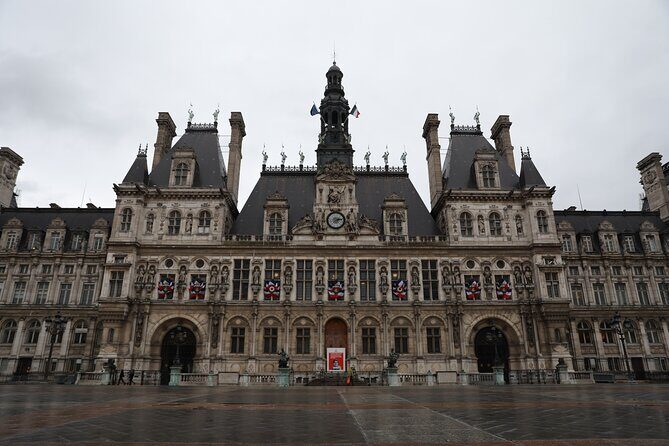
4th Arrondissement / Hôtel-de-Ville: the city’s command center
Next you head toward the Hôtel-de-Ville, the administrative center of the city. Your guide may frame it with a bit of humor, calling it something like the city’s second most important building. The joke lands because the building’s role is real: governance shapes how a neighborhood develops.
This segment is about 15 minutes, and it’s a good shift from “streets and stories” to “institutions and power.” It helps explain why some places get preserved, remade, or protected.
You can also read our reviews of more private tours in Paris






Centre Pompidou: the Marais gentrification story, seen from outside
Then comes Centre Pompidou, one of Paris’s major museum landmarks. Here’s the key detail: the tour focuses on the building from the outside only. The museum itself isn’t part of this experience, and admission is not included.
Why is that useful? Because seeing it externally helps you connect it to the Marais transformation theme. You’ll look at the location and think about what the museum meant for the neighborhood’s cultural shift—without the time pressure of a full museum visit.
If you love museums, you might add a separate visit later. But as a walking-tour stop, this makes sense: it gives you the cultural “why” without forcing you to choose between history and your feet.
La Rue des Rosiers: the Jewish quarter and Pletzel memories
Now you get to one of the most historically loaded streets in the area: La Rue des Rosiers. This is described as the center of Paris’s Jewish community and one of the oldest streets in the city. And it’s also where the tour ties in the Pletzel area—an old Jewish quarter layer that shaped the Marais in a very specific way.
This stop is around 10 minutes, but it’s the kind of short pause that makes the rest of the neighborhood feel less random. Even if you’ve heard about the Marais being “chic” today, this is where you remember it used to be home, work, and community life.
Cour et jardin de l’Hôtel de Sully: a lesson in aristocratic architecture
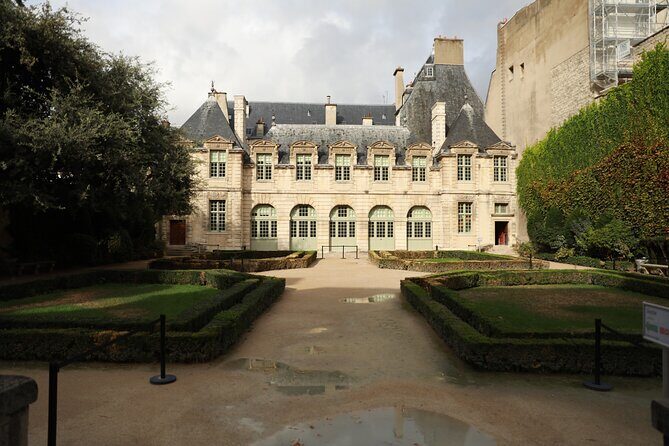
At about 15 minutes, you visit the cour et jardin of the Hôtel de Sully, a classic example of a 17th-century hôtel particulier—an aristocratic private mansion style.
This is the part where you start noticing the Marais’s “fancy bones.” A guided explanation helps you understand why these courtyards and mansions matter: they show how wealth, privacy, and power were built into the city fabric.
If you like architecture, you’ll feel your attention sharpen here.
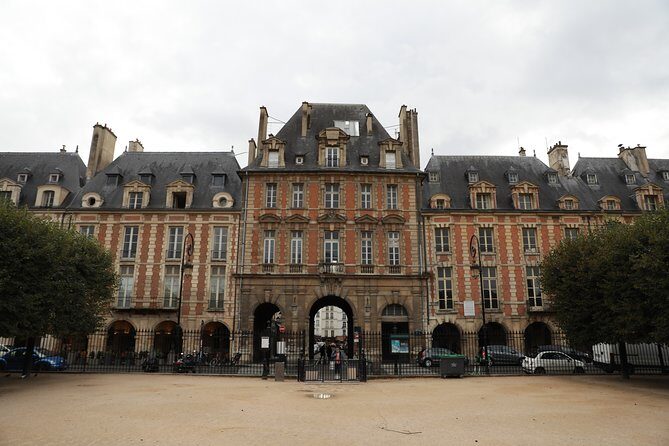
Place des Vosges: the former Place Royale, still the star
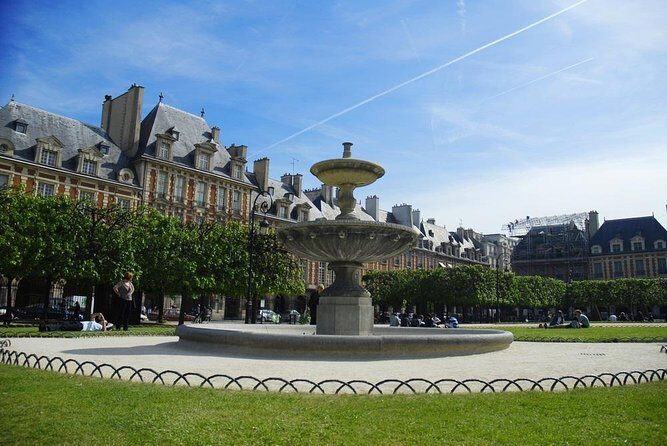
Next is Place des Vosges, about 20 minutes. It used to be known as Place Royale, and it’s now often referred to as the most beautiful square in the world—according to locals, of course.
A square is a great place for a guide-led story because it’s visible in all directions. From here, you can appreciate the design and symbolism without having to “hunt” for meaning. It’s also a natural pause point to take photos and reset your pace.
Place de la Bastille: big history energy to end the walk
You finish at Place de la Bastille (about 10 minutes). This is one of the most historically important sites in Paris—and likely beyond it. Ending here is smart because it gives the whole tour a punchy “day in Paris” finale: the walk moves from old urban life to royal squares and then to one of the city’s most decisive historical moments.
If you want to keep exploring after the tour, you’re already in a good position. The Bastille area is also a handy place to connect to transit.
The Marais transformation theme: what you’ll actually learn
The Marais has worn many identities. This tour frames it as a neighborhood that swung between extremes—aristocratic refuge, Jewish quarter, working-class hardship in later years, and now a magnet for art, fashion, and dining.
What I like about this approach is that it avoids the “everything is romantic” version of history. You’re shown how communities live in spaces, how streets develop reputations, and how design and institutions affect who gets to stay and who gets pushed out.
Why the guide’s focus on architecture matters
An art historian guide doesn’t just point at buildings. They help you connect what you see to why it happened. That’s the difference between a pretty walk and a satisfying one.
In past tours with guides such as Mila, the emphasis has been on communication that feels clear and personable. With Boris, the tours have been described as strong at blending old and newer areas plus architecture, architecture’s human stories, and the neighborhood’s change over time. One standout detail from Isadora is that she’s a PhD in history of arts specifically on Marais cultural heritage—so if your “why” questions matter to you, that’s a very targeted match. Stephanie has also been highlighted for linking stories behind sites with personal perspective and for coming in with a well-prepared walk that covers history and art with lots of anecdotes.
Even if you don’t meet those exact guides, the underlying style is consistent: stories that connect.
Value check: is $403.34 per group a smart use of time?
For a private, art-history-led walk, the price can feel steep until you calculate it by group size.
- Up to 6 people splits the cost in a way that can make this a strong deal versus booking separate museum guides.
- You’re getting two hours with dedicated attention, and the route is chosen so you cover several major Marais zones efficiently.
- The fact that Centre Pompidou is exterior-only keeps the schedule focused on the Marais story. If you want museum time too, you’ll likely pay more later—but you won’t waste this tour’s limited time.
If you’re traveling solo or as a couple and you’re not too focused on history/architecture, you might decide a group tour or self-guided walk plus one museum visit is more economical. But if you want to understand why the Marais became the Marais—this is the kind of private format that’s worth the money.
What could be a downside for you?
Two practical considerations:
- No food and drinks included. You’ll want to plan a snack stop or meal around the walk.
- Centre Pompidou is outside only and not included as a museum entry. If your dream is spending time inside, you’ll need to add another plan.
There’s also a small “how the walk starts” issue to keep in mind. One prior experience noted the guide could have offered more of an early map orientation. That doesn’t mean you won’t get one; it’s just a reminder to arrive with a little curiosity and confidence—then ask your guide right away to point out the route.
Who this Le Marais tour suits best (and who should rethink)
Book this if you:
- care about how neighborhoods change over time
- want an art-and-architecture lens, not just a photo walk
- prefer a private guide who can respond to your interests (this is exactly what the format is built for)
- like seeing “signature places” like Place des Vosges and ending at Place de la Bastille without dealing with tour crowds
Consider another option if you:
- only want museum time or food included in the price
- dislike walking for about two hours (even at a moderate pace)
- are traveling with a small group and price-per-person matters a lot
Should you book this private Le Marais walking tour?
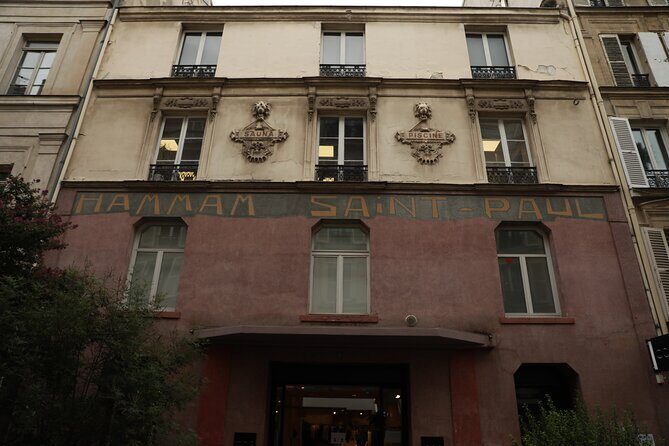
If your goal is to understand Le Marais—not just stroll it—this private walk is a solid choice. The combination of a private art historian guide, the route through key Marais anchors, and the focus on how identities shifted over time makes it more than a highlights tour.
I’d especially recommend it to couples, small groups, and anyone who enjoys architecture and historical context. If you want to spend time inside museums, plan that separately. Otherwise, you’ll leave with a clearer sense of why this neighborhood is so fashionable now—because you’ll see what came before.
FAQ
How long is the Le Marais private walking tour?
The tour lasts about 2 hours.
How many people are in a group?
It’s priced per group and can include up to 6 people.
What is the cost of the tour?
The price is $403.34 per group.
Where do you meet and where does the tour end?
The tour starts at 14 R. de Turbigo, 75001 Paris and ends at Place de la Bastille, 75004.
What’s included in the price?
You get a professional art historian guide and the private tour format.
Is food or drinks included?
No. Food and drinks are not included.
Do you visit Centre Pompidou inside?
Not on this tour. Centre Pompidou is discussed from the outside, and museum admission is not included.
Do you get a mobile ticket?
Yes, the tour uses a mobile ticket.
Is there a cancellation option?
Yes. You can cancel for a full refund up to 24 hours in advance. If you cancel less than 24 hours before the start time, the amount paid will not be refunded.