REVIEW · PARIS
Montmartre – A Canvas of Art and History (Self-Guided audio tour)
Book on Viator →Operated by sGuiding · Bookable on Viator
GPS takes the guesswork out of Montmartre. This self-guided tour uses GPS-triggered stories on your iOS phone so you can walk, stop, and listen without a fixed schedule. You’re basically free to wander through Paris’s most artistic hilltop neighborhood while a guide points out what matters.
I especially like two things: the 15 landmark route (including Sacré-Cœur and the Love Wall) and the way the audio adds context you’d miss if you just stroll. One more plus is that many of the named stops have free entry, so your money goes toward the guide experience, not museum tickets.
One possible drawback: you need to keep an eye on your phone setup—one past customer noted the activation code arrived by inbox message, and they didn’t notice it right away. Also, because you’re moving on foot, you’ll want to respect church hours so you don’t arrive when a site is closed.
In This Review
- Key Highlights You’ll Actually Use
- How This Self-Guided Montmartre Tour Really Works
- Price and Time: What You’re Paying For
- Start at Saint-Jean, Finish by Moulin Rouge
- Stop-by-Stop: What You’ll See and Why It Matters
- Église Saint-Jean de Montmartre: Art Nouveau Calm and a Launch Point
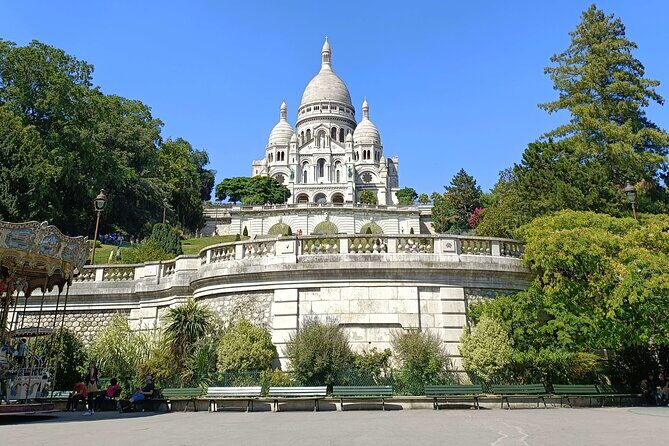
- Basilique du Sacré-Cœur: Views, Symbol, and Free Entry
- Eglise Saint-Pierre de Montmartre: A Church With Old Feel (and Limited Times)
- Le Mur des Je t’aime: Romance Wall, but Watch the Clock
- Café and Cabaret References: Amélie, Can-Can, and Artist Stories
- Musée de Montmartre: The Pink-Façade Stop for Art and District Context
- Place du Tertre: Artist Square Energy (Without Waiting for a Tour Group)
- Place Dalida and the Wall of Pop-Culture Memory
- Statue Moment: The Fictional Character and the Playful Side of Montmartre
- How to Make It Smooth on a Real Day
- Who This Tour Suits Best
- Should You Book This Montmartre Audio Tour?
Key Highlights You’ll Actually Use
- GPS-triggered audio so the story plays as you reach each spot
- 15 Montmartre sites that connect famous views with everyday corners
- Free entry at many stops, including Sacré-Cœur and the Love Wall
- Stop-and-go pacing for your group’s energy level, not a timetable
- Professional-guide storytelling delivered through your phone
How This Self-Guided Montmartre Tour Really Works
This tour is designed for independent walking. You’ll start at Église Saint-Jean de Montmartre and follow an audio path across Montmartre, with the narration tied to where you are (GPS). That means you don’t need to stare at a map the whole time or guess which alley comes next.
The audio is meant to feel like a guide speaking to you while you look around. You’ll get stories tied to what you can actually see in front of you—church details, street-level art references, and the personalities connected to famous venues.
Because it’s self-guided, you can build your own rhythm. If you want quick photo pauses, you can do that. If you want a slower listen at one stop, you can take it. It’s also a good format for mixed interests: one person wants views, another wants stories, and the audio keeps both moving forward.
You can also read our reviews of more guided tours in Paris



Price and Time: What You’re Paying For
At $5.78 per person and roughly 1–2 hours, this is an easy add-on to a Montmartre day. The value comes from the structure: 15 stops is enough to keep you oriented, but not so many that you feel rushed.
Also, a lot of the major sights on your route don’t require paid admission. Sacré-Cœur and the Love Wall are free, and the churches listed are free too. The only one called out as not included is the Musée de Montmartre—its ticket is separate—so you can decide how much museum time you want to add.
One practical note: Montmartre can be crowded, and streets can be steep. If you’re the type who stops often for photos, budget closer to the 2-hour end. If you listen and walk, you can likely keep it tighter.
Start at Saint-Jean, Finish by Moulin Rouge
The route begins at Église Saint-Jean de Montmartre, 19–21 Rue des Abbesses, in Paris’s Montmartre area. It’s open daily from 9:00 to 18:00 and the ticket is listed as free.
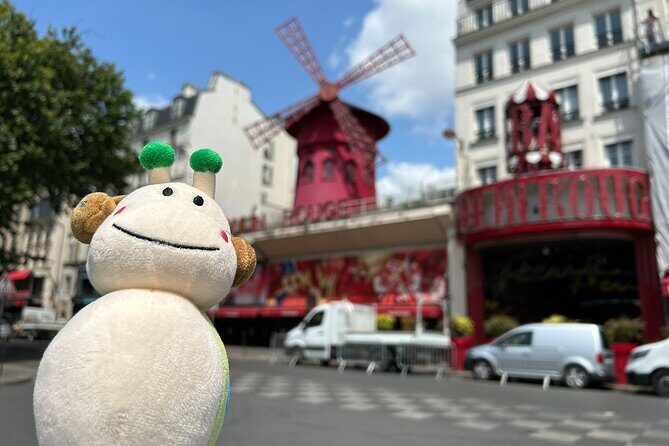
Your end point is Moulin Rouge, near the Blanche metro station (Line 2). That’s helpful because it gives you an easy way to finish and hop back onto transit without guessing what bus to take or how to exit the neighborhood.
This start-to-finish setup also makes sense for real sightseeing. Saint-Jean is a strong opening anchor, and finishing around Moulin Rouge keeps you close to one of the easiest metro connections.
Stop-by-Stop: What You’ll See and Why It Matters
Église Saint-Jean de Montmartre: Art Nouveau Calm and a Launch Point
You begin here for a reason. Saint-Jean is described as an Art Nouveau church with a calm, spiritual feel—exactly the kind of contrast that makes Montmartre click. You get your bearings in a place that feels purposeful, not just scenic.
It’s also a smart timing stop because it’s open Monday through Sunday, 9:00–18:00. If you start too late, you can still adjust your day, but starting earlier helps you catch this church before crowds and before other venues start to shift into evening hours.
Right near this area, your audio also points you toward a cluster of famous cultural references—including the oldest cabaret in Montmartre (described with evening hours) and the Café from the movie Amélie Poulain. Even if you’re not hunting for film locations, these references make the neighborhood feel lived-in, not just postcard-perfect.
You can also read our reviews of more historical tours in Paris






Basilique du Sacré-Cœur: Views, Symbol, and Free Entry
Next up is Basilique du Sacré-Cœur. Expect a major architectural moment on top of the hill, plus sweeping views. The tour lists free admission and gives generous hours: Monday–Sunday, 6:30–22:30.
This is one of those stops where the audio context helps. Without narration, you might only think Sacré-Cœur is impressive and then move on. With the guide, it’s easier to connect what you’re seeing to why this area became so symbolic.
Because it’s open late, you have flexibility. If you’re traveling with someone who hates early mornings, Sacré-Cœur late-day can still work well.
Eglise Saint-Pierre de Montmartre: A Church With Old Feel (and Limited Times)
From Sacré-Cœur you’ll head to Eglise Saint-Pierre de Montmartre, described as one of the oldest churches in Paris. That old identity matters here: it helps explain why Montmartre has kept its spiritual spots even as it became an art magnet.
The key thing is timing. It’s closed on Monday, and the other days have mixed hours (including Saturday and daily windows on Tuesday–Friday and Sunday). If you’re doing this tour on a day when it looks closed, you’ll want to adjust your pace earlier in the day so you don’t lose the stop entirely.
Also, because it’s free, it’s worth treating as a true pause. Spend a little time inside if it’s open—this is the kind of site where listening plus quiet observation works better than fast photo-taking.
Le Mur des Je t’aime: Romance Wall, but Watch the Clock
One of Montmartre’s most recognizable moments is the Mur des Je t’aime—a wall tied to romance and unity, where people leave messages. The tour lists it as free and notes it’s open Monday–Friday 08:00–17:30 and Saturday–Sunday 09:00–17:30.
That hours detail matters. If you come late in the day on a weekday, you can miss it. I like this stop for the way it’s interactive in a simple way. You’re not just reading plaques; you’re looking at messages people chose to express, right there in public.
It’s also a good reset point: after churches and architecture, this kind of human message stop keeps the walking feeling fresh.
Café and Cabaret References: Amélie, Can-Can, and Artist Stories
Your route includes audio moments tied to the cultural side of Montmartre—especially cabarets and the creative legacy.
One stop is described as the place tied to the French cancan origin, tied to a famous cabaret. Another audio moment connects you with the Café from Amélie Poulain, which can turn casual browsing into a fun reality check: you can see the real neighborhood behind the movie framing.
You’ll also get a story about a once-famous artists’ quarter, plus a reference to the oldest cabaret in Montmartre, with the tour listing evening hours that run on certain days (Tuesday, Thursday, and Saturday from 21:00 to 01:00).
The only drawback here: if you happen to visit on a day without those late hours, you may only get the story portion, not the atmosphere of night-life. Still, even during daytime, these references help you understand why the neighborhood became a stage for art and performance.
Musée de Montmartre: The Pink-Façade Stop for Art and District Context
Mid-route you’ll reach Musée de Montmartre, a museum focused on the district’s history, art, and culture. It’s open 10:00–19:00 every day on the schedule provided, and it’s not included in the tour price.
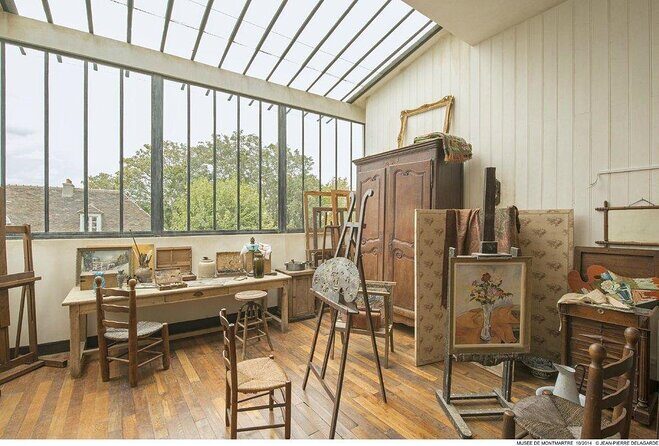
This museum is also described as having an iconic bright pink façade, and that matters because it gives you a clear visual marker in the middle of a walk-heavy neighborhood. If you enjoy understanding how Montmartre grew from working life into an art magnet, this is the place to slow down.
The trade-off is time and ticket cost. If you’re short on energy, you can skip it and still keep the main audio route. If you do go in, aim to be a little efficient with your listening so you don’t get stuck in the museum while the rest of your day runs away.
Place du Tertre: Artist Square Energy (Without Waiting for a Tour Group)
Place du Tertre is a must in Montmartre. It’s described as picturesque, with artists and cafés, and it’s timed as a short stop. That’s perfect because this square can pull your attention in every direction—street performers, quick sketches, and people-watching.
The guide audio here helps you see what you’re looking at. Instead of treating it like a single photo stop, you’ll understand why this square became a magnet for street artists in the first place.
If you’re sensitive to crowds, go slow and choose a moment when you can step to the side without blocking others. A self-guided stop can feel calmer if you let it.
Place Dalida and the Wall of Pop-Culture Memory
Another listed stop is Place Dalida, dedicated to the singer Dalida. It’s brief, but it adds a different kind of story to the neighborhood. Montmartre isn’t only churches and paintings; it’s also music and celebrity memory.
The tour also notes Dalida’s connection here: her house for more than 20 years. Even if you don’t know her music deeply, this kind of detail makes Montmartre feel like an actual neighborhood where famous people lived, not a theme park.
Statue Moment: The Fictional Character and the Playful Side of Montmartre
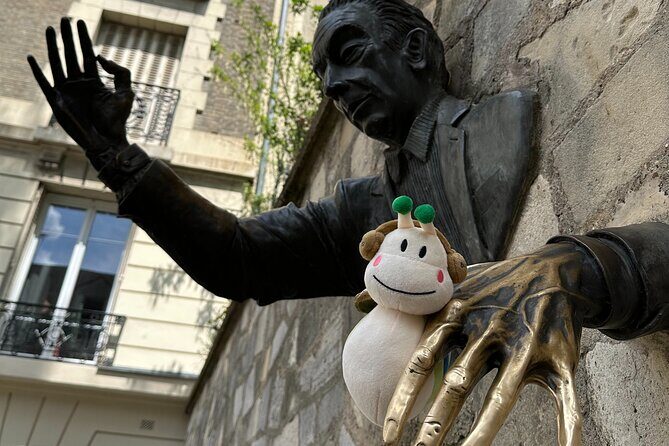
Your route includes a stop for a statue representing a fictional character who can pass through walls. This kind of small, quirky moment is why self-guided audio can beat a rigid group tour. You’re getting pop-cultural and artistic symbolism while walking through the real streets.
It’s also a good pause after heavier architecture. One short look at a statue plus a listening segment can refresh your eyes and keep your legs from turning into mashed potatoes.
How to Make It Smooth on a Real Day
Here’s how I’d set you up for an easy experience in Montmartre:
- Plan your start time so the church stops you care about are open. Some have clear windows, and one is closed on Monday.
- Keep your phone charged. You’ll be using GPS and audio the whole walk.
- Use the metro to anchor yourself. Starting near Rue des Abbesses and finishing near Blanche (Line 2) gives you a clean escape route.
- Expect hills and crowd slowdowns. The tour is designed for 1–2 hours, but Montmartre movement can easily stretch your pace.
The best part of this format is also what makes it succeed: you’re in control. If the square is too crowded, you can step aside and let the audio catch up while you wait for the flow.
Who This Tour Suits Best
This is a great fit if you like:
- Solo exploring or wandering with a small group that won’t match a strict schedule
- Art and place-based storytelling more than big bus-group explanations
- A route that mixes big name landmarks (Sacré-Cœur and the Love Wall) with cultural references (cafés, cabarets, and artist quarters)
It’s also a smart choice if you want to build Montmartre into a half-day. The start and end points near transit make it easier to connect to other plans.
If you only want one or two famous sights and nothing else, you might find this is more than you need. But if you like a walking route with guided context, it’s well matched.
Should You Book This Montmartre Audio Tour?
Yes, if you want a low-cost way to get oriented and learn while you walk. At $5.78, you’re paying for GPS-timed professional storytelling plus a structured route with plenty of free stops. That’s strong value for a neighborhood that can otherwise feel like a beautiful maze.
I’d skip it only if you prefer a live guide and hate any dependence on phone access or timing. One small caution: check your inbox for the activation code before you go, so you’re not troubleshooting at the start of your walk.
If your goal is to experience Montmartre on your terms—views, churches, and the cultural references that make the hill feel like it has a pulse—this one is an easy yes.