REVIEW · PARIS
Paris Ile-de-la-Cité Walking Tour: Max 6 People Group or Private
Book on Viator →Operated by LivTours · Bookable on Viator
Paris’s history starts in the river. This Île de la Cité walking tour is built around the big, scenic payoff: views over the Seine and a clear route through the most story-heavy part of central Paris. You’ll also get local tips and recommendations from a Parisian guide, so the time isn’t just spent looking at landmarks, but learning how locals think about them.
Two things I really liked: the small group of up to 6 keeps the pace comfortable and makes it easier to ask questions, and you get a guided focus on the details you’d otherwise miss. I especially enjoyed hearing how guides connect what you see outside—like soaring Gothic design elements—to what’s happening now, including rebuilding efforts.
One consideration: you won’t rely on “going in” at all stops. Notre-Dame is temporarily closed to the public, and admission tickets are not included for key stops, so plan for mostly exterior viewing and street-level learning.
In This Review
- Key highlights you’ll feel right away
- The Ile-de-la-Cité starting point: big views, easy orientation
- Why max 6 people changes everything on a walking tour
- Notre-Dame outside: flying buttresses and what rebuilding means
- Place Dauphine: calm squares, Henri IV, and Louis XIII
- Conciergerie: the French Revolution story you can feel in the streets
- Île Saint-Louis: postcard balconies and calmer Seine views
- Ending at Pont Marie in the Marais: how to use your extra time
- Price and value: what $130.95 buys you in real life
- Group tour vs private upgrade: choosing the right style
- Who this tour is best for
- Should you book this Île-de-la-Cité walking tour?
- FAQ
- How long is the walking tour?
- How many people are in the group?
- What language is the tour offered in?
- Where do you meet and where does the tour end?
- Is admission included for Notre-Dame and other stops?
- Is free cancellation available?
Key highlights you’ll feel right away
- Up to 6 people means a human-sized group and a guide who can actually respond to you
- Seine River viewpoints from Île de la Cité help you get oriented fast
- Notre-Dame from outside with context on flying buttresses and the rebuild effort
- French Revolution storytelling near the Conciergerie, including Marie Antoinette’s final days
- Place Dauphine and Pont Marie link famous squares to calmer island walks
- Optional private upgrade if you want the guide’s full attention
The Ile-de-la-Cité starting point: big views, easy orientation
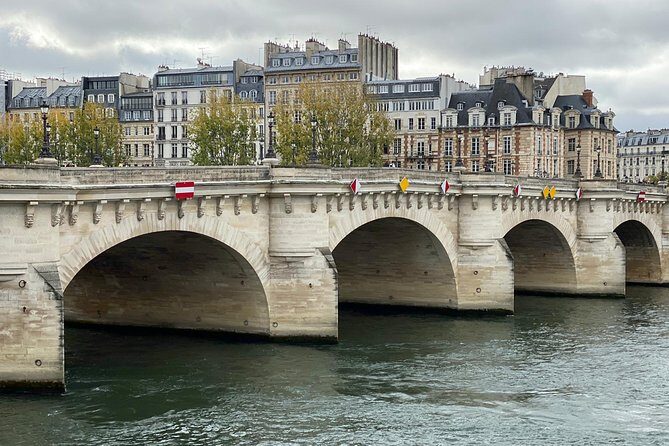
I love tours that help you understand a city fast. This route does that in a practical way. You start where the island energy begins—by the Equestrian Statue of Henri IV near Pont Neuf—and you move through the center of Paris on foot. In about two hours, you get a sense of how the islands in the Seine shape the city.
The best early payoff is the Seine River scenery. Even if you’ve seen photos of Paris for years, standing in the right spot makes it click: the river isn’t just a backdrop here. It’s part of the layout, the mood, and the walking rhythm. When you later choose where to wander on your own, you’ll have a mental map that feels real, not imaginary.
Also, because the tour is designed for a small group, it doesn’t feel rushed like bigger “see everything” walks. You’re not being swept from one photo spot to another. You’re being walked through a story, in order.
You can also read our reviews of more walking tours in Paris


Why max 6 people changes everything on a walking tour
A group of 6 isn’t just a number. It changes the whole experience. The guide can slow down when you’re reading details, and you can ask questions without shouting over a crowd.
That small-group size also helps the pacing at places where you’ll naturally stop—like cathedrals, historic squares, and the bridge area that leads you into the Marais. You can actually hear the guide’s explanation. You can also take a breath, look around, and connect the visuals to the facts.
In one past tour experience led by Sophie, the group size and pacing mattered a lot. The tour felt well timed and personalized, with observations that didn’t feel like they were copied from a script. That’s exactly the kind of guide-and-group match I look for when I want a first taste of a place.
If you prefer quiet, tight structure, this is a strong fit. If you want a lively crowd scene, a small-group approach might feel too calm.
Notre-Dame outside: flying buttresses and what rebuilding means
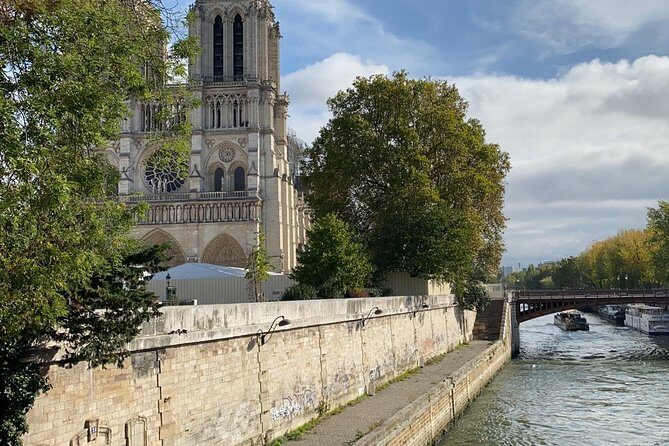
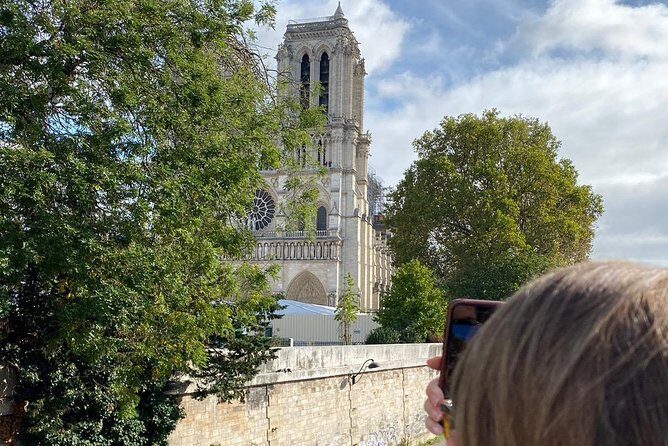
Notre-Dame is the obvious stop, but the way this tour handles it is the real value. Since Notre-Dame is temporarily closed to the public, the focus becomes learning and observing from the outside. That can sound limiting until you realize how much there is to notice without stepping inside.
Your guide explains why the cathedral’s design is so famous, including the role of the flying buttresses. These outward arches aren’t just decoration. They’re part of how architects dealt with tall interior spaces and the look of High French Gothic architecture. If you’ve ever wondered why a building’s silhouette looks the way it does, this is the kind of explanation that makes the whole façade feel less random.
Then there’s the present-day thread. The tour includes context about the 2019 fire and the rebuilding work moving forward. You’ll hear how Parisians are handling this loss and what the rebuild effort means for planning your next visit. That last part matters. Instead of leaving with vague hope, you walk away with a clearer sense of when you might return.
Practical note: admission is not included for this stop. So even if you wanted to try to enter, you shouldn’t plan on it as part of the tour. Treat it as an exterior-focused architecture and context stop.
Place Dauphine: calm squares, Henri IV, and Louis XIII
After Notre-Dame, you head to Place Dauphine—a quieter pause on Île de la Cité. I like that contrast. It’s a break from the biggest attention magnets, and it helps your brain digest what you just learned.
This square also carries real “Paris royalty” history. Place Dauphine dates back to 1600, launched under King Henri IV, and it was named for his crowned prince son, Louis XIII, the dauphin of France. If you’ve walked past names on plaques before without context, this is the kind of stop that turns names into timelines.
It’s also a location you can use later as a reference point. Even if you don’t revisit the square exactly, you’ll remember the feeling of it: a historic site that doesn’t scream for attention the way some landmarks do.
If you’re the type who likes your “old Paris” to come with dates and clear connections, you’ll probably like this stop a lot.
Conciergerie: the French Revolution story you can feel in the streets
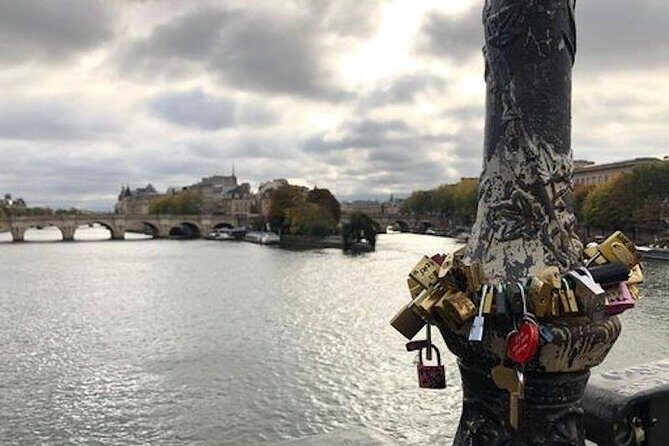
Next comes one of the darker chapters: the area by the Conciergerie. This stop is built around the French Revolution, with emphasis on Marie Antoinette’s last days before she met her fate under the guillotine.
I find this is where a good guide really matters. Without a guide, the site can feel like another historic building. With a guide, it becomes a turning point in the story of France—suddenly the architecture and location feel purposeful, not accidental.
The tour’s approach here is simple and human: you get the gist of the timeline and the stakes, then you continue walking. That keeps the mood from going heavy in a way that slows you down. You don’t need hours to understand why the setting is remembered.
Admission isn’t included for this stop either, so think of it as a narrative walking moment rather than a ticketed museum visit within the tour.
You can also read our reviews of more private tours in Paris





Île Saint-Louis: postcard balconies and calmer Seine views
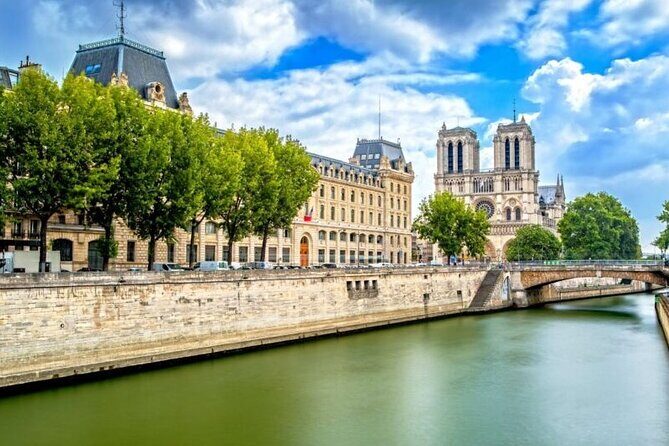
Then the route shifts to Île Saint-Louis, another island in the center of Paris. This part of the tour is visually rewarding in a more relaxed way. You’ll see picture-perfect homes and balconies looking out toward the Seine.
What I like about this stop is how it balances the earlier intensity. Notre-Dame and the Conciergerie both bring strong historical weight. Île Saint-Louis is where the city lets you breathe, while still staying connected to the same riverfront geography you’ve been learning about.
If you want a quick taste of “slow Paris”—the kind of streets you’d happily wander for another hour after the tour—this is one of the best transitions on the route.
Also, admission is listed as free for this stop, which keeps expectations aligned: you’re not paying extra during the tour to keep it moving.
Ending at Pont Marie in the Marais: how to use your extra time
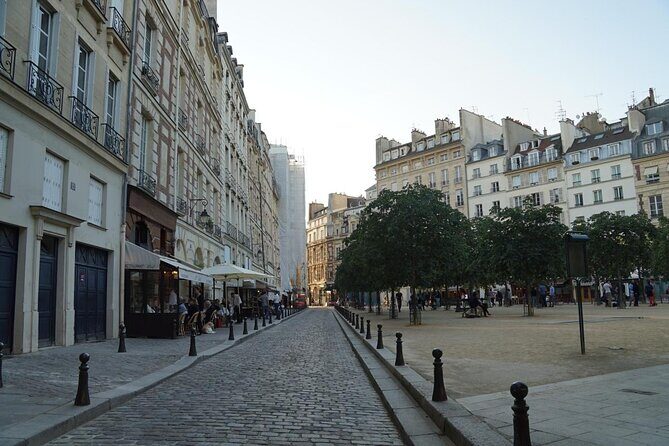
Your walk ends at Pont Marie, right by the Marais District. This is a smart finish, because it puts you in a neighborhood where you can keep exploring in whatever direction fits your day.
If you like browsing, the guide leads you toward a natural next step: you can spend the rest of your day doing boutique shopping or gallery browsing in the Marais. Even if you don’t have a list of shops, the area is a good place to wander without feeling like every step requires a reservation.
Ending at a bridge also matters. Bridges make it easy to orient yourself—especially after you’ve been crossing between river islands. You’ll feel like you know where you are, not just where you started.
One good strategy: decide before you leave the tour how you want to spend your remaining time—shopping, galleries, a café break, or just walking. Then Pont Marie becomes a clean launch point, not an anxious “what next?” moment.
Price and value: what $130.95 buys you in real life
At $130.95 per person, this tour sits in the guided-walking category where value comes from two things: time and attention.
First, the time is reasonable—about 2 hours. In a short window, you cover multiple iconic stops and still get context. A longer half-day tour can be worth it, but it’s also easier to feel tired. This one keeps you moving without turning the day into a checklist.
Second, the attention is the big value driver. You’re getting a professional local expert guide in a group that caps at 6 people, plus there’s an optional upgrade for a private guide if you want undivided attention. That upgrade can be worth considering if you’re traveling with a partner, want quieter conversation, or just prefer not to share the story with anyone else.
Also included: the tour includes visiting main highlights, including Notre-Dame. Mobile ticket convenience is included, so you’re not stuck managing paper tickets on cobbled sidewalks.
What’s not included: admission tickets for some of the main stops. That means the tour’s value is largely about interpretation—standing where you can see, listening to the “why,” and learning what to plan for later.
For me, this pricing makes sense if you’re trying to get your bearings and your historical context early in your trip. If you already know the cathedral story and just want photos, you might feel the cost more. But if you want someone to connect the dots across islands and timelines, it’s strong value.
Group tour vs private upgrade: choosing the right style
The standard format is a small-group tour. That’s best if you like meeting people casually and you don’t mind hearing a shared explanation.
The private upgrade is for a different mood. If you want to go slower, ask more questions, or tailor the walk to your interests—architecture, historical events, or just the river and neighborhood vibe—an undivided guide can be a smart move.
A quick decision rule:
- Choose group if you want a structured intro and a social-but-calm pace.
- Choose private if you’re sensitive to noise, prefer deeper back-and-forth, or want a customized route within this same island area.
Who this tour is best for
This is a great fit for:
- First-time visitors who want the heart of Paris’s river islands with clear context
- People who like architecture explanations, not just monument sightseeing
- Anyone who wants a calm, well-paced walk rather than a fast bus-style rush
- Travelers who want a guide-led story that includes both inspiring and darker chapters
It might be less ideal if:
- You mainly want interior access and ticketed museum time (Notre-Dame is temporarily closed, and tickets aren’t included)
- You’re expecting a long “hang out” neighborhood tour rather than a structured two-hour island walk
Should you book this Île-de-la-Cité walking tour?
Yes—if you want a smart first step into central Paris, this is a practical, story-driven way to do it. You’ll come away with a clearer sense of where you are on the Seine, what Notre-Dame’s design is about, and why the nearby history matters. The max 6 group size makes the whole experience feel more personal, and the guide-led pacing helps you actually process what you’re seeing.
Book it if you value context, views, and a guide who can tie the places together in a way that sticks. Skip it only if your top priority is ticketed interior access and you don’t care much about explanation.
FAQ
How long is the walking tour?
The tour runs for about 2 hours.
How many people are in the group?
The group is limited to a maximum of 6 people.
What language is the tour offered in?
The tour is offered in English.
Where do you meet and where does the tour end?
You meet at the Equestrian Statue of Henri IV, 15 Pl. du Pont Neuf, 75001 Paris, and the tour ends at Pont Marie, Quai de l’Hôtel de Ville, Rue des Deux Ponts, 75004 Paris.
Is admission included for Notre-Dame and other stops?
Admission tickets are not included for Notre-Dame, Place Dauphine, and the Conciergerie. Some stops are listed as free (including Île Saint-Louis and the end at Pont Marie).
Is free cancellation available?
Yes. You can cancel for a full refund up to 24 hours in advance of the experience start time.