REVIEW · PARIS
Paris: Private or Shared City Highlights Tour
Book on GetYourGuide →Operated by France Luxury Cab · Bookable on GetYourGuide
Paris can feel like a blur.
This tour slows the chaos down without putting all the miles on your feet. You ride in a minibus with a live driver-guide, hit the big landmarks, and still get photo stops so you can actually see what you came for. You start near Opéra Garnier and work your way through the core neighborhoods in a smooth loop.
I especially love the mix of “sit back and look” driving with short moments on foot. And I like that the guide role is hands-on—Fred, for example, was warm, funny, and flexible when a family needed a smoother setup, including a small stool to help with getting into the vehicle for someone with mobility needs. That combination makes it easier to enjoy Paris even if you’re traveling with kids, grandparents, or anyone who can’t do long walks.
One thing to consider: you do a lot of sights, but you’re not here for long time-inside museum moments. Eiffel Tower entry is not included, and access near Notre-Dame can depend on police authorization, so plan for seeing rather than deep-entry at a few spots.
In This Review
- Key Things I’d Put on Your Priority List
- Where You Start: Opéra Garnier Makes It Simple
- Why the Minibus Format Works Better Than Pure Walking
- The Classic Paris Drive: Latin Quarter to the Louvre Side
- Squares and Grand Boulevards: Vendôme, Concorde, and Champs-Élysées
- St-Germain-des-Prés Energy and the Café Culture Moment
- The Notre-Dame Area and Marais: What You’ll Really Get
- Montmartre on Foot: Place du Tertre to Sacré-Cœur
- The Eiffel Tower Finish: Drop-Off Near Tour Eiffel
- Languages, Group Size, and Why That Matters in Real Life
- Price and Value: $224 for a Sight-Heavy, Low-Walk 4 Hours
- Who This Tour Fits Best
- The Human Touch: Why the Guide Quality Shows Up
- Should You Book It?
- FAQ
- Where do I meet the guide?
- How long is the tour?
- Is the tour private?
- What’s included in the price?
- Is Eiffel Tower admission included?
- Do I need tickets for other activities like a Seine cruise?
Key Things I’d Put on Your Priority List
- Minibus views + photo stops: you get sweeping angles without spending the whole time in traffic on foot
- Live driver-guide in your language: from English to Spanish, German, Japanese, and more
- A smart route: major squares and neighborhoods in one 4-hour loop, not scattered across days
- Small group feel: up to 15 participants, and the driver may also guide if the group is tiny
- A Montmartre walking stop that matters: Place du Tertre artists and Sacré-Cœur views on foot
Where You Start: Opéra Garnier Makes It Simple
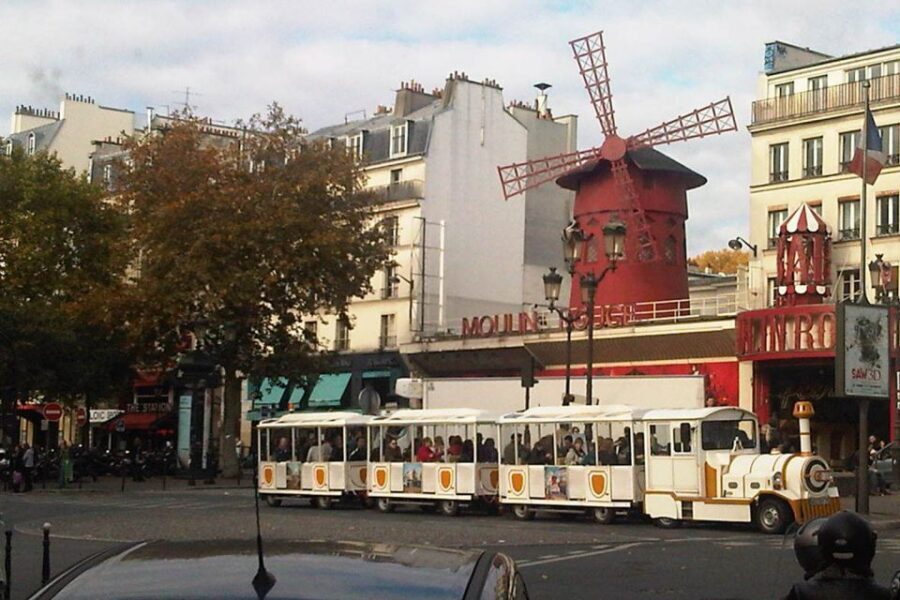
Your tour kicks off at Opéra Garnier, right in Place de l’Opéra. That’s a convenient anchor point—big, central, and easy to find compared to more hidden pickup spots. Once you meet your guide and get situated in the minibus, the pacing feels organized from the first minute.
You’ll also get quick scenic views early on, which helps you orient yourself fast. Paris can be visually overwhelming at first. A guided route like this gives you a mental map immediately, so later sights make more sense.
You can also read our reviews of more city tours in Paris


Why the Minibus Format Works Better Than Pure Walking
If you’ve ever tried to “see Paris” on foot, you know what happens: you end up tired, late, and stuck doing the same route twice. Here, the minibus does the heavy lifting. You cover ground quickly and keep your energy for the moments where you actually want to stop and look closely.
It’s also a comfort win. You can shoot photos from a good vantage point, then step out briefly for key stops. That matters when you’re doing places like Champs-Élysées and moving across areas where traffic and distance add up.
The key trade-off is time. In four hours you’ll get strong highlights, but you won’t linger for museum-level detail at every stop. Think of this as a “great orientation plus best-of sights” format.
The Classic Paris Drive: Latin Quarter to the Louvre Side
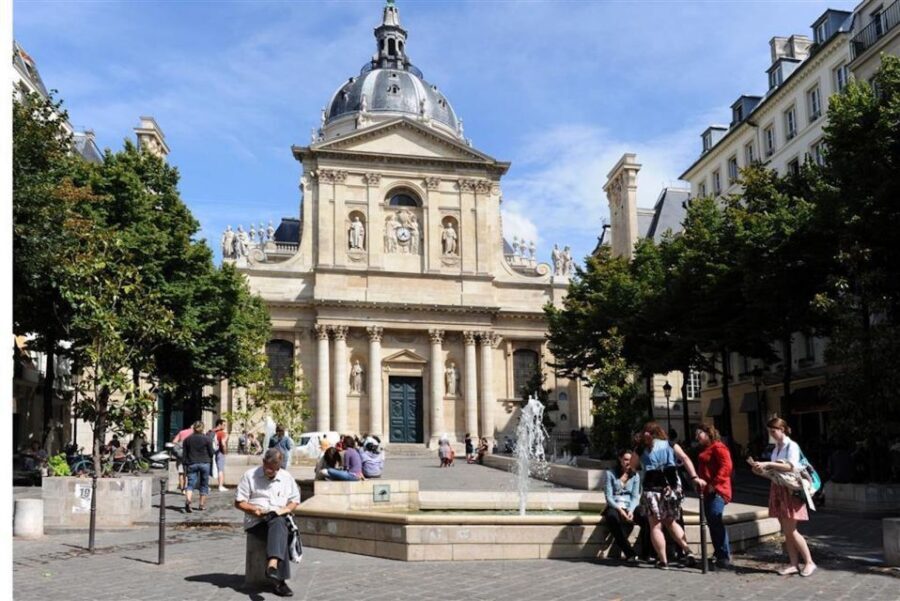
After Opéra, the route threads through the Latin Quarter, with the Sorbonne university campus area on the way. This part of town has a different personality than the grand boulevard zones—it feels more lived-in, more student-energy, more street-level. Even when you’re seated, your guide’s commentary helps you connect what you see to what’s going on there.
From there, you move past major landmarks and major squares: Place du Châtelet, Louvre Museum, and the grand Haussmann-designed Place de l’Opéra. It’s a smart way to understand how Paris grew—by reading the city as a sequence of planned urban spaces rather than random street corners.
One underrated benefit here is photo rhythm. You’ll get multiple opportunities to stop and photograph along the way, instead of only stopping at the obvious icons. That makes the tour feel more complete, even if you’re not spending hours at any one building.
Squares and Grand Boulevards: Vendôme, Concorde, and Champs-Élysées
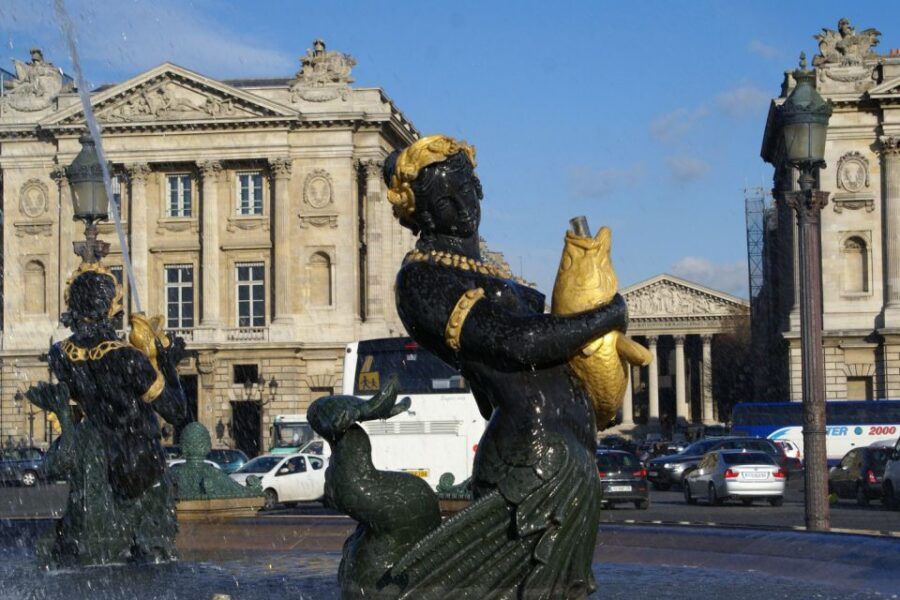
A big part of Paris’s charm is the way the city stages views. This tour leans into that. You’ll pass Place Vendôme and then reach Place de la Concorde at the end of the Champs-Élysées stretch.
The Champs-Élysées photo stop is usually where people start to believe the city is actually that wide and that monumental. It can be crowded, so having a planned stop with a guide helps you pick the best moment to capture the view and keep moving.
Then you swing past iconic edges like La Madeleine (the columned look) and continue toward the Ecole Militaire and Les Invalides area. This is where driving is a real advantage: those sites sit in a context of streets and sightlines that are hard to grasp if you’re only walking fast between stops.
St-Germain-des-Prés Energy and the Café Culture Moment
One of the more atmospheric segments is how the route touches St. Germain-des-Prés. Even though you’re moving by minibus, the guide helps you read what you’re seeing—cafés, streetscape, and the feel of a neighborhood that’s long been associated with ideas, music, and late conversations.
This doesn’t turn into a long sit-down café tour. Instead, it’s a quick “you’re in the right place” moment. It’s ideal if you don’t want to waste your whole time hunting for a perfect café. You’ll get the vibe and keep the schedule intact.
You can also read our reviews of more private tours in Paris






The Notre-Dame Area and Marais: What You’ll Really Get
Near Notre-Dame de Paris and the Marais district, you’ll experience a key part of the tour’s payoff. You’ll include Place des Vosges, which is one of the most recognizable squares in that zone and a great place to orient yourself in historic Paris.
Important note: some access can depend on police authorization. So if you were expecting a guaranteed close-in stroll at every point around Notre-Dame, you’ll want to stay flexible. What you can count on is the guided approach and the stop focus—seeing this area with structure is still worthwhile.
If you’re into photography, the Marais stop gives you a different look from the wide boulevards. Here you get more texture, tighter street energy, and classic architecture that makes Paris look like Paris on postcards.
Montmartre on Foot: Place du Tertre to Sacré-Cœur
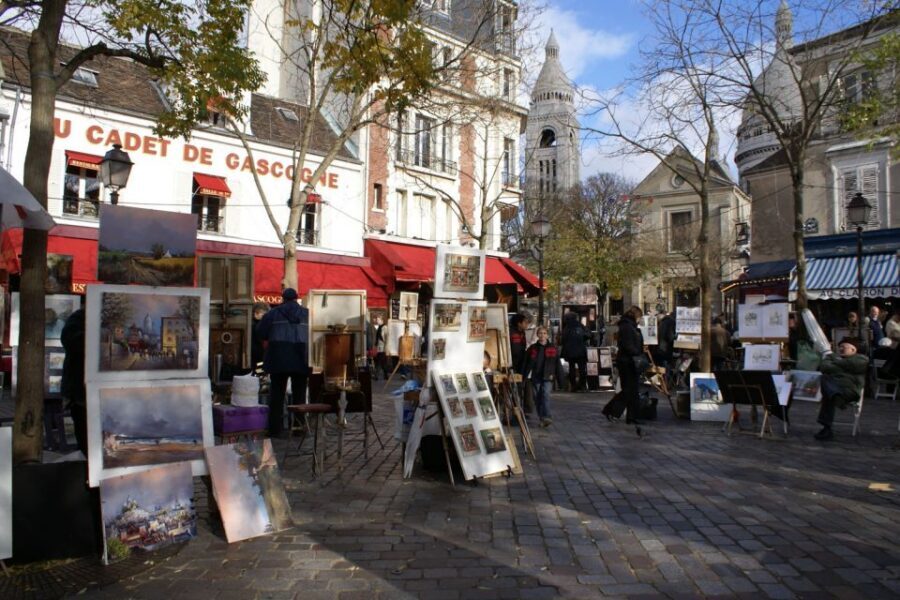
Montmartre is where the tour turns from driving to a short walking segment. You’ll arrive for a walking tour around Place du Tertre—the square known for pavement artists. Watch them work, and you’ll see why people keep coming back even after they’ve done the big ticket sights.
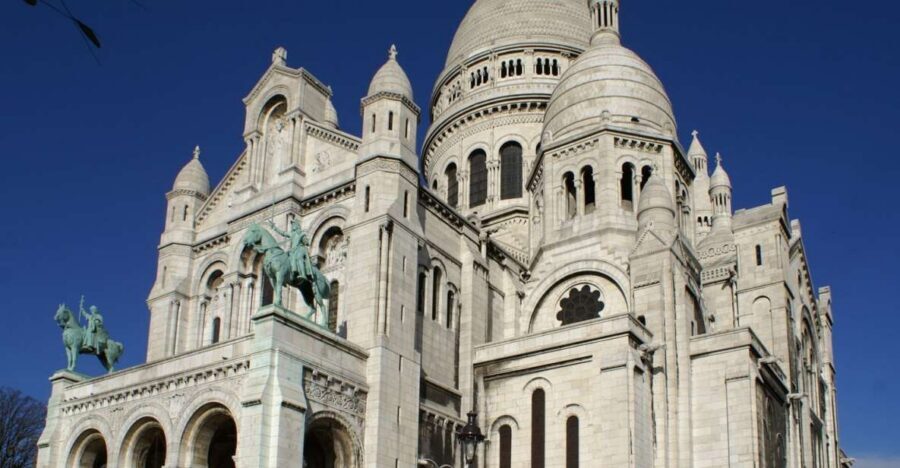
Then you look toward Sacré-Cœur, including the famous white, wedding-cake look. Even if you don’t spend a lot of time climbing, the views and the changing perspective are part of why Montmartre sticks in your memory.
A practical tip: bring comfortable shoes. This isn’t a full-day hike, but it is walking in a place where the ground can be uneven and the crowd can shift quickly.
The Eiffel Tower Finish: Drop-Off Near Tour Eiffel
The tour ends with a drive back toward central Paris for a drop-off at the foot of the Eiffel Tower. This is a smart way to close the loop. You get one last iconic target at the end, when the tour energy is high and you can still move on to dinner nearby.
Just remember: Eiffel Tower ticketing is not included. That’s not a flaw—it’s actually part of the value equation. You’re not being forced into a timed entry you may not want. You can choose your moment for ticketed access based on weather, sunset plans, or your own pace.
Languages, Group Size, and Why That Matters in Real Life
This tour runs with a live guide in a wide range of languages: English, Spanish, Chinese, French, German, Italian, Japanese, Russian, Dutch, Polish, and Portuguese. If you’ve got family members who struggle with English, this is a genuine quality-of-life upgrade, not a small perk.
Group size caps at 15 participants. That helps the guide keep track of people, answer questions, and maintain an easy rhythm for photo stops. If there are fewer than four bookings, the driver may also act as the guide, which can change how the narration feels—but it also keeps the experience direct and interactive.
Price and Value: $224 for a Sight-Heavy, Low-Walk 4 Hours
At about $224 per person, the real question is what you’re paying for. You’re not just paying for a list of landmarks. You’re paying for the time-savings of a minibus loop, the convenience of a centralized meeting point, and a live guide who coordinates stops across neighborhoods that are far apart.
In a city like Paris, time is money. If you spent the same four hours walking between the same areas, you’d likely burn energy faster and lose some photo opportunities. This tour is built for efficient enjoyment: you get a lot of different “Paris modes” in one run—grand squares, historic districts, and a Montmartre finish.
Is it expensive compared to a cheaper bus? Yes. But it’s also a different kind of service—guided, small group, and structured for highlights rather than a loose city bus ride.
Who This Tour Fits Best
This is a great pick if you want:
- A high-impact first day or a last-day sweep when your feet are tired
- A comfortable plan for families or mixed mobility groups
- Enough structure to see multiple neighborhoods without building a route yourself
- Photo stops at key photo-heavy landmarks
It’s less ideal if you want to spend hours inside a small number of places. This is about highlights and orientation, not deep museum immersion.
The Human Touch: Why the Guide Quality Shows Up
One of the most praised elements in the experience is the guide’s attitude. Fred, for instance, earned strong marks for being warm, funny, and flexible. That matters because Paris plans don’t always go perfectly—weather happens, crowds shift, and families need minor adjustments.
There was also a concrete example of thoughtful care: when a mother had mobility limitations, the guide provided a small stool to help with getting into the car. That kind of practical detail is exactly what turns a standard “sights tour” into a smoother day.
Should You Book It?
I’d book this if you want a guided best-of Paris highlights loop in just four hours, with less walking and more views. The combination of minibus comfort, multiple photo stops, and a live multilingual driver-guide is built for real travelers, not just people with unlimited energy.
Skip it only if you’re hoping for long museum time, guaranteed close access to everything near Notre-Dame, or included ticket entry to major attractions like the Eiffel Tower. For everyone else, it’s an efficient way to get your bearings fast and come away with a stronger feel for the city’s different faces.
FAQ
Where do I meet the guide?
You meet your guide in front of the Opéra Garnier, at Place de l’Opéra.
How long is the tour?
The tour lasts 4 hours.
Is the tour private?
You can choose either a private option or a small group option.
What’s included in the price?
Transportation by minibus is included, along with an English/Spanish-speaking guide.
Is Eiffel Tower admission included?
No. Eiffel Tower tickets are not included.
Do I need tickets for other activities like a Seine cruise?
A Seine River cruise ticket is not included.