
REVIEW · PARIS
Paris Latin Quarter & Left Bank – History Walk (Small Group Tour)
Book on Viator →Operated by Visit the Hidden Paris · Bookable on Viator
Paris has a second personality on the Left Bank.
This small-group Latin Quarter & Left Bank history walk is built for slow looking and smart context, with a guide who can steer the story toward what you care about. I especially like the private feel (just you and your party) paired with a historian-style explanation, and I also love the way the guide uses a tablet with photo/video support and visual tools (including 3D material for the Roman baths).
One thing to plan for: it’s still a real walking tour, and weather can get extreme. There’s a note about hot conditions (even a heatwave) and the guide keeps going in all weather, so you’ll want solid shoes, water, and an umbrella if needed.
In This Review
- Key highlights worth your time
- Why the Left Bank feels different when you walk it slowly
- Saint-Germain-des-Prés: the church with roots in 990AD
- Cour du Commerce Saint-André: Revolution energy in a tiny space
- Les Thermes de Lutece: Roman baths explained with 3D models
- Luxembourg Gardens: a real break with statues and fountains
- Pantheon: tombs and the Foucault pendulum story
- St-Étienne-du-Mont: the 30ft rood screen you’ll never forget
- Arenes de Lutece: ending with Roman leftovers in plain sight
- How the private small-group format changes what you notice
- Price and value: what you’re really paying for
- Logistics that matter: meeting, walking, and timing
- Who this tour suits best (and who might want to pick another plan)
- Should you book this Paris Left Bank history walk?
- FAQ
- FAQ
- How long is the Paris Latin Quarter and Left Bank history walk?
- Is this tour private?
- What sites are included on the itinerary?
- Are entrance fees included?
- Where do I meet and where does the tour end?
- What time does the tour start?
- Does the guide speak more than one language?
- What should I bring for the walk?
- Can kids and service animals participate?
- What’s the cancellation policy?
Key highlights worth your time
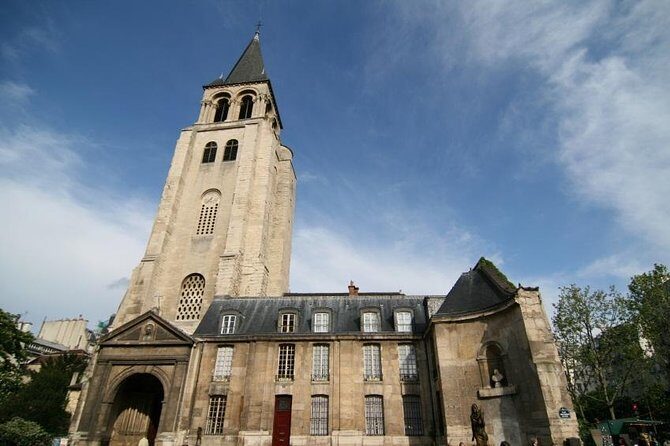
- Saint-Germain-des-Prés church with parts dating to 990AD, plus a guided walk-through
- Cour du Commerce Saint-André and its Revolutionary-era connections (Danton, Marat, Robespierre)
- Roman baths at Cluny (Les Thermes de Lutece) explained with video and 3D models
- Luxembourg Gardens with 110 statues, the Medici Fountain, and a working Statue of Liberty model
- Pantheon stops focused on famous tombs and Foucault’s pendulum story
- St-Étienne-du-Mont for the jaw-dropping carved 30ft stone rood screen
Why the Left Bank feels different when you walk it slowly
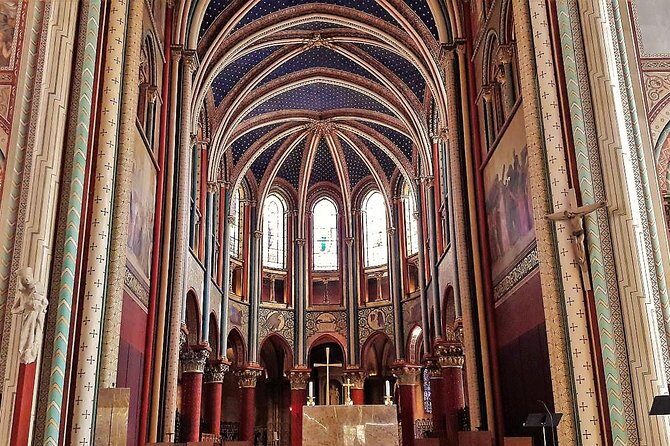
The Left Bank is where Paris starts talking philosophy, politics, and poetry. Doing it by foot matters, because these places don’t announce themselves the way major monuments do. You need someone to point out what you’re looking at and why it mattered.
This tour runs about 2 hours to 2.5 hours, starting at 11:00am, with a guide who can adapt the pace and emphasis to your interests. That’s a big deal if you’re the type who wants more time at one spot (say, Revolution history) and less time at another.
You’ll also get that small-group advantage: it’s capped at 10 travelers even though it’s described as a private tour for you and your party. In plain terms, you’re unlikely to feel lost in the shuffle.
You can also read our reviews of more walking tours in Paris



Saint-Germain-des-Prés: the church with roots in 990AD
You begin at Église de St Germain des Prés (Benedictine Abbey area), and the first stop sets the tone. The church is described as the city’s oldest, with parts dating to 990AD. That kind of age changes how you look at everything around it.
What I like about starting here: it gives you a time anchor. Before you hit street-level stories about philosophers or Revolutionaries, you understand the “ground” the neighborhood grew on. The visit includes a full tour of the church itself, and you get it at a site that’s marked as admission free on the itinerary.
Practical note: churches mean you’ll likely want to dress respectfully (cover shoulders if you’re wearing something very sleeveless), and you’ll be standing and walking indoors for a bit. If you’re visiting during hot weather, this start can feel pleasant because churches often hold cooler air.
Cour du Commerce Saint-André: Revolution energy in a tiny space

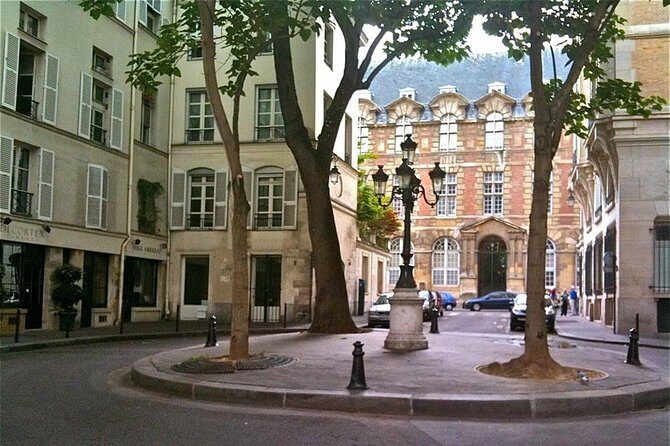
From the abbey world, you move into a much more human scale with Cour du Commerce Saint Andre—one of Paris’s oldest passages. This is exactly the kind of alleyway that you might pass without noticing, unless someone tells you what it once sheltered.
The itinerary connects this area to key Revolution figures: Danton, Marat, and Robespierre. You’ll also hear the story of Franklin and Jefferson rubbing shoulders with Revolutionaries and philosophers like Voltaire. And yes, the guide’s version includes a very Paris detail: Napoleon supposedly left his hat when he couldn’t pay his bar tab.
Two useful takeaways here:
- Passages like this are where political ideas got discussed in real everyday life, not just in speeches.
- The guide can help you read the neighborhood like a timeline—who was here, what they argued about, and what that says about Paris at the time.
This stop is also short and listed as admission free, which is helpful if you’re dealing with limited energy.
Les Thermes de Lutece: Roman baths explained with 3D models
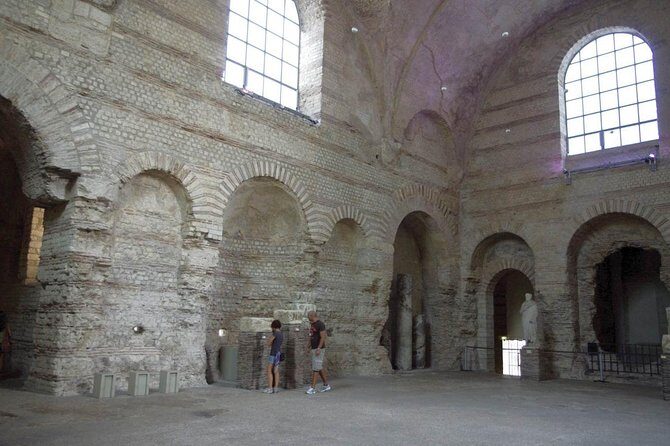
Then the tour shifts again—this time to Roman Paris. At Les Thermes de Lutece, you’re visiting the remains of the Roman Baths at Cluny. The key here isn’t just that the ruins exist; it’s how the tour helps you understand them.
Since ruins can be hard to picture, the guide uses video and visual material, plus 3D models, to explain how the baths were built and how they worked. You’re not just seeing stone fragments—you’re learning what the site may have looked like in use.
One drawback/consideration: the itinerary lists admission for this stop as not included. That doesn’t mean it’s impossible to enjoy the area, but it does mean if you want the full on-site experience inside, you should expect an extra cost.
If Roman history is your priority, this is the kind of stop that pays off. Visual explanations are a big help when you’re trying to connect modern street life with ancient city layout.
Luxembourg Gardens: a real break with statues and fountains
After the Roman layer, you get a change of pace at Luxembourg Gardens. This part of the tour is about quality time outdoors—one of the loveliest parks in the city, with 110 statues and easy-to-grasp attractions.
Two details here are especially worth noting:
- There’s a working model of the Statue of Liberty, which is the kind of thing you don’t want to miss because it’s a fun “aha” moment about how Paris celebrates modern references alongside its old ones.
- You’ll learn about the Luxembourg Palace (built 1612) and the Medici Fountain (built 1630).
The park stop is listed as admission free and is relatively short in the schedule. Still, it’s a smart choice because it lets you reset without feeling like the tour is rushing. If you like gardens, this stop makes the whole walk feel balanced.
You can also read our reviews of more historical tours in Paris






Pantheon: tombs and the Foucault pendulum story
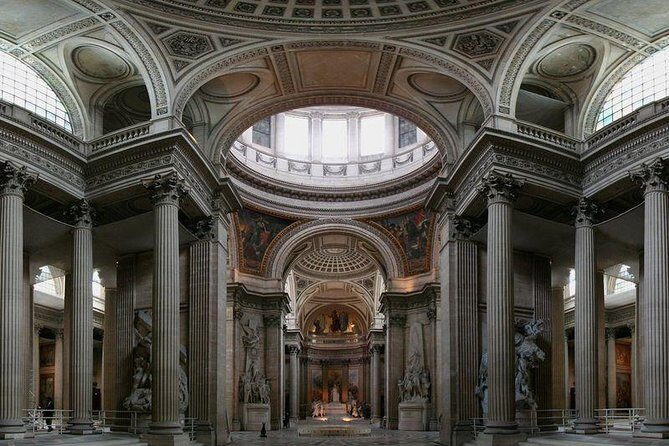
Next comes the Pantheon, a mausoleum that collects the nation’s big-name thinkers and figures. The tour focuses on who is buried there and why their presence matters.
The itinerary highlights tombs connected to:
- Philosophers such as Voltaire, Diderot, and Rousseau
- Authors like Hugo, Dumas, and St. Exupéry
- Scientists such as Pierre and Marie Curie
- Plus the story behind Foucault’s pendulum
Here’s why this is more than a photo stop: Foucault’s pendulum is the kind of concept that can feel abstract until someone explains it in plain terms. A guide who connects it to the place helps you remember it.
Like the Roman baths, Pantheon admission is not included. You’ll still see it as part of the walk, but if you want to go inside, expect the extra ticket decision.
St-Étienne-du-Mont: the 30ft rood screen you’ll never forget
A baroque church stop sounds like a break from politics and science, but it actually fits perfectly. St. Etienne du Mont is one of the city’s “look closely” churches, the kind that rewards patient attention.
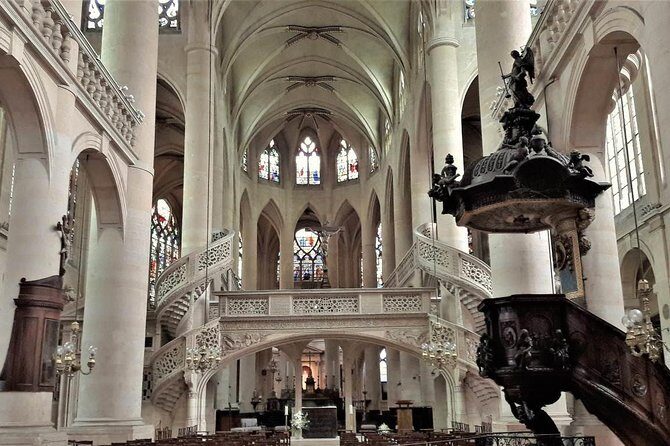
The headline feature is the church’s rood screen—described as the nation’s largest, with a carved stone screen 30ft wide. If you like dramatic religious art and architecture, this is the moment where the tour’s guided focus really shows.
The itinerary also notes that the church holds other baroque treasures that you’ll see in detail, and this stop is listed as admission free. That’s good value if you’re trying to keep extra costs down while still getting interior sights.
Arenes de Lutece: ending with Roman leftovers in plain sight
The tour wraps up at Arenes de Lutece, another Roman vestige. It’s a short finish—listed at about 5 minutes—but it works as a closing beat that ties the walk together.
If you’ve just seen the Roman baths explained with 3D models, this final stop can feel like: ok, I get it. Here’s more Roman Paris you can visually connect to what you learned.
The stop is also marked as admission free, and it’s a solid way to end without turning the last minutes into ticket lines or long detours.
How the private small-group format changes what you notice
Even with a maximum group size of 10 travelers, the tour is designed as a private tour for just you and your party. That matters because Latin Quarter streets can be confusing if you’re trying to read everything at once.
With a smaller group:
- You can ask follow-up questions without shouting.
- The guide can adjust the order or pace when you want a longer look (like lingering in a courtyard or spending extra time outside a major site).
- The tour’s “history walk” style means less waiting and more moving with purpose.
It also helps that the guide is bilingual, and uses a tablet for photo and video documentation. In a neighborhood where buildings repeat and time periods overlap, visuals make a real difference.
Price and value: what you’re really paying for
At $85.98 per person, this isn’t a “just walk and talk” bargain. It’s priced for a guide who brings structure, and for the added teaching tools (tablet support and 3D explanation at the Roman baths).
The good value part is the mix of:
- Big “must-know” Paris names and places (Latin Quarter, St-Germain-des-Prés, Pantheon)
- A handful of sites that feel small but carry huge meaning (passages, passages-courtyards, Roman remnants)
- Multiple stops that are marked admission free
Where the value can shift for you is with the stops marked not included. If you choose to add tickets at the Roman baths or Pantheon, your total cost rises. But if you’re happy focusing on exterior views plus the guide’s explanation, you may keep it close to the base price.
At the end of the day, you’re paying for time with a guide who helps you connect the dots instead of just pointing at buildings.
Logistics that matter: meeting, walking, and timing
The tour starts at Église de St Germain des Prés, 3 Pl. Saint-Germain des Prés, 75006 Paris and ends at place de la Contrescarpe, 75005 Paris. That’s a practical route across the Left Bank, and it finishes where you can easily continue exploring on foot or grab public transport.
The stated start time is 11:00am. If you’re a morning person, you’ll like the head start. If you’re visiting in peak summer or during a hot spell, remember the note about heat conditions and bring what you need.
Dress and comfort tips from the tour guidance are simple but worth following:
- Wear solid walking shoes
- Bring bottled water
- Bring an umbrella for rain
- Wear warm clothing in winter
This is the kind of tour where comfort affects how much you enjoy the explanations.
Who this tour suits best (and who might want to pick another plan)
This is a great fit if you:
- Love history that links streets to big events (Revolution to philosophers to science)
- Want a guide who can tailor commentary to your interests
- Appreciate short stops with strong context rather than long museum marathons
- Prefer smaller groups and easier conversation
It may not be ideal if you:
- Want a full, ticketed museum-heavy day where every stop is included
- Hate walking or have limited mobility (the tour is described as involving walking between stops)
- Need long time at only one attraction (the schedule is designed to cover several landmarks in a single run)
Should you book this Paris Left Bank history walk?
I’d book it if you want a smart, efficient way to get oriented on the Left Bank without turning the day into logistics and waiting. The strongest reasons: the storytelling connections (Revolution figures, philosophers, Roman Paris) and the guide’s use of tablet/visual support, including 3D-style explanation for the Roman baths.
Skip it (or pair it with something else) if your main goal is deep museum time or you’re hoping every landmark is included with entry tickets. Here, some of the value is in seeing and understanding, not in paying for everything.
FAQ
FAQ
How long is the Paris Latin Quarter and Left Bank history walk?
It runs about 2 hours to 2 hours 30 minutes.
Is this tour private?
Yes. It’s described as a private tour for just you and your party, and it has a maximum of 10 travelers.
What sites are included on the itinerary?
You’ll visit Saint-Germain-des-Prés, Cour du Commerce Saint-André, Les Thermes de Lutece (Roman baths at Cluny), Luxembourg Gardens, the Pantheon, St-Étienne-du-Mont, and Arenes de Lutece.
Are entrance fees included?
Entrance fees are not included for monuments and museums. Some stops are listed as admission free, while others (like Les Thermes de Lutece and the Pantheon) are marked not included.
Where do I meet and where does the tour end?
You start at Église de St Germain des Prés, 3 Pl. Saint-Germain des Prés, 75006 Paris, and you end at place de la Contrescarpe, Pl. de la Contrescarpe, 75005 Paris.
What time does the tour start?
The start time is 11:00am.
Does the guide speak more than one language?
The tour is operated by a bi-lingual guide.
What should I bring for the walk?
Wear solid walking shoes, bring bottled water, and dress for the weather. The guidance also suggests umbrellas for rain and warm clothing in winter.
Can kids and service animals participate?
Children must be accompanied by an adult, and service animals are allowed.
What’s the cancellation policy?
You can cancel for a full refund up to 24 hours before the experience’s start time. If you cancel less than 24 hours before, the amount you paid won’t be refunded.