REVIEW · PARIS
Private Covered Passages & Palais Royal Gardens 2-Hour Tour
Book on Viator →Operated by Napoleone Tour · Bookable on Viator
Paris has secret corridors worth slowing down for.
This private tour threads you through Paris shopping arcades and covered passages tied to 19th-century life, then cools things off in the Palais Royal gardens. I like the undivided attention of your guide and the fact that the big stops are free-to-enter, so your money goes to storytelling and pacing, not ticket fees.
The main drawback is simple: it’s still 2 hours on foot, and the route has a fixed start and finish. You’ll want comfy shoes and a plan for getting yourself from the end point near Palais-Royal to wherever you’re headed next.
You’ll meet at Le Peletier (9:30am) and finish at Palais-Royal. Your guide is multilingual, the experience is private (just your group), and you use a mobile ticket for entry.
In This Review
- Key Highlights You’ll Actually Feel During This Tour
- Covered Passages Instead of Usual Paris: The Point of This Walk
- Your 2-Hour Plan: Private Timing That Doesn’t Drag
- Passage des Princes, Passage des Panoramas, and Galerie Vivienne
- Bourse de Paris and Passage Verdeau: Where the Walk Gets Interesting
- Palais-Royal Gardens and the Royal Square Break
- Souvenir Shopping at Artisan Boutiques (Without the Hard Sell)
- What Makes the Guides the Real Value (Laurent and Maurizio Style)
- Price and Value: Is $70.98 per Person Worth It?
- Who Should Book This Tour—and Who Might Skip It
- Should You Book This Private Covered Passages & Palais-Royal Gardens Tour?
- FAQ
- What’s the duration of the tour?
- How much does the tour cost?
- Is this tour private?
- Do I need a minimum number of people?
- Where do you meet and where do you end?
- What time does the tour start?
- Is the ticket mobile?
- Is admission free at the stops?
- What’s included in the price?
- What’s not included?
- Can I get a refund if I cancel?
- Are there any health-related requirements?
Key Highlights You’ll Actually Feel During This Tour
- Private guide time: you can ask questions and shift the focus to what you care about
- Covered passages, three classics in a row: Passage des Princes, Passage des Panoramas, Galerie Vivienne
- Palais-Royal gardens stop: a calmer break after shopping arcades
- Free admission at the scheduled sites: you’re not paying extra as you move along
- Shopping time for souvenirs: artisan boutiques are part of the flow, not an afterthought
Covered Passages Instead of Usual Paris: The Point of This Walk
Paris has two faces: the big sights you’ve seen on postcards, and the smaller streets where daily life used to happen. This tour leans hard into the second one by walking the covered passages—shopping arcades with their own mood. Rain, sun, or crowds don’t hit the same way under those glass-and-stone corridors. The result is that you can actually pay attention to details and architecture without feeling like you’re fighting the flow.
What makes this experience work is the storytelling angle. You’re not just “walking through fancy hallways.” You get stories of life in 19th-century Paris while you pass real spaces where people browsed, met up, and did business. That context matters, especially if you’re the kind of traveler who likes to connect buildings to behavior—who used these places, why they mattered, and how the city felt from inside.
It also helps that it’s a private tour. In a group, you often spend time waiting for people to catch up or trying to hear through the noise. Here, your guide can slow down for architecture questions, speed up when you’re itching to move on, and adjust the emphasis if you’re more into history or more into the design.
You can also read our reviews of more private tours in Paris



Your 2-Hour Plan: Private Timing That Doesn’t Drag
This is designed as a focused, two-hour experience. It doesn’t try to cover “all of Paris in a morning.” Instead, it uses a compact route so you can enjoy the places on foot and still feel like you did something substantial.
You start at 9:30am at Le Peletier (75009) and finish at Palais-Royal (75001). That finish location is convenient if you want to keep exploring the area on your own, but it does mean you’re not doing a round-trip. If your hotel is far from either side, plan your next step accordingly.
Your tour includes a professional private guide, and you get a mobile ticket. There’s also customization mentioned for interests—so if you care more about architecture, or you’d rather hear more human stories, you can steer the conversations. If you’re traveling with teenagers or mixed ages, this matters. The best tours keep everyone mentally involved, and the guide style highlighted for this experience tends to be engaging and easy to follow.
One more practical point: food and drinks aren’t included. That’s not a problem for a two-hour tour, but it does mean you should grab a snack beforehand if you tend to get hungry quickly.
Passage des Princes, Passage des Panoramas, and Galerie Vivienne
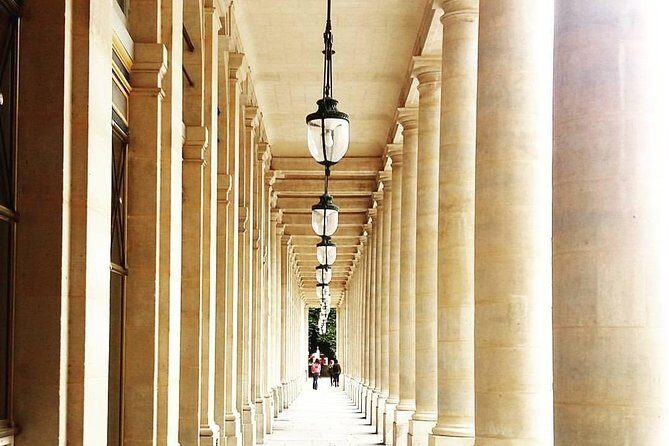
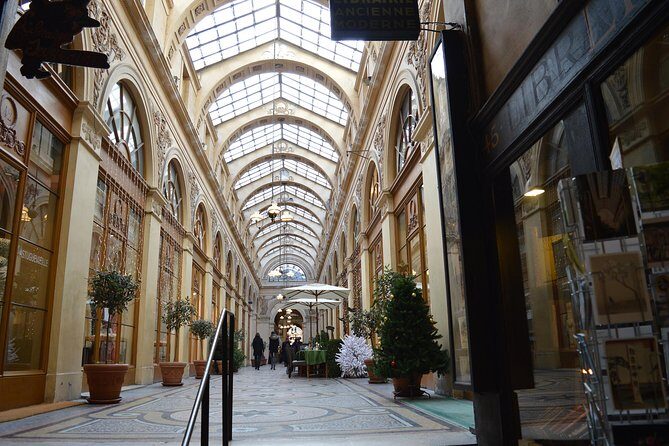
The route is built around a chain of classic covered passages, each with its own character. Even if you’ve only seen pictures, you’ll feel the difference once you’re inside, because proportions, lighting, and layout shape how a space “moves.”
Stop 1: Passage des Princes (about 15 minutes, free entry)
This is a strong opener. Your guide can set the scene here—how these arcades functioned and why they became such a recognizable part of Paris life. It’s a good time to start asking questions, because you’re fresh and still building your mental map of what you’re seeing.
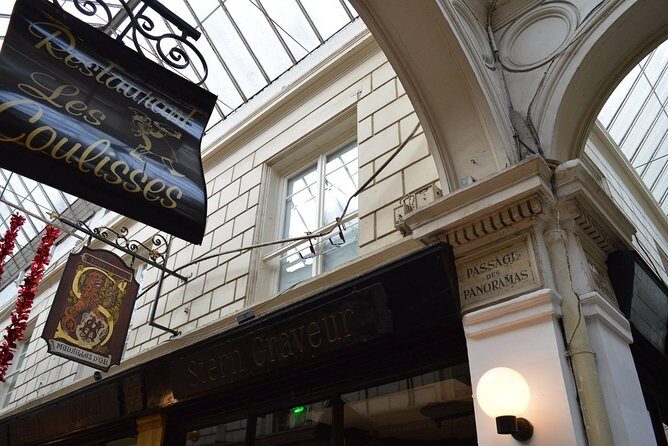
Stop 2: Passage des Panoramas (about 15 minutes, free entry)
This one keeps the momentum. After the first passage, you start noticing patterns: how shop fronts relate to the arcade, how the corridor shapes pedestrian flow, and how the design supports browsing. If you like architecture, this is where the tour starts to feel like more than a walk.
Stop 3: Galerie Vivienne (about 15 minutes, free entry)
Galerie Vivienne is typically the kind of stop that makes people pause—even if you’re not an “arcade person.” The key here is that you’re not just sightseeing; you’re learning how these passages worked as social and commercial spaces. Your guide’s narration turns a pretty hallway into something with meaning.
A small reality check: these stops are short—around 15 minutes each. That’s intentional. If you want a slow, photo-heavy meander through one passage for half an hour, you might wish this tour had more time. Still, for two hours total, this schedule keeps things lively and prevents the walk from becoming repetitive.
Bourse de Paris and Passage Verdeau: Where the Walk Gets Interesting
After those headline arcades, the tour shifts the tone a bit by adding more city context as you continue toward Palais-Royal. You’ll encounter Bourse de Paris on the route, and then you’ll add Passage Verdeau (about 15 minutes, free entry).
Bourse de Paris (timing not listed as a dedicated entry stop)
Expect it to function more like a city landmark moment than a long visit. It’s a good reminder that Paris isn’t just romance and museums. The city also runs on business, commerce, and the kind of daily hustle that shaped how people moved through public spaces. If you like connecting architecture to social purpose, this little pivot is useful.
Passage Verdeau (about 15 minutes, free entry)
This stop helps you keep your sense of “covered passage rhythm.” By now, you know the pattern, so your guide can point out what changes between arcades: the layout feel, how the shops present themselves, and how each place creates a different walking experience.
Even with short stop times, this part of the tour is valuable because it prevents you from seeing the passages as interchangeable. Your guide can highlight the differences so you leave with a real understanding of what you passed through.
Palais-Royal Gardens and the Royal Square Break
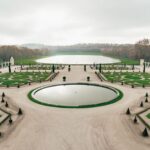
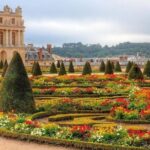
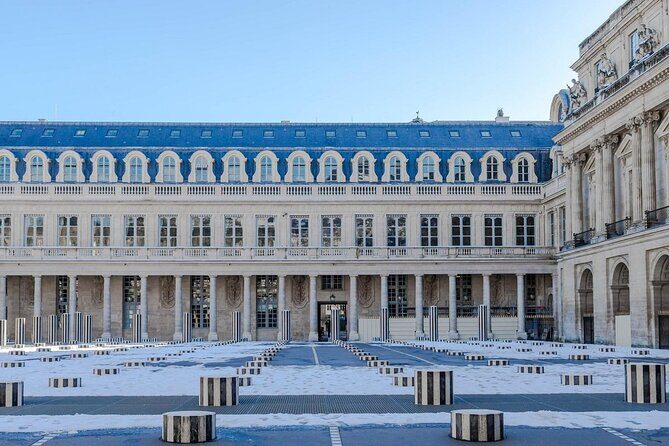
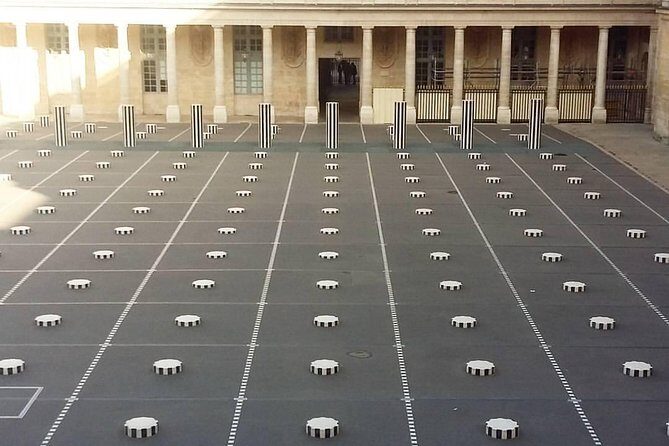
Then you shift from shopping arcades to greenery: Domaine National du Palais-Royal, including the gardens and the square of the Royal Palace area. You get about 20 minutes here, and it’s free to enter at the scheduled stop.
This is the tour’s natural reset. After multiple enclosed shopping corridors, open air and garden space feel like a breather for your feet and your eyes. It also gives you a chance to process what you just learned. In covered passages, everything is about built form and commercial life. In the gardens, the focus becomes atmosphere—how people linger, how the space feels, and how the palace setting frames the city.
If you’re someone who likes to take photos but also wants them to mean something, this garden time is where you can do both. It’s also a smart moment for a quick souvenir check-in with your guide, because you’ll have shopping time coming up.
You can also read our reviews of more tours and experiences in Paris



Souvenir Shopping at Artisan Boutiques (Without the Hard Sell)
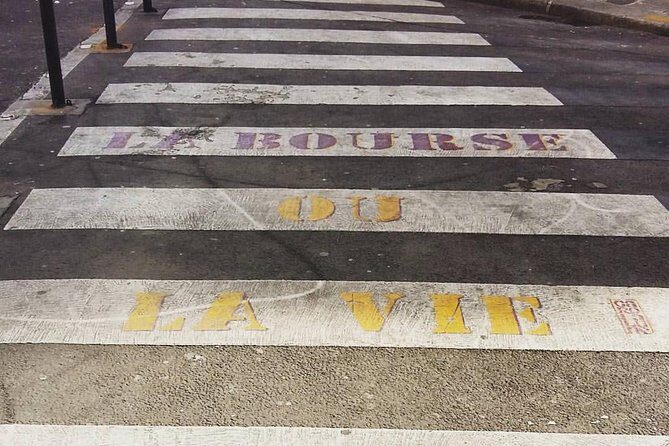
A big plus of this tour is that shopping isn’t treated like a detour. There’s time to shop for souvenirs at artisan boutiques, so you can browse with context instead of feeling lost in the chaos of central Paris.
This is a practical kind of time. You’re walking between meaningful stops, so you’re not wasting half your day trying to figure out where to go. And because the tour is private, you’re not stuck with a group that moves faster than you do.
A gentle heads-up: if you dislike shopping and prefer straight sightseeing, you may want to manage your expectations. The tour includes enough time for browsing, but it’s not a pure museum-style crawl. Still, you can treat it as a chance to pick up one or two quality items—or just enjoy the workshop/boutique atmosphere and skip purchases.
What Makes the Guides the Real Value (Laurent and Maurizio Style)
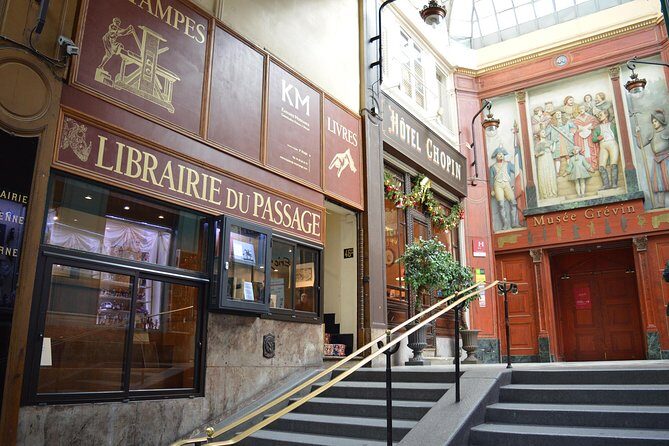
The best thing about this experience isn’t the list of passages. It’s the guide’s ability to make those spaces feel alive. The guide names that pop up for this tour include Laurent Wittvert and Maurizio, and the common thread in how they’re described is teaching through story.
Laurent Wittvert is singled out for bringing an era back to life in a way that feels structured and easy to follow—like the difference between hearing facts and understanding the scene. Maurizio is described as fun, prepared, and engaging, with an ability to keep attention from adults through adolescents. That matters, because covered passages can turn into “pretty but vague” if the narration is weak. Here, the goal is clarity plus charm.
If you’re the type who loves asking Why questions—why these arcades became popular, what daily life looked like, how architecture supported commerce—this is exactly the kind of tour that rewards that instinct. Your questions don’t feel like interruptions; they feel like part of the walk.
Price and Value: Is $70.98 per Person Worth It?
At $70.98 per person, this isn’t the cheapest way to see Paris arcades. But it can be good value because you’re paying for something most self-guided walks don’t deliver: a private guide focused on a compact route with story-driven context.
Here’s how I think about the math:
- If you’re traveling as a pair or small group, the private aspect usually makes the per-person cost feel more reasonable.
- You’re not spending your money on museum tickets or paid attractions at each stop; many scheduled stops are free to enter, so the cost goes to the guide experience.
- The tour is only about two hours, which is ideal if you want a “best of this niche” session without losing a full half-day.
If you’re solo and price-sensitive, you might compare against cheaper group tours or self-guided options. But if you want a clean route, fewer crowd headaches, and a guide who can explain what you’re seeing, this price starts to look fair.
Also worth noting: this kind of tour tends to be booked ahead (on average, around 129 days). If you’re traveling in a busy season or on a specific day, I’d lock it in early rather than hoping for last-minute availability.
Who Should Book This Tour—and Who Might Skip It
This is a strong fit if you:
- love architecture and want the “why” behind what you’re seeing
- enjoy history stories tied to real spaces, not just museum walls
- want to avoid the biggest crowds by working in a less obvious part of central Paris
- like walking tours that feel purposeful, not aimless
It might be less ideal if you:
- only want major headline landmarks (this tour is niche by design)
- hate any shopping time at all, since artisan boutiques are built into the flow
- need a totally low-walking day (it’s still a 2-hour walk with multiple stops)
Should You Book This Private Covered Passages & Palais-Royal Gardens Tour?
If your idea of a great Paris morning includes architecture, smart stories, and a route that’s more “city life” than “checklist,” I think you’ll be happy you booked. The combination of covered passages—plus the Palais-Royal gardens reset—creates variety without burning time. And when you get a guide like Laurent Wittvert or Maurizio in the mix, you’re not just looking at pretty spaces. You’re understanding them.
If you’re on the fence, make the decision based on one question: do you want Paris explained through everyday spaces? If yes, book it. If you’re only chasing icons, skip this and choose something more landmark-heavy.
FAQ
What’s the duration of the tour?
It’s about 2 hours.
How much does the tour cost?
The price is $70.98 per person.
Is this tour private?
Yes. It’s a private tour/activity, and only your group participates.
Do I need a minimum number of people?
Yes. There’s a minimum of 2 people per booking.
Where do you meet and where do you end?
You start at Le Peletier, 75009 Paris, France and end at Palais-Royal, 75001 Paris, France.
What time does the tour start?
The start time is 9:30am.
Is the ticket mobile?
Yes. You’ll use a mobile ticket.
Is admission free at the stops?
At the scheduled stops listed (including multiple passages and the Palais-Royal gardens/square), admission is free.
What’s included in the price?
A professional guide and a private guided tour.
What’s not included?
Food and drinks, plus transportation to and from the attractions.
Can I get a refund if I cancel?
No. It’s non-refundable and cannot be changed for any reason.
Are there any health-related requirements?
During Covid restrictions periods, you should bring a mask or shield for use during the tour.