REVIEW · PARIS
Private Street Art Tour in Paris with Local Expert
Book on Viator →Operated by Friendly Local Guides · Bookable on Viator
Paris’s street art has a secret map. This private, English-speaking walking tour guides you through famous walls and lesser-known streets, from Belleville’s Rue Oberkampf to the street-art side of Montmartre. With hotel pickup and a fully customizable route, it’s built to match your pace and interests.
I really like the way the local guides bring artist context to what you’re seeing. Names like Claire (who shows notes and a binder of artists and styles) and Oksana (who focuses on artists and their stories) point out details you would usually miss on your own. I also like the private attention—it’s not a herd situation, and that makes it easier to ask questions as you walk, as guide Sanny showed with great art-and-city conversation.
One possible drawback: you’ll do a solid amount of walking, and weather can change how comfortable certain areas feel—especially near Montmartre when it’s crowded or rainy. If you’re sensitive to long stretches on foot, plan for slow steps and good shoes.
In This Review
- Key Highlights You’ll Want to Know
- Why This Street Art Walk Feels More Worth It Than Another Sightseeing Day
- Price and Time: What 3 Hours Buys You in Real Viewing Time
- Hotel Pickup, Private Format, and How Customization Helps You Get the Tour You Want
- Stop-by-Stop: The Route from Belleville Street Art to Montmartre’s Walls
- 1) Rue Oberkampf: Starting at the Open-Air Museum Address
- 2) Rue Saint-Maur: New Works Every Fortnight in a Small but Active Space
- 3) Rue de l’Elysée Ménilmontant & Rue Julien Lacroix: Fresco Details at a Crossroad
- 4) Rue Laurence Savart: Narrow Alleys and the Constantly Growing Collection
- 5) Boulevard de la Villette: Lazoo and a Fresco That Feels Like a Neighborhood Landmark
- 6) Rue des Cascades: Urban Charm with a More Romantic Turn
- 7) Rue de l’Ourcq: Canal de l’Ourcq and Canal Saint-Martin as an Extended Exhibition
- 8) Rue Riquet: The Long Rosa Parks Graffiti Wall
- 9) Montmartre Finish: Street Art Without Only the Main-Attraction Crush
- How to Get the Most from Your Guide (and Your Photos)
- Who This Tour Suits Best (and Who Should Skip It)
- Should You Book This Private Paris Street Art Tour?
- FAQ
- FAQ
- How long is the private street art tour?
- Is this tour private or group-based?
- What language is the tour offered in?
- Where does the tour start, and do I get hotel pickup?
- Are there entrance fees for the stops?
- Can the itinerary be customized?
- What walking/fitness level is expected?
- Is food or drinks included?
- What’s the cancellation window?
Key Highlights You’ll Want to Know
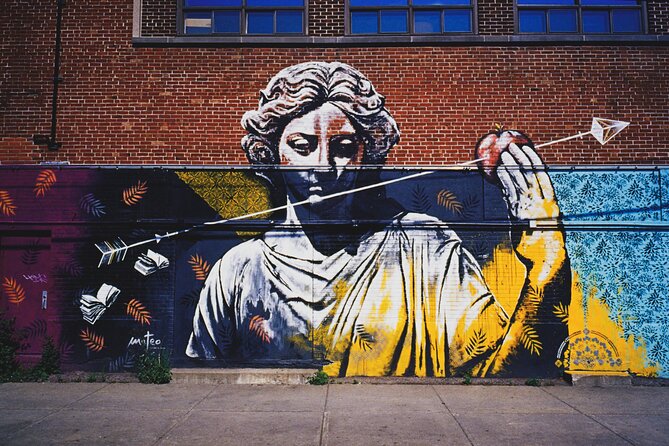
- Private guide, only your group: more questions, more stopping for photos, less waiting around
- Fully customizable itinerary: you can steer toward what you care about most
- Frequent artist-and-style explainers: Claire’s binder approach is the kind of structure that helps
- Multiple stops with free admission: most of what you see is open-air, so you spend time, not money
- Real street-art touchpoints: Lazoo’s work on Boulevard de la Villette and the Rosa Parks wall on rue Riquet are big anchors
- Guides track what’s changing: some areas have updates and new pieces regularly
Why This Street Art Walk Feels More Worth It Than Another Sightseeing Day
A lot of Paris tours feel like a checklist. This one feels like learning a city language. You don’t just look at murals—you learn how to read the clues: artist style, technique, message, and the neighborhood context that helps it make sense.
I like that you’re moving through real streets instead of waiting in front of framed art. Rue Oberkampf, Rue Saint-Maur, Boulevard de la Villette, and the streets around Canal de l’Ourcq and Canal Saint-Martin are all parts of Paris where street art is part of daily life. You end up with that satisfying moment where the city starts showing you meaning everywhere—because once you understand what you’re looking at, you notice it on your own.
Price-wise, $139 for a private 3-hour walking experience is in the reasonable zone for Paris. The value comes from two things: your guide time (private attention) and the fact that most stops are free to view because they’re outside. So you’re paying for interpretation and routing, not ticket lines.
You can also read our reviews of more private tours in Paris


Price and Time: What 3 Hours Buys You in Real Viewing Time
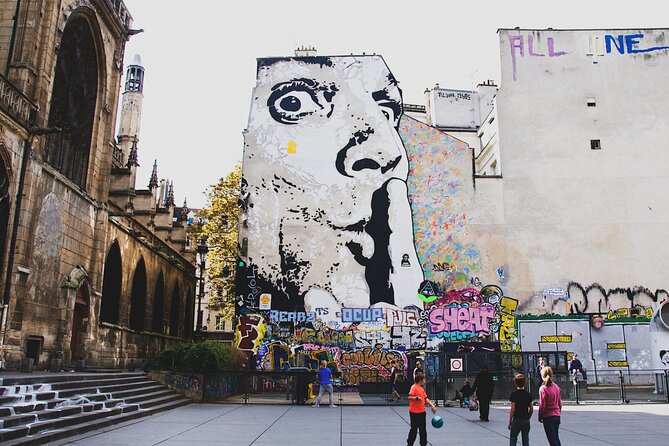
The tour runs about 3 hours. That sounds short until you realize street art isn’t something you can speed-run. A good guide slows you down at the right spots—so you see the small stuff, not just the big silhouettes from across the street.
You’ll also save time because the route is built around clusters. Instead of bouncing randomly across Paris, you move through connected areas. Stops include multiple streets with dense artwork coverage, plus photo-friendly views.
Practical tip: since it’s a walking tour, bring comfortable shoes and expect frequent stops. You’ll be standing close to walls, so you’ll want your camera ready and your posture ready too.
Hotel Pickup, Private Format, and How Customization Helps You Get the Tour You Want
This is a private tour/activity. Only your group participates, and you get a guide who can pay attention to what you actually want to see.
Two details matter here:
- Pickup from your hotel lobby: less transit friction, especially if your hotel is off a main metro line.
- Multiple start times: you can pick a slot that fits your day instead of forcing your whole itinerary to match.
Customization is also key. One review experience mentioned switching preferences mid-route because the guide picked a practical local alternative when conditions made Montmartre less pleasant. That’s a reminder that your guide can adjust to what you want while also handling real-world factors like crowds and weather.
What you can do: tell your guide early what you’re into. If you care about women artists, specific styles, or political themes, ask. Guides like Claire have been praised for matching the route to what someone wanted to focus on.
Stop-by-Stop: The Route from Belleville Street Art to Montmartre’s Walls
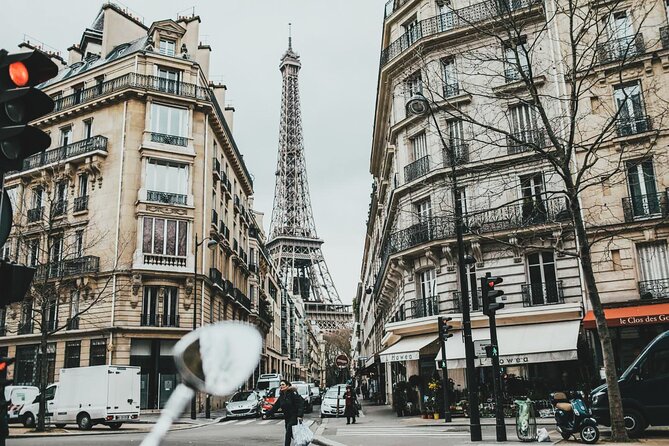
The tour’s structure makes sense. It starts in areas where street art is dense and history is written into the buildings. Then it transitions into streets that feel more like long photo galleries—canals, alleys, and neighborhood corners.
1) Rue Oberkampf: Starting at the Open-Air Museum Address
You start at 107 Rue Oberkampf, where the street-art scene is so visible it functions like an outdoor museum. In practice, this means you get quick immersion: you’re not walking ten minutes just to reach your first wall.
From this area, your guide points out graffiti that’s fun and thought-provoking, not just colorful. You’ll likely notice that street art here isn’t random tagging—it often reads like composition and design, with references you can learn as you go.
A nice bonus: street art here can keep updating. One of the tour impressions highlighted the excitement of seeing local graffiti updates and performances that draw crowds. That kind of live change is exactly what makes street art feel different from museums.
You can also read our reviews of more tours and experiences in Paris

2) Rue Saint-Maur: New Works Every Fortnight in a Small but Active Space
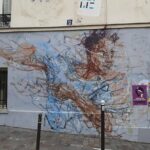
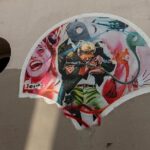
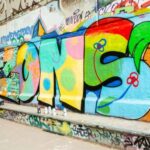
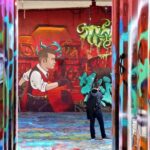
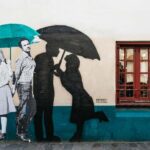
Next you move to Rue Saint-Maur, where street art shows up as an ongoing mini-exhibition—24 sq.m. that presents new artwork every fortnight. That’s a big deal for two reasons:
- you’re not seeing the same exact wall that everyone photographed last month
- your guide can explain what’s changing and why different artists use different approaches
Expect a mix of styles—abstract, realistic, and even pop-culture-influenced work. This is a good stop if you like comparing techniques side by side.
Potential drawback here: because the art is actively changing, not every wall will match what you might have seen on social media before your trip. If you’re going for a specific famous piece, tell your guide so they can aim for what’s currently up.
3) Rue de l’Elysée Ménilmontant & Rue Julien Lacroix: Fresco Details at a Crossroad
At the crossroad of Rue de l’Elysée Ménilmontant and Rue Julien Lacroix, you get another heavy concentration of complex artwork and expressive frescos.
This is where you’ll want to slow down. These corners tend to reward close viewing: layered images, lettering, textures, and the way artists place details so they make sense when you move around the wall.
If you’re photographing, bring patience. Small details often take an extra minute to frame well.
4) Rue Laurence Savart: Narrow Alleys and the Constantly Growing Collection
Then you head to Rue Laurence Savart, known for a constantly growing street art collection. The street’s layout—cobbled pavements and tighter corridors—helps the art feel more intimate, like you’ve stepped into a back-room gallery.
This stop is great for camera work because you can get interesting angles without moving across town. Your guide can help you spot the pieces tucked into corners that are easy to overlook when you’re just walking.
If you have limited time or energy, this is also one of the stops where you can ask your guide to prioritize the most interesting walls first, since it’s easy to keep wandering in narrow lanes.
5) Boulevard de la Villette: Lazoo and a Fresco That Feels Like a Neighborhood Landmark
One stop is built around Boulevard de la Villette, a street closely tied to the artist Lazoo. In this area, you’ll find massive modern frescoes near a community garden.
Lazoo’s name shows up widely here, and the art feels like it has local identity attached—not just a one-off wall. If you’ve ever wondered how street art becomes part of a neighborhood’s personality, this is your answer.
6) Rue des Cascades: Urban Charm with a More Romantic Turn
Next is Rue des Cascades, described as a picturesque mix of urban charm and romantic feel. This is a “look up and look around” street: the artwork lines your sight in a way that changes the mood compared with wider boulevards.
Expect rows of artworks where you’ll find something worth pointing your camera at in almost every direction. This is also a good breather stop if your legs feel tired—because the scenery keeps you engaged without needing to sprint between locations.
7) Rue de l’Ourcq: Canal de l’Ourcq and Canal Saint-Martin as an Extended Exhibition
Then you move toward the Rue de l’Ourcq area, where street art stretches along the Canal de l’Ourcq and Canal Saint-Martin. The tour frames it as a long street art exhibition that goes toward the city’s edge.
What makes this portion interesting is variety of surfaces. You’re looking at purpose-built walls, abandoned industrial buildings, iron bridges, and other textures that make street art feel integrated into the built environment.
If you like photo essays, this is where your pictures will start telling a story: buildings to bridges to canal edges, with art responding to each setting.
8) Rue Riquet: The Long Rosa Parks Graffiti Wall
At Rue Riquet, you’ll see a 500-meter-long wall that, in 2015, was covered with graffiti in honor of Rosa Parks. That scale is hard to understand until you walk it—then it clicks that this is street art used to build memory, not just style.
The tour also notes contributions by several acknowledged women artists. If you care about representation in public art, this is one of the strongest emotional moments on the route.
9) Montmartre Finish: Street Art Without Only the Main-Attraction Crush
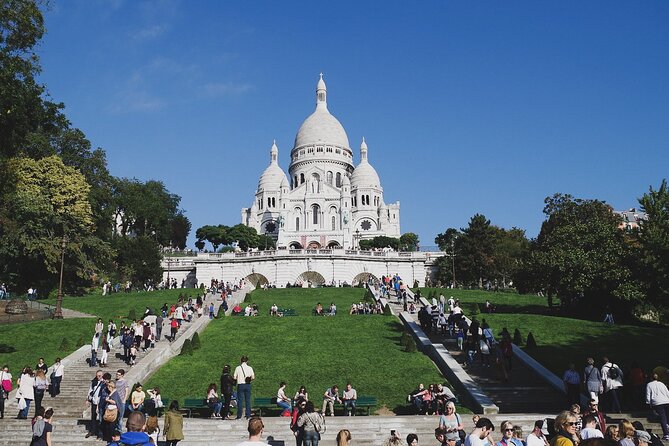
Finally, you end in Montmartre, focusing on street art rather than the usual postcard route. The goal here is to get you looking at the walls and the phenomenon of street art popularity, while also helping you avoid the most crowded tourist pockets.
This is a good ending because Montmartre is already steeped in art vibes. The difference is you’re seeing contemporary street art layers on top of that reputation—so it feels less like a theme park and more like a living neighborhood.
One caution: if the weather is rainy or the area is packed, it can reduce the comfort of walking and viewing. If you’re picky about crowd levels, pick a start time that avoids the worst overlap with peak foot traffic.
How to Get the Most from Your Guide (and Your Photos)
This tour works best when you treat it like a guided lesson, not just a photo walk.
Here’s what I’d do:
- Ask your guide to point out what makes a style a style. One guide used a binder with artist info and helped explain mediums and techniques, which makes later street art spotting way easier.
- If you’re into specific themes—politics, pop culture, or women artists—say it early. Claire was praised for knowing exactly where to go for women artists, and guides can tailor toward that kind of preference.
- Bring your camera, but also take a second to look without it. Close-up murals often have textural details that you might miss if you’re always shooting.
Also, because street art changes, you might notice new updates while you’re there. That’s not a guarantee, but guides who are paying attention will often show you what’s fresh and what’s established.
Who This Tour Suits Best (and Who Should Skip It)
This is a great fit if you:
- love street art more than museum collections
- want off-the-beaten-path Paris that still feels close to iconic neighborhoods
- like learning how artists think, not just taking pictures
It’s less ideal if you:
- hate walking or have tight mobility constraints (the tour is described for people with moderate physical fitness)
- want ticketed indoor attractions and full schedules with no weather dependency
- expect the guide to act like an audio guide script with no room for conversation (guide styles can vary)
Should You Book This Private Paris Street Art Tour?
I’d book it if you want street art that’s explained with real context and you value private time. The mix of Belleville walls, canal-side stretches around Rue de l’Ourcq, the Lazoo connection on Boulevard de la Villette, and the Rosa Parks wall on Rue Riquet gives you variety without long commutes.
If your top priority is avoiding walking, or you’re traveling during heavy rain and you’re sensitive to crowds, you might consider shifting your expectations or choosing a start time that feels calmer. But for most people, it’s a smart way to see Paris as a living art scene—one you can keep noticing long after the tour ends.
FAQ
FAQ
How long is the private street art tour?
The tour is approximately 3 hours.
Is this tour private or group-based?
It’s a private walking tour, so only your group participates.
What language is the tour offered in?
The tour is offered in English.
Where does the tour start, and do I get hotel pickup?
Your guide meets you in the hotel lobby. The pickup is from your centrally-located hotel, hostel, or vacation rental, and you provide the exact hotel name and address.
Are there entrance fees for the stops?
Admission tickets are listed as free for the stops described, and entrance fees are generally not included unless you choose otherwise.
Can the itinerary be customized?
Yes. The tour includes a fully customizable itinerary.
What walking/fitness level is expected?
Moderate physical fitness is recommended.
Is food or drinks included?
No. Food and drinks are not included, and gratuities are optional.
What’s the cancellation window?
Free cancellation is available up to 24 hours in advance for a full refund.