REVIEW · PARIS
Historic Heart of Paris: Île de la Cité Walking Tour
Book on Viator →Operated by Danis Tour · Bookable on Viator
History talks louder on the Île de la Cité.
This guided walking tour stitches together the core sights of Paris’s island in the Seine, starting at Place de l’Hôtel-de-Ville and moving through Notre-Dame, the Palais de la Cité area, and more. I like that the guide experience feels personal, with Daniel-style answers and photo-stopping moments, and you get the convenience of a mobile ticket.
I also love what you get beyond the famous names: the atmosphere around Sainte-Chapelle and the darker Revolutionary context tied to the Conciergerie. The possible drawback is simple: at about 2 hours, you will see a lot, but you will not linger for long at each stop.
In This Review
- Key highlights you will actually feel
- Starting at Place de l’Hôtel-de-Ville: a smart way to get your bearings
- Pont Louis-Philippe: the Seine view that makes the island click
- Notre-Dame Cathedral: Quasimodo, the 2019 fire, and the restoration story
- Shakespeare and Company: why a bookstore stop fits this cathedral walk
- Sainte-Chapelle at the Palais de la Cité: stained glass you can feel in your shoes
- The Conciergerie: a medieval palace with a Revolutionary prison edge
- How the guide shapes your experience: pacing, photos, and real answers
- Price and value: what $56.17 buys in central Paris
- Timing, walking style, and what to expect from a 2-hour route
- Who this Île de la Cité walk suits best
- Should you book? My honest take
- FAQ
- Where does the Île de la Cité walking tour start?
- Where does the tour end?
- How long is the walking tour?
- Is this tour private?
- What’s included in the price?
- Are tips included?
- Do I need a printed ticket?
- Is it easy to reach by public transportation?
- When will I get confirmation?
- How does cancellation work if I need to change plans?
Key highlights you will actually feel
- Hôtel de Ville as the kickoff point with a classic start in Paris’s central civic energy
- Pont Louis-Philippe views over the Seine and toward Île Saint-Louis
- Notre-Dame storytelling including Quasimodo and the 2019 fire with ongoing restoration context
- Shakespeare and Company stop for literary Paris, not just landmark hopping
- Sainte-Chapelle focus on the kaleidoscopic stained-glass experience
- Conciergerie context: a medieval palace turned Revolutionary prison, including Marie-Antoinette
Starting at Place de l’Hôtel-de-Ville: a smart way to get your bearings
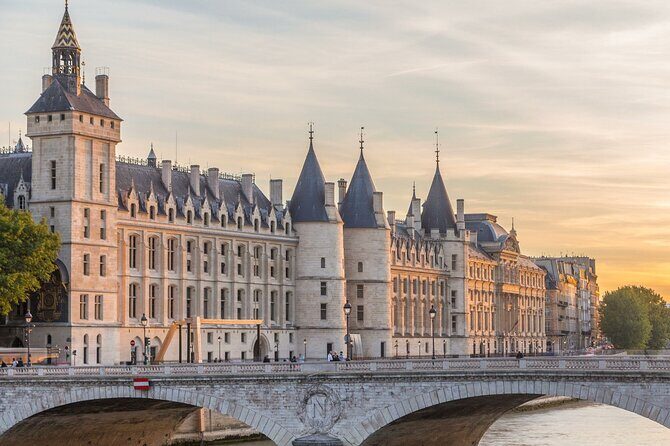
I like the way this walk begins at Place de l’Hôtel-de-Ville. It is one of those places where you can feel you are in the center of official Paris, not just the post-card version. From here, the route naturally pushes you toward the river and the cathedral zone, so the geography makes sense as you go.
Because it is a private tour for your group, the guide can set the tempo quickly. If you like asking questions, you will get room for them. If you prefer listening and moving, the guide can keep it flowing without turning it into a lecture. Either way, the opening minutes matter, since the rest of Île de la Cité works best when you already understand where the buildings sit relative to the Seine.
One more practical point: you’re close to transit, so you can arrive without a long scramble through the city. For a 2-hour experience, that kind of efficiency really pays off.
You can also read our reviews of more walking tours in Paris



Pont Louis-Philippe: the Seine view that makes the island click
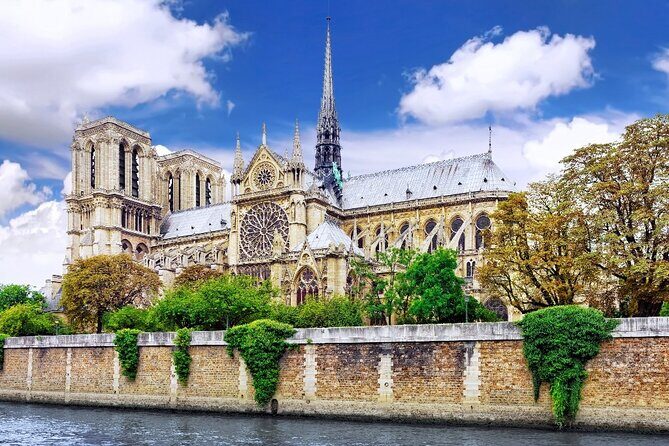
Before you hit the big names, the tour crosses Pont Louis-Philippe, and that short transition matters. The bridge gives you the kind of sightline that makes Île de la Cité feel real, not just “somewhere near Notre-Dame.”
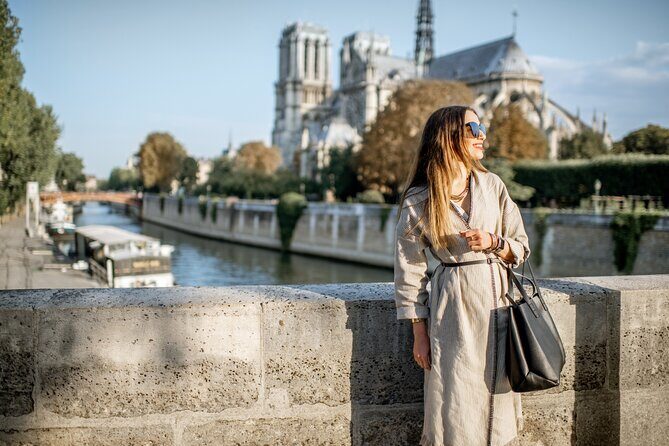
You get views of the Seine plus the angle toward Île Saint-Louis. Even if you have seen photos before, I find it helps to stand where the river frames the skyline. It also gives you a mental map: where the island sits, how the river curves, and why these monuments cluster here.
Also, bridges are great for your camera setup. In the feedback, the guide is known for pointing out photo spots, and you will likely appreciate that kind of help when the light shifts. Bring a camera strap you can actually wear comfortably, because you may want to stop a few times to frame the view right.
Notre-Dame Cathedral: Quasimodo, the 2019 fire, and the restoration story
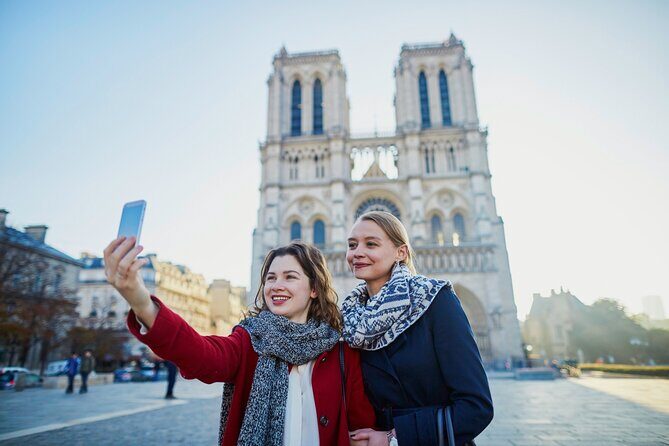
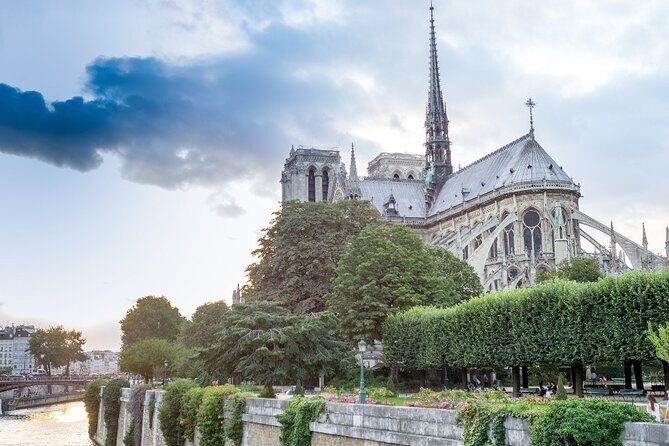
No visit to this area is complete without Notre-Dame Cathedral. But the tour’s value is not just that you stand there and look up. You get the human stories tied to the cathedral, including Quasimodo and the 2019 fire, plus the fact that there is ongoing restoration.
That combination changes how you see the building. Without the context, Notre-Dame can feel like a single famous silhouette. With the guide’s storytelling, it becomes a place that has lived through drama, damage, and careful rebuilding. The restoration piece matters because it reminds you you are seeing something in progress, not a museum prop frozen in time.
A practical note: this is a walking tour, so you will not treat the stop like a full-length cathedral visit. Instead, you get a guided orientation that helps you understand what you are looking at and why people still care so much. If your goal is long interior time, you may want to plan separate time for that.
Shakespeare and Company: why a bookstore stop fits this cathedral walk
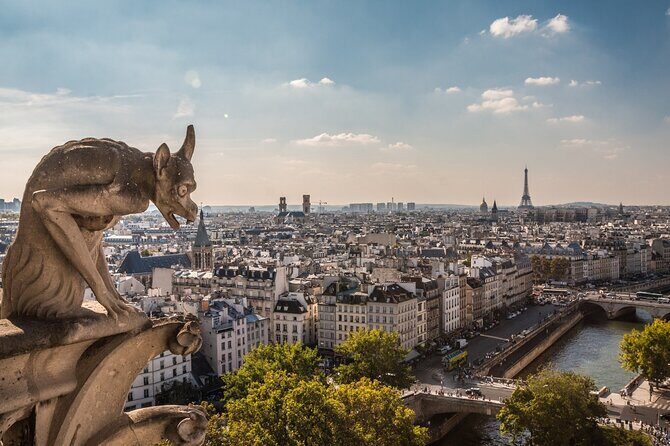
This tour does a neat thing: it does not treat Île de la Cité as only stone and spectacle. You also visit Shakespeare and Company, the famous bookstore with a reputation for inspiring writers and dreamers.
That stop works because it adds a different kind of Paris energy. Notre-Dame and the royal-then-revolutionary sites show Paris as a stage for big events. A literary landmark like this shows Paris as a place people come to imagine. You get a tonal break, and it makes the walk feel less like a checklist.
I also like that this kind of stop gives you something practical to do with your day. After the tour, you can decide whether you want to linger longer, browse, or just appreciate the vibe from the street. Either way, it makes the walking route feel more connected to real Paris culture.
Sainte-Chapelle at the Palais de la Cité: stained glass you can feel in your shoes
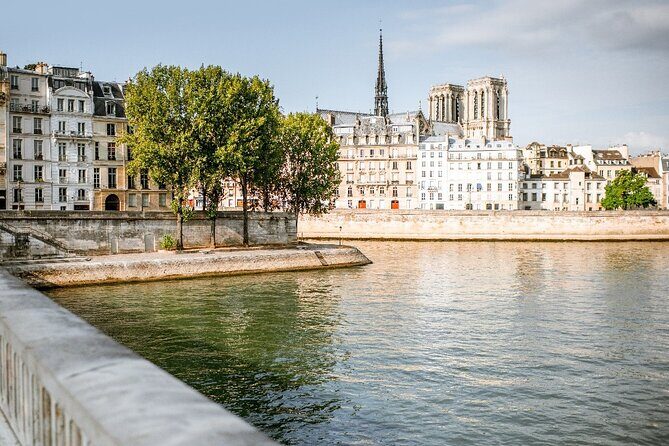
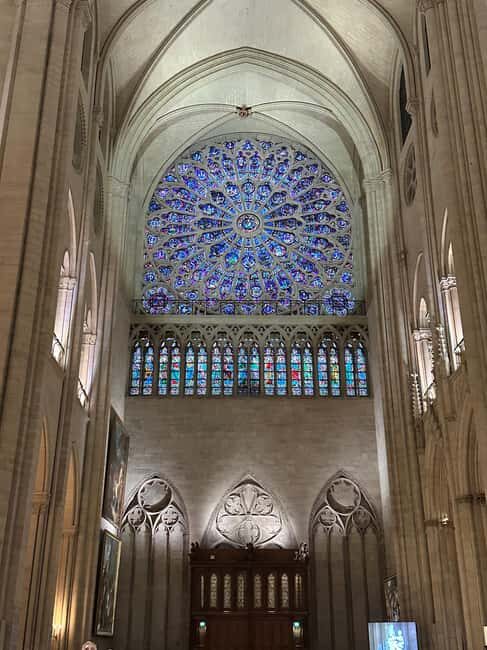
Next up is the Palais de la Cité area, including Sainte-Chapelle. The tour highlights it as the place with kaleidoscopic stained-glass windows that bathe the space in bright, shifting light.
Even if you are not going inside for a long visit, this stop can still be powerful. The guide’s framing helps you look at stained glass the right way: not as decoration, but as a designed environment meant to change your experience. When someone points out how the light works, you tend to notice more than you would alone.
There is also a psychological reason this matters on a 2-hour tour. Sainte-Chapelle is a visual payoff. After Notre-Dame’s scale and the river views, you get a different kind of intensity—color and detail up close. That contrast is a big reason this route feels satisfying.
One consideration: stained glass is very lighting-dependent. If you are sensitive to crowds or bright spaces, it may help to go with the mindset that you are there for a first look and context, not a slow, solitary viewing.
You can also read our reviews of more historical tours in Paris






The Conciergerie: a medieval palace with a Revolutionary prison edge
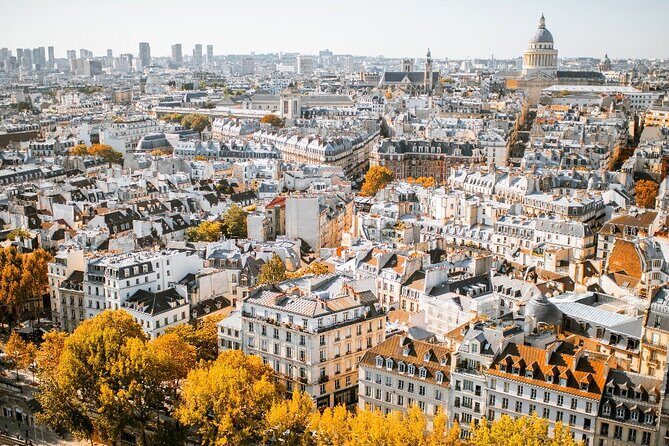
The walk also turns darker, and that is part of why it works. You hear the secrets of the Conciergerie, described as a medieval palace turned grim Revolutionary prison. The story includes that it held Marie-Antoinette before her fateful end.
This stop is not about enjoying a scenery moment. It is about understanding how the same city spaces can hold totally different meanings across centuries. The guide’s storytelling helps you connect the architectural shell to the human events that took place there, which is exactly what makes history feel relevant rather than distant.
If you like to ask why people remember certain places, the Conciergerie stop tends to spark that kind of conversation. It also balances the lighter elements of the route, like books and river views, so the overall tour feels like Paris in miniature: art, politics, belief, and consequences all layered together.
Practical tip: since this is a walking tour, wear shoes you can do comfortably for a couple of hours. Even if each stop is short, you spend real time on your feet in central Paris.
How the guide shapes your experience: pacing, photos, and real answers
What makes this tour feel worth it is how the guide handles the group. In the feedback, Daniel is praised for being communicative, responsive to questions, and good at explaining the historical context behind what you see.
Another detail that matters for you: the guide can adjust what gets emphasized based on interest. If your group wants more story, you will get more story. If you want quick orientation and key facts, you can steer it there. That flexible approach is one of the best reasons to choose a guided walk instead of a self-paced route.
You might also care about language comfort. One review notes communication in both Portuguese and English, which is a helpful sign for mixed-language groups. It suggests the guide is not just reading facts off a script; he is actively working to make the information land for the group in front of him.
And yes, photo support shows up in the feedback too. If you struggle with where to stand or when to take the shot, a guide who knows angles saves time and frustration. You’ll likely come home with photos that match what you learned, not just random pictures of famous facades.
Price and value: what $56.17 buys in central Paris
At $56.17 per person, this is not a cheap activity by Paris standards, but it also does not pretend to be. You are paying for a guided walking route that covers multiple major anchors: Hôtel de Ville, Pont Louis-Philippe, Notre-Dame, Shakespeare and Company, Sainte-Chapelle, and the Conciergerie. That is a lot of high-demand material packed into roughly 2 hours.
The private-group format also affects value. When only your group participates, you usually get more direct attention than you would on a large group bus-style tour. If you are traveling as a couple or a small family, it can feel like a better deal than splitting a guide across lots of people who all want different things.
One more signal: this tour is commonly booked about 28 days in advance on average. That tells me it is a popular way to hit the cathedral area efficiently. If you want a specific day and time, waiting too long can push you into whatever is left.
Timing, walking style, and what to expect from a 2-hour route
This experience is listed as about 2 hours and is a walking tour with a guide. That means you should expect steady movement and short stops for context. You will get time to look, but you won’t treat every monument like an all-day commitment.
Most people can participate, since it is a standard city walking route. Still, be honest with yourself: if long walks and frequent stop-and-start moments wear you out, you might prefer a shorter or less stop-heavy plan.
For comfort, I recommend:
- Wear shoes you trust for cobblestones and corners in central Paris.
- Bring sunglasses or a hat if you tend to get glare from bright windows and river light.
- Have your camera ready, but do not rush your stops. The guide’s explanations are part of the payoff.
If you want to maximize value, come with at least one question. Something like what event shaped the cathedral’s story most for you, or why the Conciergerie matters to the Revolution. A good guide will pick up on that instantly.
Who this Île de la Cité walk suits best
This tour is a strong fit if you:
- Want an efficient first visit plan for the Notre-Dame area.
- Like history that connects stories to specific places, not just facts in a list.
- Prefer a private group setup where the guide can answer questions.
- Want the mix of sights: official Paris (Hôtel de Ville), dramatic Paris (Notre-Dame and the 2019 fire context), and literary Paris (Shakespeare and Company).
It may be less ideal if your main goal is extended time inside specific buildings. The format is designed for orientation and guided storytelling in a short window, not for long ticketed museum-style time.
Should you book? My honest take
Yes, you should book if you want a guided way to understand Île de la Cité without getting lost in the crowd or the confusion of famous landmarks. The combination of Notre-Dame context, Sainte-Chapelle stained-glass focus, and the Conciergerie’s Revolutionary prison story makes the route feel coherent, not scattered.
Book it sooner rather than later if your dates are fixed, since it’s typically reserved about a month out. And if you show up ready to ask questions and take photos where the guide suggests, you’ll get more than sightseeing. You’ll get a story-driven map of the heart of Paris that will stick after the walk ends.
FAQ
Where does the Île de la Cité walking tour start?
The tour starts at Place de l’Hôtel-de-Ville, Pl. de l’Hôtel de Ville, 75004 Paris, France.
Where does the tour end?
This activity ends back at the meeting point.
How long is the walking tour?
It lasts about 2 hours.
Is this tour private?
Yes. It’s listed as a private tour/activity, so only your group participates.
What’s included in the price?
The tour includes a walking tour and a guided tour.
Are tips included?
No. TIPS are not included.
Do I need a printed ticket?
No. It uses a mobile ticket.
Is it easy to reach by public transportation?
Yes. The meeting area is noted as being near public transportation.
When will I get confirmation?
You’ll receive confirmation at the time of booking.
How does cancellation work if I need to change plans?
Free cancellation is available. You can cancel up to 24 hours in advance for a full refund, based on local time. If you cancel less than 24 hours before the start time, the amount paid is not refunded.