REVIEW · PARIS
Paris Le Marais Walking Tour: An Incredible History – Small Group
Book on Viator →Operated by Dayin · Bookable on Viator
Le Marais tells stories in every corner. This 2-hour walk strings together four classic stops that explain how the neighborhood went from working-class streets to a stylish Paris must-see. I like the small-group pace and I especially like that the route centers on free-entry landmarks with a guide who can connect the dots, whether your guide is Valentin or Clara.
One thing to consider: at about two hours, the tour is more of a focused sampler than a long, meandering day. If you want to linger in shops or eat your way through the markets, you may wish it ran longer.
Still, it’s a smart way to get your bearings fast in central Paris. The experience runs rain or shine, and it ends near Saint-Paul Saint-Louis, so you can keep exploring right after without backtracking.
In This Review
- Key highlights to know before you go
- Entering Le Marais through Carreau du Temple’s market past
- Marche Couvert des Enfants Rouges: the oldest food market rhythm
- Rue des Rosiers: why this street matters in Jewish Paris
- Place des Vosges: the royal square that pulls you back in time
- The small-group format: why it feels calmer than a mega-tour
- Value check: is $66.26 worth it?
- Timing, weather, and comfort: how to show up ready
- Where you start and where you end (and why it’s smart)
- Who this Marais tour suits best
- Should you book this Paris Le Marais history walk?
- FAQ
- How long is the Paris Le Marais walking tour?
- What is the group size?
- What language is the tour offered in?
- Where does the tour start and end?
- Is the tour available if it rains?
- Are there any entry fees at the main stops?
- Do I need a printed ticket?
- Is the meeting point near public transportation?
- Can I cancel, and how late can I do it?
Key highlights to know before you go
- Max 8 travelers for real questions: You’re not shouting over strangers, so the guide can slow down when you ask something.
- Free entry at each main stop: Carreau du Temple, Marche des Enfants Rouges, Rue des Rosiers, and Place des Vosges are presented without paid site admissions.
- Jewish Paris, street-level and human: Rue des Rosiers is treated as the heart of the Jewish district with context that starts in the Middle Ages.
- A royal square with a famous resident: Place des Vosges dates to 1612, and you’ll hear why Victor Hugo matters here.
- A market stop that feels like local life: Marche Couvert des Enfants Rouges is the oldest food market in Paris, with Parisians drawn there on weekends.
Entering Le Marais through Carreau du Temple’s market past
Start your walk at 89 Rue de Turbigo. The vibe here is immediately practical: you’re in the Marais, surrounded by the kind of streets where Paris history actually lives on—not behind velvet ropes.
Stop 1 is Carreau du Temple. The big idea is simple: this building was a second-hand clothing market starting in 1863. That matters because Le Marais didn’t jump straight from past to present. It shifted. Over time, it moved from a poorer area into the trendy, designer-carrying neighborhood people know today.
Now Carreau du Temple functions as an exhibition space. I like this stop because it shows an important lesson about cities: old spaces don’t always get replaced. Sometimes they get repurposed. You’ll get a quick historical frame, and then you can walk with a better sense of what you’re looking at as you go.
Time at this stop is about 20 minutes, so you won’t get stuck reading plaques all afternoon. You’ll just get the story—and then the streets will make more sense.
You can also read our reviews of more walking tours in Paris



Marche Couvert des Enfants Rouges: the oldest food market rhythm
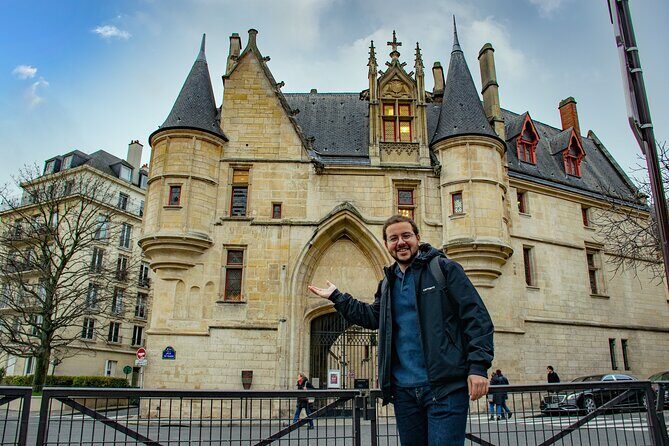
Next up is Marche Couvert des Enfants Rouges. This is one of those places that has earned its fame the old-fashioned way: it kept showing up as a real market, for real people. It’s known as the oldest food market in Paris.
You’ll spend about 20 minutes here, and the goal isn’t just to point at food. It’s to understand why this stop shows up in so many food tours and documentaries. Markets like this are where neighborhoods behave like themselves. On weekends, Parisians come here, and you’ll see the energy that makes it feel lived-in rather than staged.
A practical tip: if you’re hungry, this is the point where you might decide whether to snack now or save room for later. The tour itself keeps moving, so think about your pace. This is also a good moment to take photos, because covered markets have that soft light that makes pictures look better without much effort.
What you gain from this stop is the bridge between history and everyday Paris. You’re not just learning dates; you’re learning how people used to trade, eat, and gather—and still do.
Rue des Rosiers: why this street matters in Jewish Paris
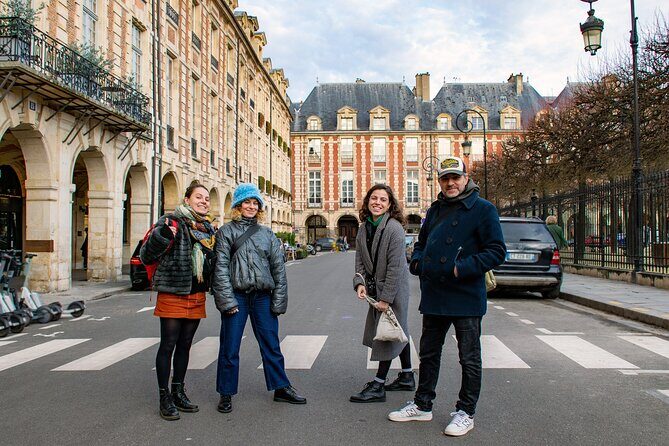
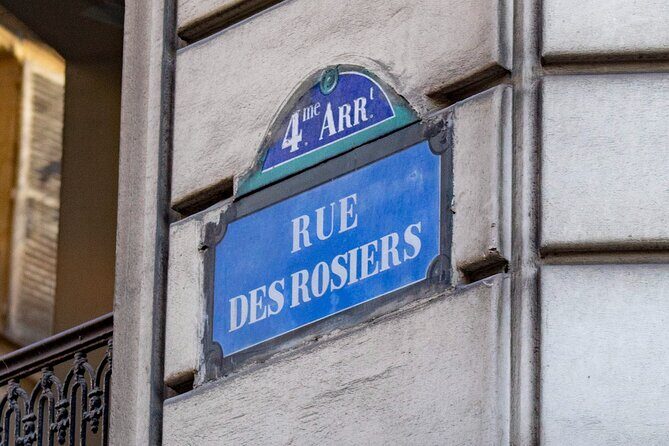
Then you’ll walk to La Rue des Rosiers, about 40 minutes of time on this stretch. This is the heart of the Jewish district of Paris, and the tour treats it as more than a cute street. You’ll hear that a Jewish community has existed in Paris since the Middle Ages, which gives the neighborhood context that most quick visits miss.
What I like here is the approach. Instead of turning it into a single cultural fact and moving on, you’re walking a real street and getting the story that explains why the street became what it is. Even if you’re not a museum person, this kind of history lands because it’s tied to geography.
A drawback to consider: Rue des Rosiers is a working street. You’ll want to keep an eye on your footing and your walking pace, especially if the weather is wet. The tour is rain or shine, so dress for the conditions, not the forecast you hoped for.
This segment is about 40 minutes, which is long enough to feel the change from stop to stop and short enough that you won’t feel rushed.
Place des Vosges: the royal square that pulls you back in time
Finish with Place des Vosges, one of the real landmarks of Le Marais. This square dates back to 1612, and it’s the kind of place where even a casual glance tells you it’s important.
You’ll also hear a key personal detail that makes the place more than just architecture: Victor Hugo used to live on the square. That connection is why this spot feels like it has an afterlife. Great squares do that. They keep famous stories and famous residents close enough that you can sense them while you walk.
Time here is about 20 minutes, which is exactly right for a square like this. You’ll get the main historical framing without turning the visit into a long endurance test. And since the walk ends near Paroisse Saint-Paul Saint-Louis at 99 Rue Saint-Antoine, you’re done in a great spot for continuing on foot. After two hours, I like being able to take a breather and then choose your next move.
The small-group format: why it feels calmer than a mega-tour
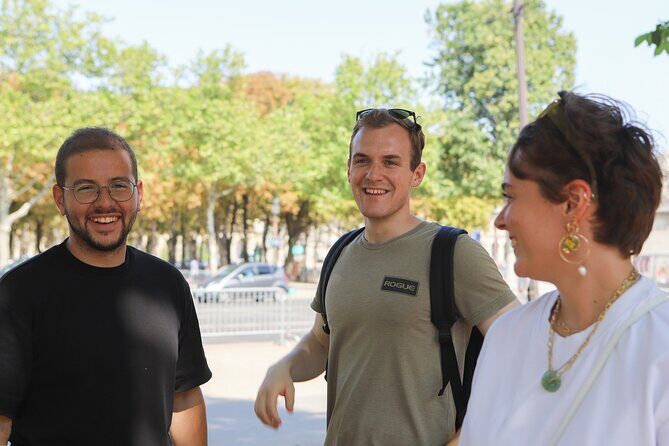
This tour caps at 8 travelers and is offered in English. I’m a fan of small groups here because Le Marais rewards curiosity. If you have questions—about what you’re seeing, why something looks the way it does, or how the neighborhood changed—small groups make that possible.
I also like that the tour can be private. If there are only a couple of you, it may turn into a private experience. That’s a big deal in Paris. Even a great guide can’t make every group equal, but a private or near-private group gives you more flexibility.
From the guiding style I’ve come to expect from this kind of tour, the best moments tend to come when the guide stays conversational and patient. In past experiences like this, I’ve seen guides like Benoit, Hugo, and Emily keep things easy to follow—even when the weather was cold and rainy. That matters. You don’t want “history class.” You want street-level storytelling.
You can also read our reviews of more historical tours in Paris






Value check: is $66.26 worth it?
At $66.26 per person for about 2 hours, it’s priced for a guided experience rather than a do-it-yourself wandering route. The value hinges on a few things you actually get:
- A local guide who organizes the neighborhood for you, so you don’t have to research the story behind each stop on your own.
- An intimate group (up to 8), which usually means more interaction and less feeling like background noise.
- A practical payoff: the tour includes tips to help you navigate after, not just “here’s where you stand.”
- The four major stops are presented with free admission noted for each site focus.
If you’re the kind of traveler who would otherwise spend time Googling things like Carreau du Temple’s history or why Rue des Rosiers matters beyond food and shopping, this guide-led structure saves effort. You get orientation plus context in a short window.
One caution: because it’s only about two hours, it’s not a “do everything” plan. If your dream is long market time, deep shopping breaks, or a slow café stop at every corner, you may want to pair this with additional self-guided exploring after.
Timing, weather, and comfort: how to show up ready
This is a walking tour, rain or shine, so you should dress for the day you’ll actually get. Paris weather can flip fast. Bring a light rain layer if rain is possible, and wear shoes you don’t mind getting a little wet.
Also plan for standing and walking between stops. The total visit is short, but it still covers enough ground that you’ll want comfortable footwear and a small bag you can manage while you walk.
If you prefer an unhurried pace, the small group helps. If you prefer a faster pace, you can usually ask the guide to keep moving a bit—but don’t expect the stop details to disappear. The tour is built on story at each location.
Where you start and where you end (and why it’s smart)

You’ll meet at 89 Rue de Turbigo, 75003 Paris. The walk concludes near Paroisse Saint-Paul Saint-Louis, 99 Rue Saint-Antoine, 75004 Paris in the south part of the neighborhood.
That ending is practical. After the tour, you’re already positioned for the next leg of your Marais day, whether that’s more streets, more shopping, or a quiet pause nearby. It also helps you avoid the common problem of tours that dump you across town.
You’ll also have a mobile ticket, and the tour is near public transportation, which makes it easier to fit into a packed day.
Who this Marais tour suits best
This tour fits best if you want:
- A historical overview that stays grounded in actual streets and buildings
- A manageable walking plan of about two hours
- A guide-led experience in English
- The chance to ask questions in a group of 8 or fewer
It also works well as an introduction if Le Marais is your first stop on your Paris trip. The route covers major “anchor” locations that are easy to revisit later on your own.
If you’re traveling with teens or friends who need a balance of storytelling and sightseeing, this type of tour tends to land well because it moves from market to street to landmark without turning into a lecture.
Should you book this Paris Le Marais history walk?
Yes, if you want a clean, efficient way to understand Le Marais instead of just taking photos. For the money, you’re buying structure: the guide helps you connect Carreau du Temple’s market transformation, Marche Couvert des Enfants Rouges as the city’s oldest food market, Rue des Rosiers as a Jewish district with deep roots, and Place des Vosges as a royal square tied to Victor Hugo.
Skip it or rethink timing if:
- You need a long, slow day with lots of breaks and extended shopping time.
- You’re looking for a food-heavy itinerary. This is more about history and context at market and street level than a full eating crawl.
If you’re curious, comfortable walking for two hours, and you like the idea of being guided by someone who can explain why these places matter, this tour is a strong bet.
FAQ
How long is the Paris Le Marais walking tour?
It lasts about 2 hours.
What is the group size?
The group is limited to a maximum of 8 travelers, and it may be private for smaller parties.
What language is the tour offered in?
The tour is offered in English.
Where does the tour start and end?
It starts at 89 Rue de Turbigo, 75003 Paris, and ends near Paroisse Saint-Paul Saint-Louis at 99 Rue Saint-Antoine, 75004 Paris.
Is the tour available if it rains?
Yes, the tour takes place rain or shine.
Are there any entry fees at the main stops?
The tour information notes that admission tickets are free for the listed main stops.
Do I need a printed ticket?
No. You’ll use a mobile ticket.
Is the meeting point near public transportation?
Yes, the tour is near public transportation.
Can I cancel, and how late can I do it?
You can cancel for a full refund up to 24 hours in advance of the experience’s start time. Cancellation closer than that is not refunded.