REVIEW · PARIS
Private Historical Tour of Notre Dame
Book on Viator →Operated by Paris in person · Bookable on Viator
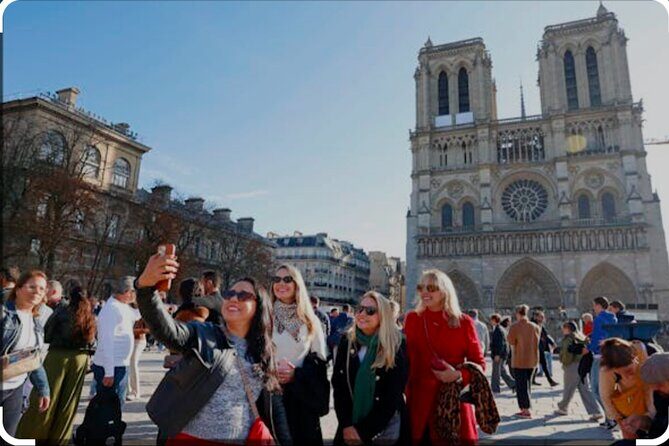
Notre-Dame feels famous even before you arrive. This private tour makes it make sense, using art history and city history to read the cathedral like a text. I like that it stays focused on what you can actually see in the Parvis area—Point Zero to the Western Portal—while keeping your questions front and center.
Two things I especially like: first, the guide framing is built for explanations you can’t get from a quick stroll, from symbolic statues to political context. Second, the schedule is flexible online, with lots of departure times that land close to your chosen slot, so you can fit it around your day.
One possible drawback: this is an outside-only experience. If you’re hoping for a full interior visit, you’ll want to plan that separately.
In This Review
- Key highlights to look for
- Private, Outside-Only Notre-Dame: What You Really Get for the Price
- Where You Meet, How Long It Runs, and Why Timing Matters
- Stop-by-Stop: Point Zero, Charlemagne, and the Western Portal
- Archeological Crypt of the Parvis (seen from above, not entered)
- Point Zero (the overlooked anchor)
- Equestrian Statue of Charlemagne (France’s origin story, in bronze)
- Cathedrale Notre-Dame de Paris Western Portal (where symbolism does the talking)
- Rue du Cloître and the Fontaine de la Vierge: Gothic Architecture from Multiple Angles
- Rue du Cloître Notre-Dame (side view, windows, gargoyles, and scale)
- Fontaine de la Vierge (the back view and the complexity lesson)
- Petit-Pont-Cardinal-Lustiger (wrap-up overview)
- Guides, Pace, and the Inside Question You Need to Ask Yourself
- How Much Walking and Standing Should You Expect?
- Who Should Book This Private Notre-Dame Tour (and Who Might Want Another Option)
- Should You Book This Private Notre-Dame Tour?
- FAQ
- Is this tour private?
- Where does the tour start?
- How long is the tour?
- Is the tour inside Notre-Dame Cathedral?
- Are any tickets included?
- Is the tour in English?
- Is food included?
- What’s the cancellation rule?
Key highlights to look for
- Art historian guide who turns stone, symbols, and style into clear stories you can follow
- Point Zero and other famous-but-often-missed details explained with meaning
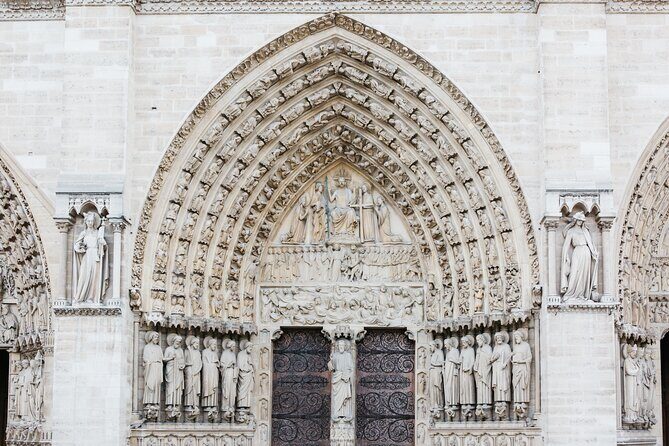
- Western Portal statues and reliefs decoded as purposeful visual theology and politics
- Multiple angles around the cathedral, from the side views to the back Gothic complexity
- Private pacing so you can ask questions without feeling rushed
Private, Outside-Only Notre-Dame: What You Really Get for the Price
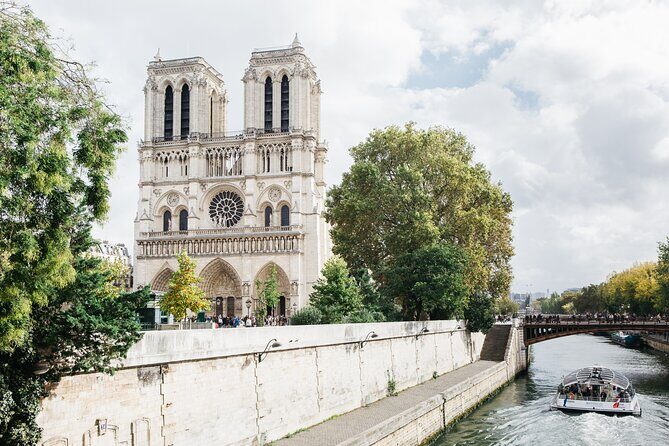
At $299.57 per person for about 1 hour 30 minutes, you’re paying for a specialist and a private setting, not for a ticketed inside visit. The good news is the tour isn’t trying to do everything. It squeezes a lot of meaning into the area you can reach easily around Notre-Dame.
This is also one of those experiences where “private” matters. You’re not sharing a comment-heavy lecture with a crowd that needs to move on. You can ask, pause, look closer, and ask again—especially when the guide is connecting details on the façade to how France’s identity formed over time.
The big catch to keep in mind is this: the tour stays outside. The cathedral’s interior access and services are separate, and the tour itself does not provide inside admission. That may be perfect if you want architecture and symbolism. It’s less ideal if your main goal is walking inside the nave.
You can also read our reviews of more private tours in Paris



Where You Meet, How Long It Runs, and Why Timing Matters
You start at 7 Parvis Notre-Dame – Pl. Jean-Paul II, 75004 Paris. That’s a smart choice because it puts you right where Notre-Dame dominates your view, with the kind of space you need to stop and talk.
The tour runs about 90 minutes, give or take. That length is usually long enough for real explanations and short enough that you can still do other nearby Paris sights the same day.
You’ll also get a mobile ticket, which is handy in a city where you don’t want to juggle paper while you’re freezing your hands off. And there are many departure times available when booking online. If you’re traveling in winter or peak hours, being able to choose a closer-in time can help you avoid feeling like you’re spending your whole trip waiting.
Stop-by-Stop: Point Zero, Charlemagne, and the Western Portal
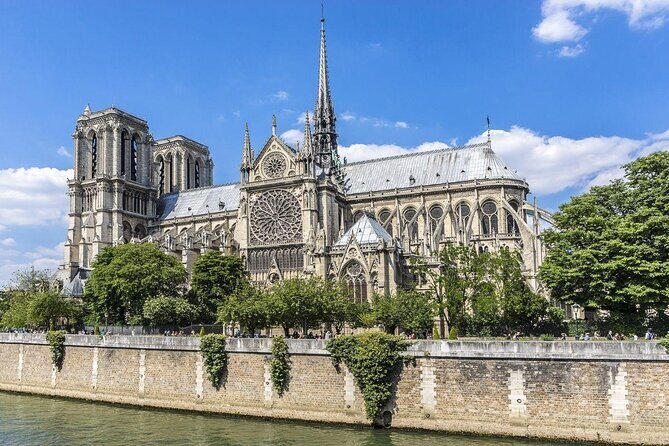
The route is designed like a guided reading. You don’t just see landmarks—you learn why they were placed there, and what people were trying to communicate through stone.
Archeological Crypt of the Parvis (seen from above, not entered)
The tour begins at the Archeological Crypt of the Parvis of Notre-Dame. You spend about 10 minutes on what the underground area means for the cathedral’s story and for Paris itself. Important: you discuss the crypt without entering it, and the ticket for that crypt is not included.
That setup can feel a bit like blue balls if your heart is set on subterranean history. But it’s also a practical move. You get context for the cathedral’s deep timeline without turning the tour into a separate ticket hunt.
Point Zero (the overlooked anchor)
Next is Point Zero, about 15 minutes. This is one of those spots many people pass without realizing it carries symbolic and practical meaning for the city. It’s called out here because it helps you feel how Notre-Dame sits inside a larger Paris story, not just as an isolated monument.
The admission here is free, so it’s an easy win for your itinerary.
You can also read our reviews of more historical tours in Paris





Equestrian Statue of Charlemagne (France’s origin story, in bronze)
Then you shift to the Equestrian Statue of Charlemagne for about 15 minutes. The focus is how France’s coming-to-be is tied to Notre-Dame’s role in that long story.
This stop adds a big-picture angle that’s easy to miss when you’re only focused on cathedral details. It’s also where your guide’s “history plus meaning” style really shows—connecting the present view to medieval power and identity.
Cathedrale Notre-Dame de Paris Western Portal (where symbolism does the talking)
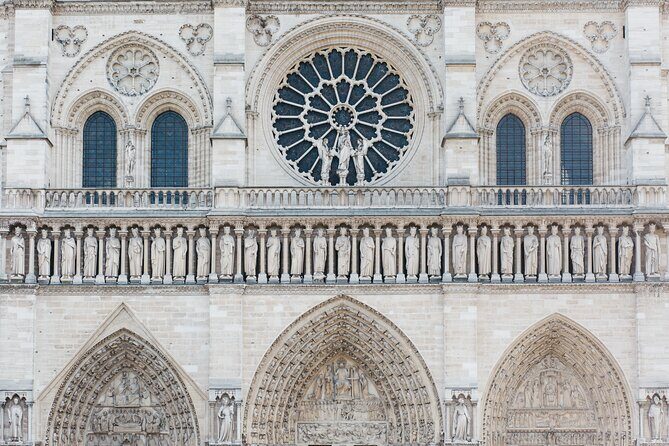
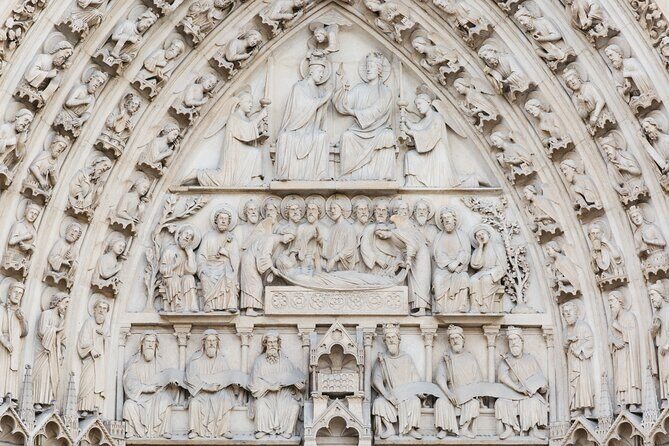
The tour’s most detail-heavy architectural lesson comes at the Western Portal. You get about 20 minutes here, with a thorough explanation of the statues and reliefs.
This is where the guide helps you see that art on churches isn’t just decoration. It’s a message system—religious instruction, political messaging, and cultural identity all at once. If you’ve ever stared at a cathedral façade and thought it looked like a puzzle, this stop is basically the moment the pieces click into place.
If you like your art history with clear language and specific examples, this is the part to prioritize. Many guides have earned high praise specifically for turning these sculpted scenes into stories you can actually remember later.
Rue du Cloître and the Fontaine de la Vierge: Gothic Architecture from Multiple Angles
After the façade work, you move into “read the building from the outside” territory. The tour uses side and back views to show how Gothic architecture works—functionally, aesthetically, and symbolically.
Rue du Cloître Notre-Dame (side view, windows, gargoyles, and scale)
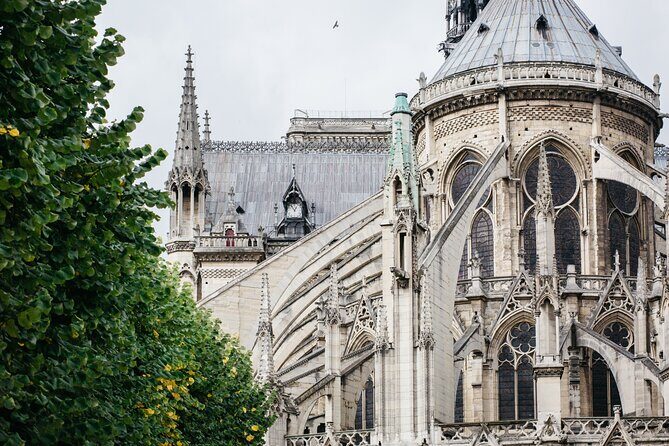
At Rue du Cloitre Notre-Dame, you get about 15 minutes. This is a side-angle stop where you can see how the cathedral comes together: architectural rhythm, window design, and the famous gargoyles you’ll recognize even if you never learned the meaning.
Side views are where you can notice how design choices serve both beauty and structural logic. And because you’re on a guided route, you’re not left guessing which details matter.
Fontaine de la Vierge (the back view and the complexity lesson)
Then you head to Fontaine de la Vierge for about 10 minutes. This gives you a back view of the cathedral and a guided explanation of Gothic architecture’s sheer complexity.
If Gothic sounds abstract, this stop tends to fix that. You start noticing how layers, forms, and ornament relate to one another rather than feeling like a single wall of stone.
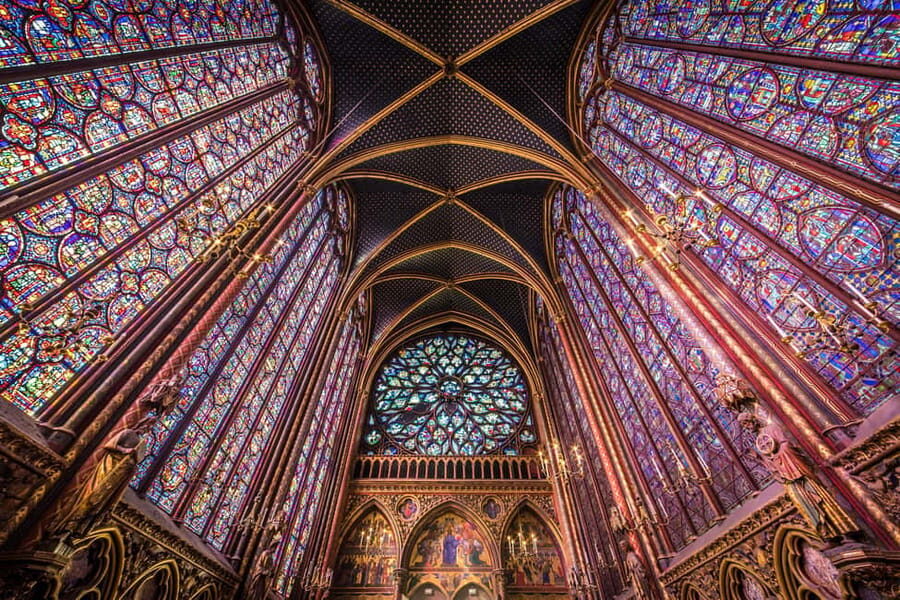
It’s also one of the spots where light can play tricks. In winter conditions, some visitors have highlighted how stained glass and light effects make the cathedral feel even more alive—so dress for cold and take a few extra seconds to look up.
Petit-Pont-Cardinal-Lustiger (wrap-up overview)
Finally, you reach Petit-Pont-Cardinal-Lustiger for about 10 minutes. From here, the guide connects the cathedral’s beauty to big ideas: dogma, Marian Catholicism, French identity, and politics.
This last stop is the payoff. It’s where all the earlier detail work—portal symbolism, architectural design, city meaning—gets tied into a coherent story.
If you’ve got teens or adults who get restless during long explanations, the structure helps: it ends with a wide-angle view and a meaning-focused wrap-up, not with another minute stuck on tiny stonework.
Guides, Pace, and the Inside Question You Need to Ask Yourself
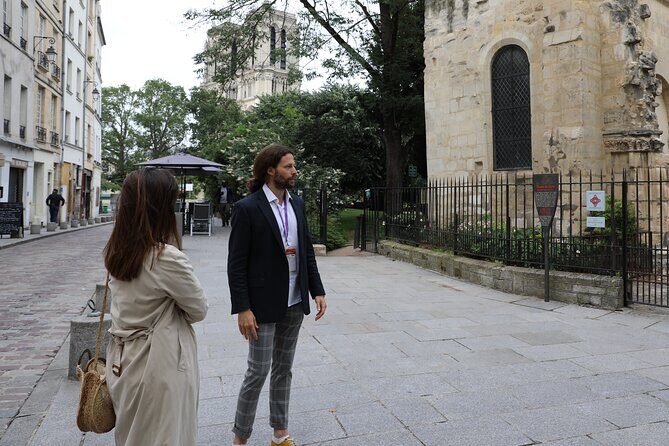
A private tour lives or dies by the guide. In this case, the guide pool can include strong art historians, and some are specifically praised for connecting Notre-Dame to engineering plus religion, or for making the cathedral’s political story feel understandable.
Guides named in guest feedback include Boris, who has been credited with explaining Notre-Dame through architecture, classical religion, history, literature, and politics; Allison, praised for thoughtful structure and making Notre-Dame fun to see with new eyes; Shelby and Mila, noted for clear insights into centuries of change; Mira, praised for deep knowledge of how the cathedral changed over time; Barbara, praised for a strong history lesson while waiting in line; and Isabella and Bella, praised for answering lots of questions.
Now the practical part: this tour is advertised and described as staying outside. Additional information also says the cathedral is not accessible on the inside for this visit. So even if you’ve seen other Notre-Dame experiences that include interior access, don’t assume this one includes it.
There’s also a pricing reality here. One low score reason is that people felt the paid experience should have included inside access or special handling. Another score notes a disappointment tied to access rules and guide speaking limits inside.
So here’s your straight advice: if your number one goal is to walk inside Notre-Dame itself, treat this as an exterior interpretation tour and plan interior time separately. If your goal is to understand what you’re looking at outside—statues, reliefs, architectural logic—this format can be a great fit.
How Much Walking and Standing Should You Expect?
This tour is built around stopping often, not sprinting between stops. You’ll spend most of the time outside at viewpoints where you can see and hear explanations. That means you should plan for time standing still, plus a bit of sidewalk walking between angles.
Since there’s no mention of long indoor segments, the pace is generally “Parvis-focused.” That can be a plus if you want to stay oriented and not deal with confusing corridors or ticket lines as part of your guided time.
Still, Paris can be cold and crowded. If you do this in winter, bring layers and expect that you may be holding your position while the guide points out details on stone. It’s easier when you’re comfortable.
Who Should Book This Private Notre-Dame Tour (and Who Might Want Another Option)
This is best for you if you want:
- Meaningful architecture and sculpture explanations, especially the Western Portal
- A private, question-friendly experience in English
- A route that uses the area around Notre-Dame for multiple angles, not just a single photo spot
- A guide who can connect Notre-Dame to French identity and politics, not only religion
It may be less ideal if:
- Your main goal is inside access (this tour does not provide it)
- You hate standing still in the cold for long explanations
- You’re expecting a ticket package that includes separate crypt or interior admission
If you’re traveling with a family, this can work well because the tour format is short and structured, with plenty of chances to ask questions. One guide is even praised for walking someone to an ice cream place afterward—though whether you’ll get that depends entirely on your guide and your group’s timing.
Should You Book This Private Notre-Dame Tour?
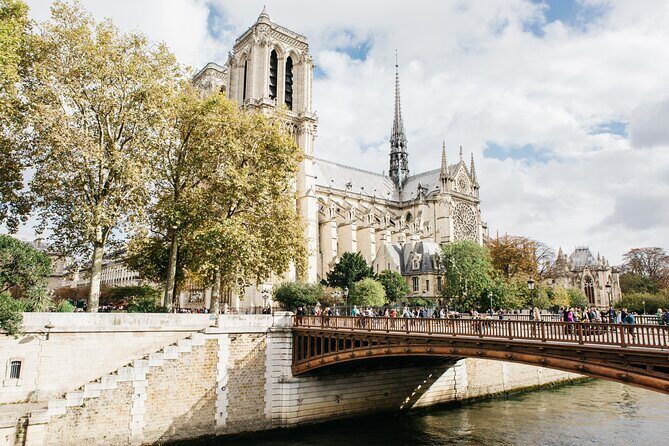
Yes, I’d book it if your goal is to see Notre-Dame as more than a postcard. The value here is the way a professional art historian turns exterior details into a clear story you can carry with you after the tour.
Book it with confidence if you’ll enjoy reading the cathedral from Point Zero to the Western Portal, then finishing with the wide-angle meaning at Petit-Pont-Cardinal-Lustiger. The outside-only format can actually be a strength: it keeps the experience focused on what you can see and understand right then.
Skip or rethink it if you specifically want an interior visit during your guided time. Since the tour stays outside, you may end up paying for a service you didn’t fully want. If you’re on the fence, check your priorities before you hit confirm—your satisfaction will depend more on that than on almost anything else.
FAQ
Is this tour private?
Yes. It’s a private tour, and only your group participates.
Where does the tour start?
The meeting point is 7 Parvis Notre-Dame – Pl. Jean-Paul II, 75004 Paris.
How long is the tour?
It runs about 1 hour 30 minutes.
Is the tour inside Notre-Dame Cathedral?
No. The visit stays on the outside. The cathedral is not accessible on the inside as part of this activity.
Are any tickets included?
Some parts are free to view. The Archeological Crypt of the Parvis of Notre-Dame is discussed without entering it and its ticket is not included. Other listed stops indicate free access.
Is the tour in English?
Yes, the tour is offered in English.
Is food included?
No. Food and drinks are not included.
What’s the cancellation rule?
You can cancel for a full refund if you cancel at least 24 hours in advance of the experience start time. Cancellation is free under that window.